
BASTARD’S LAW:
If something too controversial to survive public debate keeps moving forward anyway, it isn’t happening in the open—it’s being buried in process until it feels inevitable.
Let’s clear the smoke first, because the viral version of this story is neat, simple, and just inaccurate enough to let the real problem slip past you. No, Donald Trump didn’t wake up one morning, grab a Sharpie, and personally hand over a sacred Indigenous site to a foreign mining company like he was signing over a used golf cart. If that were the case, this would be easier to explain, easier to fight, and a hell of a lot easier for people to understand.
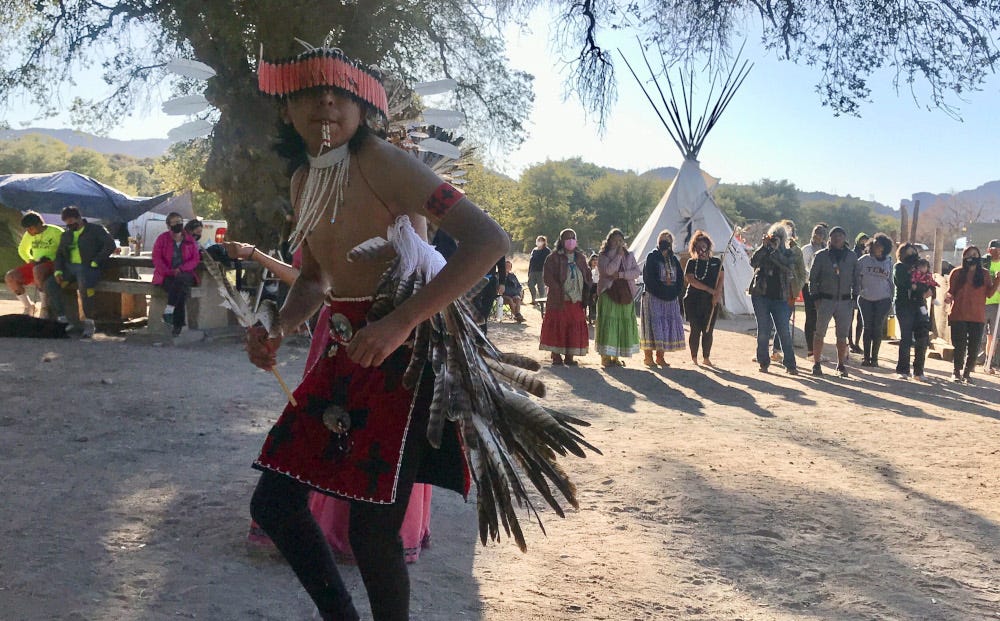
What actually happened is more dangerous precisely because it’s harder to see. Oak Flat—Chi’chil Biłdagoteel—isn’t just land on a map or a convenient patch of federal acreage. It’s a sacred site that has been used for Apache ceremonies for generations, woven into cultural and religious life in ways that don’t translate neatly into property lines or economic valuations. And yet, over the course of years, that reality has been slowly overridden by a different kind of logic, one that measures land not by meaning, but by what can be extracted from underneath it.
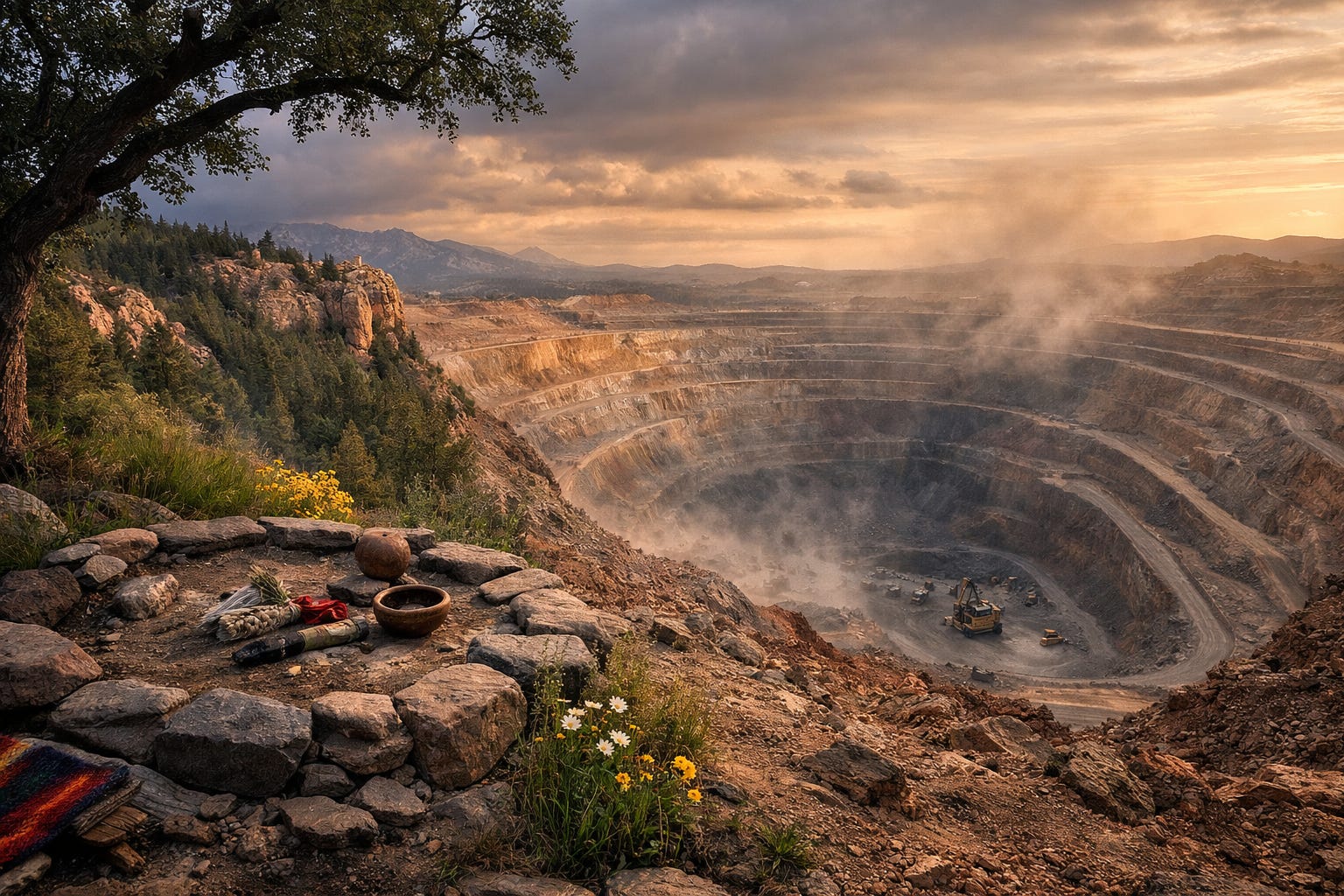
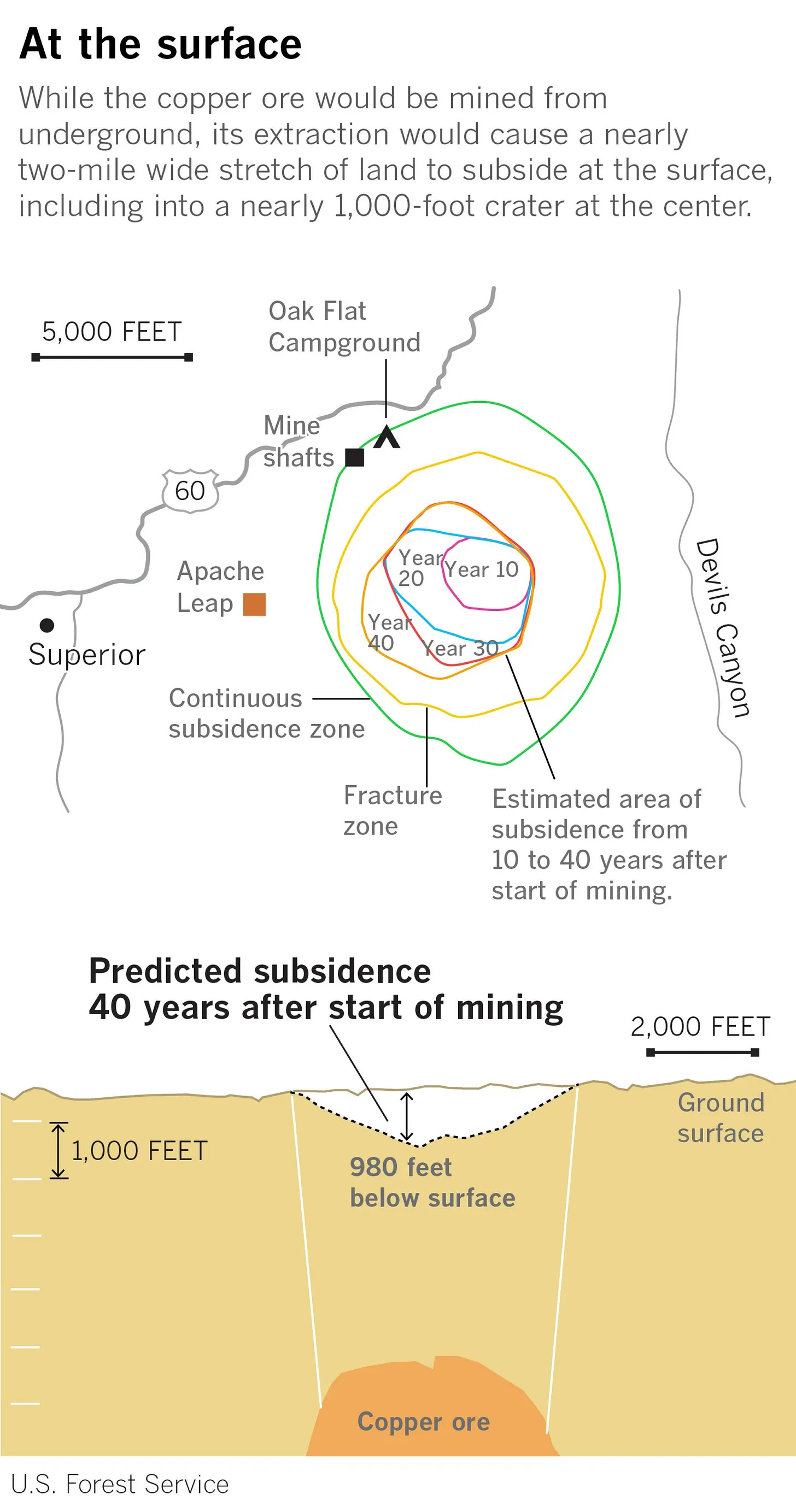
And where we are now is this: a sacred site is on track to become a giant fucking hole in the ground. Not metaphorically, not politically—literally. A place people have prayed on for generations is about to be turned into an industrial crater so massive it will be visible from space, all because someone looked at sacred land and saw a balance sheet.
🚨 Before You Read Further—Subscribe
If you want reporting that actually connects the dots instead of spoon-feeding you sanitized headlines, hit subscribe. This is reader-supported, which means it exists because people decide it should—not because advertisers are comfortable with it.
The Deal Nobody Was Supposed to Notice
The path to where we are now didn’t begin with a press conference or a national debate. It began with a legislative maneuver that should sound familiar if you’ve been paying attention to how controversial decisions actually get made in this country. In 2014, a land swap involving Oak Flat was quietly inserted into the National Defense Authorization Act, a must-pass bill that lawmakers rely on precisely because it’s too politically risky to oppose.
Buried inside that bill was authorization to transfer the land to Resolution Copper, a mining company backed by multinational giants like Rio Tinto and BHP. The structure of the deal ensured that the headline would be about defense spending, while the substance quietly reshaped the fate of a sacred site thousands of miles away from Washington.
This wasn’t an accident. It was a design choice, and it worked exactly as intended. Most people never heard about it, and the ones who did were left trying to explain a complicated land swap that had already been set in motion. That’s the part that should stick in your throat. This wasn’t debated in the open because the people pushing it knew exactly what would happen if it was. You don’t hide something inside a must-pass bill unless you’re trying to avoid a fight you’re pretty sure you’d lose.
That’s not governance. That’s legislative pickpocketing with a flag draped over it—and yeah, it’s shady as hell.
Reality Mechanism: How This Actually Happens
The mistake most people make when looking at stories like this is assuming that something this significant must have happened in a single decisive moment. That assumption is comforting, because it suggests that stopping it would have required stopping one decision, one vote, or one signature.
The reality is much more frustrating. The process stretched across years, moving forward in increments that were small enough to avoid sustained outrage but large enough to keep the outcome on track. Environmental reviews were initiated, delayed, resumed, and contested. Lawsuits were filed and worked their way through the courts. Timelines shifted just enough to keep momentum alive without drawing attention back to the original decision.
When Donald Trump entered the picture, he didn’t invent the deal, but he did something just as consequential. He treated the process not as something to reconsider, but as something to accelerate whenever the opportunity presented itself. Reviews were pushed forward at key moments, and the general posture shifted from cautious delay to forward motion.
This is how the system launders bad decisions into acceptable outcomes. Nobody storms the gates. Nobody announces the betrayal. It just keeps moving—quietly, methodically—until one day you look up and realize the fight is almost over and you didn’t even know it had started. That’s not democracy failing loudly. That’s democracy getting its pockets picked while it argues about something else—and somehow calling that normal.
Who Actually Benefits (Spoiler: Not You)
Once you strip away the procedural language and the bureaucratic framing, the underlying equation becomes brutally simple. This project is expected to create a massive crater, stretching roughly two miles across and plunging a thousand feet into the ground. That’s not development in any meaningful sense of the word. It’s permanent transformation, and not the kind you can walk back once the work is done.
The economic benefits are often framed in terms of jobs and domestic resource production, but the ownership structure tells a different story. The companies positioned to profit are multinational corporations, and while some economic activity may occur locally, the long-term gains are not designed to stay in the communities most directly affected.
What does stay behind is the damage. The land itself is altered beyond recognition. The cultural significance tied to that land is effectively erased. The environmental consequences become a local burden that outlasts any short-term economic boost.
Strip away the corporate language and the economic spin, and what you’re left with is brutally simple: we hand over something sacred and permanent, and in return we get a temporary economic sugar high while someone else walks away with the real money. If that sounds like a raw deal, that’s because it is—and it’s a deal we keep making over and over again like we’ve learned absolutely fucking nothing.
The Water Problem That Should Terrify You
If the destruction of a sacred site isn’t enough to get your attention, the water implications should be, because they extend far beyond questions of culture and into basic survival. Mining at this scale doesn’t just remove material from the ground. It fundamentally alters the way water moves through the region.
Aquifers can be drained or permanently disrupted. Groundwater levels can drop in ways that are difficult, if not impossible, to reverse. In a region where water is already a limited resource, those changes don’t just affect the immediate area. They ripple outward, impacting agriculture, ecosystems, and communities that rely on stable water access.
This isn’t a hypothetical risk. It’s a known consequence of large-scale mining operations, and it’s one that tends to be minimized in early discussions because it unfolds over time. By the time the full impact is visible, the decisions that made it possible are long since locked in.
And when that damage hits, there’s no corporate press release that fixes it. There’s no quarterly earnings call that brings a drained aquifer back to life. The people dealing with that fallout won’t be sitting in boardrooms in London or Melbourne—they’ll be right there on the ground, dealing with a problem that outlives every executive who signed off on it.
The Religious Freedom Hypocrisy Is Deafening
There’s a layer of hypocrisy here that deserves far more attention than it gets, because it cuts directly across political lines. The group Apache Stronghold has argued that the destruction of Oak Flat would violate their religious freedom in a direct and practical sense. This is a site used for ceremonies that are central to their beliefs, and its destruction would make those practices impossible in the form they have existed for generations.
If this were a church, a cathedral, or any other site associated with a more politically powerful religious tradition, the conversation would look very different. Protections would be invoked. Public outrage would be immediate. Political leaders would be forced to respond in ways that acknowledge the significance of what was at stake.
Let’s not pretend this is a gray area. If this were a church sitting on top of copper, this project would be dead on arrival. There would be hearings, outrage, and politicians tripping over themselves to defend religious liberty. The only reason this is even moving forward is because the people being asked to sacrifice their sacred ground don’t have the same political leverage. That’s not a policy debate—that’s a hierarchy of whose beliefs matter, and it’s a pretty ugly one.
Bipartisan Convenience
It would be easy, and politically satisfying for some, to reduce this entire situation to a single administration or a single political figure. That kind of framing might feel good, but it obscures the more important point. The foundation for this land transfer was laid years before Trump took office, and it was done through legislation signed under Barack Obama.
That doesn’t absolve Trump of responsibility for how the process was handled during his time in office, but it does make one thing clear. This is not a story about one party making a bad decision. It’s a story about a system that allows decisions like this to be made in ways that minimize scrutiny and maximize momentum.
When both sides of the political aisle contribute to the same outcome, even if in different ways, it becomes much harder for voters to identify where accountability should actually land. That confusion isn’t accidental. It’s baked into how this shit works.
The Lie of Inevitability
By the time stories like this reach wider public awareness, they are often framed as done deals. The language shifts from “this is being proposed” to “this is happening,” and that shift carries an implicit message that resistance is futile or at least too late to matter.
That framing is one of the most powerful tools in the entire process. It transforms a series of human decisions into something that feels like a natural outcome, as though the destruction of a sacred site is simply the price of progress rather than a choice that could have been made differently.
But inevitability is almost always constructed. It is the result of accumulated decisions, each one small enough to avoid triggering a decisive backlash, but together large enough to produce an outcome that feels locked in.
And once that narrative takes hold, the final step becomes easy. You don’t have to convince people it’s right. You just have to convince them it’s already fucking decided.
Verdict
This didn’t happen because nobody cared. It happened because the system is designed to make sure you find out too late to matter. By the time most people hear about Oak Flat, the machinery is already running, the decisions are already layered in, and the outcome is already being sold as inevitable.
That’s the real scam—not just what’s being taken, but how quietly it’s taken while everyone’s looking somewhere else.
Sacred land isn’t lost in one big betrayal—it’s carved away piece by piece until the only thing left is the hole.
💳 Upgrade to Keep This Work Going
I’m retired and reader-supported, which means this only works if readers decide it’s worth supporting. Paid subscribers get deeper dives, War Room briefings, and priority access to everything I’m building here. If you want more of this without filters, without sponsors, and without anyone telling me to tone it down, hit upgrade.
🐾 From the Other Side of the Litter Box
If you want the same broken world explained by someone with sharper instincts and better judgment, go check out Lotus Purrspective. It’s the same reality—just with more claws and less patience.
☕ Buy Me A Coffee
If this piece made you think, rage, or immediately send it to someone else, you can help keep this going. No corporate backing—just readers deciding this work matters.
#UnredactedBastard #OakFlat #IndigenousRights #EnvironmentalJustice #CorporateGreed #DemocracyWatch