

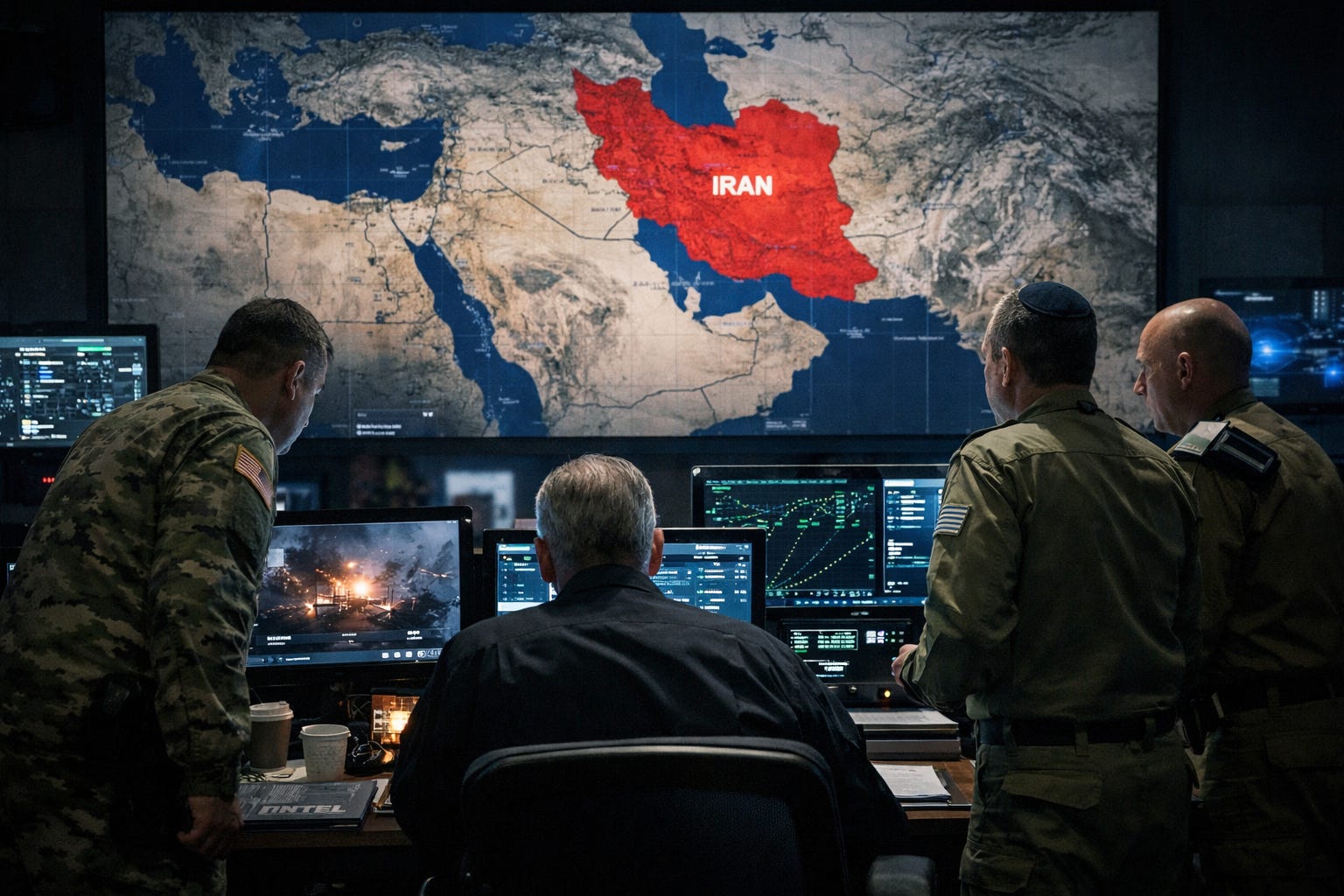
The United States is now involved in strikes alongside Israel against Iran, and if your first instinct was “this could get messy,” congratulations — your survival instincts are working like a motherfucker.
Escalating against a country that specializes in indirect retaliation would be serious under ideal conditions. The problem is these aren’t ideal conditions. This move lands after a year spent reshaping the quieter systems that exist to catch trouble early and keep retaliation from turning into something that lands closer to home. Iran doesn’t respond in straight lines; it applies pressure through proxies, cyber disruption, and long-game harassment that shows up in the seams.
If you’re new here and want someone willing to say when risk starts stacking on top of risk, now’s a good time to hit Subscribe — because this is exactly the kind of moment when pretending everything’s fine becomes a dangerous habit.
Over the past year, prevention efforts have narrowed, priorities have shifted, and coordination structures that once provided redundancy have been operating under visible strain. None of those changes alone equals collapse, but taken together, they thin the cushion that absorbs blowback when something comes back at you sideways. And escalation has a nasty way of chewing through whatever cushion is left.
Redundancy is boring until you don’t have it. Prevention programs exist so problems get stopped while they’re still manageable instead of after they’ve grown teeth. Coordination networks exist so one agency’s blind spot doesn’t become everyone’s Nightmare on Elm Street. Intelligence sharing depends on trust that information will be handled with fucking professionalism rather than volatility.
When those layers thin out, you rely more on reacting after something slips through — and reacting late is a shit stain on steroids waiting to happen.
Supporters will frame this as resolve, because force is always easier to sell than preparation. But resolve only works when the system behind it can take a god damn hit without rattling apart. Entering a higher-risk confrontation with less redundancy doesn’t guarantee catastrophe, but it absolutely raises the odds that something unexpected lands harder than it should.
That’s the part people should be angry about.
Because stepping into a volatile situation after quietly trading resilience for immediacy isn’t bold strategy. It’s a bet that the consequences won’t find the cracks — and history has a long track record of punishing that kind of gamble.
This isn’t panic territory.
It’s attention territory.
If escalation continues, reinforcing prevention and coordination matters just as much as the military move itself. In environments like this, the difference between disruption and damage often comes down to what you catch early — before it snowballs into something nobody can walk back.
💣 Paid Upgrade
I’m retired. This work is reader-funded. No sponsors. No corporate leash.
Paid supporters get deeper War Room briefings, bonus analysis, and priority Q&A when situations like this evolve fast.
If you want the full picture behind the headlines —
🐾 Lotus Purrspective
If this feels like someone revving the engine while quietly loosening the lug nuts, Lotus will have thoughts over at The Unredacted Bastard’s feline counterpart.
Like, share, and subscribe.ecurity #Iran #ForeignPolicy #
☕ If this helped cut through the bullshit, consider fueling the next breakdown via Buy Me A Coffee.
#NationalSBreakingNews #Democracy #Risk