


At some point in the last twenty years, customer service quietly stopped being a service and became a psychological endurance sport.
You know the feeling. Something simple goes wrong. A mystery charge appears on your bank statement. A package vanishes into the logistical Bermuda Triangle. Your internet suddenly slows to speeds normally associated with smoke signals. You call because you assume this is still a society where human beings occasionally solve problems for one another.
Instead, you’re greeted by a robot voice that sounds suspiciously cheerful for someone about to ruin your afternoon.
“Please listen carefully, as our menu options have changed.”
No, they fucking haven’t.
Nobody believes that. Not you, not me, not the exhausted employee trapped in a cubicle somewhere, silently questioning their life choices. Yet every corporation in America insists on beginning the interaction with what feels like a tiny piece of psychological warfare, as if confusion itself has become a customer-retention strategy.
Then the maze begins.
Press 1 for billing. Press 2 for support. Say in a few words why you’re calling. “Representative.” “I think you said account security.” No, motherfucker, I said representative.
You repeat yourself. The robot misunderstands you with the confidence of a guy explaining baseball at a bar while being catastrophically wrong. Eventually, after enough repetition to qualify as emotional cardio, you reach an actual human being who apologizes politely before informing you that they are, unfortunately, the wrong department.
Now you’re in transfer hell.
Hold music starts playing — always some weird corporate smooth jazz that somehow sounds both soothing and threatening — while your estimated wait time becomes vague enough to qualify as philosophy. Somewhere around minute forty-three, you begin wondering whether the refund is worth more than your remaining sanity.
Here’s where most people get the story wrong, though. This isn’t incompetence.
Incompetence would actually be reassuring because incompetence implies failure. It suggests somebody screwed up, someone in management missed the problem, and if enough people complained loudly enough, maybe an executive somewhere would eventually pound a conference table and declare, “Dammit, fix customer service.”
That isn’t what happened.
Customer service didn’t collapse. It was redesigned.
If you’re not subscribed yet, you’re reading this the hard way. I do this daily. No sponsors. No filter.
Subscribe if you want it in your feed instead of chasing it down.
Corporations figured out something darkly elegant a long time ago: saying “no” creates friction. A denied request makes customers angry. Angry customers complain, leave bad reviews, contact regulators, threaten lawsuits, or become internet vigilantes documenting every miserable interaction for strangers online.
Exhaustion, however, is quieter.
Exhaustion scales.
Exhaustion works.
If a cancellation process becomes confusing enough, a percentage of people simply stop trying. If refund systems require six steps, three passwords, and a blood oath, enough customers will eventually decide the fifty dollars isn’t worth sacrificing an afternoon and part of their emotional stability. Understaff a call center badly enough, and suddenly the spreadsheet starts reporting an incredible improvement in “resolved complaints,” mostly because exhausted people stop filing them.
That’s the trick.
Modern corporations realized they don’t have to defeat you. They just have to outlast you.

Once you see it, you can’t unsee it.
Airlines somehow maintain apps sophisticated enough to sell you upgrades in four seconds flat while becoming mysteriously helpless the moment compensation enters the conversation. Banks flag your card because you dared buy gas in another ZIP code, but somehow miss a criminal trying to buy jet skis in another country. Internet companies make cancellation feel like escaping a manipulative relationship where every sentence starts with, “Before you go…”
Healthcare, somehow, found a way to make all of this worse.
Nothing says “we care about your well-being” quite like a patient portal that looks like it survived three software extinctions and now requires seventeen passwords, two verification codes, and a scavenger hunt just to ask why you were billed eight hundred dollars for somebody touching your elbow.
And here’s the thing everybody recognizes in their bones: by the end of these interactions, you somehow feel guilty.
You spend three hours fixing a mistake that wasn’t yours, repeating your account number like a hostage delivering proof of life, and when an exhausted worker finally apologizes for the inconvenience, you catch yourself saying, “No worries, I know it’s not your fault.”
Meanwhile, your day is gone. And somehow you’re apologizing.
That emotional fatigue isn’t collateral damage. It’s profitable.
A corporation doesn’t need perfect customer service if enough people give up. If making ten thousand customers miserable saves three million dollars in labor, support staffing, or refunds, misery becomes a business strategy disguised as operational efficiency.
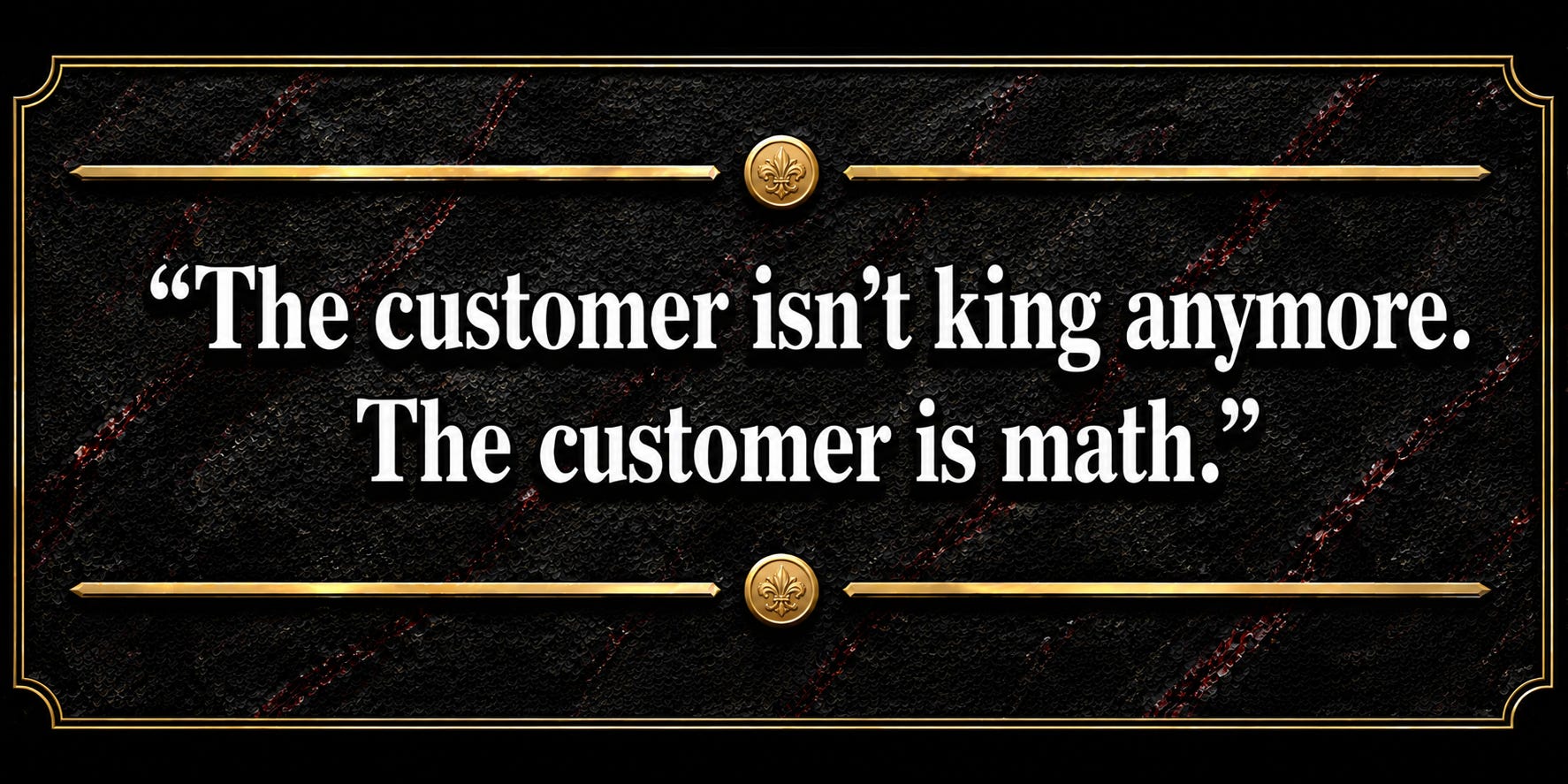
“Modern institutions learned they don’t have to say ‘no.’ They just have to make ‘yes’ so exhausting that you surrender.”
What makes this story bigger than annoying hold music and chatbot rage is the way the logic has spread everywhere else.
Insurance companies operate bureaucratic obstacle courses where the denial is rarely direct, just delayed until exhaustion becomes compliance. Government websites often feel designed by somebody who actively resents human happiness. Endless verification systems, forms for forms, passwords to recover passwords, customer support loops that quietly teach you the same lesson over and over again:
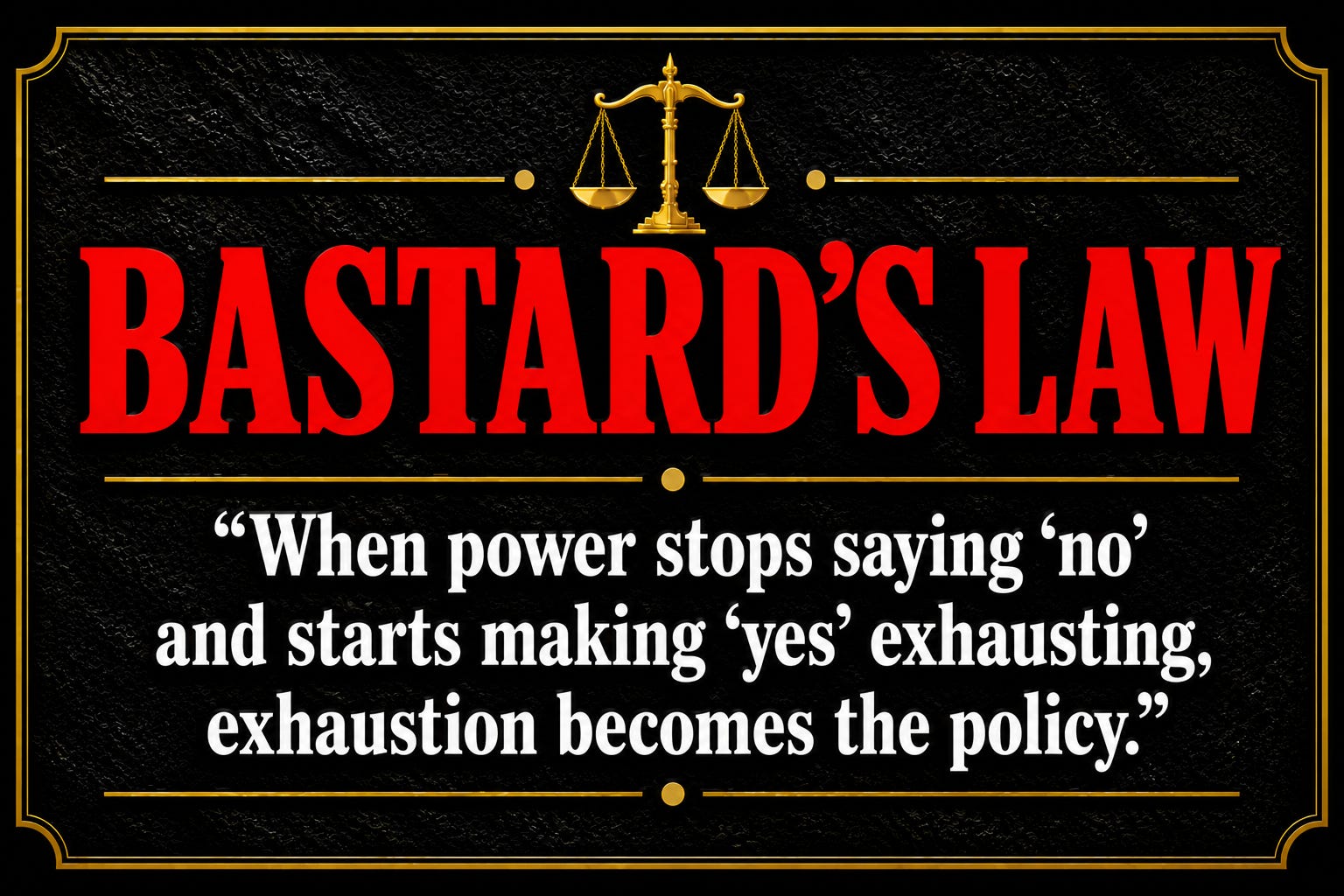
Power no longer slams the door in your face.
It just makes standing outside so exhausting that eventually you stop knocking.
And that changes people — in ways that go deeper than a bad afternoon.
When enough systems train you to expect frustration, people stop contesting charges, stop filing complaints, stop asking questions, and eventually stop believing institutions can work at all. Dysfunction becomes normal because fighting dysfunction becomes emotionally expensive.
That’s the danger hiding underneath what sounds like a funny rant about hold music.
The real damage isn’t inconvenience.
The real damage is learned helplessness.
The joke, of course, is that this wasn’t supposed to be the future.
We were promised robot servants, convenience, and magical technology that would save time. Instead, we got chatbots politely telling us to go fuck ourselves while soft jazz plays in the background and an app asks us to restart the app that stopped working.
That isn’t innovation.
That’s shareholder value with better branding.
And the next time you find yourself yelling “representative” into the void while reconsidering every life decision that brought you to that moment, remember something important:
You are not failing the system.
The system is succeeding exactly as designed.
Upgrade
I’m retired. This is reader-funded. No sponsors. No corporate leash. No one telling me to tone it down.
Paid subscribers get bonus rants, full archive access, priority Q&A, and deeper dives that don’t make it into the free feed.
Upgrade and support independent work that doesn’t play nice.
If you want the same reality with a quieter voice and sharper claws, go check out Lotus Purrspective.
That’s where the judgment is calmer, cleaner, and somehow even more brutal.
Buy Me A Coffee
If this hit, consider supporting the work because yelling “what the fuck are we doing?” at the news doesn’t pay for itself.
#TheUnredactedBastard #CustomerService #CorporateAmerica #LateStageCapitalism #Healthcare #Technology #Culture #Politics