

Tom Hicks | November 16, 2026

Okay, somebody explain something to me, because apparently I missed the meeting where Congress became an advisory committee.
Congress appropriated $607.5 million for international family planning and reproductive health. You know, contraception, maternal health, helping women avoid pregnancies they aren’t ready for, or that might put their lives at risk. Things that have been part of American foreign assistance for decades.
The Trump administration apparently looked at that money and decided it had better things to do with almost all of it.
And before somebody at the end of the bar starts hollering about America First and why we’re spending money overseas, save it for a minute. We can have that argument. Hell, I’ll even agree with some of it. We have plenty of Americans struggling to pay for medical care, and I don’t believe every foreign-aid program deserves a lifetime subscription to the federal treasury.
But there’s a rather important detail here.
Congress already voted to spend this money.
It didn’t ask Donald Trump to go shopping for another purpose. It didn’t tell Marco Rubio to stick the money in a drawer until something more interesting came along. And it certainly didn’t authorize the administration to treat federal appropriations like a goddamn gift card.
Congress passed a spending law. The executive branch is supposed to carry it out.
At least that’s how the arrangement worked before everybody in Washington started treating the Constitution like the terms and conditions on a software update.
According to CNN’s November 14 investigation, the administration’s preliminary plans would withhold or redirect nearly $605 million of the $607.5 million Congress designated for these programs. And the documents show something else worth a closer look: a separate $888 million innovation fund intended to support American companies. (CNN investigation, November 14)
Now we’re getting somewhere.
Subscribe to Off Script if you enjoy pulling up a chair, following the money, and discovering just how much bullshit can fit inside a government budget.
THE HALF-BILLION-DOLLAR WAITING ROOM
You know how you’ll sometimes put something on your to-do list because you don’t particularly want to do it, but you also don’t want anybody accusing you of ignoring it?
Well, Washington has apparently perfected that technique.
Nearly $524 million in family-planning money appears in the State Department’s preliminary spending plan under the heading “To Be Programmed.”
That’s it. To Be Programmed.
Not distributed to clinics. Not assigned to programs. Just sitting there, like a guy in the doctor’s waiting room who’s been watching the same three-year-old magazine collection since breakfast.
Another $48.5 million is targeted for energy security, while $32.5 million originally designated for the United Nations Population Fund is being redirected through another process.
Add it up, and nearly the entire appropriation is either unallocated or headed away from its original purpose. (Public Citizen, Partners In Health and PAI analysis)
But here’s the part that really caught my attention.
Marco Rubio already told Congress during a budget hearing that there was “no plan to spend that money” on global family planning. He went on to say the administration wasn’t going to be in that business.
Well, now, Marco, that does make “To Be Programmed” sound a little less like a temporary accounting entry and a little more like a polite way of telling Congress to go fuck itself.
And when you’ve got more than half a billion dollars sitting in bureaucratic limbo, that’s a pretty expensive way to deliver the message. (Rubio testimony cited in the budget analysis)
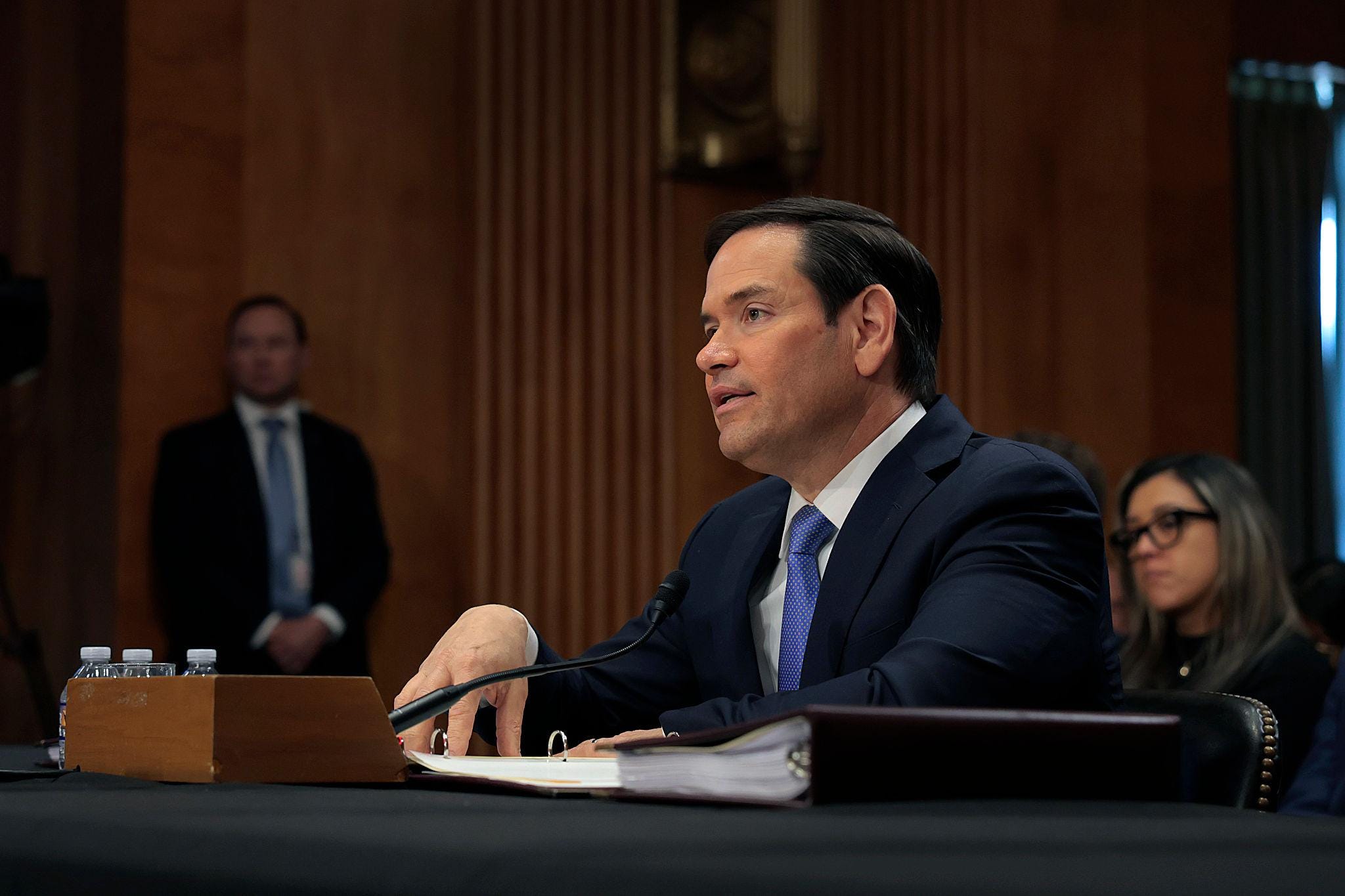
And yes, the $48.5 million for energy security has a legal explanation attached to it. Rubio invoked an emergency authority under Section 451 of the Foreign Assistance Act to redirect up to $125 million for energy-related needs, citing problems involving Russia, China, and Iran.
I understand the concern. Energy security matters. We’ve got a war involving Iran, unstable markets, and countries worrying about whether they’ll be able to keep the lights on.
Fine.
But why the hell is the family-planning budget suddenly the answer?
If the administration needs additional money for energy security, make the case to Congress. It’s not as though the country has run out of appropriations committees.
Rubio’s memorandum explains the claimed emergency authority. What it doesn’t do is settle every question about whether this particular diversion is appropriate. That’s something Congress ought to be examining instead of treating its oversight responsibilities like an optional gym membership. (State Department budget documents and memorandum)
THE PEOPLE AT THE OTHER END OF THIS MESS
Here’s where I want to get away from Washington for a minute.
Because everybody involved in this fight gets to go home at night, eat dinner, and argue about which office controls which appropriation.
The women affected by these decisions don’t have that luxury.
We’re talking about women trying to avoid another pregnancy because they’ve already got children they can barely feed. Women living miles from the nearest medical facility. Women for whom a complicated pregnancy can become a death sentence.
And yes, we’re also talking about ordinary contraception. Birth-control pills, implants, condoms, and the medical care that helps people decide when to have children.
Not exactly the stuff of a communist takeover.
Although I’m sure somebody on cable television could turn a packet of contraceptive pills into a threat to Western civilization if you gave them a whiteboard and fifteen uninterrupted minutes.

The Guttmacher Institute estimated that American international family-planning assistance at its 2024 funding level could provide contraceptive care to 47.6 million women and couples annually, preventing approximately 17.1 million unintended pregnancies and 34,000 maternal deaths.
Those are projections, not a precise count of deaths caused by this particular budget decision. But they tell you why the money matters. (Guttmacher Institute estimates)
And before somebody starts yelling about abortion, let’s get another thing straight.
International family planning is not simply another name for abortion funding. American law has longstanding restrictions on using foreign assistance to pay for abortion as a method of family planning.
Birth control and abortion are two different things. I realize this comes as a shock to certain politicians who apparently received their reproductive-health education from a bumper sticker.
Now, you can still argue that American taxpayers shouldn’t be paying for these programs. I might disagree with you, but that’s a legitimate conversation.
What isn’t legitimate is pretending the money isn’t accomplishing anything just because the people benefiting from it live somewhere other than Ohio.
And here’s something else that bothers the hell out of me.
We hear politicians constantly talking about protecting children, defending families, and respecting human life. Then, when somebody proposes helping a woman avoid a dangerous pregnancy or giving her access to basic medical care, suddenly the federal government has developed a severe case of fiscal responsibility.
Funny how that works.
Apparently, the sanctity of life comes with geographical restrictions and an expiration date.
AND NOW, THE CORPORATE MONEY
All right, here’s where the other number comes in.
The State Department’s preliminary allocation plan includes $888 million for a global health innovation fund supporting American companies. The comparable figure in the previous year’s plan was $60 million.
From $60 million to $888 million.
Holy shit.
I’d like to know what the hell they’re putting in that fund, because whatever it is, it’s growing faster than my grocery bill.
Meanwhile, the administration’s proposed country-level global health allocations are down approximately $1.66 billion compared with 2024 plans. According to the watchdog analysis, 69 of the 79 countries examined would receive less money, and eight would see their country-level allocation drop to zero. (Detailed allocation comparison)
Now, let’s be fair about something.
The $888 million innovation fund is a separate funding decision. The documents do not demonstrate that the same $605 million in family-planning money is being handed directly to corporations. If somebody wants to make that accusation, they’d better have more than a suspicious-looking spreadsheet.
But the larger question remains.
The administration says American technology and private-sector innovation can produce better health outcomes more efficiently.
Maybe it can.
If an American company develops a better way to distribute medicine or provide inexpensive diagnostic equipment, I’m all for it. I’d rather see money spent on something that works than wasted on a bureaucracy that exists primarily to justify its next budget request.
But here’s what I’d like to know.
Which companies are getting the money? Who gets to choose them? Are there competitive bids? What are the performance requirements? And why are we expanding this fund so dramatically while country-level health programs are being cut?
Because there’s an enormous difference between using private enterprise to solve a public-health problem and using public health as an excuse to subsidize private enterprise.
And if nobody can explain how those contracts are being awarded, then perhaps we should hold off on congratulating ourselves for inventing a more efficient government.
The State Department hasn’t publicly explained the fund’s award-selection process in sufficient detail to answer those questions. (Public Citizen analysis of the innovation fund)
Look, I’m not automatically suspicious of every government contract with a private company. Somebody has to manufacture the medicines, build the equipment, and develop the technology.
But when direct aid to struggling countries gets chopped while a corporate-focused fund multiplies almost fifteenfold, I think taxpayers are entitled to something more informative than “Trust us, it’s innovation.”
That’s not an explanation.
That’s a sales pitch.
And a rather shitty one at that.
THE CONSTITUTIONAL PROBLEM NOBODY SHOULD IGNORE
You know what bothers me most about this whole thing?
It isn’t even the foreign-aid argument.
It’s the growing assumption that once Congress passes a law, the president gets to decide which parts are worth obeying.
Now, the administration does have legal authority to make certain spending adjustments. Rubio didn’t invent Section 451 out of thin air. There are also specific statutes governing money withheld from international organizations.
So I’m not going to sit here and declare every proposed transfer illegal without examining the applicable law.
That’s how you end up looking like the idiots we spend so much time making fun of.
But the Constitution gives Congress the power of the purse, and the Impoundment Control Act places limits on a president’s ability to withhold appropriated funds. The Government Accountability Office has been particularly clear about the problem of allowing money to expire without being made available for its lawful purpose. (GAO explanation of the Impoundment Control Act)
And this is where I’d really like a few Republicans to join the conversation.
Suppose President Biden had decided he wasn’t particularly interested in spending money Congress appropriated for border security. Suppose he announced that the money would remain unprogrammed while his administration looked for something it liked better.
You think Republicans would have shrugged and said, “Well, that’s executive discretion”?
Bullshit.
They’d have been climbing over one another to get to the nearest microphone, demanding hearings, subpoenas, investigations, and quite possibly a public hanging in the Capitol Rotunda.
And you know what?
They would have had a legitimate reason to demand answers.
The rules don’t change because the guy breaking them is wearing your team’s jersey.
I don’t particularly care whether the president is named Trump, Biden, Obama, or Abraham Lincoln’s ghost. If Congress appropriates money, the executive branch has to operate within the law governing that money.
And if Congress doesn’t like how an administration is using its authority, Congress should do something about it.
That’s called checks and balances.
Remember those?
We used to teach them in school before civics apparently became an extracurricular activity.
And frankly, I’m getting pretty goddamn tired of watching members of Congress behave like they’re auditioning for a spot on the president’s Christmas-card list.
They’re supposed to be a separate branch of government. They have their own constitutional responsibilities. They don’t need permission from the White House to do their jobs.
If they wanted to spend their days applauding somebody else’s decisions, they should have applied to be the studio audience for The Price Is Right.
At least there, occasionally somebody wins something.
WHAT I’D LIKE TO SEE HAPPEN
I want Congress to demand a clear accounting of every dollar in these plans.
I want to know what happened to the $524 million labeled “To Be Programmed.” I want an explanation for the proposed energy-security diversion that goes beyond waving around the words unanticipated contingency. And I want the administration to explain exactly how the innovation fund will operate, including who receives contracts and why.
If the answers are legitimate, let’s hear them.
If the administration believes these programs should be eliminated, let it ask Congress to eliminate them.
And if the spending laws have been violated, Congress should use its oversight powers and the courts should resolve the legal questions.
This shouldn’t be a partisan controversy. It should be a separation-of-powers controversy.
Unfortunately, we’re living in an era when too many people apparently believe the Constitution is a sacred document right up until it becomes inconvenient for their favorite president.
Then it’s just a bunch of old guys being difficult.
Well, those old guys had a point.
And unlike a remarkable number of the people running Washington today, they actually understood why concentrating power in one person’s hands was a terrible fucking idea.
I don’t expect every member of Congress to agree with every appropriation. Hell, I’d be worried if they did. But I do expect them to defend the institution they were elected to serve.
Because if Congress won’t stand up for its own authority, why should any president respect it?
And if we’re going to let presidents decide which spending laws they feel like following, we might as well save taxpayers some money, send 535 members of Congress home, and replace the Capitol with an enormous rubber stamp.
At least then we’d be honest about how the damn place operates.
ONE QUESTION
Would you support a president withholding money Congress appropriated if you agreed with the president’s reason?
And if you would, are you prepared to give the next president exactly the same power?
THE BULLSHIT DETECTOR
Three claims. Three reality checks. One increasingly exhausted bullshit shovel.
THE STINK SCALE
💩 A Little Whiff — A small exaggeration with room to grow.
💩💩 Something Smells — The facts are getting suspicious.
💩💩💩 Steaming Pile — Somebody’s been shoveling.
💩💩💩💩 Full-Blown Bullshit — The truth has left the building.
💩💩💩💩💩 Weapons-Grade Bullshit — Industrial-strength nonsense.
1. BIG OIL THREW THE ELECTION
Claim: Gas companies deliberately raised prices to make Trump look bad before the midterms, then lowered them once Democrats won.
Bullshit: Gas prices had already been falling for weeks before Election Day. Seasonal demand, changes in gasoline blends, and developments in global oil markets explain the decline considerably better than an elaborate political conspiracy.
💩💩💩 Steaming Pile
Why: So let me get this straight. We’re supposed to believe that competing oil companies secretly coordinated a plan to hurt Trump, help Democrats, and possibly undermine their own preferred regulatory environment?
I have trouble getting three people to agree on where to order pizza.
These people apparently think the entire petroleum industry operates a secret Democratic campaign headquarters. (PolitiFact, November 11)
2. THE SKY IS FALLING. SO ARE THE SNAKES.
Claim: A viral video showed snakes raining from the sky, allegedly dropped on Gaza.
Bullshit: The circulating footage shows strong signs of AI generation, with multiple versions of the bizarre scene appearing online.
💩💩💩💩 Full-Blown Bullshit
Why: We’ve reached the point where people see snakes falling out of the clouds and decide the logical next step is to share the video with everyone they know.
Not check it. Not question it. Just immediately assume somebody in the Middle East has developed a reptilian air force.
I’m beginning to understand why aliens haven’t contacted us.
They’re probably watching our internet and trying to figure out whether we’re worth the fuel. (Lead Stories, November 12)
3. TRUMP RENAMES HIS VICE PRESIDENT
Claim: Trump posted on Truth Social that JD Vance was now “Judas Disloyal Vance.”
Bullshit: The screenshot was fake. Investigators found no matching post on Trump’s account or in archives.
💩💩💩💩 Full-Blown Bullshit
Why: I’ll give the creator some credit. “Judas Disloyal Vance” has exactly the sort of childish nickname energy we’ve come to expect from presidential politics.
That’s what makes this stuff dangerous. The fake stories no longer have to be especially clever. They just have to sound like something the real people might say.
And considering that our president has spent years handing out nicknames like a drunken camp counselor, that isn’t a particularly high bar.
Of course, if Trump actually does start calling Vance that, I reserve the right to laugh. (Lead Stories, November 10)
ELSEWHERE IN TOM HICKS MEDIA
If you enjoy pulling apart the stories that deserve a closer look, Blind Spot digs into the political machinery beneath the headlines, exposing the things politicians would rather you didn’t notice.
In Is It Just Me?, Frank N. Krancke takes on the everyday absurdities of modern life with the patience of a man who’s officially run out of it.
And What the Hell? is our weekly investigation into humanity’s remarkable ability to dream up spectacularly stupid ideas—and occasionally get government funding for them.
Explore everything at Tom Hicks Media — The Complete Collection.
You can explore everything at Tom Hicks Media — The Complete Collection.
ONE LAST QUESTION
If Congress won’t defend its own power to control federal spending, why should any president bother respecting it?
#OffScript #Congress #TrumpAdministration #ForeignAid #WomensHealth #GlobalHealth #Constitution #GovernmentAccountability #TomHicksMedia