

Tom Hicks | November 13, 2026
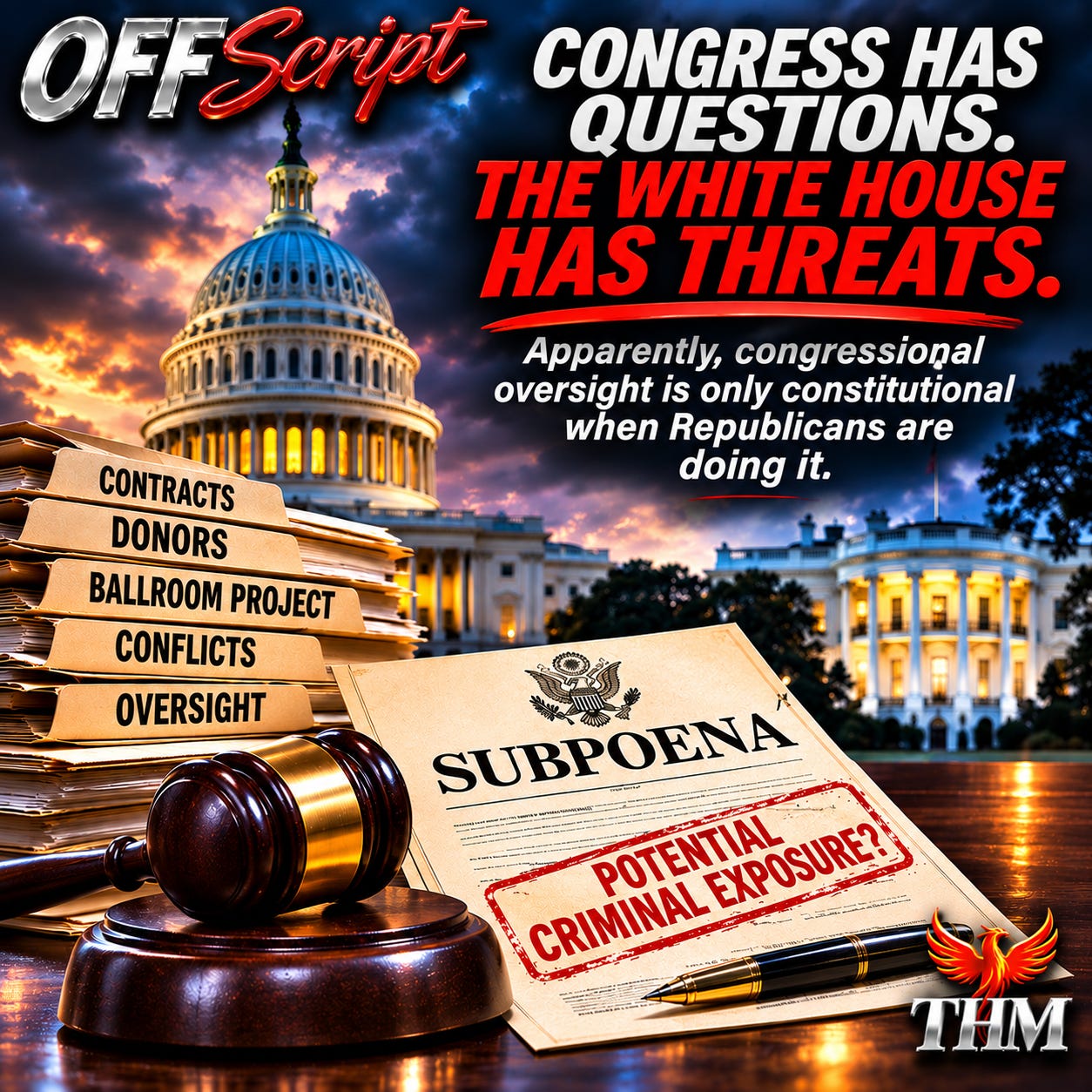
Well, this is a fascinating development.
After spending two years enjoying a Republican-controlled Congress, Donald Trump is about to encounter something his administration hasn’t had much practice dealing with lately: congressional oversight conducted by people who aren’t particularly interested in kissing his ass.
And the White House is handling the prospect with all the quiet dignity you’d expect from an administration that treats an uncomfortable question like an attempted coup.
It’s warning Democrats that investigating the president could get them investigated.
No, seriously. That’s where we are. The Democrats haven’t even moved into their new committee chairmanships yet, and the White House is already waving legal threats around like a nervous homeowner pointing a shotgun at the mailman.
White House counsel Will Scharf sent a letter to incoming House Oversight Chairman Robert Garcia warning that certain investigations and subpoenas could cross the line into “blatant criminality.” Scharf argued that congressional inquiries must have a legitimate legislative purpose and cannot be used simply to harass or punish people.
That underlying legal principle is real. But suggesting that aggressive congressional oversight could expose lawmakers to criminal investigations is another matter entirely, and legal experts have questioned the basis for that warning. CBS News
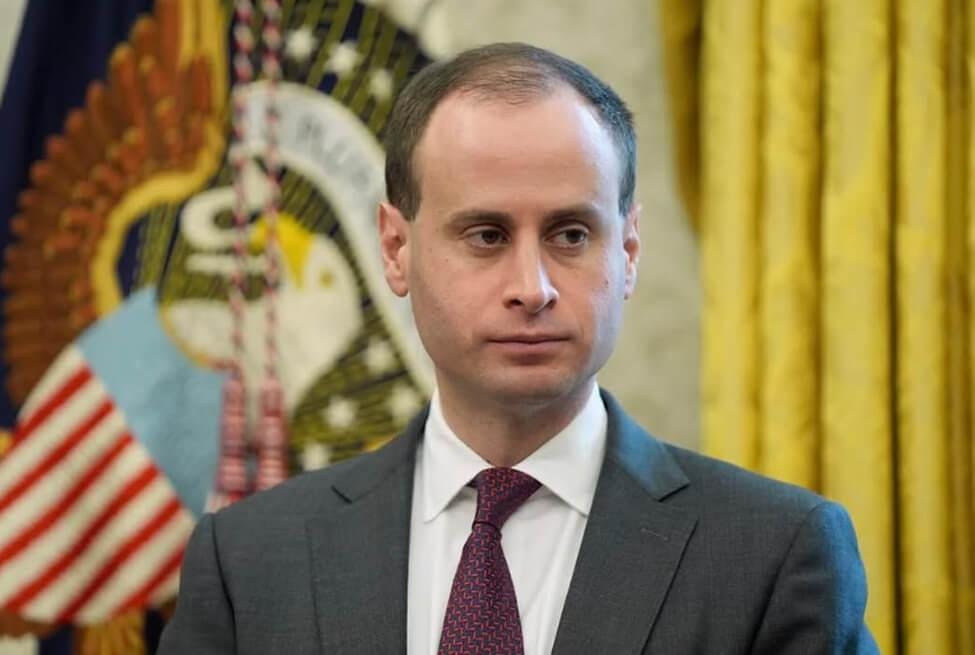
Think about the timing. Democrats won’t take control of Congress until January. They aren’t holding hearings yet. They haven’t buried the administration under mountains of subpoenas. They’re announcing what they intend to investigate.
Apparently, merely discussing accountability is enough to make the White House reach for the criminal statutes.
Congratulations on your election victory, Democrats. Here’s your new office, your committee assignment, and a complimentary warning from the executive branch.
Try not to ask anything complicated.
THE GREAT REPUBLICAN INVESTIGATION PANIC
Meanwhile, Republicans and their television allies have discovered a brand-new political principle: congressional investigations are apparently incompatible with governing.
Former Trump press secretary Kayleigh McEnany went on Jesse Watters’s Fox News program Wednesday and complained that Democrats had suddenly abandoned affordability to concentrate on investigations, subpoenas, and making administration officials hire lawyers.
She repeatedly emphasized the word “investigate,” apparently hoping that saying it often enough would make it sound like a contagious disease.
McEnany suggested Trump should offer Democrats opportunities to work on affordability legislation, predicting they wouldn’t accept. Her broader argument was that Democrats had campaigned on economic concerns but were now talking about investigations.
Fair enough to ask whether Democrats intend to deliver on their campaign promises. But the idea that investigating government misconduct automatically prevents them from doing anything else deserves considerably more scrutiny. Fox News
And the spectacle becomes even more entertaining when you remember who’s making the complaint.
Remember James Comer investigating the Biden family? Jim Jordan? The impeachment inquiry, the subpoenas, the hearings, the bank records, the witnesses, and the endless promises that the next exciting development would finally blow the whole thing wide open?
Republicans spent a substantial portion of Biden’s presidency investigating him and his family. They considered that work sufficiently important to establish an impeachment inquiry and demand testimony under subpoena.
Nobody told them they had to choose between investigating Biden and doing their legislative jobs.
Maybe Republicans possessed extraordinary multitasking abilities. Maybe Comer had secretly invented a congressional calendar capable of displaying two appointments on the same day.
Or perhaps everybody in Washington knows perfectly well that Congress can investigate the government and work on legislation simultaneously, but admitting that would spoil a perfectly good television talking point.
Congress isn’t a one-burner hot plate, for Christ’s sake.
The people electing these lawmakers are entitled to expect them to manage more than one responsibility without getting confused.
And here’s the part getting lost in the political performance:
Congressional oversight IS working for the American people.
When lawmakers investigate wasted taxpayer money, questionable government contracts, administrative misconduct, or possible abuses of executive power, they’re examining how the government operates. When those investigations uncover problems, Congress can write laws intended to prevent them from happening again.
That’s not my invention. The Congressional Research Service explains that investigative authority is an essential part of Congress’s legislative function. Congressional Research Service
Of course, Democrats also need to deliver on affordability, health care, Social Security, and everything else they promised voters. If they spend two years staging theatrical hearings while accomplishing absolutely nothing, they deserve the criticism.
But pretending they must choose between investigating wrongdoing and making groceries more affordable is ridiculous.
By that standard, Republicans should have spent the Biden years wondering whether they were allowed to investigate Hunter Biden before lunch or whether that would interfere with their afternoon responsibilities.
Subscribe to Off Script for independent commentary, uncomfortable questions, and the occasional reminder that the people in Washington are supposed to work for us.
THE MAN WHO’S ABOUT TO GET THE GAVEL
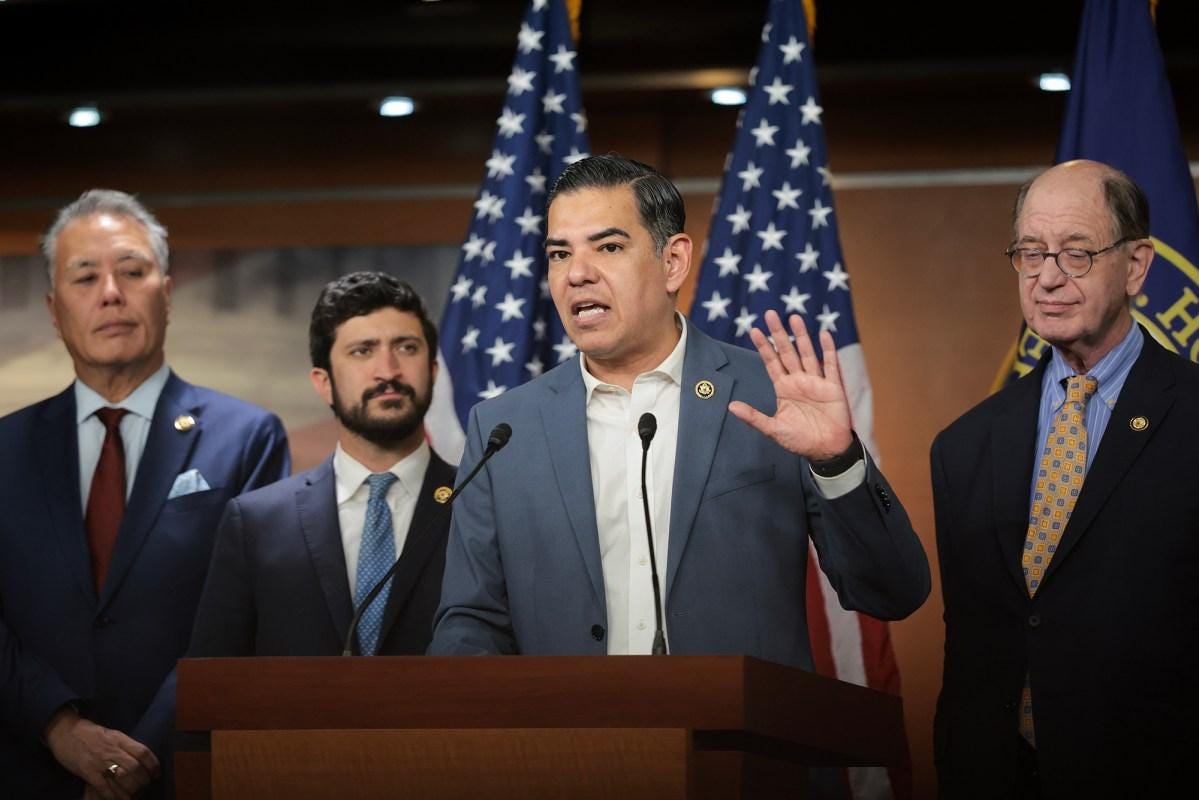
Garcia certainly hasn’t been shy about his intentions.
Following the election, he warned administration officials to “lawyer up,” promising aggressive investigations into potential wrongdoing.
Now, I understand why that kind of language excites Democrats who spent two years watching Republican congressional leaders defend the administration. But if Garcia wants to be taken seriously, his investigations need evidence, credible witnesses, legitimate legislative purposes, and something considerably more substantial than a catchy social media post.
A congressional subpoena isn’t a revenge coupon.
The White House has every right to challenge an improper investigation, and courts exist to decide disputes over congressional authority. What makes Scharf’s letter so consequential is its suggestion that lawmakers could face criminal scrutiny for crossing those boundaries.
There’s an enormous difference between asking a court to invalidate a subpoena and suggesting that issuing one might lead to prosecution. Los Angeles Times
Here’s a question for readers: Should Congress investigate possible presidential misconduct even when doing so creates political gridlock, or should legislation always take priority?
AND NOW THE FEDERAL PROSECUTOR WANTS A WORD
If the warning to Garcia weren’t enough, Senator Richard Blumenthal has found himself in a remarkably similar situation.
Blumenthal has been investigating the private donors financing Trump’s White House ballroom project, including whether contributors with business before the federal government may have received favorable treatment.
And before anybody starts screaming that every donor is automatically corrupt, let’s establish something: contributing to a presidential construction project doesn’t prove anyone bought political influence.
But when companies with substantial federal interests contribute millions of dollars to something associated with the president, it’s entirely reasonable to examine the arrangements and ask whether conflicts of interest exist.
Apparently, those questions have attracted some interesting attention.
Enter Aaron Reitz, the Trump-appointed U.S. attorney for the Southern District of Texas, who sent Blumenthal a letter demanding preservation of records associated with his investigation.
Reitz accused the senator of threatening the constitutional rights of private citizens who associated with the president. His letter cited federal civil-rights statutes and warned of potential legal consequences.
So we now have a federal prosecutor scrutinizing the investigative conduct of a senator who is scrutinizing people contributing money to a project championed by the president. Connecticut Public
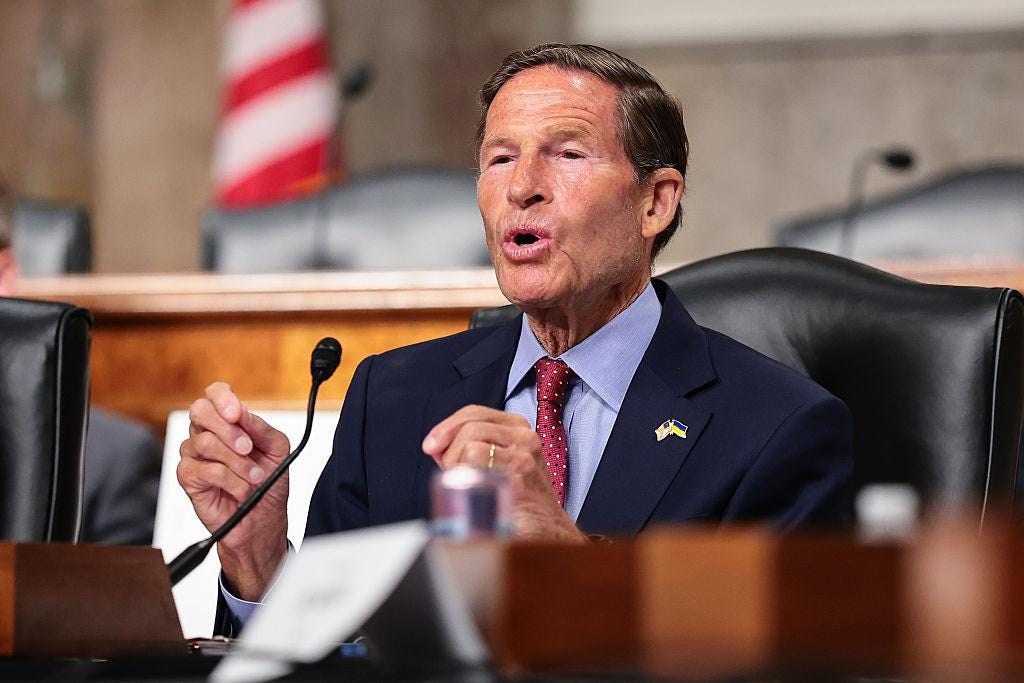
Blumenthal’s response was glorious in its own wonderfully Washington way.
He essentially told Reitz to preserve his own records, including communications with the White House and Justice Department concerning the decision to send the warning.
The investigator is now demanding records from the prosecutor who demanded records from the investigator.
It’s a constitutional merry-go-round, except instead of horses, everybody is riding a subpoena, and the music is being played by a law firm charging $1,200 an hour.
APPARENTLY, THE JUSTICE DEPARTMENT IS GOING TO WAR
And just when you thought Washington couldn’t make this any more ridiculous, along comes the Justice Department with a little military terminology.
According to reporting published Friday by the Associated Press, Aakash Singh, a senior aide to Attorney General Todd Blanche, told federal prosecutors during a conference call this week to prepare for a “wartime” footing.
Wartime.
That’s an interesting choice of vocabulary for an agency preparing to operate under a Congress controlled by the opposition party.
The Justice Department says the remark concerned public safety and anticipated difficulties cooperating with newly elected state and local officials. Fair enough. We shouldn’t pretend Singh explicitly declared war on congressional investigators.
But the broader atmosphere is unmistakably confrontational. Blanche has pledged that the department will cooperate with Congress while simultaneously insisting it won’t retreat from the administration’s agenda.
Meanwhile, senior officials have resigned from the department’s National Security, Civil, and Civil Rights divisions, and Singh reportedly suggested additional U.S. attorneys could be pushed out.
Apparently, Washington’s latest personnel-management philosophy involves telling everybody to prepare for battle and then wondering why people are leaving.
And here’s where this becomes considerably more serious than another round of political chest-thumping.
Congress can issue subpoenas. It can demand records. It can hold officials in contempt. But enforcing those demands against an uncooperative executive branch can become extraordinarily difficult.
Civil lawsuits can drag on for years, and criminal contempt referrals ultimately go to the Justice Department.
Yes, that Justice Department.
The one Congress may be investigating.
So imagine Congress subpoenas an administration official, that official refuses to cooperate, and Congress asks the Justice Department to enforce its contempt referral.
The same Justice Department whose conduct is under scrutiny gets to decide whether to pursue the matter.
I’m sure that arrangement will run as smoothly as a family reunion where everybody has sued everybody else.
The Associated Press reports that congressional investigators could face substantial obstacles compelling cooperation, even with Democrats controlling both chambers. The possibility of a constitutional standoff is real, and nobody seems entirely certain how it would be resolved.
Which means Democrats may inherit the gavels in January only to discover that getting answers from the executive branch requires considerably more than banging them on a desk.
Somewhere in Washington, a constitutional-law professor just canceled his vacation and ordered a case of bourbon. The Independent — November 13, 2026
Share this article if you think congressional oversight should operate under the same rules regardless of which party controls the White House.
BEFORE SOMEBODY CALLS THE CONSTITUTIONAL POLICE
There are legitimate limits on congressional investigations.
Lawmakers cannot simply drag private citizens before committees because they dislike their politics. Congressional inquiries must serve valid legislative purposes, and constitutional protections do not disappear because an elected official starts waving a gavel.
Those limitations apply to Democrats just as they applied to Republicans.
Attorney General Todd Blanche also clarified Thursday that the Justice Department has no ongoing criminal investigations into Democratic lawmakers’ remarks about their oversight plans. He said the department had not determined that any particular statement had crossed a criminal line.
That’s an important distinction, and pretending prosecutions are already underway would be irresponsible. Washington Examiner
But a warning doesn’t have to result in prosecution to raise serious constitutional questions. Threatening possible criminal consequences for congressional activity can become a problem if it discourages lawful oversight.
The Constitution gives Congress broad investigative authority precisely because the legislative branch needs information to do its job and hold the executive branch accountable.
Otherwise, we’d have a government where the people spending the money, awarding contracts, enforcing laws, and exercising executive power could simply tell Congress to mind its own damn business.
Which would be a lovely arrangement for anyone who preferred operating without supervision.
THE PART THEY’D RATHER YOU DIDN’T NOTICE
There’s another revealing development in this story.
House Republican leader Steve Scalise has been organizing a defensive strategy against the investigations Democrats are expected to launch when they take control.
In a November 5 letter to Republican committee chairmen, Scalise warned that Democrats would use their new authority against Trump, administration officials, and Republican allies. He urged Republicans to prepare while they still controlled their committees. Fox News
So let’s see if I’ve got this straight.
Republicans spent years investigating Democrats. They’re now preparing an organized congressional operation to defend the Trump administration against investigations. Their television allies are accusing Democrats of abandoning the people’s business by planning investigations.
And the White House is warning Democrats that certain investigations might cross into criminal territory.
All of which leaves me wondering who exactly has time to work on affordability while everybody is busy arguing about who gets to investigate whom.
Apparently, the problem isn’t the amount of time Congress spends on investigations.
The problem is who’s holding the damn magnifying glass.
THE CONSTITUTION DOESN’T COME WITH A LOYALTY CARD
Here’s what I’d like to see from the incoming Democratic Congress.
Investigate legitimate allegations of misconduct. Follow the evidence. Demand documents. Put credible witnesses under oath. Make public findings and recommendations where appropriate.
And while you’re doing that, write legislation. Address health care, retirement security, wages, housing, and the cost of living. Make the president decide which bills he’s willing to sign. If those efforts fail, explain why.
Nobody is asking lawmakers to perform brain surgery while juggling flaming chainsaws.
We’re asking them to perform the responsibilities they were elected to carry out.
Republicans can question individual investigations, challenge subpoenas, and demand procedural fairness. Those safeguards are important. Democrats should have the same rights when they’re on the receiving end.
What neither party should expect is the privilege of declaring congressional oversight illegitimate simply because it has become politically inconvenient.
The Constitution established three branches of government, each with responsibilities and limits. It did not create an executive branch whose conduct may be examined only when the president approves the questions in advance.
And it certainly didn’t give any president an unlimited supply of GET OUT OF OVERSIGHT FREE cards.
But after watching Washington for all these years, I’m beginning to suspect somebody is trying to print a few.
One Last Question: When Democrats take control in January, what should be their first oversight priority?
Leave a comment. I’m particularly interested in what you think deserves scrutiny—and what Congress should be working on at the same time.
If you appreciate independent commentary without partisan loyalty tests, you can also buy me a cup of tea.
And if this piece gave you something worth arguing about, share it.
For more political analysis, visit Blind Spot, or take a detour through What the Hell? for the stories that remind us reality doesn’t always need help becoming ridiculous.
Explore Tom Hicks Media — The Complete Collection.
#OffScript #CongressionalOversight #TrumpAdministration #Congress #Accountability #Constitution #PoliticalCommentary