

Tom Hicks | October 20, 2026
Editorial Note:
This is Part 1 of a two-part Off Script investigation into Donald Trump’s relationship with Russia. Today, we’re examining recent decisions, their consequences, and the administration’s explanations. Tomorrow, we’ll look at the longer history, including the investigations, business relationships, and unanswered questions that have followed Trump for years. Throughout, we’ll distinguish documented actions from speculation about motives.

I grew up in an America where you didn’t have to ask who the enemy was. We were told practically from the time we could understand the words that the Russians were dangerous, untrustworthy, and quite possibly coming to kill us all.
It was the Cold War. We practiced living with the possibility of nuclear annihilation as though it were just another unpleasant feature of modern life, somewhere between getting a cavity filled and watching your parents argue over the electric bill.
I served in the Air Force during that era. I remember the atmosphere, the assumptions, and the certainty with which we were taught to regard the Soviet Union. The message was pretty straightforward: Moscow couldn’t be trusted, and anyone who thought otherwise had better have a damn good explanation.
Looking back, I know we were fed our share of propaganda. The Soviet government was responsible for plenty of things worth fearing, but that didn’t mean every Russian citizen was evil or that every American policy was wise. Age has a way of teaching you that governments are considerably better at dividing the world into good guys and bad guys than the world is at cooperating.
Still, there were some principles I thought we understood. One was that an American president wasn’t supposed to make life easier for a Russian leader waging a war of conquest.
Yet here we are, watching Donald Trump make one decision after another that seems to work out rather nicely for Vladimir Putin.
Maybe you’ve been asking yourself the same question I have. What the hell is going on?
I’m not asking you to accept the idea that Trump is a Russian agent. That’s an extraordinary accusation, and extraordinary accusations require evidence. I’ve heard the speculation, the jokes, and the less-than-affectionate variations on the word asset. None of those establishes that Trump is acting under Moscow’s direction.
But there’s another question that doesn’t require us to prove any secret arrangement, and it’s one I think we’ve spent far too much time avoiding.
Why does Putin keep getting the benefit of decisions made in Washington?
The Sanctions That Weren’t
On September 18, Trump signed the Lindsey O. Graham Sanctioning Russia and Iran Act of 2026, legislation designed to increase economic pressure on Russia and those helping finance its war against Ukraine.
Congress had managed something increasingly unusual. Lawmakers from both parties agreed that Russia needed additional pressure. The legislation authorized substantial tariffs on countries buying Russian energy and sanctions against those helping Moscow sustain its war. The idea was simple enough: make the war more expensive for Putin.
Then came October 16.
Trump issued an executive order waiving major provisions of the law, including sanctions, restrictions, and additional duties. The stated justification was that the waivers served the national interests of the United States.
National interests.
That’s an interesting phrase, isn’t it? Broad enough to cover practically anything, yet official-sounding enough to suggest somebody has carefully weighed the consequences.
To be fair, the law explicitly allows presidential waivers. Trump used authority Congress provided, and the order didn’t eliminate every existing sanction against Russia. Those distinctions matter, particularly when we’re discussing something as serious as American foreign policy.
But the practical result was that new economic pressure Congress had authorized was put on hold, and Putin didn’t have to make a visible concession to receive that relief.
The administration argues that imposing sanctions during negotiations could undermine efforts to end the war. Secretary of State Marco Rubio has also described a review of the economic consequences, including potential effects on American consumers and international trade. Those aren’t ridiculous concerns. Sanctions can hurt people who had nothing to do with starting a war, and presidents are supposed to consider the consequences of their decisions.
But there’s a rather large difference between carefully managing sanctions and removing the threat of new penalties before the other side has agreed to anything.
The decision drew criticism from lawmakers in both parties, including Republicans who had supported tougher measures against Moscow. That matters because the objections weren’t limited to Democrats looking for another opportunity to criticize Trump.
The people who helped put pressure on Russia were watching the president release it.
And the timing was particularly interesting because the sanctions decision followed another arrangement involving something Moscow desperately needs to sell.
Oil.
Or, more precisely, diesel.
You can subscribe for free and keep reading, or become a paid subscriber to help support the work that goes into every edition. Either way, I’m glad you’re here.
A Deal That Deserves a Closer Look
On October 9, Trump announced that Russia would supply more than 300,000 metric tons of diesel to the United States and global markets, with additional shipments anticipated afterward.
The announcement followed discussions with Putin. The administration’s explanation was that the arrangement would help stabilize fuel supplies and bring down prices.
I understand the appeal. Anybody who’s filled a gas tank, paid a heating bill, or watched grocery prices climb understands why energy costs matter. If the administration can lower those costs without creating bigger problems elsewhere, Americans deserve the benefit.
But foreign policy has a nasty habit of presenting bills that don’t arrive at the same time as the purchase.
Russia’s energy exports are an important source of revenue. That revenue supports the Russian economy, which in turn supports Putin’s ability to continue his war. Easing restrictions on those exports creates an economic opportunity for Moscow, even if the stated American objective is lower fuel prices.
The Council on Foreign Relations examined the agreement and found that the initial quantities were relatively modest compared with American fuel consumption. Experts questioned whether the additional supply would meaningfully lower prices, particularly before the November elections.

Russian refinery infrastructure. Energy exports are central to Moscow’s war economy and the sanctions debate.
The administration also argues that economic cooperation could encourage Putin to negotiate. Maybe it can. Governments have used incentives alongside penalties for centuries, and sometimes those arrangements produce worthwhile results.
But incentives work best when there’s a clear understanding of what the other party must do to receive them.
So far, the administration hasn’t demonstrated that the diesel arrangement has produced a meaningful Russian concession. The promised economic benefits to Americans remain uncertain, while the opportunity for Russia to generate revenue is considerably easier to identify.
And there’s another complication. While Washington is easing some economic restrictions on Moscow, it’s also asking the country Russia invaded to change how it fights the war.
The Country Being Bombed Gets the Pressure
Ukraine has been attacking Russian oil refineries and other energy facilities, attempting to damage infrastructure that supports Moscow’s war economy. Russia, meanwhile, has continued striking Ukrainian energy infrastructure, leaving civilians without reliable electricity, heating, and water.
Both countries have targeted energy facilities, and the humanitarian consequences deserve scrutiny regardless of who carries out an attack. But there’s an underlying fact that cannot be treated as a minor detail in a negotiation.
Russia invaded Ukraine.
Ukraine is fighting to remain an independent country.
Trump has pressured Ukraine to stop attacking Russian oil facilities, arguing that the strikes contribute to rising energy prices and complicate negotiations. The administration has also pursued an energy ceasefire, an objective that could have genuine humanitarian value if both sides agreed to it and honored its terms.
The problem is that the proposed ceasefire hasn’t held, and Russian attacks have continued.
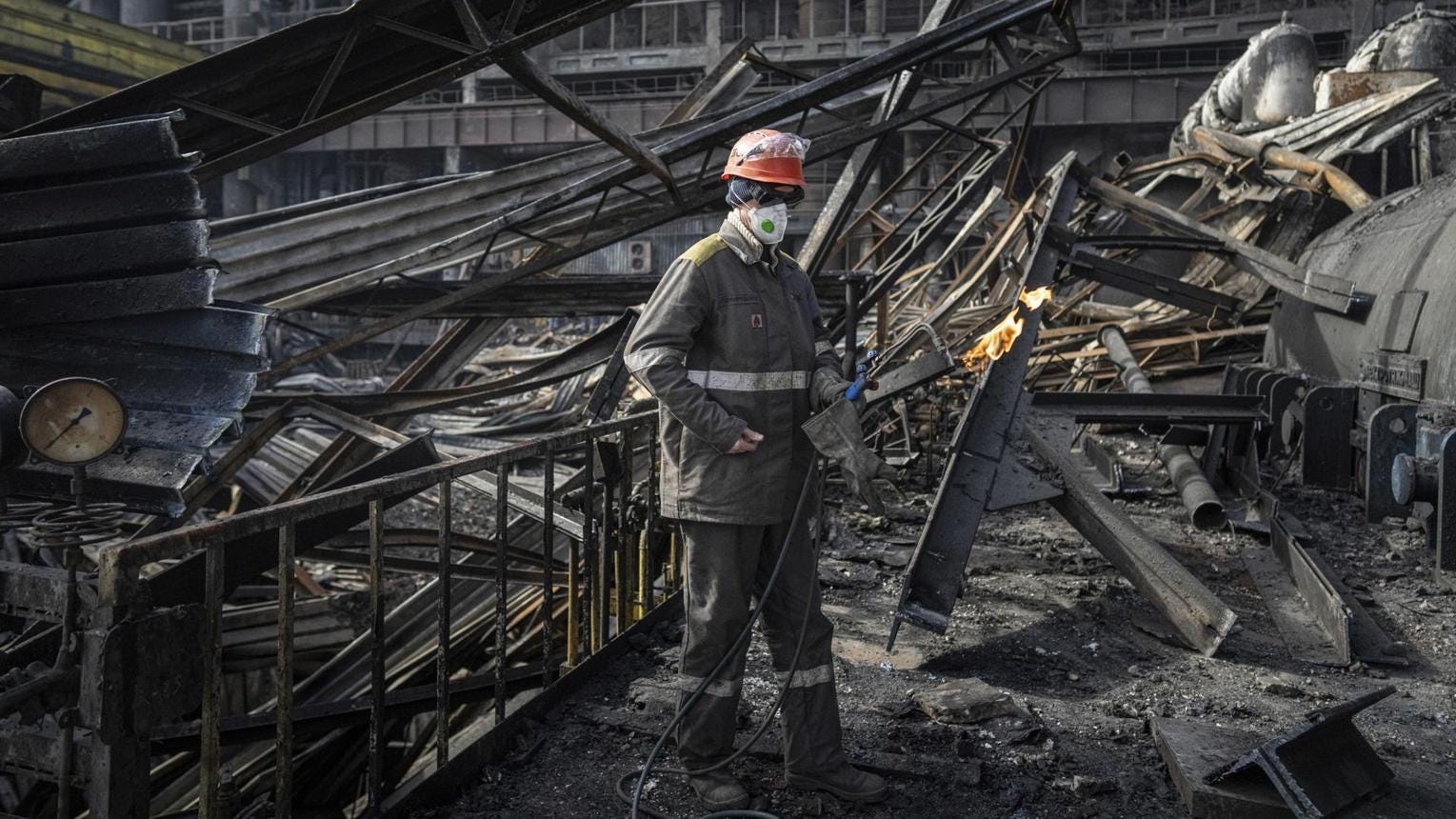
Russian attacks have repeatedly damaged Ukraine’s energy infrastructure, threatening civilian electricity and heating.
Imagine being a Ukrainian civilian trying to keep your family warm while the power goes out again. You’re being told that peace requires compromise, which is reasonable enough in the abstract. Wars generally end through some combination of military exhaustion, negotiation, and concessions.
But then you discover that your country is being pressured to stop attacking facilities that support the invader’s economy, while the invader is receiving economic relief from the United States.
I can understand why Ukrainians might wonder whose negotiating position Washington is trying to improve.
A ceasefire that protects civilians on both sides would be worth pursuing. An agreement that reduces attacks on energy infrastructure could save lives. But it has to be reciprocal, and there must be consequences when either side violates it.
Otherwise, the country defending itself is being asked to surrender leverage without any assurance that the country attacking it will do the same.
That isn’t a recipe for a durable peace. It’s a recipe for an agreement that looks good at a press conference and starts falling apart before the microphones have been packed away.
[SUBSTACK SHARE BUTTON 1]
When the Questions Turn to Intelligence
The economic decisions would be troubling enough on their own. But Ukraine has also raised concerns about interruptions involving American intelligence support, military supplies, and satellite communications.
President Volodymyr Zelenskyy has complained that Ukraine missed expected warnings about Russian attacks and that restrictions involving satellite capabilities interfered with Ukrainian operations.
These are serious allegations because Ukraine depends heavily on American technology and intelligence to identify threats and defend its population.
But they’re also allegations that need to be handled carefully.
Secretary of State Marco Rubio has denied that the United States paused intelligence sharing. American officials have disputed claims involving satellite restrictions, and the available reporting does not establish that Trump personally ordered the interruptions Ukraine has described.
That’s an important distinction. I don’t intend to turn uncertainty into proof simply because it would make for a more dramatic column.
Still, an interruption doesn’t become harmless because officials disagree about what caused it.
If Ukraine was expecting intelligence warnings and didn’t receive them, that deserves an explanation. If satellite capabilities were restricted, we need to know who authorized those restrictions, why they were imposed, and whether they affected Ukraine’s ability to defend itself.
There may be technical or operational explanations. There may be disagreements over how American-supplied systems should be used. Those possibilities deserve consideration.
But the public shouldn’t have to choose between accepting every allegation from Kyiv and accepting every denial from Washington. We ought to be able to get answers.
The Evidence That Complicates the Picture
Before somebody decides I’ve conveniently forgotten everything that doesn’t fit my argument, there’s something important we need to acknowledge.
The Trump administration has taken actions against Russian interests. In October 2025, the United States imposed sanctions on major Russian oil companies, including Rosneft and Lukoil. Those measures represented genuine economic pressure on Moscow.
The October 16 executive order also preserved existing sanctions imposed under other authorities. It didn’t wipe the slate clean.
Those facts matter because they complicate the idea that every Trump decision involving Russia has benefited Putin. They haven’t.
The administration maintains that its approach combines pressure with negotiation, using the possibility of sanctions and economic incentives to encourage a settlement. That’s a legitimate diplomatic strategy in principle, and I don’t think we should reject it simply because Trump is the one pursuing it.
But strategies have to be judged by results.
If you impose sanctions one year and waive major new sanctions the next, what changed? Did Russia make meaningful concessions? Has Ukraine become more secure? Is there evidence that Putin is closer to accepting a settlement that respects Ukraine’s sovereignty?
Those are reasonable questions regardless of who’s sitting in the Oval Office.
And they’re particularly reasonable when the president has spent years telling us what an extraordinary negotiator he is.
You don’t get to advertise yourself as the world’s greatest dealmaker and then complain when people ask what you got in the deal.
What Putin Actually Needs
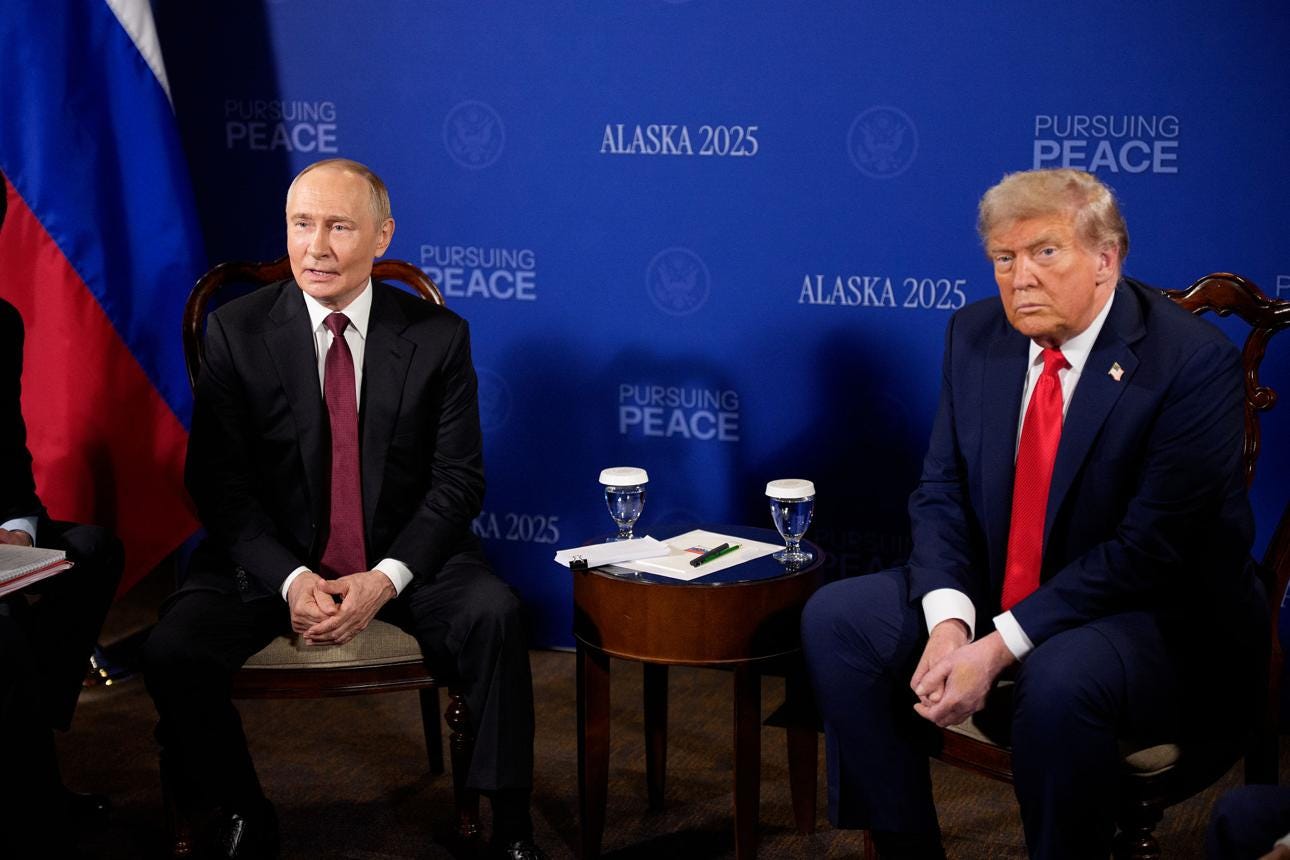
Trump and Putin at the August 2025 Alaska summit.
Here’s where I think much of the public discussion about Trump and Russia has gone wrong.
People become so determined to prove what Trump secretly wants that they sometimes overlook what his decisions actually accomplish.
Maybe Trump genuinely believes his personal relationship with Putin gives him a better chance of ending the war. Maybe he’s more concerned about American fuel prices than about maintaining maximum economic pressure on Russia. Maybe he believes Ukraine will eventually have to accept territorial concessions and wants to push negotiations toward that outcome.
Some combination of those explanations could be true. None requires a secret arrangement with Moscow.
But motives and consequences aren’t the same thing.
If a decision benefits an aggressor, the benefit doesn’t disappear because the person making it had another objective. If you weaken one negotiating partner’s position while easing pressure on the other, you should expect questions about whose interests your policy is serving.
And when those decisions accumulate, they become harder to dismiss individually.
The sanctions waiver. The diesel arrangement. The pressure on Ukraine to limit attacks on Russian energy facilities. The unresolved questions about defensive support. Taken separately, each has explanations worth examining. Taken together, they suggest an administration increasingly willing to offer Moscow relief while asking Ukraine to accept additional constraints.
There’s a difference between that observation and an accusation that Trump is secretly taking orders from Putin. It’s a distinction I intend to maintain, because the documented record is troubling enough without embellishment.
I remember when Americans were expected to be suspicious of practically anything that came out of Moscow. We were taught to question Soviet intentions, to watch for manipulation, and to be wary of concessions that weren’t matched by something substantial in return.
I eventually learned to question some of those assumptions. That was healthy. Nobody benefits from treating an entire nation as an enemy simply because of its government.
But questioning the propaganda of my youth doesn’t require me to abandon the skepticism that came with it.
If anything, it makes that skepticism more important.
I don’t know whether Donald Trump has some hidden reason for treating Vladimir Putin the way he does. I don’t know whether there’s a personal calculation, a diplomatic strategy that hasn’t produced visible results, or something else entirely.
What I do know is that Putin doesn’t need Trump to be a Russian agent to benefit from Trump’s decisions.
He only needs the decisions.
Tomorrow, we’ll examine the longer history of this relationship, including the allegations, investigations, business connections, and political decisions that have kept these questions alive for years.
Because this didn’t begin with a diesel deal.
And the questions didn’t begin last week.
If this was worth your time, hit Like, Restack or share it. That’s how independent work like this finds new readers.
The Bullshit Detector
Three fresh claims. Three reality checks. The bullshit doesn’t care which party you’re in.
1. JD Vance Blames Biden for a Refinery Shutdown That Didn’t Happen
CLAIM: During an October 17 CBS town hall, Vice President JD Vance claimed that approximately 20% of American refining capacity went offline under Joe Biden and that this was the biggest reason gasoline prices were so high.
BULLSHIT: The nationwide figure is false.
BULLSHIT LEVEL: 💩💩💩💩 — 4/5
WHY: California has lost roughly 20% of its refining capacity, but the United States as a whole hasn’t. National capacity remained relatively stable during Biden’s presidency. The more immediate driver of high gasoline prices is the disruption caused by the Iran war, which began under Trump.
Vance took a California statistic, promoted it to a national emergency, and sent the bill to his predecessor. That’s a remarkable amount of mileage from one wrong number.
PolitiFact’s October 19 investigation rated the claim false.

PolitiFact
2. A Democratic Ad Claims a Republican Senator Paid Himself $500,000
CLAIM: A Democratic-aligned super PAC ad says Alaska Senator Dan Sullivan voted to give himself a $500,000 taxpayer-funded payout while increasing healthcare costs for Alaskans.
BULLSHIT: The ad creates a false impression that Sullivan collected the money.
BULLSHIT LEVEL: 💩💩💩💩 — 4/5
WHY: Sullivan voted for a government funding bill containing a provision that would have allowed certain senators to sue for damages over access to their phone records. But Sullivan never collected $500,000, said he wouldn’t pursue a payout, and later voted to repeal the provision.
The ad also omits important context about his healthcare votes, including his subsequent support for extending enhanced Affordable Care Act subsidies.
There’s plenty of room to criticize a senator’s voting record without pretending he walked away from the Capitol carrying half a million dollars in a canvas sack.
FactCheck.org documented the misleading claims on October 15.

FactCheck.org
3. The Poll Worker Who Supposedly Invalidates Your Ballot With a Pen
CLAIM: A viral social media warning claims that if an election worker writes anything on your ballot before you feed it into the voting machine, your vote could be disqualified.
BULLSHIT: Routine authorized markings don’t automatically invalidate a ballot.
BULLSHIT LEVEL: 💩💩💩💩💩 — 5/5
WHY: Election procedures vary by state, and poll workers may make authorized administrative markings without invalidating a vote. The viral warning turns an ordinary election procedure into an allegation of voter suppression.
That matters because somebody who believes the warning might confront a poll worker or distrust a perfectly legitimate ballot.
We’re close enough to Election Day without inventing new reasons for voters to panic.
PolitiFact examined the warning on October 16 and rated it false.
PolitiFact
The Bullshit Scale: 💩 Mostly harmless · 💩💩 Misleading · 💩💩💩 Substantial deception · 💩💩💩💩 Serious deception · 💩💩💩💩💩 Weapons-grade bullshit
Elsewhere at Tom Hicks Media
What The Hell? explores history’s most spectacular examples of human beings making terrible decisions with impressive confidence, while Chart Collision revisits the songs that shaped our lives and the stories behind them. Lotus Purrspective offers the household’s feline assessment of human behavior, usually with considerably less patience than the humans deserve.
Rabbit Ears Classic TV revisits classic television, The Backlot Ghost goes behind the movies and the people who made them, and Panic Room Sports separates what actually happened on the field from the noise that followed.
Buy Me a Tea
Independent journalism takes time, especially when the subject requires sorting documented facts from speculation and political spin. If you’d like to help support Off Script, you can do so through Buy Me a Tea. No obligation. Reading and sharing matter, too.
One Question
When you look at Trump’s decisions involving Russia, do you see a coherent diplomatic strategy, a series of questionable judgments, or a pattern that demands a deeper investigation?
I’m especially interested in hearing from readers who disagree with my interpretation. Tell me which decision you think I’m getting wrong, and why.
#OffScript #Trump #Russia #Putin #Ukraine #ForeignPolicy #PoliticalAccountability #IndependentJournalism