
Tom Hicks | November 2, 2026
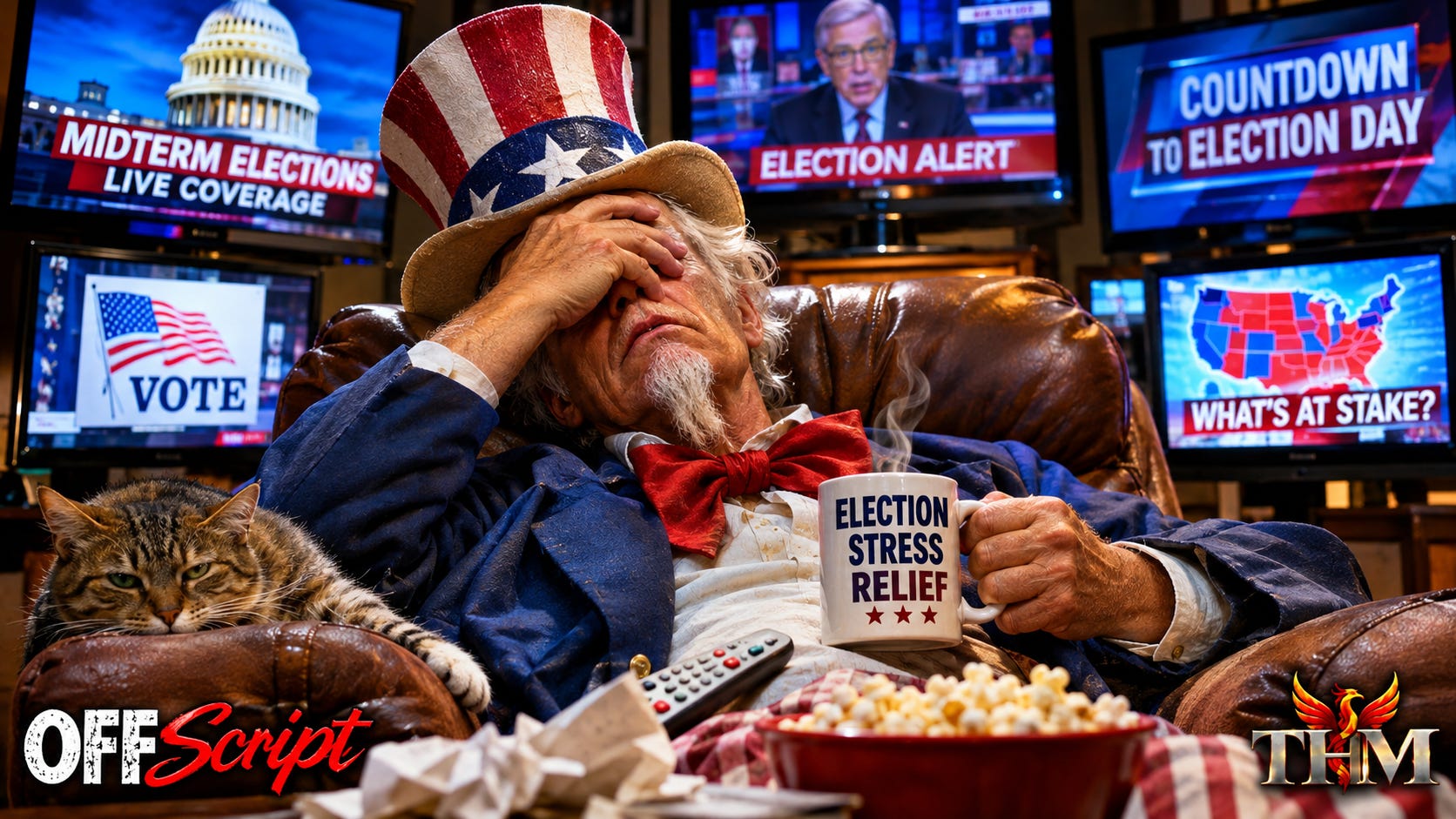
I don’t know about you, but I’m beginning to think the entire country needs a prescription for something considerably stronger than chamomile tea.
Tomorrow is Election Day, and the atmosphere reminds me of those disaster movies where everybody knows something terrible is coming, but nobody can agree on what it is. Half the people are running around screaming, the other half are insisting there’s nothing to worry about, and somewhere in the middle there’s a guy trying to sell everybody a commemorative T-shirt.
And the funny thing is, practically everybody’s nervous. They’re just nervous about entirely different things.
Depending on who you’re talking to, tomorrow’s election represents either a chance to get the country back on track or the beginning of the end of civilization as we know it. Some Trump supporters are worried about losing their political advantage. Plenty of Democrats are looking at what’s happened over the past couple of years and wondering how much more the country can take. Independents are all over the damn map, which is pretty much what you’d expect from people who couldn’t agree on which party to join in the first place.
Personally, I’m not particularly worried about making up my mind. That ship sailed a long time ago. I’m more concerned about what happens after everybody else makes up theirs.
I’ve Been Around This Block a Few Times
If you’ve been reading Off Script for a while, you already know I’ve been a registered independent since 1974. What you might not know is that I’ve voted for candidates from both major parties over the years. Hell, I even worked on the campaign of a Republican running for state Senate, and I didn’t have to hold my nose while doing it.
I’ve never understood people who automatically vote for somebody because there’s a D or an R next to their name. I’ve always figured that if you want my vote, you ought to give me a damn good reason to hand it over. Apparently, that’s become a rather quaint idea.
But here’s something I never imagined I’d say. After everything I’ve watched unfold during the Trump years, I honestly cannot envision a scenario in which I’ll ever vote for another Republican. Not tomorrow. Not in 2028. Not for however many elections I’ve got left in me. And considering I’m 70, it’s probably a good idea not to make any long-term political commitments beyond the warranty on my next toaster.
That’s a hell of a change for somebody who’s spent more than half a century refusing to pledge allegiance to either party.
And it didn’t happen overnight.
I’ve watched presidents come and go. I’ve watched politicians promise things they couldn’t possibly deliver, explain why they couldn’t deliver them, and then ask everybody to vote for them again so they could have another crack at it. I’ve seen scandals, resignations, political embarrassments, and enough congressional stupidity to fill a decent-sized landfill.
But I don’t remember another midterm election that felt quite like this one.
Now, that doesn’t necessarily mean it’s the most stressful midterm in American history. I’m not arrogant enough to assume that whatever I’m experiencing at the moment automatically qualifies as an unprecedented national event. That’s a bad habit Americans have developed, particularly when somebody puts a microphone in front of them.
Still, something about the way we’re living through elections has changed, and I don’t think it’s doing any of us a damn bit of good.
Everybody’s Afraid of Something
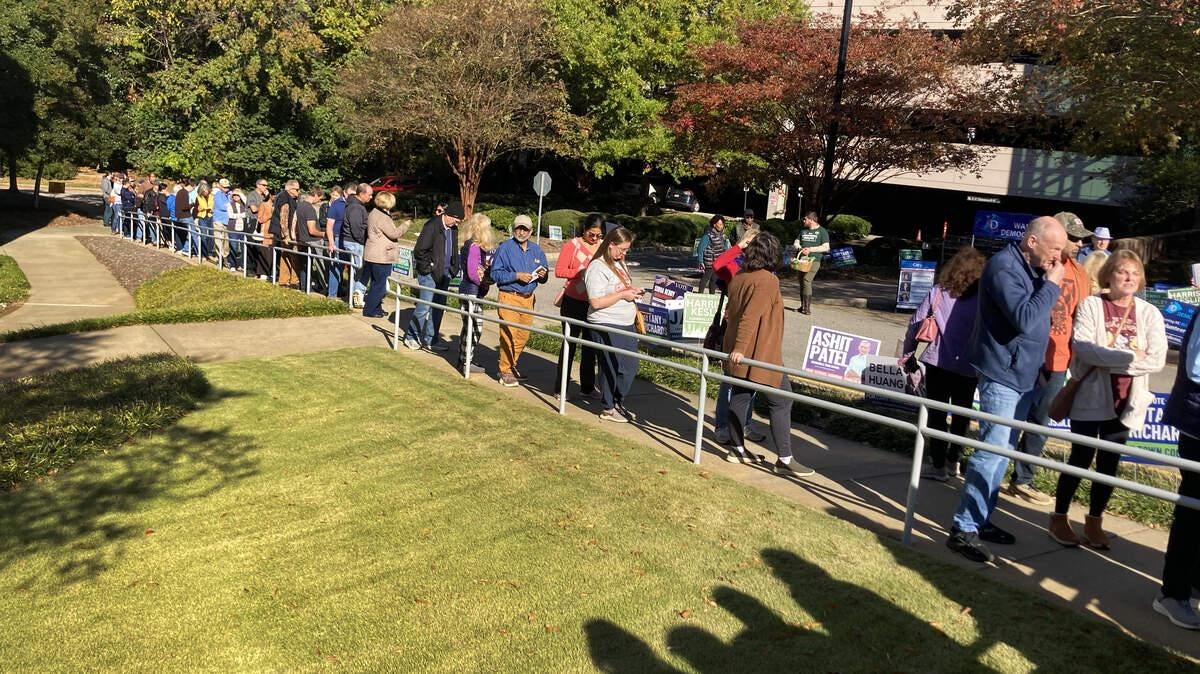
Americans head to the polls carrying very different hopes, fears, and expectations about what comes next.
One of the strangest things about this election is that people on opposite sides of the political divide can look at exactly the same situation and come away with completely different nightmares.
Some Republicans are worried that losing ground in Congress could mean investigations, stalled legislation, and a much more difficult time advancing Trump’s agenda. Democrats, meanwhile, are concerned about whether Congress will provide meaningful oversight and what might happen if it doesn’t. Neither group necessarily sees the other’s concerns as legitimate, which makes having a civilized conversation about any of it about as easy as teaching a raccoon to file income taxes.
And then you’ve got independents, who aren’t nearly as unified as the political commentators would like everyone to believe. Some lean heavily toward one party, some toward the other, and some would probably vote for a reasonably intelligent golden retriever if somebody could get its name on the ballot.
What bothers me isn’t that Americans disagree. We’ve been disagreeing since before we had a country. Hell, disagreement is practically our national pastime, right behind complaining about the price of groceries and pretending we’re going to start exercising next Monday.
What bothers me is how many people have come to believe that losing an election means losing their country.
There’s a difference between believing an election has serious consequences and believing that everybody who votes differently from you is an enemy who needs to be defeated at all costs. We’ve gotten awfully comfortable blurring that distinction.
And when people start treating every election like a final battle for the survival of civilization, the stress doesn’t end when the polls close. It just changes shape.
We’ve Had Some Pretty Ugly Elections Before
Before anybody starts handing out trophies for the most terrifying midterm in American history, we ought to take a quick look backward.
Consider 1866. The Civil War had ended barely a year earlier, Reconstruction was underway, and the country was wrestling with the enormous question of what freedom and citizenship would actually mean for millions of formerly enslaved Americans. Political violence wasn’t some theoretical concern being debated by people on television. It was happening.
Or take 1966. Vietnam was escalating, the civil rights movement was confronting fierce resistance, and the country was experiencing social and political upheaval that would continue for years.
In 1974, Americans went to the polls just months after Richard Nixon resigned in disgrace over Watergate. Trust in government had taken a beating, and the country was still dealing with the aftermath of a constitutional crisis.
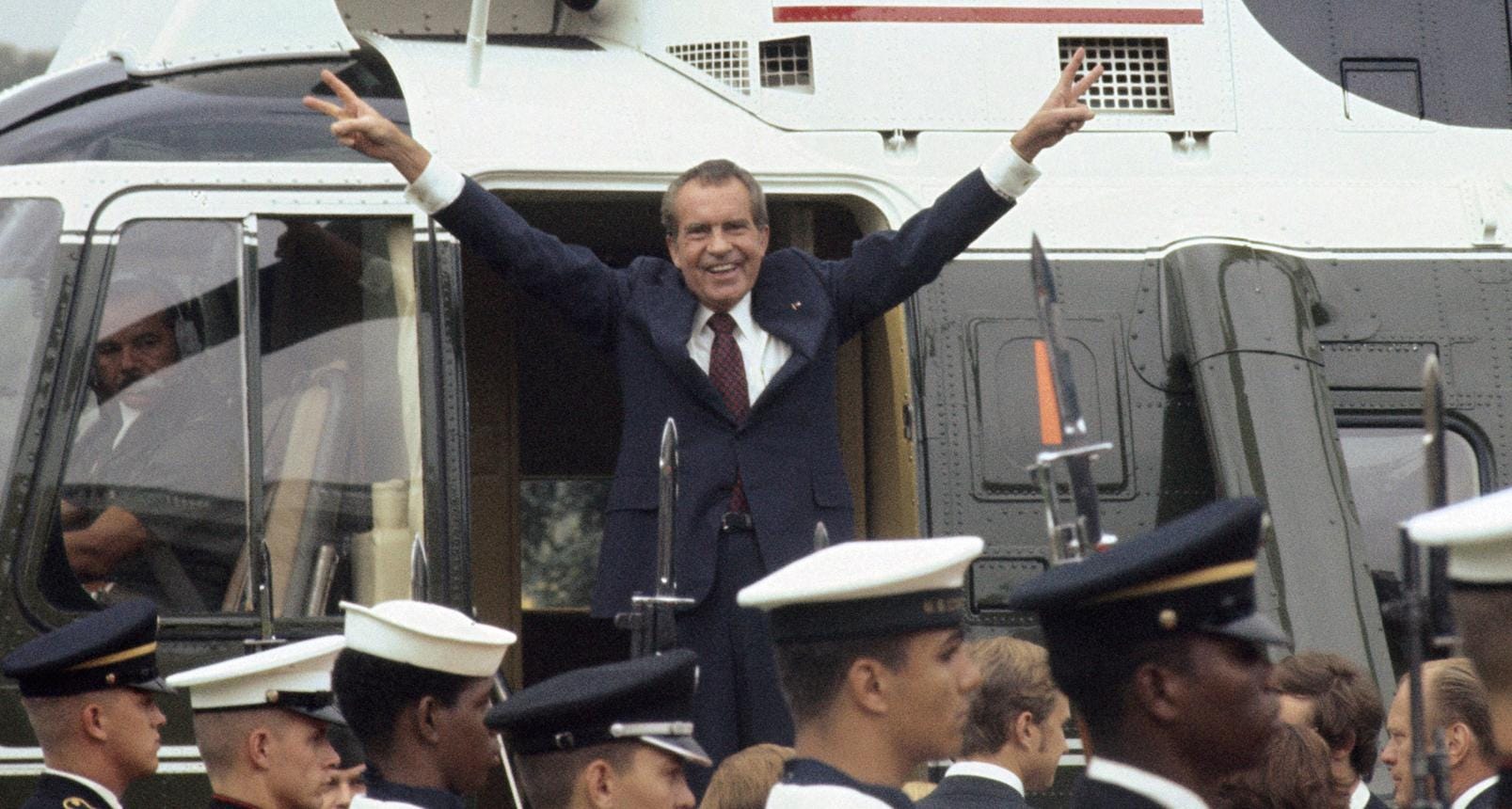
Richard Nixon leaves the White House on August 9, 1974. Three months later, Americans voted in the aftermath of Watergate.
Those weren’t exactly elections where everybody went home, put on a Perry Como record, and enjoyed a nice peaceful evening.
And more recently, the 2018 midterms unfolded during Trump’s first presidency, with political polarization already making Thanksgiving dinner a potentially hazardous undertaking.
So no, I’m not prepared to declare 2026 the most stressful midterm in history. People living through those earlier elections had plenty of reasons to be frightened, angry, and uncertain about what came next.
But I do think there’s something different about the way we experience political stress today.
Our grandparents could put down the newspaper. Our parents could turn off the evening news. We carry the entire political circus around in our pockets, complete with instant notifications, breaking-news banners, fundraising appeals, and strangers who apparently have nothing better to do than call each other idiots on the internet.
You can be standing in the supermarket trying to decide whether you can afford a decent steak, and your phone will interrupt to inform you that somebody in Washington said something outrageous seventeen seconds ago.
I’m beginning to suspect that knowing what every politician says every minute of every day might not be particularly good for the human nervous system.
Apparently, We’re All Stressed Out
And there’s some evidence that the anxiety isn’t just in our heads.
The American Psychological Association’s 2026 Stress in America survey reported that 74% of American adults considered the future of the nation a significant source of stress. An October survey from LifeStance Health found that 70% of Americans experienced at least some stress or anxiety about the upcoming midterms, with 43% reporting moderate or significant levels.
Those are substantial numbers, although they don’t tell us how 2026 compares with elections a century ago. We can’t exactly call up somebody from 1866 and ask how they were sleeping.
The APA also found that 69% of adults considered the 2024 presidential election a significant source of stress, compared with 52% in 2016. So whatever else is happening, political anxiety has been a serious concern for quite a while.
And I have to wonder how much of that anxiety is being fed by the people who benefit from keeping us anxious.
Think about it. Political campaigns want your attention, your money, and your vote. Television networks want you watching. Social media platforms want you clicking, commenting, arguing, and coming back for more.
Calm, reasonable people who decide they’ve heard enough and go read a book aren’t particularly profitable.
Somewhere along the way, political anxiety became a business model.
And business appears to be booming.
If you enjoy an independent perspective on politics without the daily fundraising panic attacks, subscribe to Off Script. It’s free, and I promise not to tell you democracy will collapse unless you send me $12 before midnight.
The Completely Unofficial Off Script Election Stress Management Program
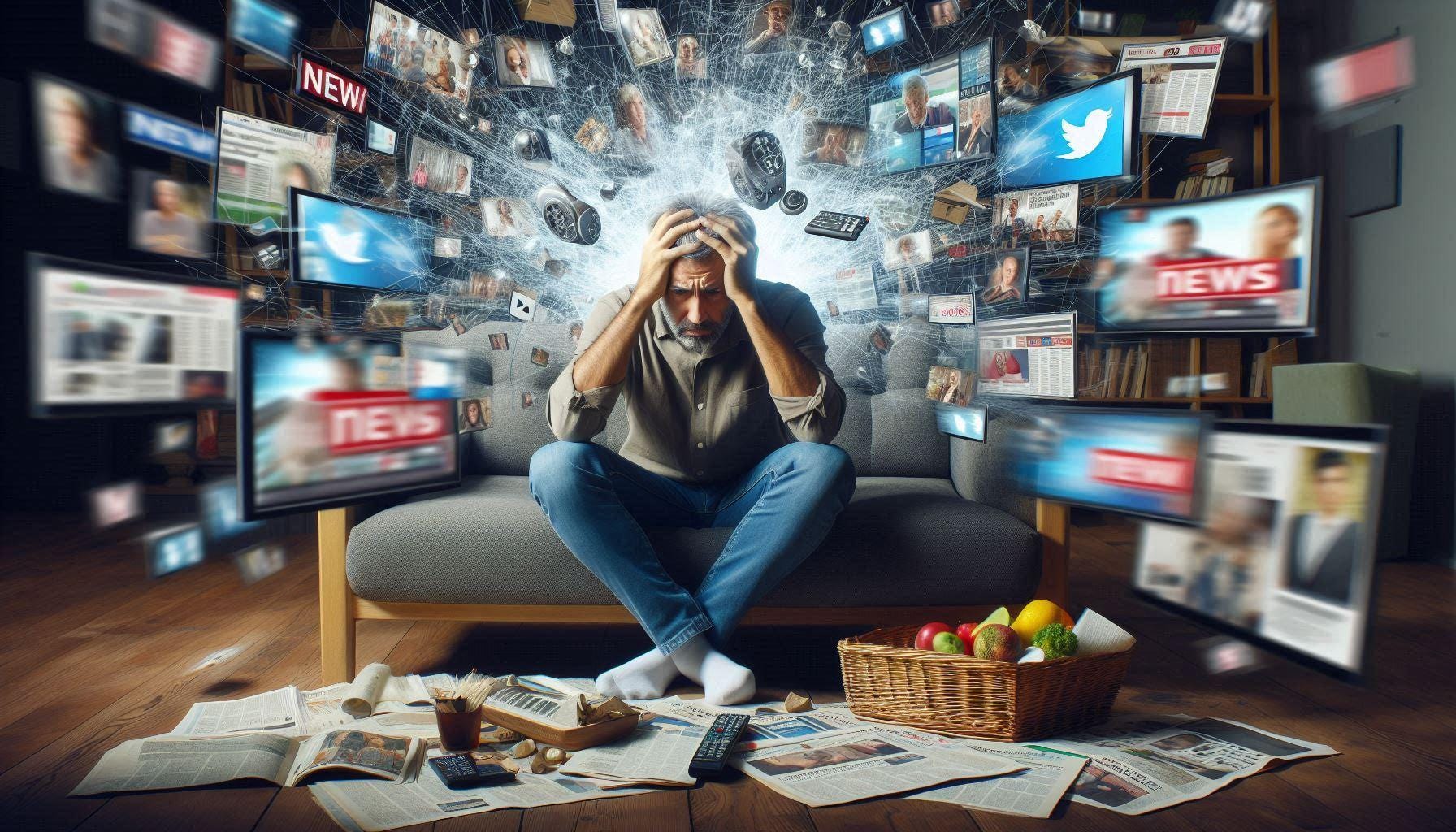
Medical experts recommend limiting stress. Cable news executives would apparently prefer that you develop a permanent twitch.
Since we’ve established that a considerable portion of the country is one breaking-news alert away from climbing the walls, I thought I’d offer a little assistance.
As a public service, I’ve developed a comprehensive election survival program based on absolutely no medical training whatsoever. It hasn’t been approved by the FDA, the American Medical Association, or anybody who knows what the hell they’re doing.
You’re welcome.
1. Limit your exposure to political news.
Experts recommend taking regular breaks from stressful information. I recommend turning off cable news before you reach the point where you can identify pharmaceutical commercials by their opening musical notes. If you’re watching a congressional hearing while simultaneously arguing about it on three social media platforms, you may already be beyond help.
2. Practice deep breathing.
Inhale for four seconds. Hold for four seconds. Exhale slowly. Repeat until the urge to throw something through a window subsides. If you’re still angry after six hours, check whether you’ve accidentally left Fox News or MSNBC running in the background.
3. Avoid political arguments with relatives.
Especially Uncle Larry, who discovered a massive government conspiracy while searching Facebook Marketplace for replacement windshield wipers. You’re under no obligation to spend Thanksgiving listening to a man explain constitutional law when he still can’t figure out how to change the clock on his microwave.
4. Assemble an election-night emergency kit.
Comfortable clothing, snacks, your beverage of choice, a fully charged phone, and something soft you can safely throw across the room. Stuffed animals are recommended. Cats are not. Cats remember these things, and they’ll wait until you’re asleep to settle the score.
5. Remember that election results take time.
Counting ballots is a process. Democracy doesn’t operate on the same schedule as DoorDash, no matter how many times you refresh your browser. And if some television personality announces that everything is suspicious because a race hasn’t been called twelve minutes after the polls close, consider changing the channel before you develop a twitch.
6. Get a good night’s sleep.
If you can’t sleep, try counting sheep. If the sheep start arguing about voter identification requirements, seek professional assistance.
And Then There’s Wednesday Morning
Whatever happens Tuesday night, Wednesday morning will arrive right on schedule. Unfortunately, so will the bills.
Here’s the part that keeps getting lost in all the shouting.
Wednesday morning, the sun is going to come up. The coffee will still need making, the bills will still need paying, and some inconsiderate son of a bitch will still be driving fifteen miles an hour under the speed limit in the passing lane.
Some people will be celebrating. Others will be miserable. Depending on how close the races are, we may not even know who won everything, which will undoubtedly inspire another round of people on television explaining things they don’t actually know yet.
But the election will have consequences, and I don’t want to minimize that. The decisions made by the people we send to Washington affect real lives. That’s why I take voting seriously, even when the political circus surrounding it makes me want to bang my head against the nearest available wall.
What worries me is what happens when we lose the ability to distinguish between political opposition and personal hatred. We’re going to have to keep living in the same country after Tuesday. We still need functioning institutions, communities that can work together, and some basic willingness to recognize that the people across the street are human beings even when their political opinions make absolutely no sense to us.
I’m not suggesting we all hold hands and sing “Kumbaya.” I’m 70 years old, not suffering from a head injury.
I’m suggesting that maybe, just maybe, we need to remember that democracy involves more than winning elections. It also involves figuring out how to live with the results, hold elected officials accountable, and keep the whole damn thing functioning until the next election rolls around.
In the meantime, take a walk. Listen to some music. Pet the dog. If you’ve already voted, give yourself permission to stop thinking about politics for a few hours.
And for the love of everything holy, don’t spend election night arguing with strangers on Facebook.
Nobody in the history of American politics has ever changed somebody’s mind by typing WAKE UP, SHEEPLE! in capital letters.
THE OFF SCRIPT BULLSHIT DETECTOR
Three fresh claims. Five possible stink levels. Absolutely no patience for nonsense.
THE OFFICIAL STINK SCALE
💩 A Little Whiff
💩💩 Something Smells
💩💩💩 Steaming Pile
💩💩💩💩 Full-Blown Bullshit
💩💩💩💩💩 Weapons-Grade Bullshit
1. Apparently, Arab Scientists Never Got the Memo
CLAIM: Health and Human Services Secretary Robert F. Kennedy Jr. claimed that Arab Muslims no longer produce meaningful science or literature and don’t win major international prizes.
BULLSHIT: Arab and Arab-descended scientists, mathematicians, and writers have won Nobel Prizes and other major international honors.
OFFICIAL STINK RATING: 💩💩💩💩💩 Weapons-Grade Bullshit
WHY: Egyptian chemist Ahmed Zewail won the Nobel Prize in Chemistry in 1999. Omar Yaghi, born in Jordan, shared the 2025 chemistry prize. Egyptian novelist Naguib Mahfouz won the Nobel Prize in Literature in 1988. And mathematician Michael Atiyah, whose father was Lebanese, received the Fields Medal.
That’s four examples without even working up a sweat.
When the man overseeing America’s health agencies makes a sweeping claim that can be demolished by spending thirty seconds looking up Nobel Prize winners, we have a problem. Apparently, the Department of Health and Human Services could use a Department of Reading a Fucking Book.
Source: Associated Press, October 28, 2026.
AP News
2. The Amazing Disappearing Fortune
CLAIM: A New Hampshire Senate campaign ad claimed Democratic Rep. Chris Pappas had increased his net worth by more than 1,000% while serving in Congress.
BULLSHIT: The ad cherry-picked the highest and lowest ends of financial disclosure ranges to manufacture a dramatic increase that the underlying records don’t establish.
OFFICIAL STINK RATING: 💩💩💩💩 Full-Blown Bullshit
WHY: Members of Congress disclose assets and liabilities in ranges. The ad effectively calculated Pappas’ earlier wealth using the least favorable combination of those ranges, then calculated his later wealth using the most favorable combination. It also glossed over assets belonging to his husband that appeared on the later disclosures.
FactCheck.org found the result misleading. The same underlying figures could be manipulated in the opposite direction to suggest that Pappas had lost millions.
That doesn’t mean politicians shouldn’t be questioned about their finances. They absolutely should. But if you’re going to accuse somebody of getting rich in office, you’d better have something more convincing than creative bookkeeping.
Otherwise, you’re just putting a calculator in a campaign commercial and hoping nobody checks the batteries.
Source: FactCheck.org, October 30, 2026.
FactCheck.org
3. The Campaign Ad That Forgot Half the Sentence
CLAIM: A campaign ad from Texas Republican Senate candidate Ken Paxton portrayed Democrat James Talarico as broadly supporting higher taxes, using a clip in which Talarico welcomed people willing to pay more.
BULLSHIT: The ad removed the context that Talarico was specifically addressing wealthy supporters willing to accept higher taxes and limits on their political influence.
OFFICIAL STINK RATING: 💩💩💩 Steaming Pile
WHY: Talarico was discussing wealthy people who wanted to support his campaign despite proposals that could increase their taxes. Removing that context makes the remarks sound substantially broader than they were.
FactCheck.org also found that other tax-related claims in the ad omitted important context, including one suggesting that Talarico had voted for a Texas income tax when he had actually voted against a constitutional amendment making such a tax harder to enact.
There’s a reason politicians love selectively edited video. You can make almost anybody sound ridiculous if you remove enough words.
Hell, give me a pair of scissors and enough tape, and I could probably make Mister Rogers sound like a serial killer.
Source: FactCheck.org, October 23, 2026.
FactCheck.org
One Question Before You Go
Are you more stressed about what happens on Election Day, or what happens afterward?
I’m genuinely curious, because I suspect those are two very different kinds of anxiety. And if you’ve somehow managed to remain perfectly calm through all this, I’d love to know your secret. Preferably something legal and available without a prescription.
Leave a comment. Tell me what’s keeping you up at night, or whether you’ve figured out how to tune out the madness.
Around Tom Hicks Media
If you’re interested in what happens behind the political curtain, Blind Spot digs into the machinery of American elections. And if you’ve reached the point where everyday life seems almost as ridiculous as politics, Frank N. Krancke has a few things to say over at Is It Just Me?
For something completely different, Just Lucy arrives this morning with a child’s-eye view of a world the grown-ups haven’t exactly done a stellar job of managing.
You’ll find every edition of every publication in Tom Hicks Media — The Complete Collection. It’s updated daily, so bookmark it and come back whenever you want to see what we’ve been up to.
If you feel like continuing the conversation, join us in the Tom Hicks Media Discord.
One last question: If an election can make an entire country this miserable before anybody’s even counted the votes, what the hell does that say about the way we’re doing politics?
#OffScript #Midterms2026 #ElectionStress #AmericanPolitics #PoliticalHumor #TomHicksMedia