

Tom Hicks | November 24, 2026
I checked the news early last night, figuring I’d find one good story to write about. That’s usually how this works. I find something sufficiently outrageous to get my attention, dig into the details, and spend a few hours trying to explain what the hell is going on without doing permanent damage to my remaining brain cells.
Last night, that approach went straight to hell.
Every time I found a story worth writing about, another one came along that was just as ridiculous, twice as infuriating, or so spectacularly stupid that I couldn’t possibly leave it alone. The White House was trying to control what federal contractors tell Congress. Pete Hegseth was making it more complicated for American military personnel to socialize with Canadians. Donald Trump had apparently added corporate executive recruiting to his presidential duties. Immigration agents were dragging people off an airport jet bridge, and Democrats had just won their biggest House majority in more than three decades.
I briefly considered writing five separate articles, but that would have required an additional eight hours and possibly a medically supervised sedative.
So we’re doing something a little different. Instead of giving one story the full Off Script treatment, we’re going to take a tour through the latest examples of government overreach, political lunacy, and people in positions of authority behaving like nobody ever explained to them how their jobs are supposed to work.
Everybody gets a turn.
THE WHITE HOUSE WOULD LIKE TO KNOW WHO’S ASKING QUESTIONS
Let’s start with an old-fashioned concept called congressional oversight. It’s part of the arrangement we supposedly agreed to when we decided to govern ourselves under a Constitution instead of allowing whichever guy had the biggest army to make all the decisions.
Congress appropriates money. The executive branch spends it. Congress gets to ask where the money went, whether it was spent legally, and why somebody apparently paid $19,000 for a desk chair that looks suspiciously like the one available at Staples for $149.
The system isn’t perfect. Congressional investigations can be partisan, wasteful, and occasionally conducted by people whose primary qualification for public office appears to be an unusually high tolerance for television cameras. But oversight is one of the mechanisms intended to keep the executive branch from doing whatever the hell it pleases.
President Trump apparently finds this arrangement inconvenient.
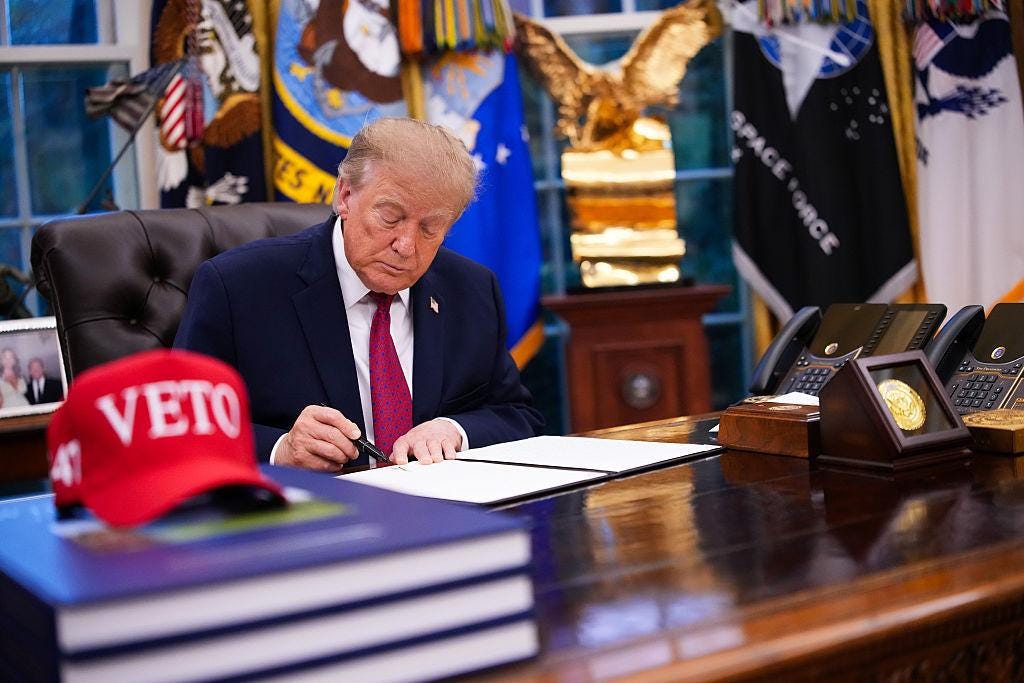
On Friday, he signed an executive order requiring federal contractors and subcontractors to notify the White House and their contracting agencies about congressional requests involving their work with the executive branch. The contractors must also follow administration instructions concerning information the White House considers protected by executive privilege. Companies that refuse could potentially face contract termination, suspension, or exclusion from future federal business.
The White House says the order protects legitimate executive privileges from congressional overreach. There are genuine legal questions about which communications qualify for protection, and Congress doesn’t automatically get access to every confidential executive-branch discussion just because somebody with a committee chairmanship demands it.
But there’s an enormous difference between protecting legitimately privileged information and establishing a system in which contractors must alert the administration whenever Congress comes knocking.
Imagine a congressional committee investigating whether a defense contractor overcharged taxpayers. The committee asks for records, and the contractor has to notify the administration, whose officials may have approved the payments. The White House then gets involved in deciding what information should be withheld.
That’s roughly equivalent to requiring a bank teller to notify a suspected bank robber before answering questions from the police.
“Sir, the detectives want to know what happened to the money.”
“Tell them I’m invoking executive privilege.”
“But sir, you’re holding the money.”
“Exactly. Very privileged money.”
There’s also the matter of timing. Democrats are preparing to take control of Congress in January, and they’ve made it clear they intend to investigate the administration. This order arrives just as Republicans are about to lose their ability to decide which oversight questions get asked and which ones disappear into a committee drawer.
Maybe that’s a coincidence. And maybe my cats will volunteer to clean their own litter boxes.
The Constitution gives Congress oversight responsibilities for a reason. If the administration believes a request violates executive privilege, there are established legal ways to contest it. Threatening the government contracts of companies that don’t cooperate with the White House is a much more troubling proposition.
The question isn’t whether Congress sometimes overreaches. Of course it does. The question is whether a president should be able to position himself between Congress and the people who might have information Congress is entitled to receive.
Because when government officials start controlling who can answer questions about government officials, my bullshit alarm doesn’t merely go off. It starts smoking. Source: White House executive order
A quick favor before we continue: If you enjoy independent reporting with a healthy disrespect for political bullshit, subscribe to Off Script. There are no party loyalty oaths here, and nobody gets a free pass because we happen to dislike the other guy more.
And while we’re on the subject of accountability, here’s something I’d like readers to weigh in on: Should a president have any authority to control what private federal contractors tell Congress? There’s a real constitutional argument underneath all this nonsense, and I’m interested in where you draw the line.
PETE HEGSETH DECLARES THE CANADIAN SOCIAL HOUR A NATIONAL SECURITY CONCERN
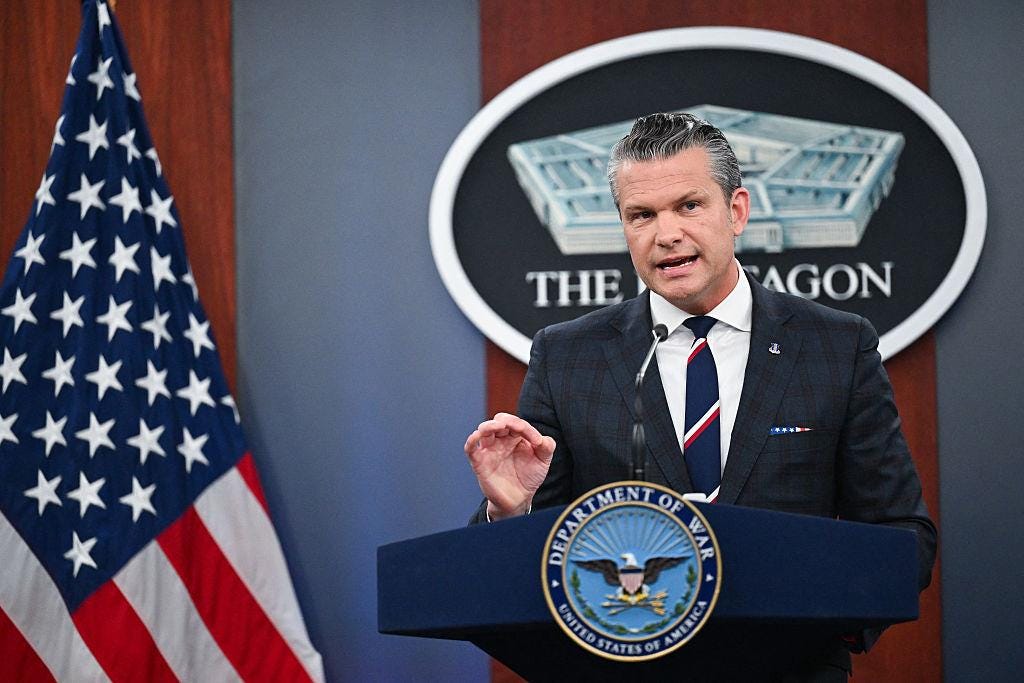
Speaking of government officials deciding who gets to talk to whom, let’s visit the Pentagon, where Pete Hegseth has apparently identified a dangerous new threat to American military readiness.
Canadians.
Yes, Canadians. Those terrifying people who live directly north of us, apologize when somebody else bumps into them, and have somehow managed to maintain a functioning country despite putting gravy and cheese curds on their french fries.
The defense secretary reportedly circulated a classified memorandum imposing new restrictions on certain interactions between American military personnel and their Canadian counterparts. According to Republican Sen. Mike Rounds, the directive primarily affects informal engagements, including social activities and participation in conferences or think-tank events that may now require additional permission.
To be clear, this is not a blanket order forbidding American troops from speaking to Canadians. The Pentagon says intelligence sharing, NATO cooperation, and the joint North American Aerospace Defense Command, better known as NORAD, remain unaffected. Canada’s defense minister says he hasn’t observed any meaningful disruption in military cooperation.
That’s reassuring. Apparently, we’re still allowed to defend the continent together. We just need to be a little more careful about who gets invited to the barbecue.
The Pentagon insists the restrictions are intended to ensure that engagements with Canada advance concrete American defense objectives. Which sounds impressive until you remember that informal relationships between allied military personnel are often part of what makes formal cooperation work.
Military alliances aren’t maintained entirely through treaties, command structures, and carefully worded memoranda. They’re also maintained by people who know one another, trust one another, and have spent years working together.
American and Canadian service members have fought alongside each other. Their countries have shared intelligence, defended common interests, and operated joint military institutions for generations. The idea that ordinary professional relationships suddenly need an additional layer of bureaucratic supervision is enough to make you wonder what problem Hegseth thinks he’s solving.
I can already picture the paperwork.
REQUEST FOR INTERNATIONAL BEVERAGE ENGAGEMENT
Personnel involved: One American major. One Canadian lieutenant colonel.
Proposed activity: Consumption of beer.
Operational necessity: Minimal.
Potential intelligence exposure: Canadian officer may reveal preferred hockey team.
Recommendation: Deny pending further review.
And this isn’t occurring in a diplomatic vacuum. Trump has spent much of his second presidency antagonizing Canada, including repeatedly suggesting that our northern neighbor should become America’s 51st state. The Pentagon’s restrictions arrive in the middle of that already strained relationship.
There’s a legitimate discussion to be had about Canadian defense spending, military readiness, and whether every NATO member is meeting its obligations. Those are serious matters. But if the goal is to strengthen the alliance, making normal relationships between American and Canadian military professionals more complicated seems a peculiar way to accomplish it.
What exactly are we afraid of? That a Canadian colonel will invite an American officer to dinner and accidentally expose him to universal healthcare?
Maybe somebody should explain to Hegseth that an alliance is supposed to involve people actually liking and trusting one another.
Because if this is how we treat our friends, I’d hate to see what the Pentagon has planned for countries we genuinely don’t like. Source: The Washington Post
DONALD TRUMP, PRESIDENT OF THE UNITED STATES AND PART-TIME NVIDIA RECRUITER

Meanwhile, over in Silicon Valley, we’ve got a completely different kind of presidential interference to consider.
Jensen Huang, the founder and longtime chief executive of Nvidia, is back in charge of the company after resigning earlier this month amid revelations about extramarital affairs, including one involving a woman alleged to have connections to Chinese intelligence.
Normally, a corporate leadership scandal of this magnitude would be handled by the company’s board of directors, its lawyers, and whatever investigators were needed to establish whether sensitive information had been compromised.
Nvidia isn’t just another company selling gadgets to people who already own too many gadgets. Its advanced chips are central to artificial intelligence, which makes the company enormously important to American technology, economic competitiveness, and national security. Any credible suggestion of an attempted foreign intelligence operation involving its chief executive deserves serious examination.
And an important point: allegations concerning a suspected intelligence operative don’t establish that Huang knowingly participated in espionage or committed a crime.
Nvidia’s board initially rejected the idea of reinstating Huang. But on Monday, it reversed course and announced that he was returning as CEO, effective immediately.
Donald Trump had been personally advocating for that outcome.
The president publicly celebrated the decision, saying he had helped persuade the board to bring Huang back. Nvidia acknowledged receiving input from senior American government officials and said the board was satisfied that Huang’s return posed no national security risk.
Well, isn’t that special.
The president of the United States has apparently found enough spare time between foreign policy, domestic politics, and running the executive branch to moonlight as a high-end corporate recruiter.
I can practically hear the conversation.
“Mr. President, we’re still reviewing the national security implications.”
“Great guy. Tremendous guy. Knows computers.”
“Sir, we’re conducting an independent investigation.”
“Nobody knows investigations better than me. Put him back.”
Trump says government investigators found no evidence of unlawful conduct by Huang, and supporters of the decision argue that keeping the company’s experienced founder in charge is important to American leadership in artificial intelligence. That’s an argument worth examining, given Nvidia’s extraordinary position in the industry.
But Nvidia has also confirmed that its independent investigation and cooperation with government inquiries are continuing. The board’s decision to reinstate Huang doesn’t mean every question surrounding the original controversy has been answered.
There’s something deeply uncomfortable about a president using his personal influence to reverse a private corporation’s leadership decision while national security questions remain under investigation.
And I’m not interested in hearing that this is perfectly acceptable because Trump is doing it, any more than I’d accept the same behavior from a Democratic president.
Imagine Joe Biden personally pressuring the board of a major technology company to reinstall an executive facing national security scrutiny. Fox News would have needed to rent additional buildings just to accommodate the outrage.
The issue isn’t whether Huang is a brilliant executive. By almost every reasonable measure, he is. Nor is it whether Nvidia matters enormously to America’s technological future. It does.
The issue is where the president’s responsibilities end and the independence of a private corporation begins, especially when federal investigators are involved.
The White House has a legitimate role in protecting national security. It shouldn’t become an extension of a corporation’s human resources department.
And given the number of actual problems demanding presidential attention, I would have thought Trump already had enough on his plate without becoming the world’s most powerful employment reference. Sources: Associated Press | Nvidia’s official announcement
If you’re enjoying this tour through institutional insanity, share the article. There must be somebody in your life who still believes the news can’t possibly be as ridiculous as people claim. Let’s help them catch up.
AN AIRPORT JET BRIDGE IS NOW AN IMMIGRATION ENFORCEMENT ZONE
This next story isn’t particularly funny, and I’m not going to pretend otherwise.
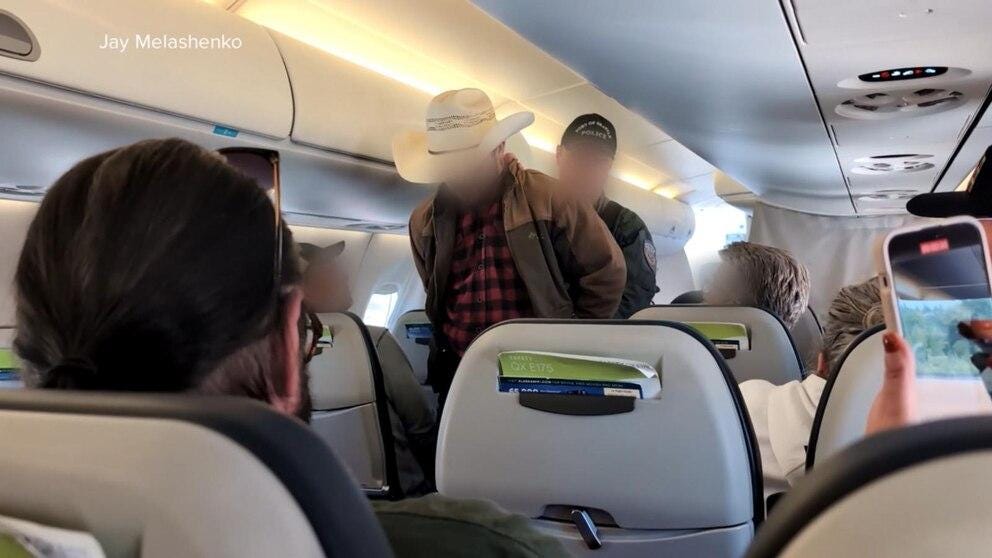
On Saturday, masked immigration officers detained a father and daughter on a jet bridge at Seattle-Tacoma International Airport as they were preparing to board an Alaska Airlines flight to California for a family baptism.
Passengers recorded a chaotic confrontation involving officers struggling with travelers on the ground. The flight was delayed, and videos of the incident spread quickly online.
According to the family’s attorney, the father and daughter entered the country legally more than a decade ago, had valid work permits, and were pursuing immigration matters through established legal channels.
ICE says the father overstayed his visa and that the operation was a targeted immigration arrest. The agency also alleges that the daughter threw hot coffee at an officer during the confrontation. The family’s account disputes important elements of the government’s description.
Those differences matter, and they need to be investigated. A video clip doesn’t necessarily tell us everything that happened before the camera started recording, and conflicting statements from attorneys and federal officials aren’t proof that either side has provided a complete account.
But there’s a larger issue that shouldn’t disappear into a shouting match over immigration policy.
What kind of enforcement system are we creating when masked federal officers conduct arrests in crowded airport boarding passages, surrounded by passengers and airline personnel?
The federal government has authority to enforce immigration law. That isn’t in dispute. What deserves scrutiny is how that authority is exercised, whether the tactics are proportionate to the circumstances, and what protections exist against unnecessary force or mistakes.
People ought to be able to raise those questions without immediately being accused of supporting open borders or opposing law enforcement.
I’ve never understood why some people seem to believe that supporting the police, federal agents, or the military requires suspending your ability to question their decisions. Accountability is part of what makes public authority legitimate in the first place.
If the officers acted appropriately, the government should explain the circumstances and the legal basis for what occurred. If mistakes were made or excessive force was used, those responsible should be held accountable.
I don’t know every detail of what happened on that jet bridge, and neither do the millions of people who have watched the videos. That’s precisely why a credible explanation matters.
Federal authority comes with responsibility. It shouldn’t come with an automatic exemption from scrutiny. Sources: Associated Press | KUOW
DEMOCRATS WIN A HISTORIC MAJORITY. NOW WHAT?
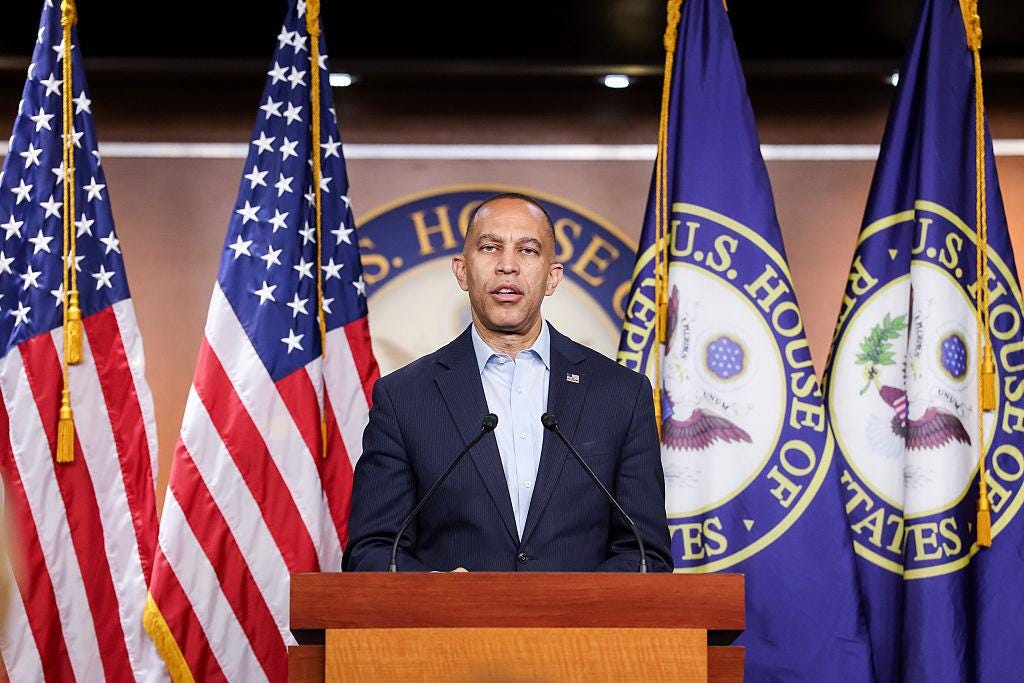
And finally, before anyone accuses me of spending the entire morning beating up on Republicans, let’s have a little conversation about the Democrats.
Congratulations. Seriously. You did something remarkable.
With Chuck Hubbard’s narrow victory over longtime Republican Rep. Virginia Foxx in North Carolina, Democrats have secured at least 258 House seats in the next Congress. It’s the party’s largest House majority since the 1992 election, and it comes alongside Democratic control of the Senate.
Hakeem Jeffries is positioned to become speaker of the House in January, giving Democrats control of congressional committees and the investigative authority that comes with them.
The voters have handed the party an extraordinary opportunity. They’ve also removed one of its favorite excuses.
Because if this turns into two years of press conferences, carefully worded statements of concern, and fundraising emails describing how deeply troubled everybody is, I’m going to lose my goddamn mind.
Look at the stories we’ve just covered. An administration attempting to control how federal contractors respond to congressional inquiries. Unanswered questions about presidential involvement in a major technology company’s leadership. Immigration enforcement practices that deserve serious examination.
Congress has the institutional tools to investigate these matters. And in January, Democrats will have significantly more control over how those tools are used.
That doesn’t mean they can simply wave a magic wand and eliminate every policy they oppose. Presidential vetoes, Senate procedures, court decisions, and the limits of congressional authority aren’t going to disappear because Democrats won an election.
But oversight is another matter. Committee hearings, subpoenas, document requests, and investigations are exactly the kinds of things congressional majorities are supposed to do when serious questions arise about executive conduct.
And before Democrats get too comfortable polishing those shiny new congressional gavels, perhaps they’d like to take a long, unpleasant look at their own house.
Because apparently the news gods decided that this article needed one more example of why accountability shouldn’t come with a party affiliation.
AND THEN THERE’S JIMMY GOMEZ
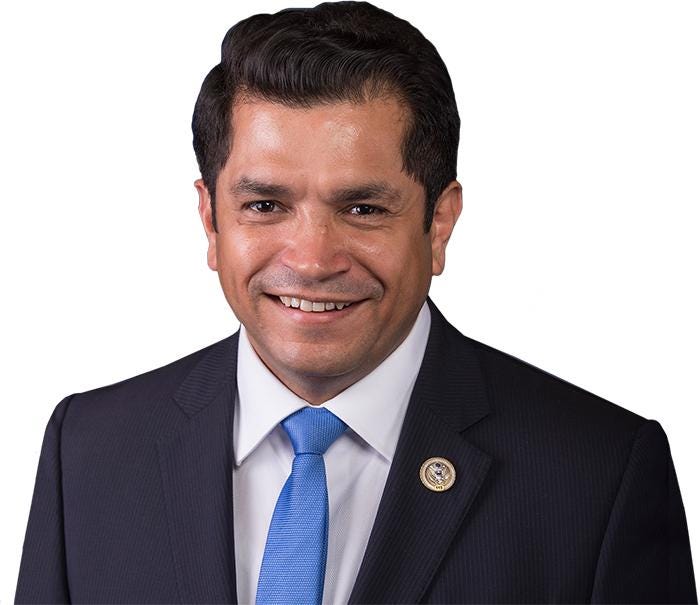
On Monday, the bipartisan House Ethics Committee released a report finding substantial evidence that Democratic Rep. Jimmy Gomez of California engaged in sexual misconduct involving a female congressional staffer, including unwelcome sexual advances and contact.
The committee concluded that Gomez violated House standards of conduct and said some of the reported behavior could constitute misdemeanor sexual abuse under federal law. Gomez disputes the committee’s findings but announced that he will resign effective December 1. He had already lost his reelection bid earlier this month.
Let’s be very clear about something. We’re not talking about an inappropriate joke at an office Christmas party or somebody making an awkward pass at a coworker. We’re talking about findings involving unwanted sexual contact, a workplace power imbalance, and conduct serious enough for a bipartisan congressional committee to conclude that House rules were violated.
The woman at the center of this deserves to be treated seriously. Her experience isn’t a punchline, and I’m not interested in turning it into one.
But the political hypocrisy surrounding misconduct like this? That’s absolutely fair game.
Democrats have spent years presenting themselves as defenders of women, champions of workplace dignity, and the political party most committed to holding powerful men accountable for sexual misconduct. Fine. Those are worthwhile principles.
Now let’s see how consistently they apply them when the politician facing the allegations happens to have a D after his name.
It’s easy to demand accountability when the accused is a Republican. It’s also easy for Republicans to demand accountability when the accused is a Democrat. American politics has turned selective outrage into something approaching an Olympic sport, complete with partisan judges and absolutely no drug testing.
The harder test is whether you’re willing to hold your own people to the standards you insist everyone else should meet.
And here’s what bothers me about the Gomez situation. The House Ethics Committee didn’t issue some vague statement about unfortunate misunderstandings or interpersonal difficulties. It reported substantial evidence of misconduct. Gomez rejected the findings, but his resignation comes after he already lost his seat in the election.
Resignation is an important consequence. But the larger question is how Congress handles these complaints while the people involved still have power, staff, influence, and political allies protecting them.
You want to clean up Washington? Wonderful. Start with your own damn caucus.
Otherwise, you’re just rearranging the furniture in the same old political whorehouse. Sources: CBS News | Los Angeles Times
And while they’re cleaning house, perhaps somebody could remember the people who voted for Democrats because groceries are expensive, healthcare is increasingly difficult to afford, and working families are wondering when political victories will translate into improvements in their actual lives.
Democrats can’t spend the next two years investigating everything while governing nothing. They also can’t ignore potential abuses of executive power in the name of appearing reasonable.
They need to walk and chew gum, which should be possible for a political party that just won 258 House seats.
I don’t expect miracles. I do expect competence, priorities, and enough backbone to recognize that the voters didn’t deliver this kind of majority so congressional leaders could spend another two years politely requesting that Republicans behave themselves.
If anybody suggests a six-month study to determine whether oversight might be appropriate, I’m mailing Congress a dictionary with the word OVERSIGHT highlighted in fluorescent orange.
The voters did their part. Now the Democrats need to prove they understand the difference between winning power and actually using it. Source: CBS News
CBS News
THE BULLSHIT DETECTOR
Because apparently five developing news stories and a congressional ethics scandal weren’t enough.
THE STINK SCALE
💩 A Little Whiff — A questionable claim that needs airing out.
💩💩 Something Smells — Misleading enough to raise eyebrows.
💩💩💩 Steaming Pile — The facts have left the building.
💩💩💩💩 Full-Blown Bullshit — Somebody brought a shovel.
💩💩💩💩💩 Weapons-Grade Bullshit — Handle with protective equipment.
THE GREAT GASOLINE ELECTION CONSPIRACY
Claim: Gas companies deliberately raised prices before the midterms to hurt Trump, then dropped them after voters went to the polls.
Bullshit: False.
💩💩💩💩 Stink Rating: Full-Blown Bullshit.
Why: Gasoline prices were already falling before Election Day. Energy analysts point to ordinary market forces, including seasonal demand and developments in global oil supplies, rather than a coordinated political conspiracy. There is no credible evidence that American gasoline companies collectively manipulated prices to influence the midterms.
I understand the temptation to believe that everybody in the energy business meets secretly in a windowless conference room to decide how much we’re going to suffer at the pump. But global oil markets are complicated enough without inventing a secret political conspiracy every time prices change.
Besides, the theory requires believing that an industry famous for pursuing profits suddenly decided to coordinate its pricing decisions around one politician’s electoral fortunes.
If somebody has evidence, let’s see it. Otherwise, put down the conspiracy theory and pick up an economics textbook. Source: PolitiFact
JON STEWART TAKES A SWING AT CHUCK SCHUMER
Claim: Jon Stewart said Chuck Schumer fought tooth and nail against half the Democrats who won Senate races.
Bullshit: Mostly false.
💩💩 Stink Rating: Something Smells.
Why: Schumer did favor different candidates in some Democratic primaries, and there are legitimate arguments about whether party leadership has been sufficiently open to newer voices. But he also helped recruit several eventual winners, and the broader claim that he fought against half the victorious Senate candidates doesn’t hold up under examination.
I enjoy watching Jon Stewart take a swing at political leadership, particularly when the targets deserve it. But comedy doesn’t make somebody immune from factual scrutiny, and criticizing Democratic leadership doesn’t become more effective when the numbers are wrong.
There are plenty of legitimate reasons to criticize Schumer. We don’t need to manufacture additional ones. Source: PolitiFact
THE DEMOCRATS APPARENTLY WON THROUGH WITCHCRAFT
Claim: Viral Truth Social screenshots show Trump accusing Democrats of using witchcraft and satanism to influence the midterm elections.
Bullshit: The screenshots are fake.
💩💩💩💩💩 Stink Rating: Weapons-Grade Bullshit — for passing satire off as authentic.
Why: Reuters confirmed that the screenshots were fabricated as satire. The White House said they weren’t authentic, and the creators of the witchcraft-themed post acknowledged making it with photo-editing software.
The fact that anybody needed to investigate this tells you something about the state of American political discourse.
We’re living in a country where somebody can fabricate a presidential accusation of supernatural election interference, post it online, and generate enough confusion that professional fact-checkers have to determine whether the president actually blamed Democrats for casting spells.
At this point, I wouldn’t be entirely surprised if somebody introduced legislation requiring witches to register as political action committees.
But satire is satire, even when the real news makes it increasingly difficult to tell the difference. Source: Reuters Fact Check
ONE QUESTION
Here’s what I keep coming back to after looking through this collection of political and institutional nonsense.
We have an executive branch asserting more control over information, a Pentagon creating new restrictions involving a close ally, continuing national security questions around a major technology company, and immigration enforcement practices generating serious public concern.
Meanwhile, Democrats are about to take control of Congress with a historic majority, and another member of their own party is leaving office following serious ethics findings.
What should Democrats investigate first when they take office in January — and what would convince you they’re serious about accountability rather than simply putting on another political show?
I’m particularly interested in hearing from people who voted Democratic without being especially enthusiastic about the party. Winning elections is one thing. Earning public trust afterward is considerably harder.
AND THAT’S ENOUGH GOVERNMENT FOR ONE HUMAN BEING
I started last night hoping to find one worthwhile story. By the time I’d finished, I had five stories, a congressional ethics scandal, three pieces of demonstrable bullshit, and enough discarded notes crumpled into little paper balls around my desk to make the room look like a recycling center had exploded.
And those were just the stories that made the cut. For every one I managed to wrestle into this article, another two or three were still lying around somewhere, competing for attention and threatening to turn a perfectly respectable Monday evening into a full-scale journalistic nervous breakdown.
At some point, I realized I wasn’t even trying to keep up with the news anymore. I was trying to keep it from climbing through the windows.
The stories themselves are different, but a familiar question keeps turning up: Who gets to demand an explanation from the people making decisions that affect everybody else?
Congress ought to be able to conduct legitimate oversight. Military alliances ought to be managed in ways that strengthen cooperation. Corporate decisions involving national security ought to withstand independent scrutiny. Federal law enforcement ought to be accountable for its conduct, and political parties that win elections ought to use the authority voters have given them.
And when members of Congress abuse their positions, the responsibility to hold them accountable shouldn’t depend on which party controls the committee room.
None of those expectations is particularly radical. They’re the ordinary requirements of a functioning democratic system.
Yet here we are, having to argue about them as though somebody just discovered the concept of accountability buried beneath a stack of classified memos.
I don’t expect government officials to be perfect. Hell, I’d settle for reasonably competent, occasionally humble, and capable of recognizing when something they’re proposing sounds ridiculous when spoken out loud.
That doesn’t strike me as an unreasonable standard for the people entrusted with enormous amounts of power and other people’s money.
And if the folks running the country don’t like being questioned, perhaps they should consider careers involving considerably less public responsibility.
I understand Nvidia occasionally has openings.
Although I hear their hiring process has gotten a little political.
Enjoyed this edition? Give it a Like, share it with somebody whose blood pressure can withstand the experience, or drop your best argument in the comments. Around here, disagreement is welcome. Unsupported bullshit gets its own department.
MORE FROM TOM HICKS MEDIA
When the real world is even stranger than fiction, What the Hell? goes looking for the extraordinary stories, institutional absurdities, forgotten history, and remarkable people that make you wonder whether civilization has been making this up as it goes along.
And when you’ve finally had enough political bullshit for one day, Midnight Indulgence offers a decidedly different way to spend your reading time. Consider it a little relief from the national headache.
You can explore all the publications at Tom Hicks Media — The Complete Collection.
#OffScript #PoliticalCommentary #GovernmentAccountability #PeteHegseth #Congress #TrumpAdministration #IndependentJournalism #BullshitDetector
While the topics don't exactly lift me up, your writing style at least makes it all palatable. Regarding Congressman Gomez...he definitely needs to be held accountable for his actions, which in this case will probably happen through the civilian legal system rather than a congressional committee. That said, the stories of Al Franken and Eric Swalwell are reminders of how our two major parties handle these situations quite differently. Certainly not saying the Dems are perfect, but I have more confidence in their handling of these issues than the Repugs.