
Bastard’s Law
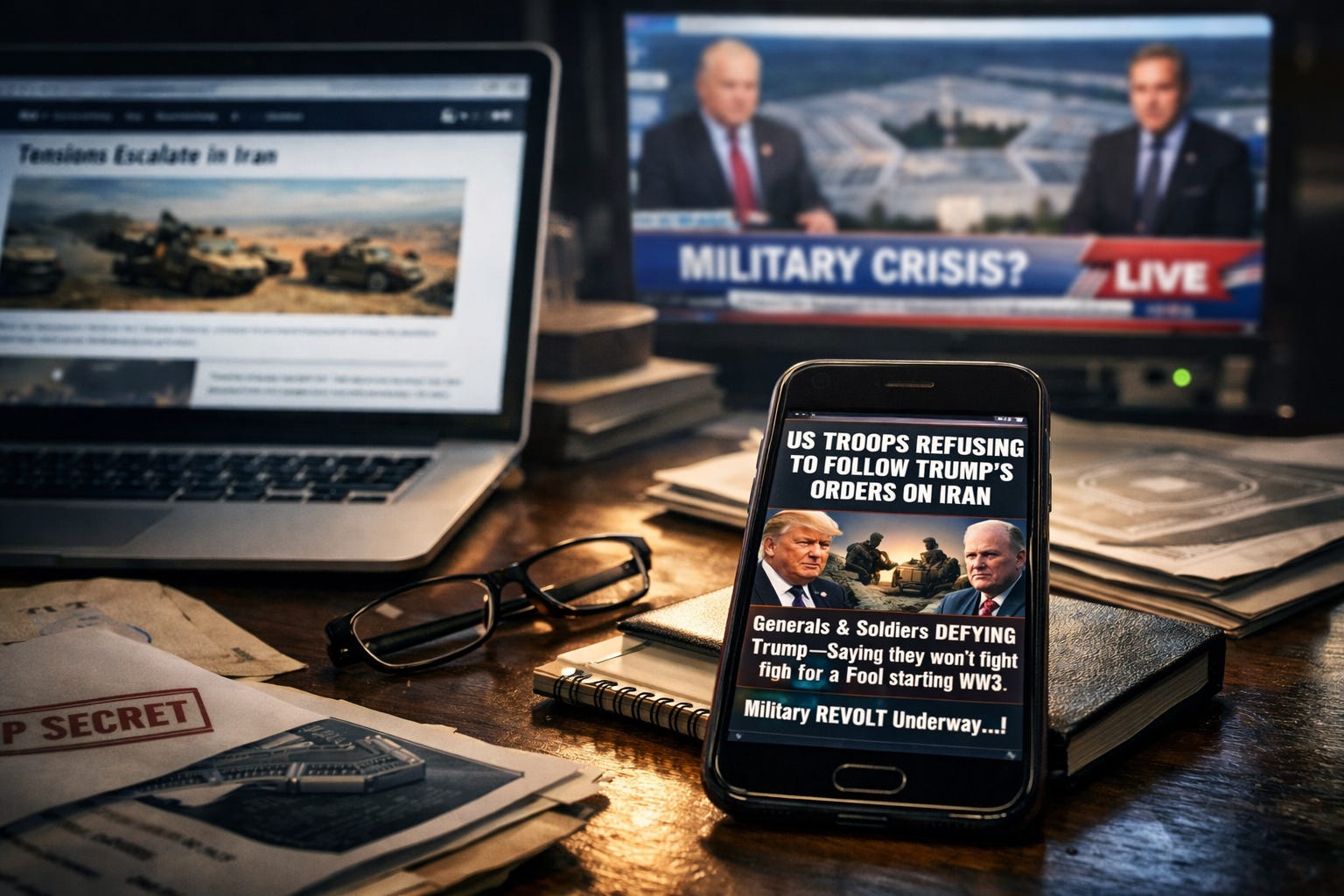
If thousands of American troops were actually refusing orders from the commander in chief, you wouldn’t hear about it first from a Facebook meme. You’d hear about it from every newsroom on Earth while the Pentagon scrambled to explain what the hell just happened.
Yet here we are.
A viral graphic is ripping through social media claiming that U.S. troops are refusing Donald Trump’s orders regarding Iran and that the American military is on the verge of collapse.
It’s dramatic.
It’s emotionally satisfying.
And it’s almost certainly complete bullshit.
The Meme That’s Spreading
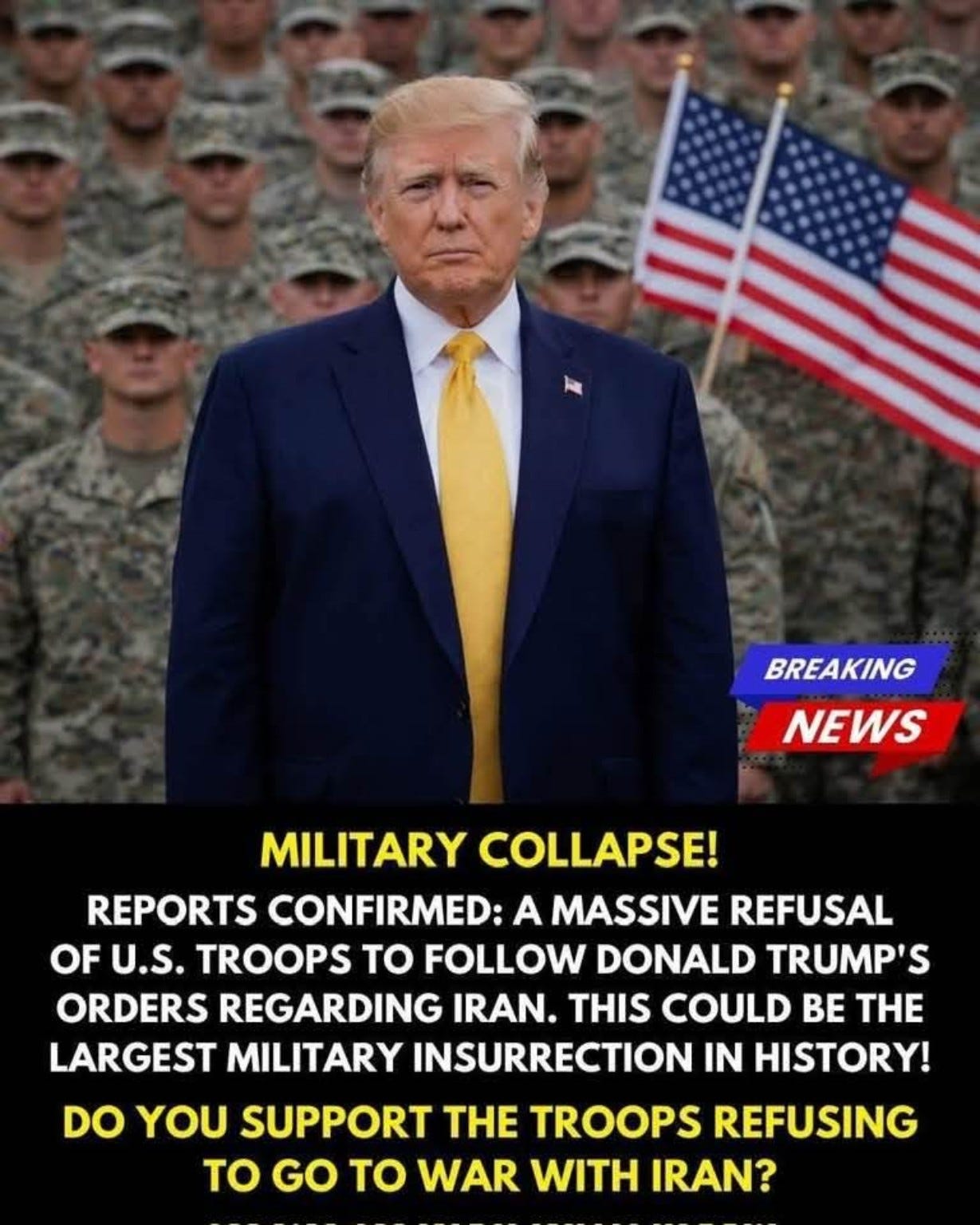
The viral meme circulating online claiming U.S. troops are refusing Trump’s Iran orders. There is currently no credible reporting supporting this claim.
The problem isn’t just that this meme is wrong.
The problem is that millions of Americans instantly believed it.
And that’s the part we should be paying attention to.
Before We Go Further
If you’re tired of watching viral nonsense become political reality before anyone checks the facts, hit Subscribe.
This newsletter exists to do something increasingly rare in modern media: slow down the outrage machine long enough to actually look at what’s real, what’s propaganda, and what’s just algorithm-amplified bullshit.
The Fantasy Everyone Wants to Believe
The story this meme tells is almost too perfect for the moment we’re living in.
In this version of events, the United States military suddenly becomes the grown-up in the room. Troops refuse dangerous orders. Officers stand tall. The machine stops itself before a reckless leader can drag the country into another catastrophic war.
It’s a comforting fantasy. Unfortunately, it’s also a fundamental misunderstanding of how the U.S. military actually works.
The American armed forces operate under one of the most rigid command structures on Earth. Orders flow from the president to the secretary of defense, through combatant commanders, down through officers, and finally to enlisted personnel. By the time an operational directive reaches troops on the ground, it has already passed through multiple layers of planning, legal review, and command approval.
A “mass refusal” at the troop level would not be a moment of heroic conscience. It would signal a collapse of the chain of command itself.
That’s not dissent.
That’s the opening chapter of a constitutional crisis.
And if something that serious were happening inside the United States military, the story wouldn’t be leaking out through memes and reposts. Every major newsroom on Earth would already be reporting on it while the Pentagon scrambled to figure out how the hell the world’s most powerful military suddenly broke in half.
Reckless and Illegal Are Not the Same Thing
Members of the U.S. military swear an oath to the Constitution, not to a president. That oath includes the obligation to refuse unlawful orders.
But here’s where the internet tends to get sloppy.
An order can be reckless, dangerous, politically motivated, or strategically idiotic and still not meet the legal threshold of an unlawful command. For that threshold to be crossed, the order has to clearly violate the laws of armed conflict or the Uniform Code of Military Justice.
In other words, we’re talking about war crimes or explicitly illegal conduct.
Presidents have ordered military action many times without formal declarations of war from Congress. Some of those decisions turned out to be terrible ideas. But terrible ideas are not automatically illegal orders.
Which means the viral fantasy of thousands of troops collectively saying “nah, fuck that” to a deployment order is about as realistic as a summer blockbuster.
Where the Mark Kelly Story Actually Matters
The Mark Kelly angle circulating online points to the real tension — but not the one the meme claims.
Mark Kelly is a former Navy combat pilot and astronaut. When someone with that background speaks about military credibility or reckless escalation, people inside the defense world tend to listen.
Kelly’s involvement in this broader debate highlights the growing friction between political theater and military reality. Politicians often frame foreign policy through the language of strength and confrontation. Military professionals, on the other hand, understand the staggering human and logistical cost of actual war.
Those perspectives do not always align.
When political messaging collides with military expertise inside an information environment already flooded with misinformation, the result is a narrative landscape where speculation spreads faster than facts and rumors start filling the gaps.
What Real Resistance Would Look Like
If the U.S. military ever believed a presidential order crossed a constitutional or legal line, the warning signs would look very different from a viral meme.
Senior commanders would raise internal alarms. Pentagon lawyers would review the legality of the directive. Congressional leaders would demand briefings. Intelligence agencies would begin assessing the geopolitical consequences.
If the conflict escalated further, the most likely outcome would be resignations, not rebellion. High-ranking officers would step down rather than execute orders they believed violated their oath.
Institutional resistance is rarely cinematic. It’s bureaucratic, messy, and slow.
The meme version is cleaner because it’s fiction.
The Real Danger Isn’t the Meme
The most disturbing part of this story isn’t that the viral claim is wrong.
It’s that millions of Americans find it instantly believable.
Public trust in institutions has eroded so deeply that many people now assume the system must already be collapsing behind the scenes. In that environment, rumors feel plausible and memes start masquerading as inside information.
That kind of chaos is political oxygen for people who thrive on confusion.
Here’s the crystallization line:
When citizens stop trusting the guardrails of democracy, the loudest liar in the room gets to pretend he’s the only one telling the truth.
Once that dynamic takes hold, reality becomes negotiable.
Verdict
There is currently no credible evidence that U.S. troops are refusing Trump’s Iran orders en masse.
But the speed at which this rumor spread reveals something more troubling: millions of Americans now assume the system is fragile enough that a military revolt feels plausible.
That’s the real warning sign.
Democracies rarely collapse in one dramatic moment. They erode slowly as trust breaks down, facts become optional, and rumors start sounding more believable than reality.
And once that erosion gets deep enough, fixing the damage becomes far harder than spreading the lie that helped cause it.
Support Independent Journalism
Upgrade to paid if you want the full War Room treatment. I’m retired, reader-funded, and not taking marching orders from corporate sponsors, political parties, or billionaire sugar daddies. Paid subscribers keep this operation running and get deeper analysis, bonus posts, and behind-the-scenes breakdowns when the political temperature really starts boiling.
Over at The Unredacted Bastard’s feline counterpart, Lotus Purrspective, a certain judgmental tuxedo cat watches human behavior from the windowsill and dissects it with surgical precision. When you need the same nonsense examined by someone with fur and zero patience, Lotus has you covered.
Like, share, and raise a little hell.
If today’s rant saved you from believing a meme that looked like it was designed by a conspiracy theorist with Microsoft Paint and too much caffeine, you can always
☕ Buy Me A Coffee to keep me caffeinated and cranky.
#TheUnredactedBastard #MarkKelly #Iran #Military #Trump #Disinformation #Propaganda #Democracy #NationalSecurity #Politics