


You know what phrase I never expected to read in my lifetime?
“The White House UFC fight.”
Not because I have anything against UFC. I’ve watched UFC. There are probably people reading this who can name more fighters than they can members of Congress. What caught me off guard wasn’t the sport. It was the location. If you’d asked me to make a list of places where I expected to see two guys trying to punch each other unconscious, the White House South Lawn would’ve landed somewhere between the Vatican and my dentist’s waiting room.
Yet here we are.
According to Reuters, U.S. District Judge Amit Mehta denied a request to block the planned UFC event at the White House, allowing the event to proceed after concluding that the plaintiffs lacked standing to bring the challenge.
The White House is hosting a UFC event. A lawsuit was filed trying to stop it. A federal judge said no. And if your first reaction was “What the fuck are we doing?” congratulations. You’re not alone.
And that’s where my brain immediately wandered away from UFC and toward something much more interesting.
Who gets to complain?
Not who gets invited. Not who gets tickets. Not who gets to sit ringside. Who gets to object when something happens on public property that they think shouldn’t be happening there? Because that’s where this story takes a turn.
A lot of people are going to hear that a judge allowed the event to proceed and assume the court determined everything was perfectly fine. That’s not really what happened. The ruling wasn’t primarily about whether a UFC fight belongs at the White House. The plaintiffs couldn’t establish standing. In legal terms, they couldn’t demonstrate the kind of direct injury necessary to bring the challenge. In plain English, the court said they weren’t the right people to complain. Not that the complaint was necessarily wrong. Not that the idea was necessarily wonderful. Just that these particular people weren’t the ones who got to bring the fight.
And that struck me as one hell of a weird place for a democracy to end up.
Now, before the lawyers start composing angry emails, I understand why standing exists. I’ve spent enough years buried in legal research to know that federal courts can’t simply become complaint departments for every citizen who dislikes a government decision. If standing disappeared tomorrow, every controversial policy in America would generate ten thousand lawsuits before breakfast. The rule exists for a reason.
The problem is that the rule can sometimes produce outcomes that sound completely batshit to ordinary people. You spend your whole life hearing that something belongs to the American people, then the minute somebody objects, they’re told they don’t have enough skin in the game to complain. That’s the kind of thing that makes normal people start muttering “bullshit” under their breath.
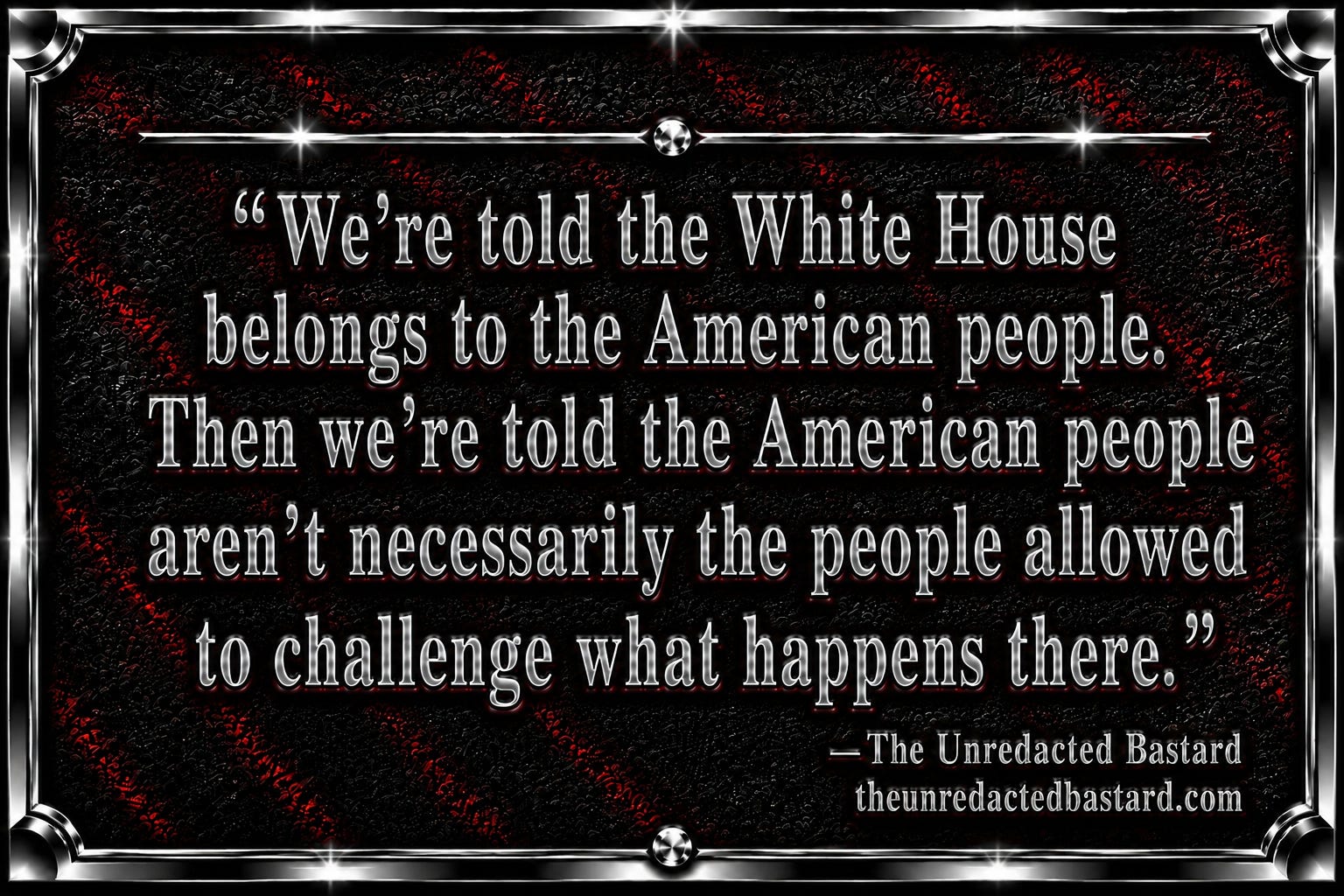
The White House is constantly described as “the People’s House.” Politicians say it. Tour guides say it. Journalists say it. Schoolchildren hear it. The phrase gets repeated so often that most Americans accept it without thinking much about it. Then a case like this comes along, and suddenly the comfortable fiction starts showing some cracks.
The White House announces a UFC event. People look at each other and say, “What the fuck?” A lawsuit gets filed. A judge responds by saying the people filing it aren’t the right people to bring the complaint in the first place. At which point a lot of Americans are probably asking the same question I am: if not them, then who?
Because this isn’t really about UFC. If it were a rock concert, we’d be having the same conversation. If it were a corporate conference, we’d be having the same conversation. If it were Monster Truck Madness on the South Lawn, and honestly, at this point, who the hell knows, we’d definitely be having the same conversation. The event is almost beside the point.
The part that sticks in my craw is that we’re constantly told these places belong to us right up until we start acting like owners.
Think about it. If your neighbor told you that you jointly owned a vacation house, you’d probably assume you’d get some say in what happened there. Then imagine showing up one day to discover he’d turned the living room into an octagon, rented tickets, hired security, and informed you that your opinion didn’t matter because you couldn’t demonstrate a sufficiently individualized injury.
That’s obviously a ridiculous example.
Then again, so is reading the phrase “White House UFC fight.”
Seriously, read that sentence one more time. If you’d told me twenty years ago we’d eventually be arguing over whether cage fighting belongs on the South Lawn, I’d have assumed you got into the cooking sherry before breakfast.
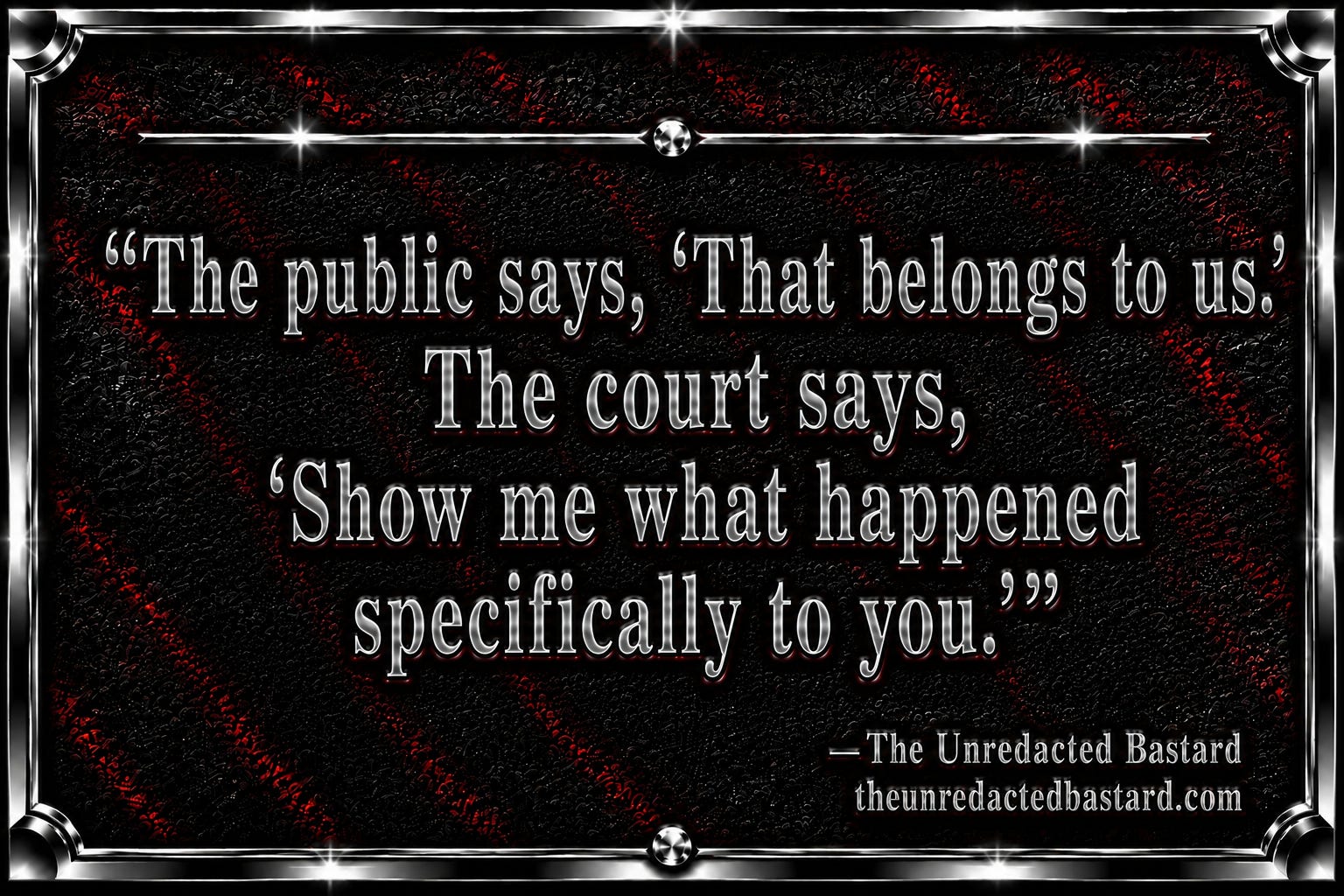
Most Americans think of public property in terms of ownership. They hear “the People’s House” and naturally assume that means the public has some meaningful role in determining how it’s used. The legal system thinks in terms of injury. The public says, “That belongs to us.” The court says, “Show me what happened specifically to you.” Those are two entirely different conversations, and the people running the legal system are not losing sleep over the gap between them.
Join Us Every Morning
The more I thought about this ruling, the more it reminded me of something most Americans experience all the time. You call customer service because something is broken. The representative agrees it’s broken. The supervisor agrees it’s broken. Everybody agrees the problem exists. Then somebody politely explains that you’re not authorized to fix it because you checked the wrong box, filled out the wrong form, missed the deadline, or don’t qualify under some technical requirement buried on page seventeen of a policy manual nobody told you existed.
The problem is real. Everybody agrees the damn problem exists. You’re just apparently not the lucky bastard who’s authorized to do a thing about it. That’s how standing often feels to people who don’t spend their days in a courthouse. Not necessarily wrong, just completely maddening.
And before somebody accuses me of going after Judge Mehta, that’s not what’s happening here. The judge applied the law as it exists. Standing requirements are real. Courts have to follow them. The issue isn’t this ruling. The issue is the disconnect it exposes, the one we’ve all been trained to ignore.
Americans spend their entire lives being told these institutions belong to them. We pay for the damn things. We maintain the damn things. We get lectured about respecting the damn things. Then one day something weird happens, somebody objects, and suddenly we’re all getting a crash course in why ownership and authority are two completely different animals.
Then sometimes we discover that ownership and authority aren’t remotely the same thing, and the discovery feels like finding out Santa Claus works for a private equity firm.
You can own something collectively and still have essentially no ability to influence what happens to it. That’s not a legal observation. That’s a political one, and it’s the kind of political observation that tends to make people very angry once it actually sinks in.
The reason this ruling stuck with me isn’t because of UFC. Hell, six months from now, most people won’t remember a damn thing about the card itself. What they’ll remember is the feeling that something happened in a place that supposedly belongs to all of us, and then a court essentially said that disagreement alone isn’t enough to get you through the courthouse door.
Legally, that’s completely normal. Politically, it’s a hell of a thing for people to hear, and the people in charge know exactly how normal it is.
Maybe somebody else eventually challenges something similar and establishes standing. Maybe another plaintiff emerges with a more direct injury. Maybe this event comes and goes, and none of this matters by next Tuesday. But the larger question isn’t going anywhere because this was never really a story about mixed martial arts.
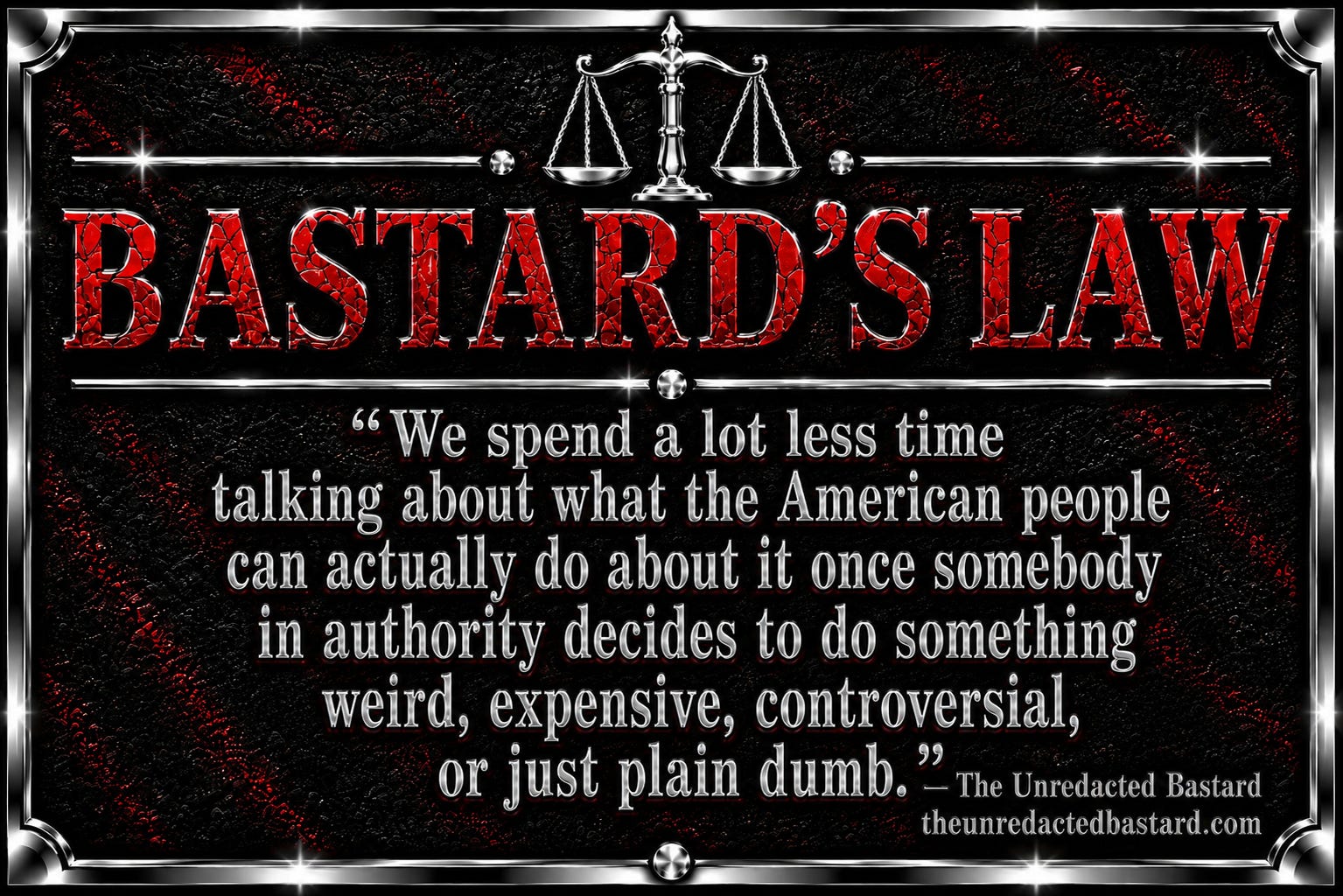
It was a reminder that public ownership and public control are not the same thing. We spend a lot of time talking about what belongs to the American people. We spend a lot less time talking about what the American people can actually do about it once somebody in authority decides to do something weird, expensive, controversial, or just plain dumb.
And judging by this ruling, those two lists are a hell of a lot further apart than most of us want to admit.
Upgrade — Or Stay On The Surface
I’m retired. No sponsors. No corporate leash. War Room is where the deeper patterns live. Not just what happened, but how it works and where it’s going next. If you want the full picture, upgrade. If not, you’ll still get the headlines. Just not the part that actually explains themUpgrade
Same reality, different delivery. Check out Lotus Purrspective, where a judgmental tuxedo cat continues documenting the baffling behavior of the species that opens her food.
Like, Share, Subscribe: Or let someone louder and dumber control the narrative.
Buy Me A Coffee: Because yelling “what the fuck are we doing?” at the news doesn’t pay for itself.
Today’s Bastardonia Fact
The Ministry of Public Ownership and Private Decision-Making is Bastardonia’s most confusing government agency.
Citizens are assured that everything belongs to them. They are also reminded that this information grants absolutely no decision-making authority whatsoever.
When asked how that works, officials generally change the subject.
#TheUnredactedBastard #Journalism #Commentary #Politics #Courts #Democracy #CurrentEvents #Opinion
Mind boggling the goings on in "our" Country right now. We are citizens yet the power to exhibit our citizenship is constantly usurped. I continue to be a good neighbor by deliberate kindness which gives me joy. However, never mistake my kindness for weakness. And especially...do not underestimate me and my power to influence the necessary changes.
I've had a lot of fun in my life at the expense of people who were foolish enough to underestimate me.