
Tom Hicks | October 22, 2026
Editorial Note — The Bastard Is Back
Somewhere along the way, I apparently confused being professional with being well-behaved. I started sanding down the rough edges, choosing the diplomatic word, and occasionally allowing spectacular bullshit to pass without giving it the beating it deserved.
That’s over.
The facts still matter. The research still matters. But there’s no rule requiring me to be polite to people who have earned a verbal ass-kicking.

I was in my high school’s production of Fiddler on the Roof.
If you know the show, you know it isn’t exactly a cheerful little romp through the Russian countryside. It’s about Jewish families struggling to preserve their traditions in a world that’s changing around them. There’s religious persecution, antisemitism, generational conflict, arranged marriages, and eventually an entire community being driven from its home.
Imagine some of those themes landing in certain school board meetings today. I can practically hear the objections before the curtain goes up. Somebody would probably accuse Tevye of promoting a radical agenda because his daughters wanted to marry men they actually loved.
I didn’t have a starring role. Not even close. I played a minor character, the Seltzer Man, whose name I remember as something like Duvidal. I might have had one or two lines.
Didn’t matter a damn bit.
I sang the songs. I learned the dances, including the famous Bottle Dance at the wedding. I pushed myself physically in ways I hadn’t before. At one point, I could jump into the air and touch my toes with the palms of my hands in midair.
These days, I’m happy if I can reach my toes without calling for assistance.
But I discovered something about myself in that production. I could do things I hadn’t known I was capable of doing. I was part of something bigger than myself, surrounded by other kids making discoveries of their own.
More than fifty years later, I still consider it one of the best experiences of my life.
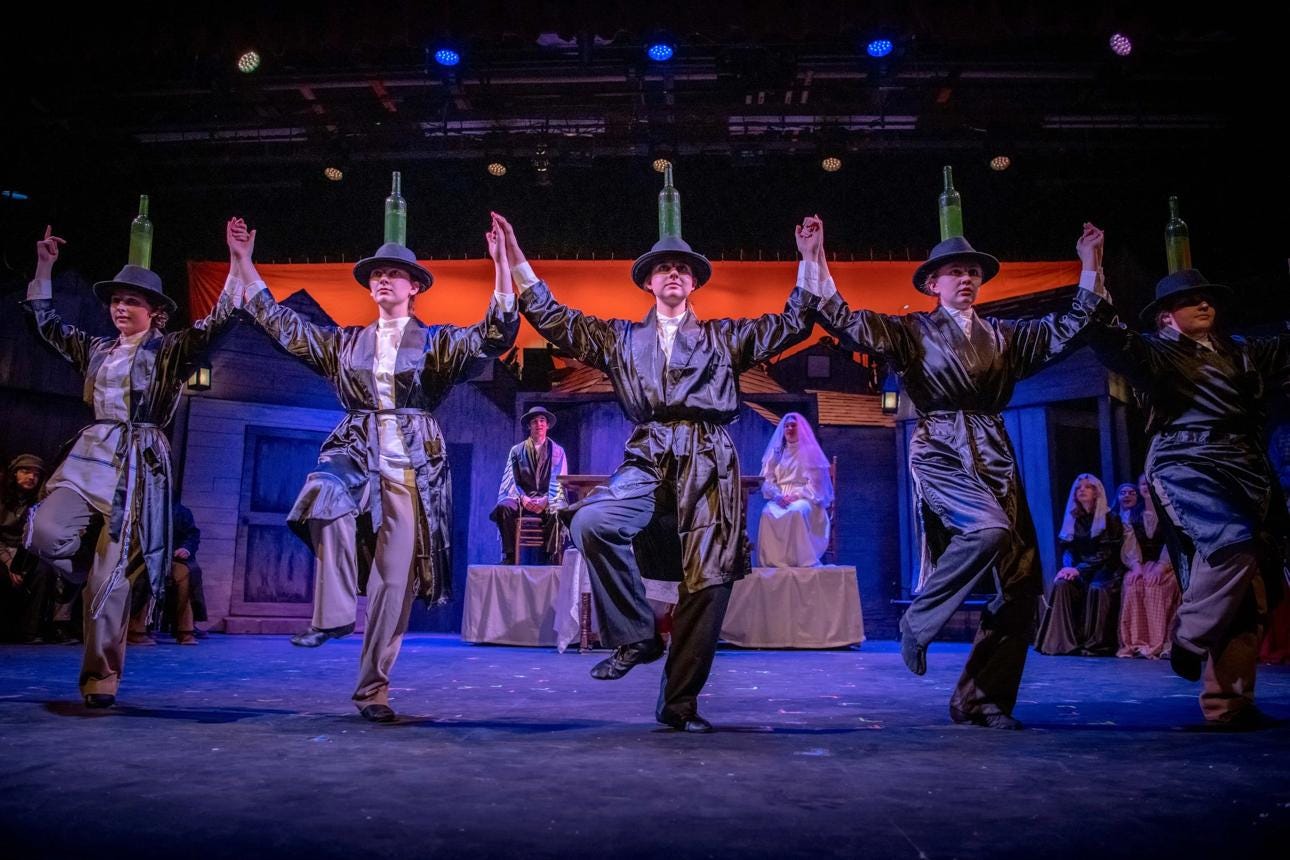
Students performing the Bottle Dance in a high school production of Fiddler on the Roof. Illustrative photograph.
Which is why I’m getting thoroughly pissed off watching today’s adults take those same opportunities away from children because somebody might get offended, somebody might complain, or somebody might lose a few votes.
Take Ana Mota, a 17-year-old senior at South Grand Prairie High School in Texas. She auditioned for Little Shop of Horrors, earned the role of Seymour, and was looking forward to playing a character traditionally portrayed by a male actor. She’d played male roles before, including Jack in Into the Woods, and somehow the republic had survived.
Then district officials got involved.
They wanted her moved into a female role, and eventually the production was canceled. As NBC 5 Dallas–Fort Worth reported, the district cited its efforts to comply with Texas Senate Bill 12, a law addressing instruction and programming related to sexual orientation and gender identity.
Now, I’ve seen Little Shop of Horrors. It’s about a giant, man-eating plant, murder, an abusive relationship, and a dentist who makes root canals look like a recreational activity. Nobody watches this thing and mistakes it for a documentary about responsible horticulture.
But a teenage girl playing Seymour? Apparently, that was the bridge too far.
The district reportedly selected Frozen as a replacement, a musical featuring a woman whose inability to control her supernatural powers nearly destroys an entire kingdom. Apparently, mass hypothermia is wholesome family entertainment, but gender-blind casting is the opening act of the apocalypse.
And here’s the part that really gets me. The district says it was trying to comply with state law. Fine. Then point to the provision that forbids a female student from playing a male character. Don’t wave a statute around like a crucifix at a vampire convention and expect everybody to shut up.
What we’re watching is a particularly ugly form of institutional cowardice. Administrators are so terrified of offending adults that they’re willing to disappoint children instead.
The children, after all, don’t vote in school board elections.
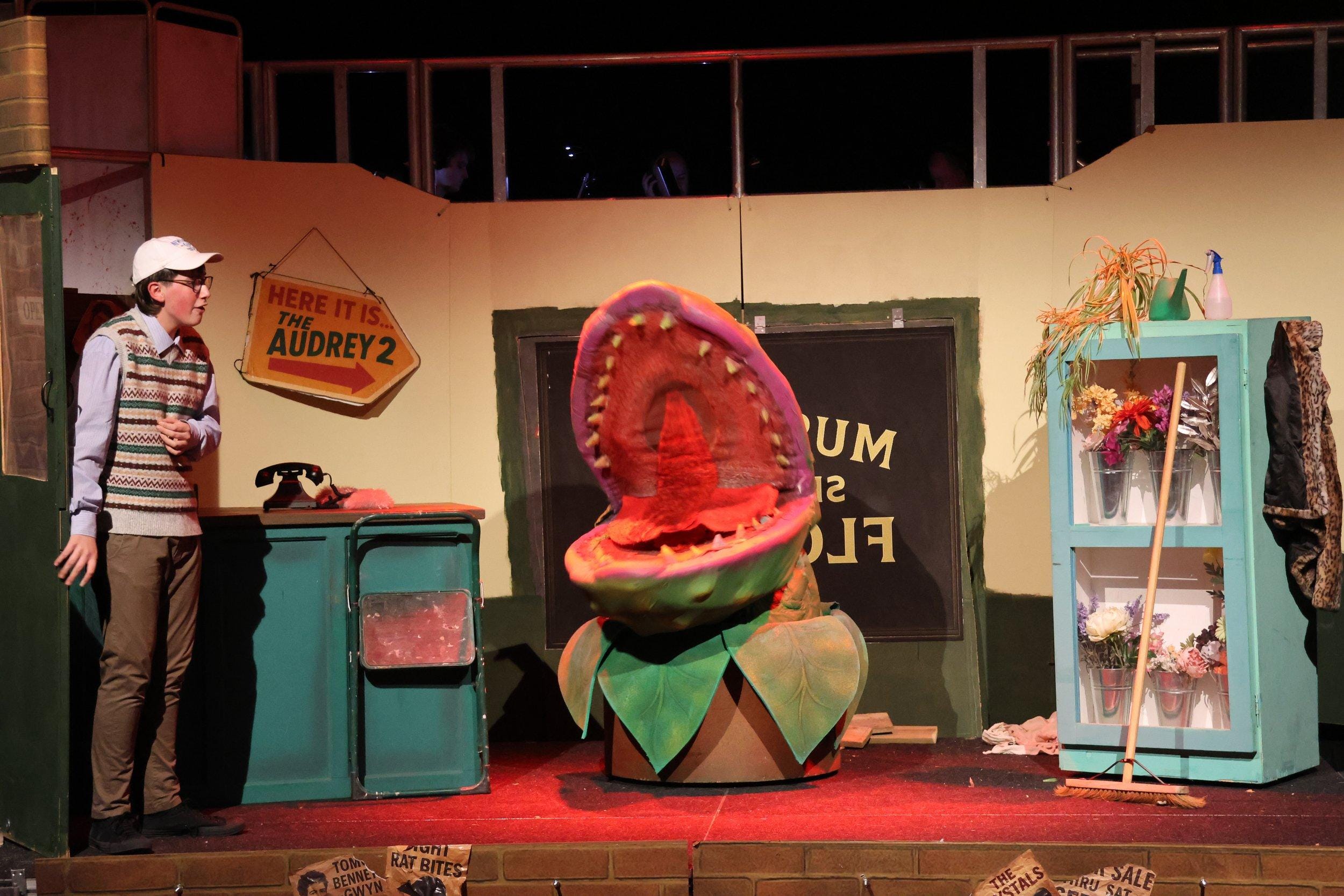
Audrey II in a school production of Little Shop of Horrors. Illustrative photograph, not the canceled Texas production.
And Texas isn’t the only place where grown-ups have discovered that canceling a school play is easier than defending it.
At Copley High School in Ohio, students had auditioned, received their roles, and begun rehearsing She Kills Monsters, a play exploring grief, identity, friendship, and acceptance through a fantasy adventure. Then a parent complained about its LGBTQ themes.
The district canceled the show.
Superintendent Aimee Kirsch said the decision wasn’t about those themes. The production hadn’t gone through the proper administrative approval process. A new review procedure followed, and Alice in Wonderland was chosen as the replacement.
Perhaps the paperwork really was screwed up. Schools are perfectly capable of administrative incompetence without any political assistance whatsoever. But if that’s what happened, why were students allowed to audition, receive roles, and begin rehearsing before somebody noticed?
And why were the kids the ones punished for the adults’ screw-up?
The teenagers, to their credit, started exploring ways to stage the production independently, with assistance from a local theater. While the administrators were busy explaining what couldn’t be done, the students were figuring out what could.
That sounds suspiciously like the sort of initiative schools are supposed to encourage.
But apparently, we’re operating under a new educational philosophy: children should learn to overcome obstacles, provided those obstacles aren’t created by the people running the school.
This is where the argument becomes bigger than theater. Because once adults decide that avoiding controversy is more important than giving children opportunities, there’s no particular reason to stop at the auditorium doors.
In Virginia, students at King George Middle School wanted to form a Gay-Straight Alliance. They followed the established procedures, but the school board adopted a policy prohibiting noncurricular clubs at the middle-school level. According to the ACLU of Virginia, other existing clubs continued operating despite the restrictions.
One of those clubs, according to the ACLU’s account, taught students to make fishing lures and skin squirrels.
So apparently, a club where children can learn to skin a squirrel is fine, but a club where children can support one another is a threat requiring emergency intervention.
You really couldn’t write satire this stupid. Nobody would believe it.
The families sued, and in September the board settled and restored the ability to form noncurricular clubs.
A federal lawsuit. Over a middle-school club.
What the actual fuck is wrong with these people?
These are children trying to figure out who they are, where they belong, and whether anybody gives a damn about them. Some want friendship. Some want support. Some simply want a place where they don’t have to spend every minute worrying about being judged.
You don’t have to agree with every political position associated with LGBTQ advocacy to understand that.
But apparently, basic human decency now requires legal representation.
And if anybody thinks this is confined to a few school productions and extracurricular clubs, the numbers coming out of America’s libraries should cure that delusion.
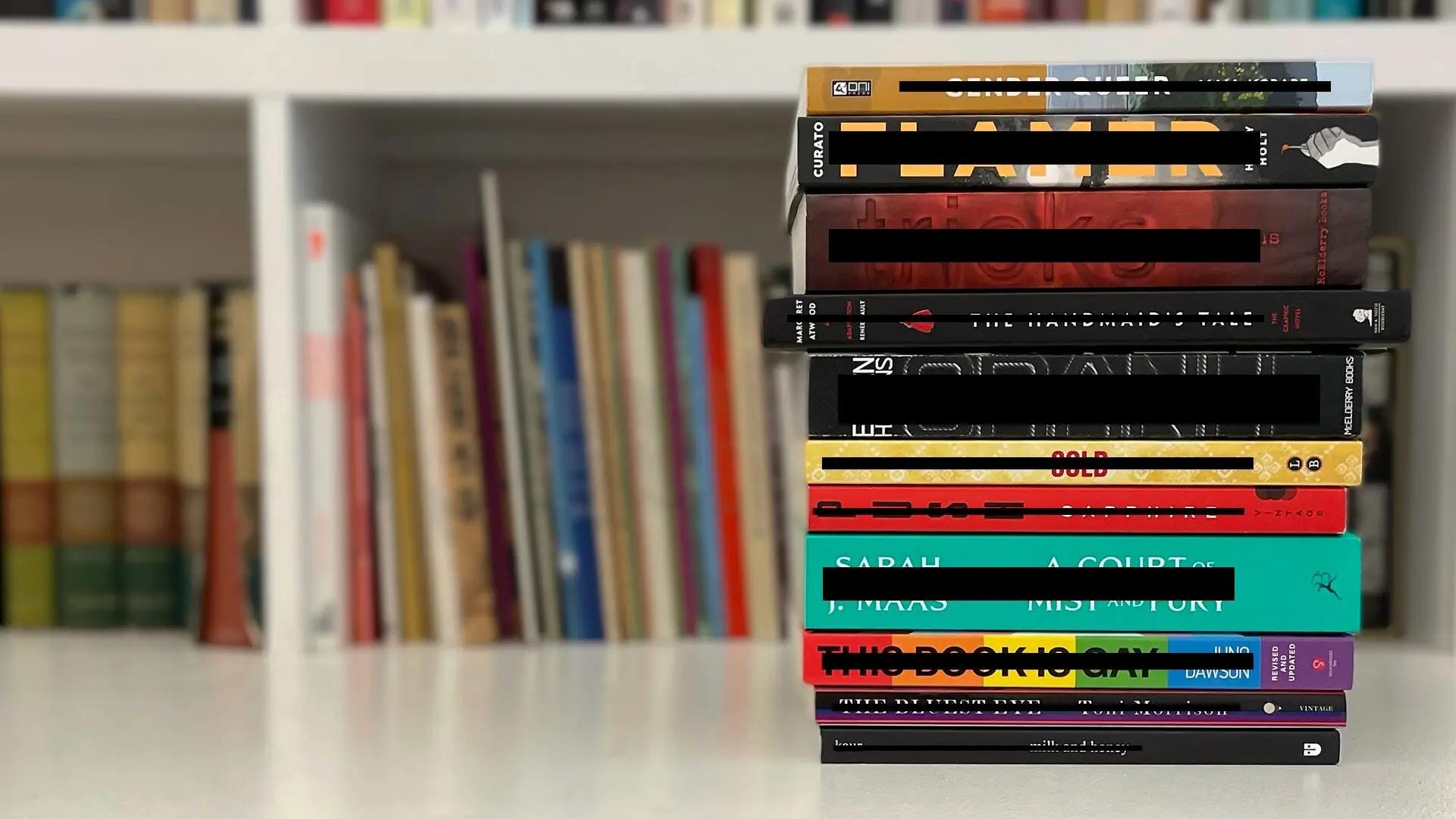
Illustrative image representing restrictions on access to books.
According to PEN America’s October 2026 report, there were 11,982 recorded instances of school book bans during the 2025–26 school year, affecting 7,370 distinct titles. Those figures include restrictions and removals under PEN America’s methodology, rather than nearly 12,000 different books permanently outlawed nationwide.
The distinction matters. So does the scale.
Some books are challenged because they discuss sexuality. Others address racism, abuse, religious differences, or the less flattering chapters of American history.
Now, I’m not suggesting every book belongs in every classroom. A third grader and a high school senior aren’t interchangeable, and parents have every right to raise legitimate questions about age-appropriate material.
But your right to decide what your child reads does not automatically give you the right to decide what everybody else’s child reads.
You don’t want your kid reading a particular book? Work with the school on an alternative. That’s a reasonable conversation.
Demanding that the book disappear for everyone because you personally find it offensive is something else entirely.
It’s authoritarian bullshit dressed up in a PTA sweater.
And the politicians encouraging this nonsense get to pose for photographs, brag about defending family values, and head home before anybody asks whether they’ve actually helped a single child.
You can subscribe for free and keep reading, or become a paid subscriber to help support the work that goes into every edition.
Either way, I’m glad you’re here.
Here’s what really pisses me off about the whole thing.
We spend years telling children to think independently, challenge themselves, respect differences, and stand up for what they believe. Then, when they actually do those things, some adults react as though somebody just released a rabid raccoon into the school cafeteria.
A girl earns an unconventional role. Cancel the show. Students rehearse a play about grief and identity. Cancel that one, too. Middle-school kids want a club. Better call the lawyers. Books that might make young people question something they’ve been taught? Get those dangerous little bastards off the shelves.
What a magnificent educational philosophy.
We apparently want independent thinkers who never think independently, courageous young people who never challenge authority, and creative students who understand that creativity ends wherever somebody else’s political discomfort begins.
And the people behind this keep insisting they’re protecting children.
Bullshit!
Some of them may sincerely believe that. Others are terrified of controversy, desperate for political approval, or convinced their personal beliefs should govern everyone else’s lives. But sincerity doesn’t excuse stupidity, and good intentions don’t magically erase the damage.
If your idea of protecting children requires humiliating them, restricting their opportunities, or treating ordinary school activities like threats to civilization, maybe you ought to ask yourself whether you’re protecting the kids or protecting your own narrow-minded ass from having to deal with a changing world.
I keep thinking about Fiddler on the Roof.
It wasn’t an easy show. It dealt with painful subjects, and it asked teenagers to understand lives and experiences far removed from their own. Nobody wrapped us in ideological bubble wrap before we went onstage.
We rehearsed. We learned. We screwed things up and tried again. We became a cast.
And somewhere in the middle of all that, a kid with maybe two lines discovered he could leap into the air and touch his palms to his toes.
I can still remember that feeling more than fifty years later.
That’s what these self-appointed guardians of childhood don’t seem to understand. The important part of a school play isn’t always the performance. Sometimes it’s the kid in the background discovering something about himself that he’ll carry for the rest of his life.
Ana Mota should have had the chance to play Seymour. The Ohio students deserved better than having an administrative mess dumped in their laps. The Virginia kids shouldn’t have needed lawyers to establish that they deserved the same opportunities as their classmates.
And the next time some politician or school board member starts lecturing us about protecting children, I’d like somebody to ask a simple question.
“Protecting them from what, exactly?”
From books? From plays? From friendships? From discovering they might be capable of something extraordinary?
Or are you really protecting yourselves from having to deal with people who think differently?
I got one of the best memories of my life out of a high school musical.
These kids got a front-row seat to adult cowardice.
And if you’re one of the adults responsible for turning their childhood into your personal political battlefield, here’s my advice.
Get your sanctimonious ass out of the way.
The kids have a show to put on.
If this was worth your time, hit Like, Restack, or share it. That’s how independent work like this finds new readers.
The Bullshit Detector
Three more claims that deserve to be dragged into the daylight.
1. The Great Kansas Beef Apocalypse
Claim: Republican Sen. Roger Marshall said Democratic Senate candidate Adam Hamilton wants to shut down the beef industry.
Bullshit: 💩💩💩💩 — Four out of five.
Why: Hamilton discussed cattle emissions and dietary choices during a 2020 sermon about climate change. He never proposed shutting down the beef industry. During his Senate campaign, he explicitly supported Kansas cattle producers.
There’s a considerable difference between discussing methane emissions and declaring war on every steakhouse between Wichita and Topeka.
But apparently, “My Opponent Once Discussed Cow Farts” wasn’t frightening enough for the campaign. Source: PolitiFact, October 20
2. The Medicare Chainsaw That Wasn’t
Claim: Democratic campaign ads say Republicans voted to gut Medicare through President Trump’s major domestic policy law.
Bullshit: 💩💩💩 — Three out of five.
Why: The law does include Medicare-related changes, but the sweeping claims in some advertisements exaggerate their scope. FactCheck.org found that the changes are relatively narrow and affect a comparatively small share of beneficiaries.
That’s not an endorsement of the legislation. It’s a reminder that criticizing a real policy doesn’t give anybody permission to invent a much bigger one.
If your argument is strong, you shouldn’t need to inflate it until it looks like the Stay Puft Marshmallow Man. Source: FactCheck.org, October 16
3. The Disavowal That Apparently Didn’t Count
Claim: Republican Michigan Senate candidate Mike Rogers said his Democratic opponent, Abdul El-Sayed, refused to disavow the Muslim Brotherhood.
Bullshit: 💩💩💩💩💩 — Five out of five.
Why: When directly asked whether he would disavow the organization, El-Sayed answered affirmatively. He then challenged the implication that his Muslim faith made his loyalty to the Constitution questionable.
Rogers subsequently insisted that El-Sayed hadn’t disavowed the group.
Apparently, we’ve reached the stage of political campaigning where an opponent can answer your question and you can simply declare that the answer never happened.
That’s not fact-checking. That’s sticking your fingers in your ears and yelling until the television cameras leave. Source: PolitiFact, October 19
Elsewhere at Tom Hicks Media
If you enjoy watching human stupidity get the attention it deserves, What The Hell? explores the disasters, absurdities, and spectacular screwups history has generously supplied. Panic Room Sports takes a similarly skeptical look at professional sports, where the hype frequently outruns the facts.
Chart Collision revisits the songs, performers, and stories behind the music we grew up with. Rabbit Ears Classic TV remembers the television shows and commercials that once ruled our living rooms, while The Backlot Ghost digs into the movies that stuck with us long after the credits rolled. And Lotus Purrspective offers the perspective of a cat who considers most human behavior deeply embarrassing.
Buy Me a Tea
If you’d like to help keep independent writing alive, consider buying me a tea. Research takes time, and apparently so does finding new ways for adults to make complete asses of themselves.
One Question
What school experience helped shape who you became? And would today’s students still be allowed to have it?
#OffScript #TomHicksMedia #Education #SchoolCensorship #StudentRights #FreedomToRead #SchoolTheater #ParentalRights #CultureWars