


A while back, I found myself helping somebody untangle a bureaucratic mess. I honestly don’t remember which agency was involved anymore, and that’s probably because the agency wasn’t the part that stuck with me. What I remember is spending hours chasing an answer that should have taken minutes. There was a letter, then a phone call, then a website, then another phone call, then another website. At one point, I became so familiar with the hold music that I started wondering whether psychological warfare required congressional authorization.
The people on the other end of the line weren’t rude. Most of them sounded genuinely sympathetic, like they actually wanted to help. The strange part was that nobody seemed able to explain the decision that had triggered the whole adventure. They could see it, read it, and confirm it existed. What they couldn’t explain was how it had been reached.
The longer those conversations went on, the stranger the situation felt. Everybody involved appeared to be standing outside the same locked room. Somewhere inside that room, a determination had been made, a review had occurred, a conclusion had been reached. Yet every human being I spoke with seemed to be looking at the result from the outside rather than participating in the process that created it.
At first, I chalked it up to ordinary bureaucracy. Government agencies have never exactly been famous for their smooth customer-service experience. But over the next few years, I started hearing versions of the same story from other people. One friend spent weeks trying to understand an insurance decision. Another got trapped in an automated hiring system that kept rejecting applications before a human being ever reviewed them. Veterans described benefits issues that seemed impossible to untangle. People seeking housing assistance, healthcare eligibility, and unemployment benefits kept describing the same feeling. Different institutions, different paperwork, same mystery. You start out looking for the person responsible and somehow end up chasing a ghost.
That’s when it occurred to me that Americans may be having the wrong conversation about artificial intelligence. Most of us think of AI as a future issue. We picture self-driving cars, humanoid robots, and science-fiction scenarios where machines gradually take over jobs, industries, and eventually the world. Meanwhile, something much quieter has been happening right under our noses.
Automated decision-making systems have already become part of everyday life. Government agencies and private companies increasingly use them to prioritize applications, identify possible fraud, screen claims, rank candidates, and allocate resources. Researchers and civil-rights advocates have spent years warning that these systems can produce outcomes that are difficult to understand and even harder to challenge.
The technology itself isn’t necessarily the problem. Most of these systems were created to solve legitimate issues. Agencies face enormous workloads, companies process mountains of information, and technology can improve efficiency, speed up reviews, and help institutions handle tasks that would otherwise overwhelm them. But efficiency and accountability aren’t the same thing.
If you’ve ever spent an hour arguing with a phone tree only to end up exactly where you started, you’re exactly who this newsletter is written for.
What keeps bothering me about these stories isn’t that mistakes happen. Mistakes are unavoidable. Human beings make them, institutions make them, computers make them, and if perfection is the standard, we’re all screwed before breakfast. The issue is what happens after the mistake.
A few decades ago, responsibility usually had an address. If an agency made an error, there was an office attached to it. If a company screwed something up, there was a department responsible for the decision. You might spend days fighting through bureaucracy, but eventually you’d reach somebody who could explain what happened, why it happened, and what your options were for fixing it.
Today, that process often feels different. The representative tells you the system generated the determination. The supervisor explains that the review followed established procedures. The contractor says they merely built the software. The agency says the process is functioning as designed. Everybody seems connected to the decision, yet nobody appears responsible for it.
That distinction matters more than most people realize. A society can survive bad decisions, inefficient agencies, and incompetent bureaucrats. What becomes much harder to survive is a system where responsibility becomes increasingly difficult to locate.
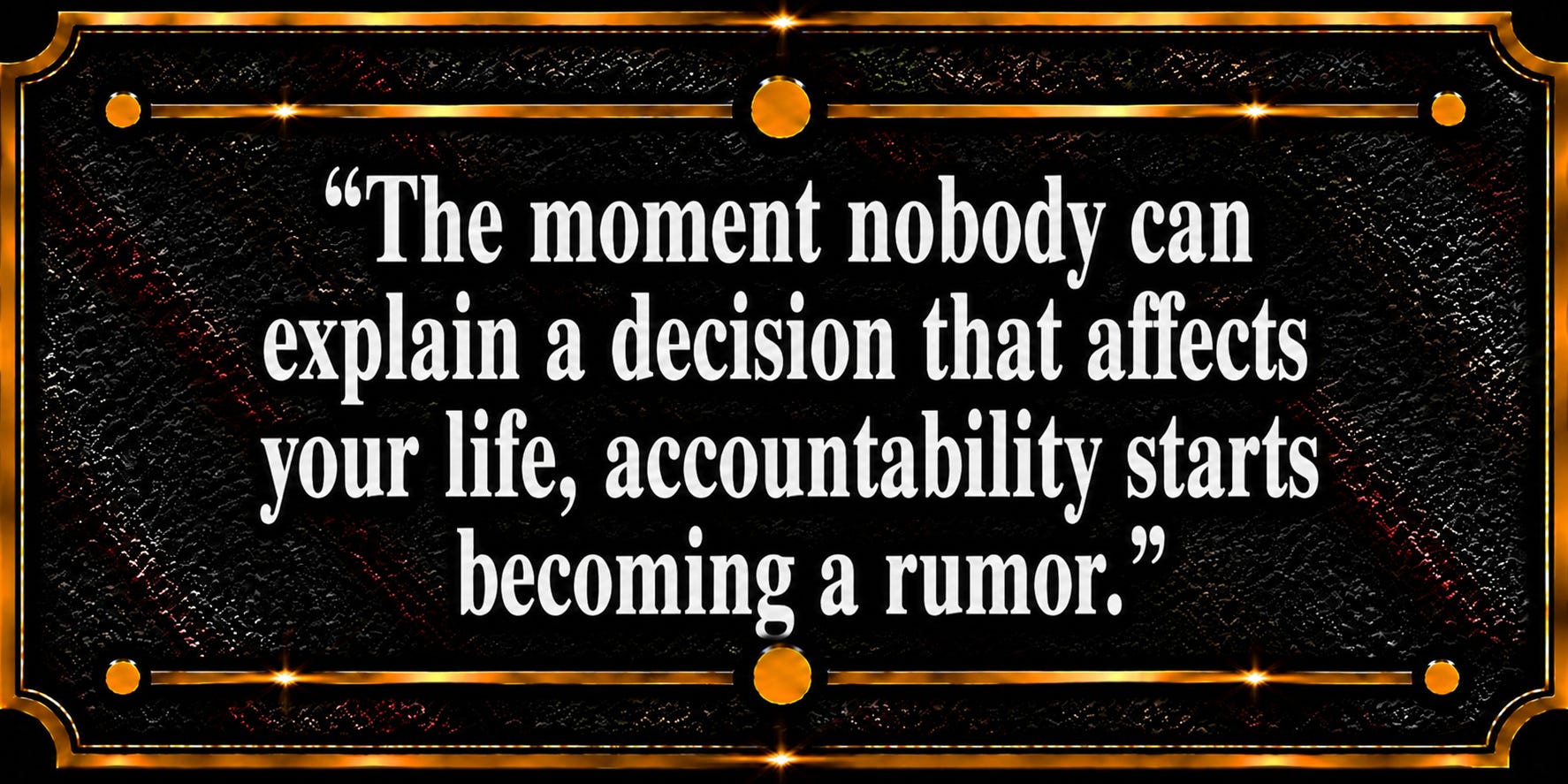
Think about the practical consequences for a moment. Imagine you’re a veteran trying to resolve a benefits issue. Or a senior citizen whose housing assistance suddenly changes. Or a single parent trying to understand why healthcare coverage was interrupted. The immediate problem isn’t the denial, the delay, or the error itself. The immediate problem is finding somebody capable of explaining it, because once that becomes difficult, challenging the decision becomes difficult as well.
That’s where this stops being a technology story and starts becoming a power story. One of the oldest tricks in human history is creating distance between authority and consequences. Kings used layers of nobles. Corporations use layers of management. Modern institutions use procedures, departments, and administrative structures. Sometimes those layers exist for legitimate reasons, and sometimes they create genuine accountability. But they can also obscure responsibility, and power has always preferred a little distance between itself and the people affected by its decisions. Technology simply provides a new place to create that distance.
When an institution can point to a process instead of a person, scrutiny becomes harder. When a citizen can’t determine who made a decision, appealing that decision becomes harder. When responsibility gets spread across software vendors, agencies, contractors, administrators, and review systems, accountability becomes harder to pin down. Not impossible. Just harder.
And history suggests that whenever accountability becomes harder, accountability usually loses.
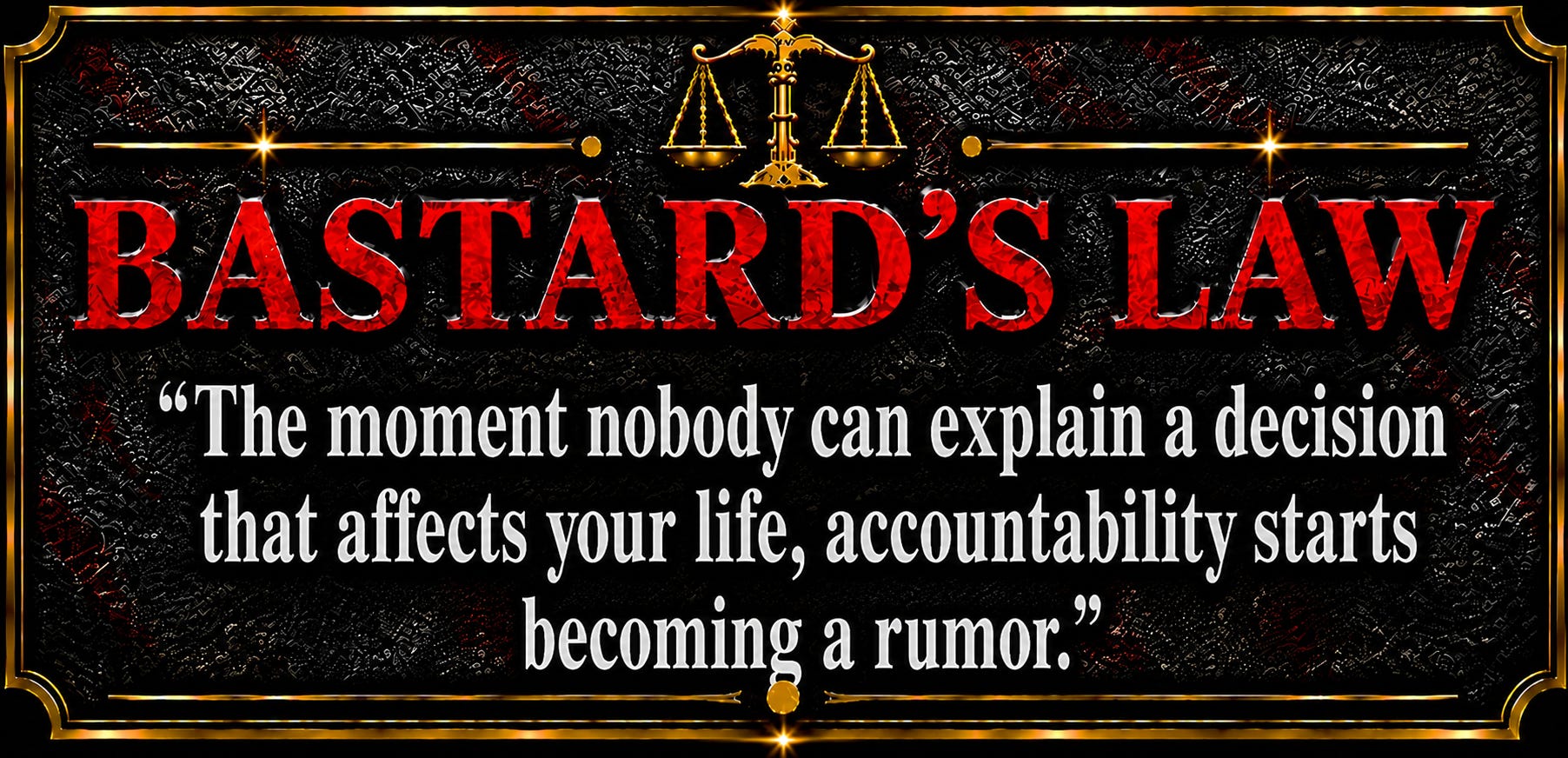
Here’s the part that concerns me most. Nobody I know is worried about a robot becoming president. Nobody is losing sleep over a machine declaring itself ruler of America. The real concern is much more ordinary than that.
Here’s the thing that keeps nagging at me. A democracy doesn’t require perfect people. If it did, we’d have packed this whole experiment in sometime around 1792. What it does require is knowing who made the decision and who answers for it when things go wrong. If an agency makes a bad decision, somebody should be able to explain it. If a policy creates harm, somebody should answer for it. If a system affects people’s lives, somebody should be accountable for how it operates.
Those principles sound obvious until you start examining how many modern decisions emerge from processes that few people understand and even fewer can explain.
That’s why the AI conversation often misses the point. The danger isn’t that computers will replace democracy. The danger is that institutions will gradually place more and more distance between citizens and the people exercising authority over them. Most of the time, that won’t look dramatic. It will look like paperwork, automated notices, and endless appeals. It will look like a citizen trying to understand a decision and discovering that nobody seems capable of explaining where it came from.
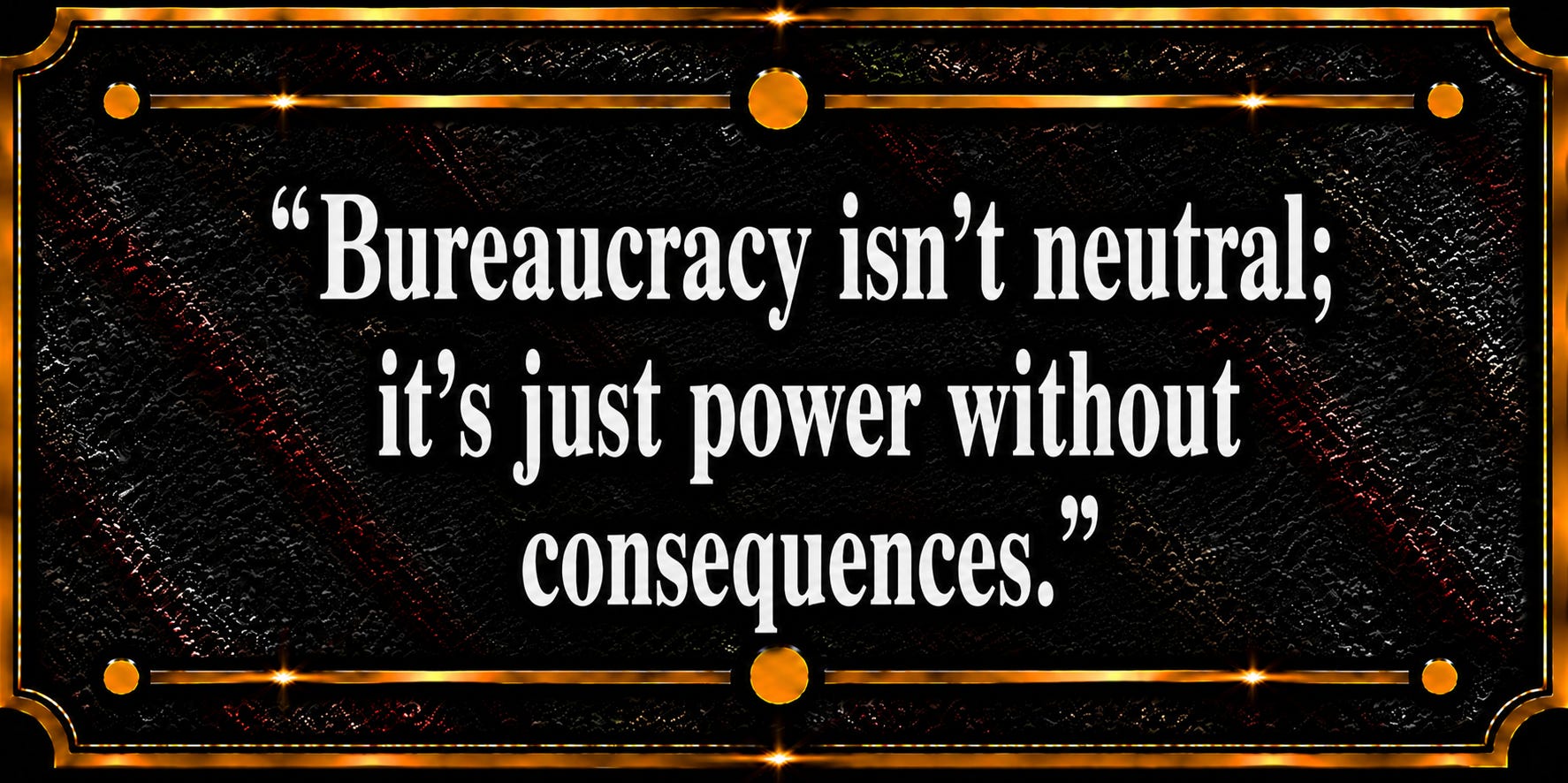
The irony is that technology can absolutely improve government. It can make agencies faster, more efficient, and more responsive, and, used correctly, automated systems can reduce errors, expand access, and improve public services. But none of those benefits eliminates the need for transparency, due process, or accountability. Because once citizens lose the ability to understand how decisions are made, they slowly begin losing the ability to challenge those decisions as well.
And that’s where this story circles back to the guy sitting at his kitchen table staring at a letter that doesn’t make sense. The real question isn’t whether the decision came from a human being or a machine. The real question is whether anybody can explain it. Because democracy isn’t merely the right to vote. It’s the right to know who told you no.
The most dangerous government official is the one you can’t identify, can’t question, and can’t hold accountable. If power is learning how to hide behind algorithms, somebody still has to keep shining a flashlight into the machinery.
I’m retired, reader-funded, and stubborn enough to keep asking questions the people in charge would rather avoid. If you’d like to support that work and unlock War Room briefings, archives, and subscriber extras, consider upgrading today.
After all that, you may need a break from me yelling about invisible power structures. Lotus is waiting with fresh judgment, feline wisdom, and evidence that humans were making questionable decisions long before algorithms got involved.
Like, share, and subscribe. Every new reader helps keep Bastardonia’s bullshit detectors fully operational.
☕ Buy Me A Coffee: Because somebody has to stay awake long enough to figure out who programmed the robot bureaucrat.
#TheUnredactedBastard #AI #ArtificialIntelligence #Government #Democracy #Technology #Accountability #CivilRights #Politics #Bastardonia