



The moment you decide it can’t happen here is the moment it’s already happening.
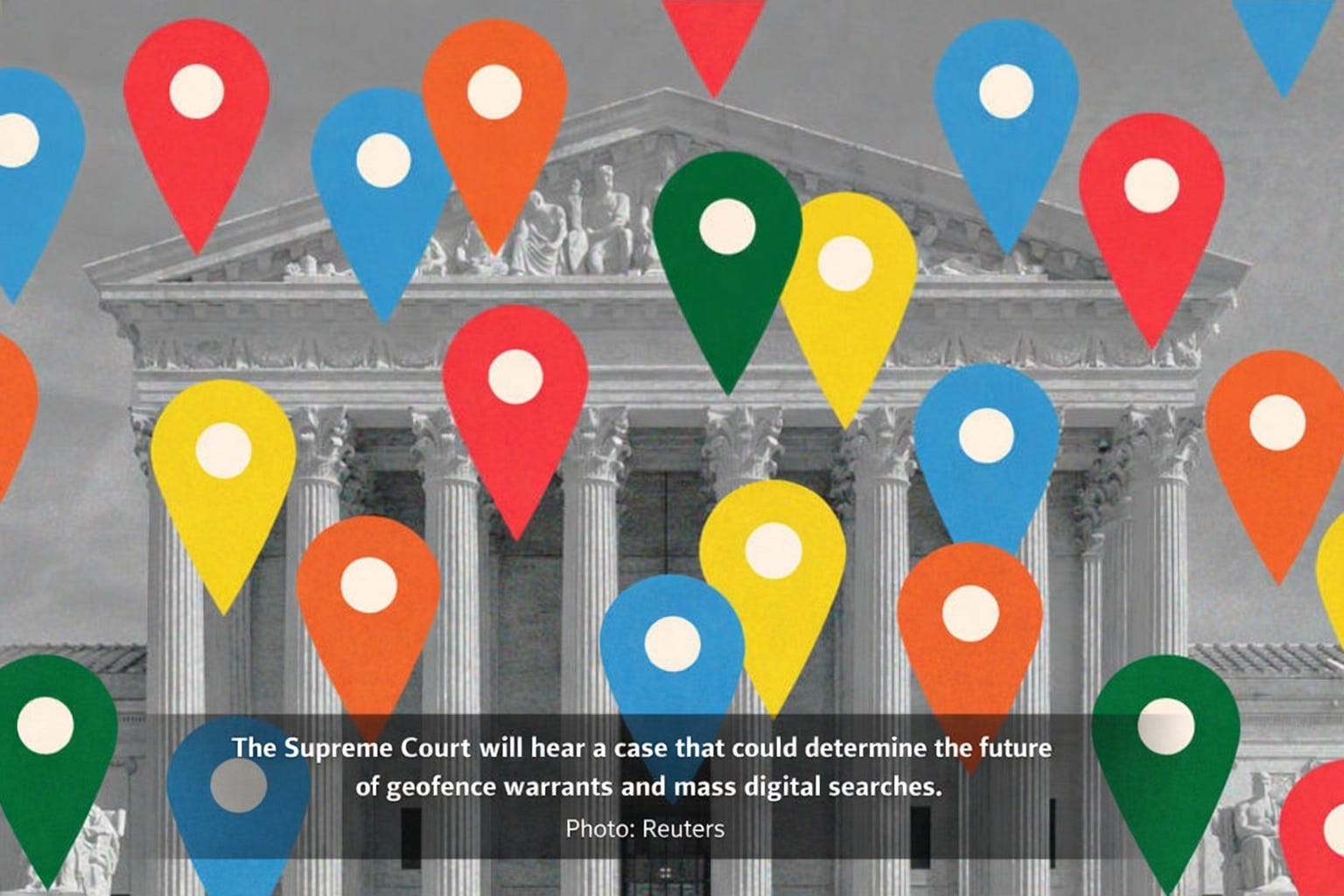
The Supreme Court has agreed to hear a case that will determine whether law enforcement can vacuum up location data from thousands of people’s cell phones. Thousands of people who have done absolutely nothing wrong. The theory is that somewhere in that pile of innocent Americans is the one guy they’re actually looking for.
This is called a geofence warrant, and if you haven’t heard of it, that’s not an accident. I’ll get to that.
Here’s how it works. Police connect a crime to a specific location and time window. They go to a judge, get a warrant, hand it to Google or Apple or whoever’s been quietly sitting on your location data, and they say, “Give us everyone.” Not the suspect. Not someone they have reason to believe did anything. Everyone who was in the vicinity. The whole digital pile is dumped on a table, and then they sort through it until they find whoever they think they’re looking for.
The Supreme Court has never ruled on whether this is a constitutional search. This will be the first time the justices actually decide if these digital dragnet searches violate the Fourth Amendment. That’s where we are right now.
If you’re not subscribed yet, you’re reading this the hard way. I do this daily. No sponsors. No filter.
Subscribe if you want it in your feed instead of chasing it down.
So, let me make sure we’re on the same page about what this actually means in practice, because “geofence warrant” sounds like something that happens to other people, and it absolutely fucking doesn’t.
You went to a protest last year. You walked past a bank that got knocked over an hour before you got there. You drove through some neighborhood on a Tuesday for reasons you don’t even remember anymore. Under the practice that law enforcement is currently defending before the Supreme Court, every one of those situations potentially drops your phone into a pile that cops are combing through without ever having a reason to suspect you of a goddamn thing.
That isn’t a targeted investigation. That’s fishing with a badge attached to the pole.
The Fourth Amendment was written specifically to prevent this kind of shit. The founders weren’t being philosophical about it either; they had lived it. The British used something called a Writ of Assistance, which was basically a general warrant that let Crown officials search wherever they wanted, whenever they wanted, for whatever the hell they felt like looking for. The entire point of requiring particularity in a warrant, of making the government tell a judge specifically who they’re after and why, was a direct response to that experience. These were not abstract principles. They were pissed off people writing down what they never wanted to live through again.
What geofence warrants do is bring that logic back with better technology. No soldiers walking into your house this time. Just a quiet data request walking into your phone while you’re sitting on the couch watching television. You never know it happened. Which honestly makes it worse, not better.
The government’s whole defense rests on a legal fossil called the “Third Party Doctrine.” This is a theory the Supreme Court cooked up in 1979. Back then, the most sensitive thing you could hand a “third party” was a paper check or a long-distance phone bill.
The logic is simple and completely insane. The second you share information with a company like Google or AT&T, the Court thinks you “voluntarily” gave up any expectation of privacy. You handed it over, so the cops don’t need a warrant to take it. It’s total bullshit.
Let’s be real here. In 1979, “sharing data” meant physically handing someone a slip of paper. Yesterday, it means existing while your phone is turned on. You didn’t “choose” to tell Google you were at that protest or that doctor’s office. You were fast asleep, and your phone was just being a phone.
During oral arguments yesterday, the Gorsuch versus Alito divide told you everything you need to know about where this court actually is.
Gorsuch, who is usually the conservative justice most likely to tell the government to go fuck itself on overreach questions, went straight at the Justice Department lawyer. He asked point-blank what the difference is between a geofence warrant and a cop getting a warrant to search every single room in a hotel just to find one guy. Search every storage unit in a facility. Every safe deposit box in a bank. “What’s the difference between those cases and this case?” MarketScreener, he asked. There wasn’t a good answer, because there isn’t one.
Alito was playing an entirely different game, and this is the part most people are going to miss completely.
Alito repeatedly questioned why the court was even hearing the case at all. “This involves a Google feature that doesn’t exist any longer,” he said, pointing out that Google has since moved location data off its own servers and onto individual devices, making it harder for law enforcement to pull in bulk. CNN His actual words were that the justices would essentially be writing a law review article on a subject with little relevance going forward.
Read that again. A sitting Supreme Court justice is floating the idea that maybe this whole constitutional question is moot because Google already quietly changed how they store your data. Not because your rights were protected. Because Google made a business decision that happened to make the warrant process more inconvenient.
That’s not a legal argument. That’s a corporate get-out-of-jail-free card dressed up in judicial language. And if that logic holds, it means your Fourth Amendment protections going forward depend entirely on whether tech companies find it profitable to keep restructuring their data storage. That is a completely fucking terrifying place to leave this.
Whether the tech changed or not, the principle is the same. Treating our physical movements like a public phone bill isn’t just a reach. It’s a total fucking hallucination of how modern life works.
There’s a version of this ruling that treats that distinction as meaningful. There’s another version that doesn’t. We’re about to find out which court we actually have.
And here’s what’s going to happen. Most people will hear the words “geofence warrant” and “Fourth Amendment jurisprudence,” and their eyes will glaze over before they get to the part where this directly affects them. That’s not a coincidence. Technical language does a tremendous amount of work to make dangerous things sound boring.
So let me just say it plainly: The police want the legal right to know where you were, when you were there, and who else was in the area with you, and they want to be able to collect that information without ever having a reason to think you did anything wrong. The Supreme Court is deciding right now whether that’s okay.
That’s the whole thing. That’s what’s being argued.
Pay attention to this one.
Truth Bomb
The Fourth Amendment was never about protecting guilty people from getting caught. It was about protecting everyone else from a government that doesn’t need a reason to come looking. The second we decided convenience was worth more than that protection, we handed over something we’re going to have a hell of a time getting back. The Court has a chance to draw a line here. Whether they remember what the line was actually for is another question entirely.
Upgrade
I’m retired. This is reader-funded. No sponsors. No corporate leash. No one telling me to tone it down.
Paid subscribers get bonus rants, full archive access, priority Q&A, and deeper dives that don’t make it into the free feed.
Upgrade and support independent work that doesn’t play nice.
If you want the same reality with a quieter voice and sharper claws, go check out Lotus Purrspective.
That’s where the judgment is calmer, cleaner, and somehow even more brutal.
☕ Buy Me A Coffee
If this hit, consider supporting the work because yelling, “What the fuck are we doing?” at the news doesn’t pay for itself.
#GeofenceWarrants #FourthAmendment #SupremeCourt #DigitalPrivacy #SearchAndSeizure #CivilLiberties #SurveillanceState #ConstitutionalRights #UnredactedBastard #PoliceState #DataPrivacy #SCOTUS