

Tom Hicks | October 16, 2026
Editorial Note:
We’re going to talk about affordable housing, which is one of those issues everybody agrees is a problem until somebody proposes doing something about it. Republicans, Democrats, homeowners, developers, and local governments all have a part in this story. Some of their concerns are legitimate. Some of their arguments deserve a closer look. And some of us may be contributing to the very problem we’re complaining about.
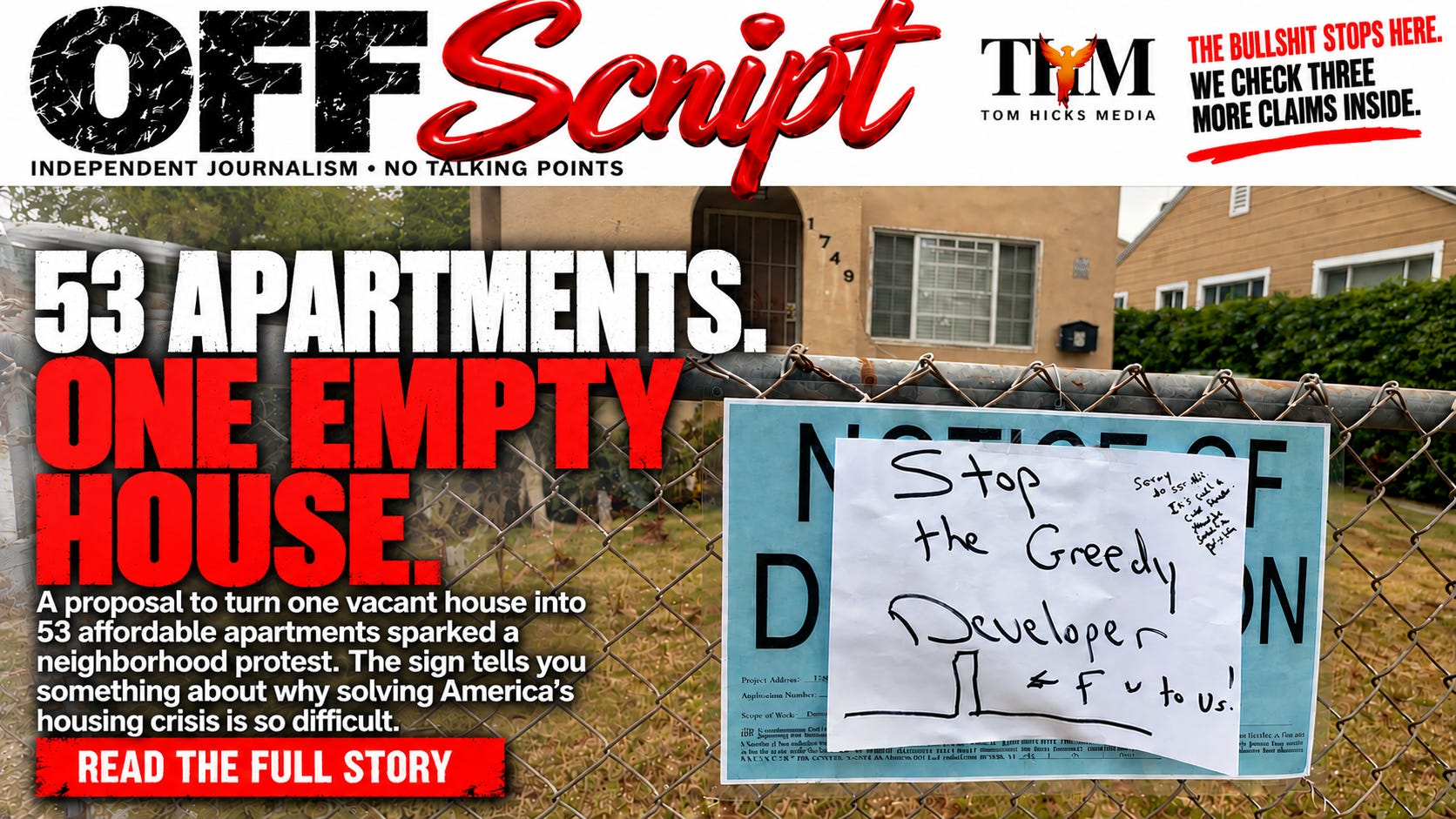
I’ve been thinking about the housing crisis, and there’s something about the conversation that doesn’t quite add up.
Everybody agrees that housing costs too much. Young people are struggling to buy their first homes. Renters are watching more of their paychecks disappear into monthly payments, and people who have lived in the same communities for decades are discovering that their children can’t afford to live anywhere near them. Politicians from both parties promise to fix it, developers insist we need to build more, and homeowners complain that the house down the street just sold for an absolutely ridiculous amount of money.
Of course, if their own house sells for that ridiculous amount of money, that’s an entirely different conversation.
I don’t think there’s anything particularly sinister about that. Most people who own homes have spent years paying for them, maintaining them, and watching their equity grow. For many, that house represents the biggest financial asset they’ll ever have. Naturally, they want it to increase in value. I would, too.
But there’s a contradiction hiding in there, and it’s one we don’t talk about nearly enough. We want housing to become more affordable for everybody else while hoping the value of our own property continues climbing. We want our kids to be able to buy homes, but we also want our retirement investments protected. Somehow, we’re expecting those two things to happen simultaneously, and we’re getting annoyed that nobody has figured out how to pull it off.
Now imagine that somebody announces plans to build 150 apartments in your town. Maybe the developer has purchased an old commercial property that’s been sitting empty for years. Maybe the apartments would be close to shopping, public transportation, and jobs. On paper, it sounds like the sort of project we’ve been saying we need.
Then the neighbors find out.
Suddenly, everybody’s an expert on traffic engineering, stormwater runoff, school capacity, and the architectural character of the community. People who haven’t attended a town meeting since the last time somebody threatened to change the garbage collection schedule are organizing petitions and demanding answers.
Some of those questions absolutely deserve answers. If a development is going to create dangerous traffic conditions or cause flooding in somebody’s basement, that’s a legitimate problem. If the water system can’t handle another 150 apartments, the developer needs to explain how that gets fixed. But suppose those concerns can be addressed. Suppose the developer makes reasonable changes, the engineers sign off, and the project complies with the applicable safety requirements.
What happens then?
That’s where the conversation often gets interesting, because sometimes the objection isn’t really about traffic or drainage. Sometimes people simply don’t want apartments in their neighborhood.
I can understand that feeling, too. Change can be uncomfortable, especially when it involves the place where you’ve chosen to live. But understanding why somebody feels that way doesn’t mean the rest of the community should automatically accept the consequences.
Somebody has to live in those apartments. If we don’t build them here, where exactly are those people supposed to go?
Here’s where the politics gets awkward. Republicans have traditionally championed private property rights, limited government interference, and the idea that markets should respond to supply and demand. Those are familiar conservative principles, and there’s a perfectly reasonable argument behind them. If somebody owns a piece of property and wants to develop it responsibly, government shouldn’t make the process unnecessarily difficult.
Until, of course, the property owner wants to build something the neighbors don’t like.
Now the discussion turns to preserving single-family neighborhoods, protecting community character, and maintaining restrictions on what can be built where. The developer’s property rights suddenly become less compelling than the neighbors’ desire to keep everything looking exactly as it did when they moved in.
There’s a legitimate role for zoning. Nobody wants a chemical processing plant opening beside an elementary school, and nobody should have to accept a development that creates demonstrable safety hazards. But when the argument becomes that a neighborhood should remain exclusively single-family because that’s what the existing homeowners prefer, we’re no longer having a straightforward conversation about property rights. We’re deciding whose property rights matter more.
Democrats have their own complications, and they’re no less interesting. Affordable housing is supposed to be a priority, along with economic opportunity, inclusion, environmental protection, and making communities accessible to people who aren’t wealthy. Those are all worthwhile goals, but they don’t always coexist as comfortably as campaign speeches suggest.
Consider an affluent community that strongly supports affordable housing while resisting proposals to build it locally. Residents may raise concerns about trees, open space, wetlands, neighborhood density, or the appearance of new buildings. Sometimes those objections are completely justified. Sometimes they’re the same arguments that have been used for decades to keep new housing out of desirable neighborhoods.
The tricky part is separating one from the other.
If protecting a wetland means rejecting a particular development, fine. Wetlands matter. But if every proposed development somehow turns out to threaten something precious, and the only acceptable alternative is to build somewhere else, eventually we have to wonder whether environmental protection has become a very convenient way to avoid having new neighbors.
Notice that neither party has to be lying about its principles for these contradictions to exist. People can genuinely believe in property rights, affordable housing, environmental protection, and neighborhood preservation. The problem comes when those principles collide, and somebody has to decide which one gets priority.
That’s the part politicians tend to leave out of the speeches.
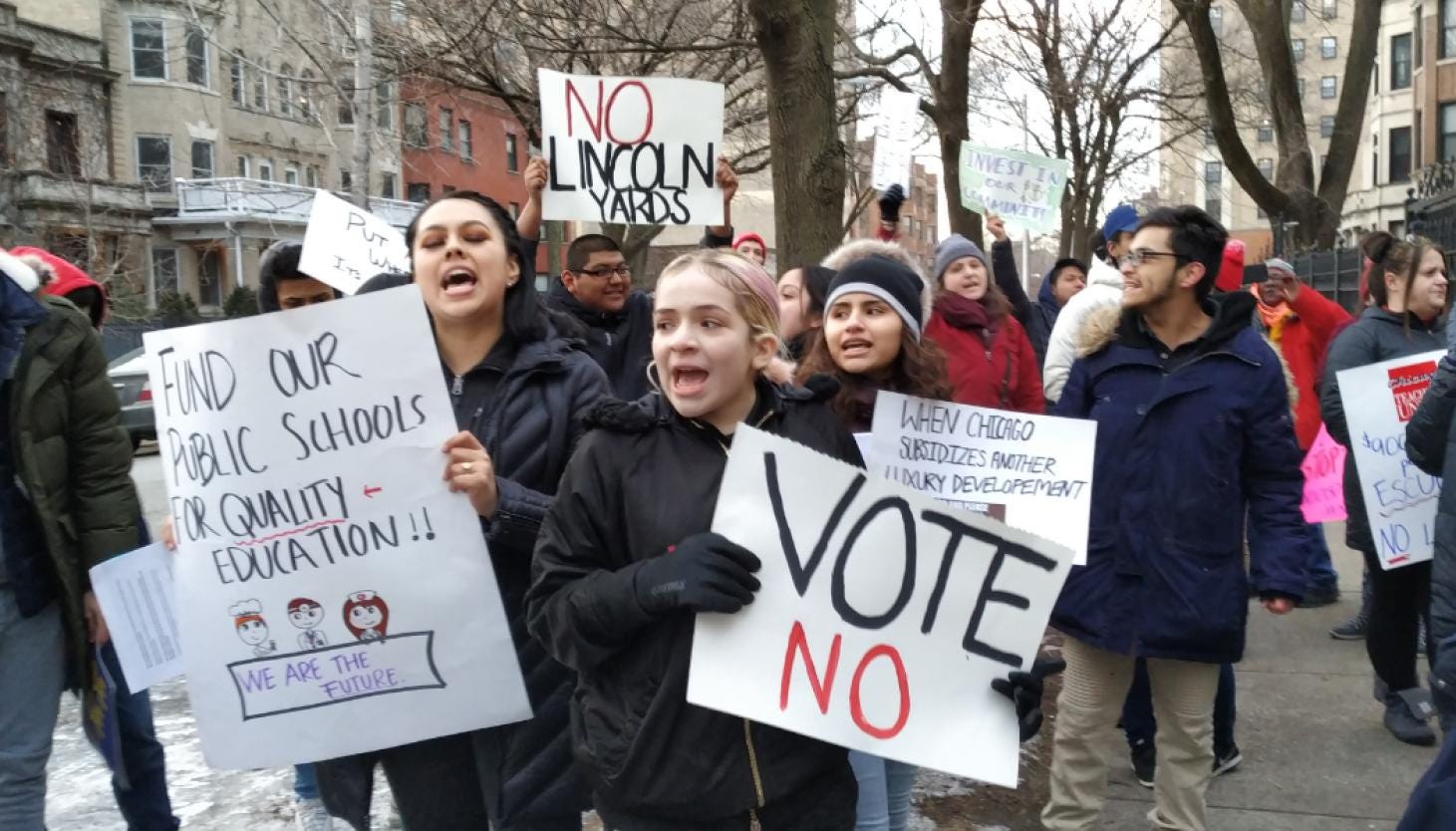
Chicago residents protest the Lincoln Yards development and public subsidies for developers in April 2019. Their concerns included displacement and rising rents, a reminder that opposition to development isn’t always opposition to housing. Charles Edward Miller / CC BY-SA 2.0.
.jpg?utm_source=chatgpt.com)
And there’s an important distinction in that photograph. Those Chicago protesters weren’t simply demanding that nobody build anything near them. They were questioning how public money was being spent and whether the people already living in surrounding neighborhoods would benefit or be pushed out.
That’s a different argument from insisting that an apartment building will ruin the view from your back porch. We shouldn’t lump the two together just because both involve somebody objecting to a development.
Subscribe to Off Script. It’s free—or help fund the research and tools we use every day. We dig into the contradictions, check the claims, and try to make sense of the things that don’t quite add up.
Now, before this turns into a philosophical argument about people who live in neighborhoods with names like Whispering Pines Estates, let’s look at something that actually happened.
On October 5, the Planning and Zoning Commission in Mansfield, Connecticut, voted 8–1 against a proposal to redevelop the Carriage House Apartments near the University of Connecticut. The developer wanted to replace an existing 64-unit apartment complex with 192 units, a net increase of 128 apartments.
An October 10 report by CT Insider describes the objections, which included concerns about groundwater, density, land use, and whether the project would address the community’s actual housing needs. Some commissioners questioned whether Mansfield needed more student-oriented apartments rather than housing aimed at other residents.
Those aren’t frivolous concerns. If a community has a shortage of housing for working families, adding student apartments may not solve that particular problem. And if there are genuine water issues, they need to be resolved before anybody starts digging.
But the commission’s decision raises a question that extends well beyond Mansfield.
What happens to the demand for those additional apartments?
It doesn’t necessarily disappear because eight people voted against the proposal. The students and other prospective tenants who might have lived there still need housing. The developer may revise the project, pursue another location, or abandon the effort altogether. Each possibility has consequences, and the people making the decision ought to understand them.
I’d also like to know whether the problems identified by the commission were fixable. Could the density have been reduced? Could the water concerns have been addressed through another approval process? Was there a version of this development that would have worked for the community?
Those questions matter because rejecting a bad proposal can be good public policy. Rejecting every proposal until the housing shortage becomes somebody else’s problem is something else entirely.
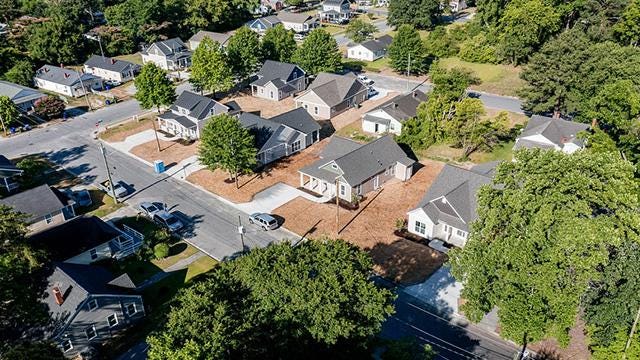
Affordable housing construction in Greenville, North Carolina, February 2024. City of Greenville / Public domain.
.jpg?utm_source=chatgpt.com)
Here’s something else that complicates the familiar story about politicians doing nothing.
Congress actually managed to agree on a major housing bill this year.
I know. Take a moment to appreciate the rarity of that sentence.
The 21st Century ROAD to Housing Act became law on July 11. It included provisions addressing housing supply, financing, regulatory barriers, and incentives for communities that modernize their housing policies.
That deserves recognition. It’s easy to complain about Washington’s inability to accomplish anything, but when lawmakers from both parties support something substantial, we ought to acknowledge it.
The catch is that much of what happens next depends on states and local governments. Congress can create incentives, remove certain barriers, and provide resources, but local zoning boards still have enormous influence over what actually gets built.
As Pew explained in its examination of the law, much of its success will depend on how state and local governments respond.
So Washington has taken a step toward encouraging more housing, and now thousands of communities have to decide what they’re willing to permit.
Which brings us to another uncomfortable possibility: maybe the politicians aren’t always the biggest obstacle.
A national survey commissioned by Pew in September 2023 found substantial support for policies intended to increase housing supply. Eighty-six percent supported simplifying and speeding up permitting, while 80% supported allowing apartments near transit and job centers.
But support fell when the proposed changes came closer to traditional single-family neighborhoods. Fifty-six percent supported allowing townhouses and small multifamily buildings on any residential lot, while 49% favored reducing minimum lot sizes.
That tells us something important. Americans generally support more housing, but enthusiasm becomes more complicated when the discussion turns to changing the places where people already live.
Pew also found that people who speak at public meetings about development tend to be less supportive of additional housing than the broader communities they represent.
Think about what that means.
Suppose most people in a town favor building more housing, but the people most strongly opposed to a particular project are the ones who attend every hearing, organize neighborhood groups, and contact elected officials. The people who would benefit from the apartments may not even live in town yet. They can’t vote in the local election, and they probably don’t know there’s a zoning meeting scheduled for Thursday night.
One group has a voice in the process. The other may not even know the process exists.
That’s a pretty significant imbalance, especially when the decisions being made will determine who gets to live in the community in the future.
And that’s something worth remembering the next time a handful of people stand up at a meeting and announce that the entire community opposes a project.
Of course, developers aren’t exactly innocent bystanders in all this. They’re businesses, and businesses generally don’t spend millions of dollars building things unless they expect to make money. There’s nothing inherently wrong with that, but it does mean their interests aren’t automatically identical to the interests of people who need affordable housing.
A developer might argue that a new luxury apartment building will help relieve pressure on the housing market. That can sound ridiculous to somebody earning $40,000 a year who couldn’t afford the rent in that building if the landlord threw in free utilities and a personal chef.
But the economic argument isn’t necessarily nonsense.
When higher-income renters move into newly constructed apartments, they may leave older, less-expensive units available for somebody else. Those moves can ripple through the housing market. A Pew analysis of housing construction and rent growth found that communities adding more housing generally experienced slower rent growth, including in older and more affordable properties.
That doesn’t mean building a luxury apartment complex will magically solve the housing crisis. It means additional supply can help relieve pressure on existing housing, even when the new units themselves are expensive.
Still, we shouldn’t pretend that slowing rent increases is the same as making housing affordable to somebody who can barely cover the rent they’re paying now.
That’s where direct assistance, income-restricted housing, and other targeted programs become important. Some households simply cannot afford what the private market can profitably provide, no matter how efficiently developers operate.

Step Up on 5th in Santa Monica, California, provides permanent affordable housing with supportive services. Calderoliver / CC BY-SA 3.0.

And the numbers are ugly.
According to Harvard’s State of the Nation’s Housing 2026, 83% of renter households earning less than $30,000 were housing-cost burdened in 2024. More than two-thirds of those households spent over half their income on housing and utilities.
Imagine trying to build any kind of financial security when half your paycheck disappears before you’ve bought groceries, paid the electric bill, or put gas in the car.
People talk about saving for a down payment as though it’s simply a matter of discipline. Stop buying expensive coffee, cut back on restaurants, and put a little money aside every month. That’s wonderful advice if there’s actually money left over to put aside.
For somebody spending half their income just to keep a roof overhead, the financial plan is considerably simpler.
Pay the rent. Hope nothing breaks. If something does break, figure out which bill can wait.
That’s the reality behind the statistics, and it’s worth keeping in mind when we’re discussing whether a development should have 100 apartments or 150.
But I keep coming back to the people who already own homes, because I think that’s where the contradiction becomes personal.
Let’s say you’ve lived in the same house for 25 years. You’ve paid the mortgage, maintained the property, and watched the neighborhood change around you. Maybe you’ve finally reached the point where the house is worth considerably more than you paid for it.
Then somebody proposes a development nearby.
You worry about traffic. You worry about noise. You worry about whether the neighborhood will still feel like the place you chose to live.
I get it.
But somewhere else, a young family is looking for a place to live, and the community you’ve enjoyed for 25 years is effectively telling them there’s no room.
Maybe the development really is inappropriate. Maybe the infrastructure can’t support it, or the developer hasn’t adequately addressed the environmental concerns. Those are legitimate reasons to push back.
But if every available piece of land is unsuitable, every apartment building is too large, every proposal threatens neighborhood character, and every alternative belongs somewhere else, eventually we have to ask whether we’re solving a housing problem or simply defending the status quo.
Because the status quo is working pretty well for some people. It’s just not working for everybody.
There’s another part of this that bothers me. We tend to talk about housing as though the only choices are preserving existing neighborhoods exactly as they are or allowing developers to build whatever they want wherever they want.
That’s a ridiculous way to frame the problem.
Communities can establish reasonable standards, require infrastructure improvements, protect environmentally sensitive areas, and still make room for additional housing. Developers can revise proposals. Local governments can allow duplexes, townhouses, accessory dwelling units, and smaller apartment buildings without turning every residential street into downtown Manhattan.
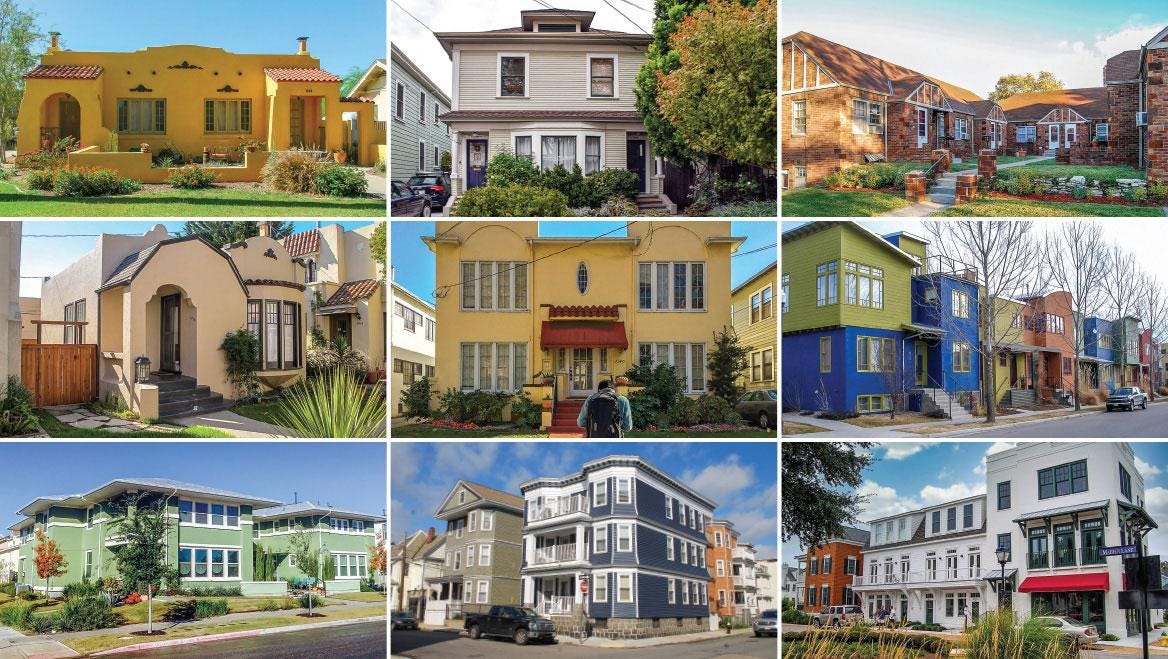
Sample of the smaller-scale housing that can fit into established neighborhoods. Sightline Institute, Missing Middle Homes Photo Library / CC BY 2.0.

There are compromises available, although they require something that seems to be in increasingly short supply: a willingness to accept that somebody else’s needs might occasionally matter as much as our own preferences.
And maybe that’s the most uncomfortable part of this whole discussion.
I don’t think most Americans are deliberately trying to make housing unaffordable. I think people make decisions that seem perfectly reasonable from where they’re standing. Homeowners want to protect their investments. Environmental advocates want to protect natural resources. Local officials want to respond to constituents. Developers want projects that make financial sense.
None of those motivations is automatically wrong.
But when you put them together, you can end up with a system that makes it extraordinarily difficult to build enough housing in the places where people actually want and need to live.
The consequences don’t arrive all at once. They accumulate over years. A development gets rejected here. A zoning restriction prevents another one there. A permitting process becomes too expensive or unpredictable. A community refuses to allow anything other than single-family homes on large lots.
Eventually, the shortage becomes severe enough that everybody starts demanding action.
Then, when somebody proposes action, the whole process starts again.
I’m not suggesting we should approve every housing development. That would be irresponsible. Communities need planning, and residents deserve a meaningful voice in decisions that affect their homes.
But there’s a difference between having a meaningful voice and having an unlimited veto over the possibility of change.
We ought to be able to recognize that difference.
The next time somebody proposes new housing in your community, ask the hard questions. Ask about traffic, water, infrastructure, affordability, and whether the developer is being straight with the public. Those are all things responsible citizens should want to know.
But once those questions have been answered, ask yourself something else.
If this project isn’t acceptable, what would be?
Because if the answer is that nothing seems quite right, maybe the problem isn’t entirely with the developers, the politicians, or the people looking for somewhere to live.
Maybe some of the accomplices are a little closer to home than we’d care to admit.
And maybe that’s why this problem has been so damn difficult to solve.
If this was worth your time, hit Like, Restack or share it. That’s how independent work like this finds new readers.
The Bullshit Detector
Three claims that have nothing to do with housing, but still deserve to be taken out behind the woodshed.
Claim #1: The Great Wall of China is visible from the Moon.
BULLSHIT. 💩💩💩💩💩
Apparently, being impressive on Earth isn’t enough. Somebody decided the Great Wall needed to be visible from a quarter-million miles away, too.
It isn’t. NASA explains that the wall cannot be seen from the Moon and is difficult to distinguish even from low Earth orbit without magnification. It’s long, certainly, but relatively narrow and blends into the surrounding landscape.
It’s an impressive engineering achievement without requiring astronauts to admire it from space.
Claim #2: Goldfish have a three-second memory.
BULLSHIT. 💩💩💩💩
Goldfish can learn associations, recognize patterns, and remember information far longer than three seconds. A study published in Science demonstrated memory formation in goldfish after a single learning experience.
So the next time somebody compares your memory to a goldfish’s, you might want to consider whether the fish is getting the short end of the insult.
Claim #3: Humans use only 10% of their brains.
BULLSHIT. 💩💩💩💩💩
This one has been hanging around for generations, probably because people love imagining they’ve got 90% of their brain sitting around waiting to unlock superpowers.
As neuroscience researchers explain, there’s no dormant 90% waiting for somebody to flip the switch. Different areas perform different functions, and we don’t use every part of the brain simultaneously.
Given some of the things people say on the internet, I understand why the theory remains popular. Unfortunately, the science doesn’t support it.
Elsewhere at Tom Hicks Media
Off Script / Blind Spot keeps following the stories behind the political noise, while Chart Collision revisits the music, memories, and sometimes downright peculiar stories behind the songs we grew up with. For a different perspective on human behavior, Lotus Purrspective offers the observations of a tuxedo cat who remains thoroughly unimpressed by our species.
Panic Room Sports sorts through the games, decisions, and occasional acts of athletic stupidity. Rabbit Ears Classic TV and The Backlot Ghost revisit the television and movie stories that deserve another look, while What The Hell? explores true stories so ridiculous that making them up would probably be easier.
Buy Me a Cup of Tea
Independent journalism requires research, time, and the occasional willingness to spend several hours discovering that something everybody knows isn’t actually true.
If you enjoy Off Script, consider buying me a cup of tea. It helps cover the tools and research that keep this operation running, and it allows the work to remain free for everyone.
One Question Before You Go
Would you support a new apartment development in your neighborhood if it meant more affordable housing, even if it changed the character of the neighborhood?
I’d be particularly interested in hearing what would make you support or oppose it.
#HousingCrisis #AffordableHousing #HousingPolicy #Zoning #Homeownership #IndependentJournalism #OffScript