

Tom Hicks | October 19, 2026
Editorial Note:
The Common Cents Act has passed Congress. At the time of this edition’s preparation, its presidential signing had not been confirmed. The Mint’s decision to end circulating penny production is already in effect. Congressional legislation
Somewhere in Washington, somebody finally looked at the numbers and realized that spending nearly four cents to manufacture something worth one cent might not be the brightest idea the federal government ever had.
Fair enough. I can’t argue with that.
If I handed you a dollar and asked you to give me 27 cents back, you’d probably look at me like I’d been drinking since breakfast. Yet we’ve been doing essentially that with pennies for years, manufacturing coins at a cost considerably greater than their face value and sending them out into the economy as though everything made perfect sense. U.S. Mint production costs
So the Trump administration decided to stop making them.
There’s just one little problem.
The coin that’s supposed to help us live without pennies costs more than twice its own face value to manufacture. U.S. Mint, FY2025 Annual Report
Welcome to American currency, where apparently the solution to losing money on pennies involves making more nickels that also lose money.
I wish I were making that up.
The penny’s last stand. In February 2025, President Trump directed Treasury to stop producing pennies. The U.S. Mint eventually struck its final circulating pennies on November 12, 2025. The government estimates that suspending production will save approximately $56 million annually in production costs. U.S. Mint penny history and FAQs | Treasury’s savings estimate
That’s real money. It’s also a legitimate reason to question whether we need to keep manufacturing a coin whose purchasing power has been declining for decades.
You can’t buy much with a penny anymore. Hell, you can barely find anything that costs a nickel.
But the problem isn’t whether eliminating the penny makes economic sense. It probably does, at least when you look at the penny by itself.
The problem is what happens when you start looking at everything connected to it.
Because Washington made the decision to stop production before Congress had finished establishing a national framework for dealing with the consequences. Businesses began running short of pennies, retailers had to figure out what to do when they couldn’t make exact change, and states started addressing the problem themselves. Federal Reserve penny distribution records | Retailers’ concerns and congressional response
The government had the legal authority to suspend production under existing law. That’s important. Nobody needed to pass a new law to give Treasury permission to stop making coins it determined were no longer necessary. U.S. Mint, legal authority FAQ
But having the authority to do something and having a workable plan for what comes afterward are two different questions.
And that’s where this story gets interesting.
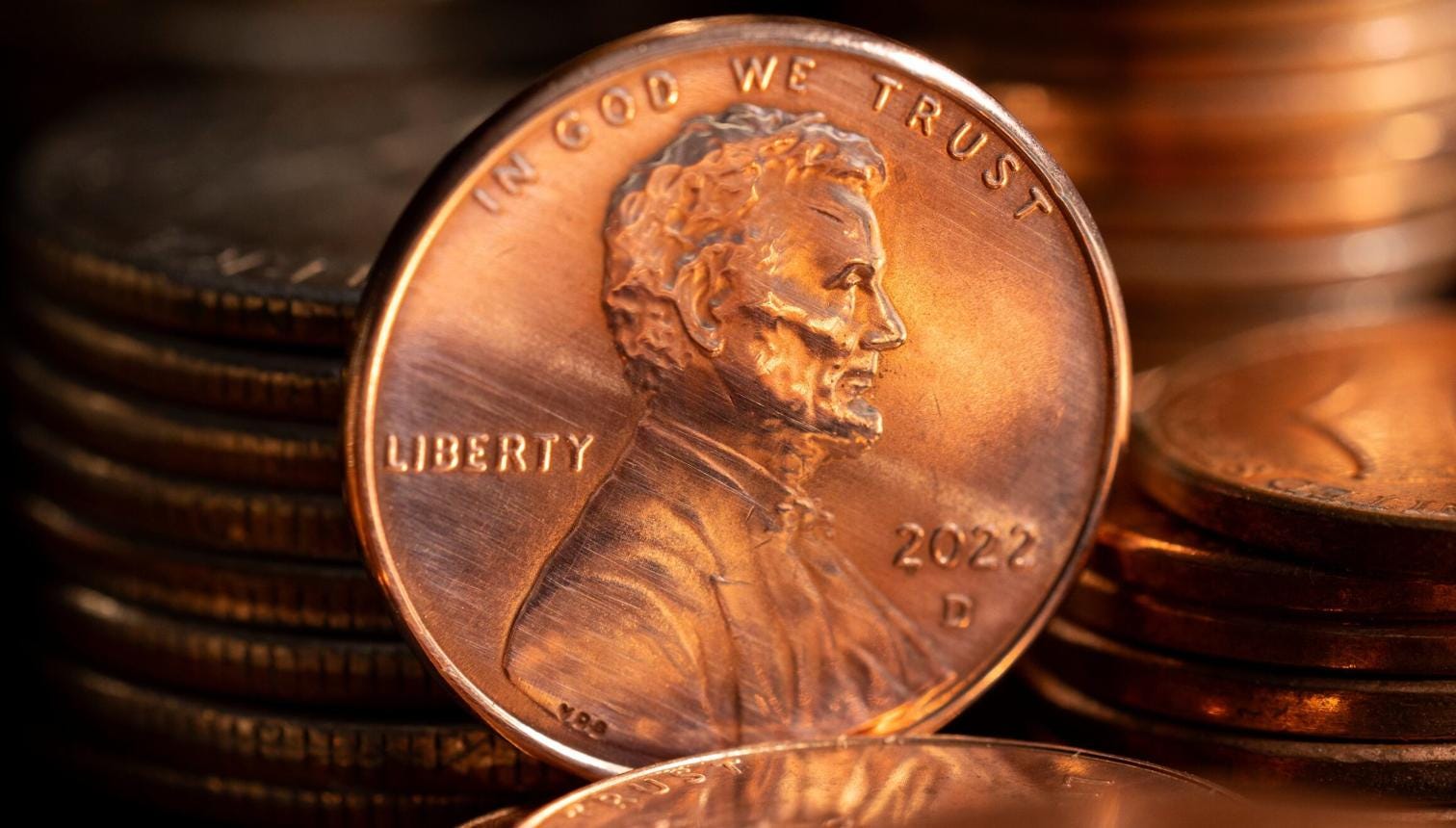
Circulating penny production ended in November 2025. Existing pennies remain legal tender.
The rules arrived after the problem. By late 2025, retailers were already dealing with penny shortages. Some rounded cash transactions down to avoid charging customers extra. Others began encouraging electronic payments. Businesses wanted clearer guidance on what they could legally do. Federal Reserve coin distribution information | National Restaurant Association concerns, as reported September 29
Treasury eventually issued recommendations in December 2025 explaining how cash rounding could work. But those recommendations were nonbinding, and businesses still had to comply with applicable state and local laws. Treasury’s December 23 guidance
Now Congress has passed the Common Cents Act, which would formally end circulating penny production and establish a federal framework permitting certain cash transactions to be rounded to the nearest nickel when exact change isn’t available. Common Cents Act, enrolled text
Notice the sequence.
First, stop making pennies. Then deal with shortages. Then issue guidance. Then pass legislation.
I’m not suggesting there was no preparation whatsoever. The Mint and Treasury had reasons for making the decision, and they had existing legal authority to act. Treasury’s explanation of the decision
What I’m questioning is whether the transition was adequately coordinated before the consequences reached the checkout counter.
That’s a perfectly reasonable question when we’re talking about a change that touches something as ordinary as buying a cup of coffee.
If this kind of reporting is worth having in your inbox, subscribe to Off Script. It’s free, or you can help fund the research and tools we use every day.
And now, about that nickel. According to the U.S. Mint’s fiscal 2025 annual report, it cost 3.02 cents to produce and distribute a penny and 13.31 cents to produce and distribute a nickel.
Those are the same fiscal year’s figures, so we’re comparing apples to apples. The Mint has also cited a higher penny production-cost estimate of 3.69 cents in discussing the shutdown. FY2025 Annual Report | Treasury’s 3.69-cent figure
A nickel costs roughly thirteen cents to manufacture and distribute. That’s more than eight cents above its face value.
The penny costs several times what it’s worth.
At this point, I half expect someone to announce that we’re going to save money on nickels by manufacturing quarters for 65 cents apiece.
Fortunately, quarters still cost less than their face value to produce. So does the dime.
The nickel, however, is a problem Congress has clearly noticed. Mint production costs by denomination
The Common Cents Act would permit Treasury to test a different nickel composition, using an inner layer of zinc and an outer layer of nickel, provided the change reduces production costs and minimizes problems with coin-operated equipment. Common Cents Act, nickel-composition provisions
That last part matters more than you might think.
A coin isn’t just a little piece of metal. Vending machines, parking meters, laundromats, and other equipment have to recognize it. Change the composition, weight, or electromagnetic characteristics, and you may have to change equipment that was designed around the old coin.
Which means that saving money on manufacturing could create costs somewhere else.
The legislation recognizes that risk. Whether the proposed redesign will be cheap enough, compatible enough, and practical enough remains to be established. Congressional nickel redesign requirements
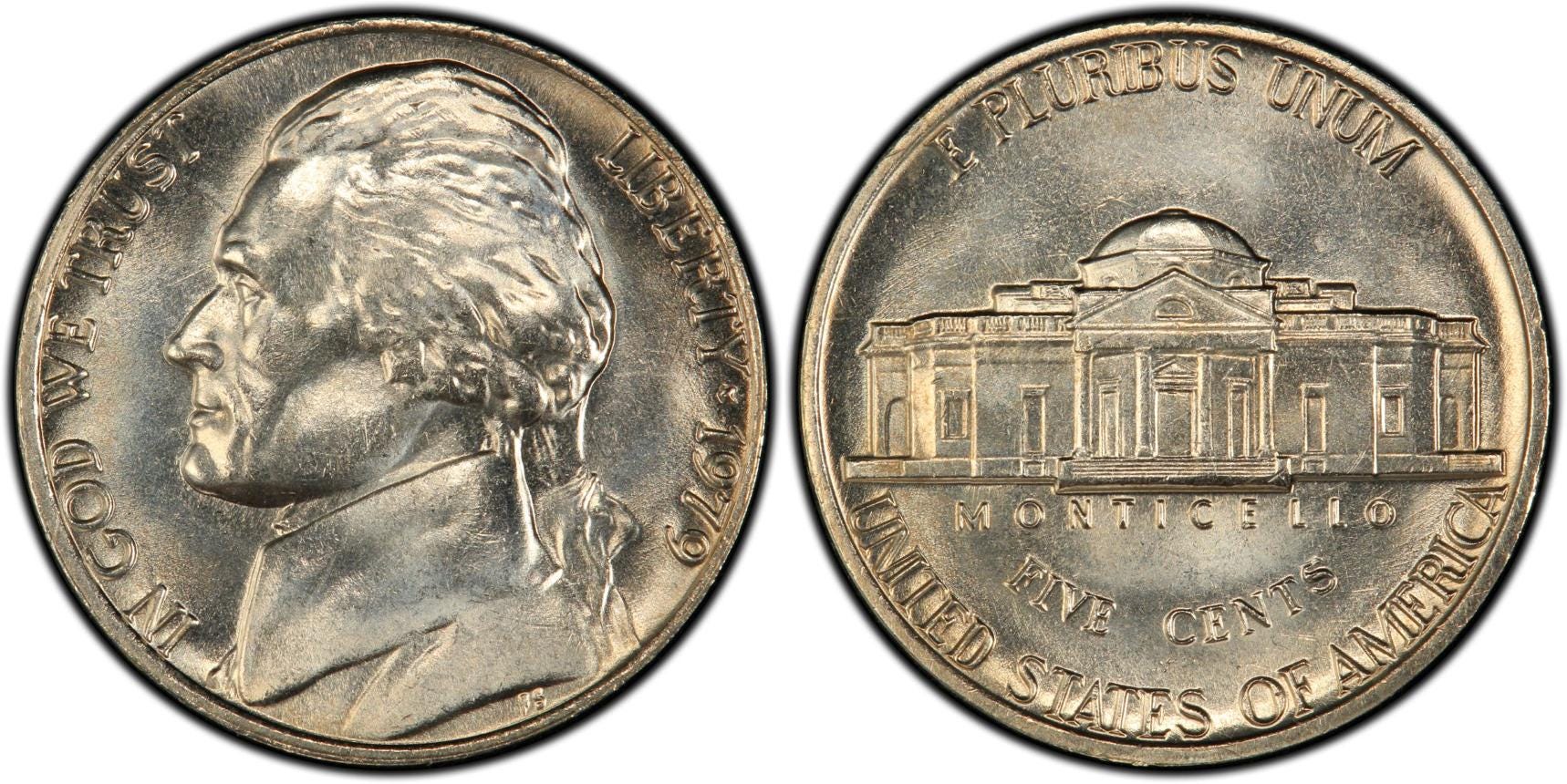
The Mint reported a 13.31-cent production and distribution cost for each nickel in fiscal 2025.
Here’s the part where we have to be careful with the arithmetic. A nickel costs more than a penny to manufacture. That doesn’t automatically mean the government will lose more money by eliminating pennies.
A single nickel can replace several pennies in making change. The Mint doesn’t necessarily have to produce one new nickel for every penny it stops making. And existing coins can keep circulating for years.
The relevant question is how many additional nickels will be needed, what those additional coins will cost, and whether those expenses eat into the projected savings.
The Federal Reserve Bank of Richmond has raised precisely that concern. Its research notes that increased nickel production could offset some of the savings from eliminating pennies. Richmond Fed, Does Phasing Out the Penny Make Cents?
Could it offset all of them? We don’t have enough evidence to say.
Could Treasury still save substantial money overall? Absolutely.
That’s why I wouldn’t trust anybody claiming to know the final financial result before we have the necessary figures.
The penny savings are relatively straightforward to estimate. The full cost of the transition is considerably more complicated. Treasury’s estimated savings | Richmond Fed’s analysis of additional nickel costs
[SUBSTACK SHARE BUTTON #1 — INSERT HERE]
What about the money in your pocket? Let’s say you stop at a convenience store, grab a couple of things, and your total comes to $12.98.
Under conventional nearest-nickel rounding, a cash payment would become $13.00.
You’ve paid two cents more.
But if your total is $12.97, it rounds down to $12.95. You save two cents.
A total ending in one, two, six, or seven cents rounds down. Three, four, eight, or nine cents rounds up. Amounts ending in zero or five don’t change. Common Cents Act, cash-rounding formula
The pending federal bill generally permits this when exact change can’t be provided. It doesn’t require every merchant to round every cash purchase, and it also permits rounding in the customer’s favor under specified circumstances. Card transactions aren’t subject to the bill’s cash-rounding provisions.
Existing pennies don’t suddenly become worthless, either. They remain legal tender. Enrolled bill, transaction provisions | U.S. Mint, penny legal-tender FAQ
You might think the rounding would even out over time. Sometimes you pay a couple of cents more, sometimes a couple of cents less. No big deal.
Except researchers have found something curious.
Using 2023 consumer payment data, Federal Reserve researchers estimated that transaction totals were slightly more likely to end in digits that would round upward than downward.
Their modeled result was a net cost to consumers of approximately $6.06 million annually. Richmond Fed, rounding research
Now, before anybody starts screaming about a six-million-dollar robbery, let’s keep that number in perspective.
Spread across the country, it’s a tiny amount per person. It’s a model based on historical transaction patterns, not a measurement of what Americans have actually lost since penny production stopped. Federal Reserve research methodology
But it does raise a question about who is affected.
If you pay electronically, you generally don’t encounter this rounding. If you rely on cash, you may encounter it repeatedly.
That matters for people who don’t have bank accounts, people who prefer cash, and households where even small amounts deserve attention.
It’s also worth noting that the legislation specifically calls for examining the effects of penny shortages and rounding on populations with limited banking access, older consumers, and lower-income communities. Common Cents Act, reporting requirements
Apparently, Congress recognizes that a change that looks trivial from Washington can feel different when you’re standing at the register counting out your money.

Cash customers may encounter rounding when exact change is unavailable. Electronic payments remain calculated to the cent under the proposed framework.
There’s another detail Congress slipped into the bill. Future decisions to discontinue other circulating coins would come with an advance-notification requirement and a phaseout plan for Congress.
That plan would have to address the consequences for consumers and businesses. Common Cents Act, future coin phaseout provisions
Which makes me wonder why we’re establishing those safeguards now.
I’m not claiming the provision is a confession that the penny transition was botched. Legislation often addresses problems that become clearer once a policy is underway.
But the timing is hard to ignore.
The penny production shutdown happened first. Businesses dealt with shortages. Treasury issued nonbinding guidance. Congress developed legislation that includes additional planning requirements for future coin changes. Federal Reserve shortage records | Treasury guidance | Congressional legislation
It suggests that lawmakers understand the importance of looking beyond the manufacturing cost of a coin.
And that’s really what this comes down to.
The cheapest decision isn’t always the cheapest outcome. Suppose the government saves $56 million a year by no longer producing pennies. That’s good.
Suppose it then needs additional nickels, some businesses have to update equipment or software, employees need training, and cash transactions require new procedures.
Those costs don’t all land on the federal government’s books. Some fall on retailers, equipment operators, or consumers. Richmond Fed’s discussion of broader costs | Restaurant industry’s reported operational costs
That doesn’t mean the decision was wrong. It means the financial picture is bigger than the savings figure printed in a press release.
If we want to know whether eliminating the penny is a success, we should eventually compare the total costs and benefits, including the transition, rather than treating the Mint’s production savings as the entire answer.
And we should remember that the penny itself isn’t disappearing overnight.
There are still billions of them in circulation. You can spend them, receive them as change when they’re available, or leave them in that jar on the dresser where they’ve been accumulating since approximately the Eisenhower administration.
The government has stopped producing new circulating pennies. It hasn’t confiscated the old ones. U.S. Mint, continued use of pennies | Federal Reserve penny deposit and distribution guidance
So where does that leave us? Trump is expected to sign the Common Cents Act, giving the penny phaseout a formal legislative framework. As of this edition’s final research, I haven’t found official confirmation that the signature has occurred. The latest official legislative text I located remains the enrolled bill dated October 9. Government Publishing Office, enrolled legislation
The legislation may help businesses handle a transition that’s already underway. The Mint’s projected savings are real estimates, and the economic argument for discontinuing penny production is substantial. Treasury savings and policy rationale
But the full financial consequences remain an open question.
I’d like to know how much additional nickel production actually costs. I’d like to know whether redesigning the nickel saves enough to justify the change. I’d like to know how much businesses spend adapting their systems, and whether the rounding effects on cash customers match the Federal Reserve’s projections.
Those aren’t unreasonable demands. They’re the questions you ask when somebody tells you they’re saving money.
Especially when the proposed solution involves a five-cent coin that costs thirteen cents to make.
There’s an old saying about being penny-wise and pound-foolish.
I suppose we’re about to find out whether Washington can manage to be nickel-foolish, too.
If this was worth your time, hit Like, Restack or share it. That’s how independent work like this finds new readers.
[SUBSTACK SHARE BUTTON #2 — INSERT HERE]
THE BULLSHIT DETECTOR
Three more claims making the rounds. Three more reasons to check the receipts before swallowing the story.
1. Walmart Receipts Prove Grocery Prices Have Quadrupled
CLAIM: Viral images show authentic Walmart receipts from 2002 and 2026, supposedly proving that the same groceries now cost nearly four times as much.
BULLSHIT: 💩💩💩💩💩 (5/5)
WHY: The receipts are fake.
The supposed Walmart is located in Sunset Bay, Florida, a town that doesn’t exist. The store address doesn’t check out, either. Fact-checkers determined that the images were AI-generated, with prices exaggerated to make inflation look even worse than it already is.
Grocery inflation is real. People are feeling it every time they shop. Apparently, somebody decided that wasn’t depressing enough and invented an entire Walmart to help make the point.
The next time somebody shows you an old receipt proving how cheap everything used to be, check whether the store actually existed.
2. Trump Threatened Zelenskyy With Ramen Noodles
CLAIM: A screenshot supposedly shows Trump ordering Ukrainian President Volodymyr Zelenskyy to stop attacking Russian oil refineries and threatening to replace American military assistance with instant noodles.
BULLSHIT: 💩💩💩💩💩 (5/5)
WHY: The Truth Social screenshot was fabricated.
Fact-checkers searched Trump’s actual account and an independent archive. Neither contained the alleged message, and established news outlets hadn’t reported it.
There have been real disputes about attacks on Russian energy infrastructure, which probably made the fake post seem believable to some readers.
But the supposed presidential threat to replace military aid with thoughts, prayers, and ramen coupons wasn’t real.
Although I have to admit, the part about ramen noodles sounds like somebody who spent entirely too much time writing rejected Saturday Night Live sketches.
3. JD Vance Is Making an Emergency Visit to Pope Leo XIV
CLAIM: Vice President JD Vance is scheduled to visit Pope Leo XIV following the pontiff’s surgery and cancer diagnosis.
BULLSHIT: 💩💩💩💩 (4/5)
WHY: The purported travel announcement originated with an account that openly identifies itself as parody.
The pope’s surgery was real. Vance’s public expression of concern was real. But as of the October 16 fact-check, neither Vance’s official accounts nor established news organizations had announced such a visit.
This is how a perfectly real news event becomes the setting for a made-up story. Somebody invents the next development, attaches it to something readers already recognize, and watches it travel.
Before you share the breaking news, it might be worth checking whether the account breaking it has the word parody in its biography.
From Off Script: The Bullshit Detector
If you enjoy catching the tricks behind misleading headlines, manipulated images, and claims that collapse under five minutes of checking, there’s more where these came from.
The full Off Script Bullshit Detector guide is free for subscribers, or available separately for $4.95 at the Tom Hicks Media Store.
More From Tom Hicks Media
Off Script / Blind Spot follows the money, examines the machinery behind the headlines, and asks the questions that tend to get lost in the shouting. Chart Collision brings back the music and memories that defined the charts, while Lotus Purrspective offers the world through the eyes of a cat who has very little confidence in human judgment.
Panic Room Sports looks past the noise to figure out what actually matters on the field. Rabbit Ears Classic TV revisits the programs, personalities, and forgotten corners of television history, while The Backlot Ghost digs into the movies and the stories behind them.
And when reality gets too ridiculous to ignore, What The Hell? is there to remind us that human beings have been doing spectacularly stupid things for a very long time.
Buy Me a Cup of Tea
Independent reporting takes time, research, and tools that aren’t free. If Off Script gives you something worth thinking about, consider helping keep it going.
No billionaire owners. No corporate editorial meetings. Just the work, the research, and the occasional discovery that the government spends thirteen cents making a nickel.
One Question Before You Go
Would you rather eliminate the penny now and deal with the transition costs, or keep it until the government can show the change will actually save money?
I’m curious whether you’ve already encountered rounding at a store, too. Has it been handled fairly, or have you noticed something that doesn’t add up?

#OffScript #TomHicksMedia #CommonCentsAct #Penny #USMint #GovernmentSpending #ConsumerNews #FollowTheMoney #BullshitDetector