

Tom Hicks | November 22, 2026

There’s something happening in Washington that I think deserves a hell of a lot more attention than it’s getting. Some of the most powerful civilian officials in the United States have moved out of ordinary residential neighborhoods and into housing on military installations. We’re talking about people involved in running American foreign policy, national defense, law enforcement, and the White House itself.
These aren’t politicians dropping by a base to shake hands with the troops, admire a helicopter, and assure everybody that nobody loves the military more than they do. They’re actually living there, behind guarded gates, inside installations that most Americans can’t enter without authorization.
And here’s what really caught my attention.
Even Donald Trump has questioned why they need to be there.
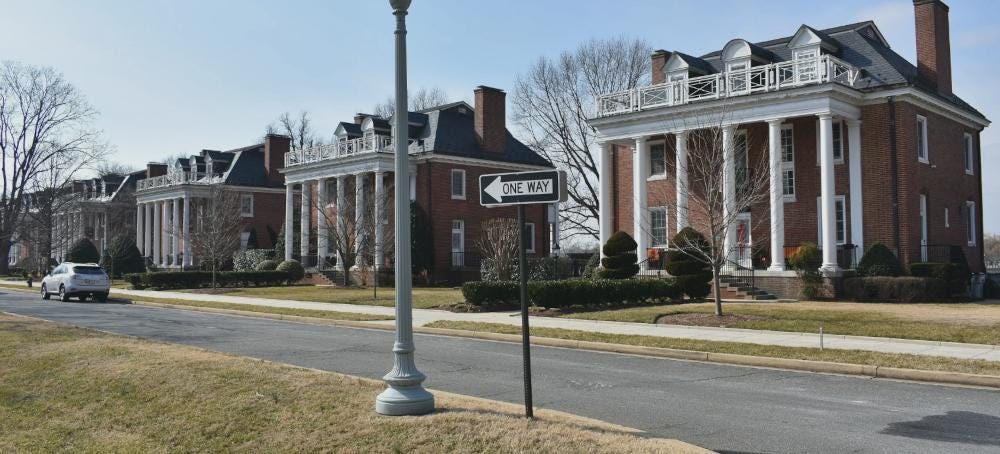
The President Who Didn’t Know Why
Back on April 26, Trump sat down with Norah O’Donnell for an interview on CBS’s 60 Minutes. The conversation came during a discussion of political violence, and O’Donnell brought up the growing number of Cabinet secretaries living on military bases because of potential threats against them.
Trump acknowledged the situation, then offered this rather interesting explanation:
“Well, they choose to. I’m not sure that-- they need to.”
He went on to point out that some of the housing on military bases was very nice, suggested Democrats had done the same thing, and questioned whether his officials were necessarily living there because of threats of violence.
Now, I’ve listened to enough Trump interviews over the years to know that trying to extract a coherent administrative policy from an offhand presidential remark can be like trying to nail Jell-O to a wall. But this one deserves a closer look, because the president was being asked why members of his own administration were relocating to secure military installations.
And his response was essentially that they liked the accommodations.
To be fair, presidents don’t personally approve every security arrangement, and Trump being uncertain doesn’t mean a particular relocation was unjustified. The Secret Service and other agencies make protective decisions based on information that may never become public.
Still, the question practically asks itself: If the president isn’t certain these moves are necessary, who’s deciding that they are? What standards are being used? And are these officials moving because of documented threats, personal preference, or some combination of the two?
Those aren’t conspiracy theories. They’re the kinds of questions we ought to ask whenever public property and public money are involved. [Source: CBS News, April 26, 2026, full interview transcript.]
Quite a Neighborhood They’ve Got There
When The Atlantic began examining this arrangement in October 2025, it reported that at least six senior political appointees were already living in military housing around Washington. Defense Secretary Pete Hegseth and Secretary of State Marco Rubio were among those residing at Fort McNair, where a collection of handsome historic homes known as Generals’ Row had traditionally accommodated senior military officers.
Stephen Miller moved into military housing after protests and harassment near his family’s home in Arlington, Virginia. Other reported residents included Army Secretary Dan Driscoll and then-Homeland Security Secretary Kristi Noem, who was living in Coast Guard housing.
By this month, the list of reported residents had grown. Attorney General Todd Blanche and Treasury Secretary Scott Bessent were among the additional officials identified in November reporting. The publicly reported names don’t amount to a verified current census, but we’re clearly dealing with more than one or two officials temporarily needing a secure place to sleep. The Atlantic, October 30, 2025; November 13, 2026 reporting.
Now, before we start drawing up secret maps with red string connecting everybody’s front door, let’s acknowledge something important.
Some of these officials have legitimate reasons to worry about their safety.
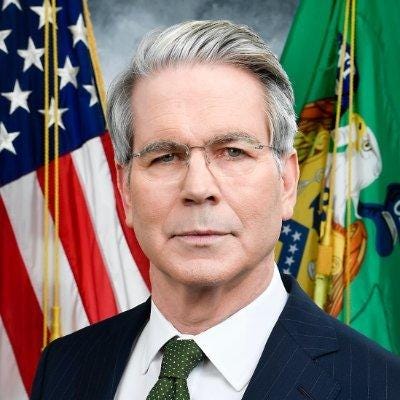
Bessent confirmed on November 13 that he’d relocated after threats attributed to Iran, saying he was following Secret Service instructions. Reuters reported that Iranian threats against American officials had become an increasingly serious concern. Iran has denied plotting attacks on people inside the United States.
I don’t particularly care whether somebody likes Bessent’s economic policies or thinks he ought to be selling used Pontiacs somewhere. If there are credible threats against his life, protect him. That should go without saying, although these days apparently very little does.
But protecting an official from violence and giving an official a privileged living arrangement are different matters. Sometimes the first may justify the second. What we need to know is whether those decisions are being made consistently, legally, and with appropriate oversight.
And here’s something worth considering: If military housing is the best answer for one official facing a documented foreign threat, does that automatically make it the best answer for every political appointee worried about protests, harassment, or personal security?
Of course it doesn’t. Different circumstances demand different decisions.
The trouble begins when the public has no meaningful way to evaluate the difference. Reuters, November 13, 2026.]
Here’s something I’d like you to think about
If you were responsible for protecting a Cabinet secretary who faced credible threats, would you consider military housing an acceptable solution? And would your answer change if several other officials wanted the same arrangement?
I’m genuinely interested in how readers see that distinction, particularly veterans and military families who’ve lived with the security requirements of military installations.
Because I don’t think there’s necessarily one answer that fits everybody.
Security, Secrecy, and a Pretty Important Difference
One of the benefits of living on a military installation is obvious: security is already part of the infrastructure. Guarded entrances, restricted access, patrols, and established procedures can make protecting a senior official considerably easier than securing an ordinary residential street.
There may also be substantial savings. Protecting a private residence can involve extensive modifications, additional officers, communications equipment, and around-the-clock security arrangements. If the Pentagon can provide comparable protection more efficiently, that’s a legitimate consideration.
Fine. Show us the numbers.
And while we’re at it, show us who authorized the arrangements, what legal authority was used, whether the officials pay appropriate rent, and whether somebody in uniform lost access to a residence that would otherwise have been available.
I’m not asking the government to publish floor plans or security schedules. That would be irresponsible. But surely we can find a way to account for public property without announcing the location of every security camera in Washington.
The interesting thing is that Congress has already started asking substantially the same questions.
And this is where the story gets considerably more revealing.
Subscribe to Off Script / Blind Spot
The headlines have already given us the alarming possibilities. What interests me is what happens when we get past them and start examining the paperwork, the law, the history, and the people making the decisions.
That’s what Blind Spot is for. If you value independent reporting and analysis that goes beyond the daily shouting match, please consider becoming a paid subscriber. Your support helps keep this work independent and gives us room to follow stories wherever the evidence leads.
