

Everybody’s known some asshole who thought they were indispensable. The coworker who kept threatening to quit because he was sure the place would collapse without him. The contractor who jacked up his prices every six months because he figured you had nowhere else to go. That one friend who stormed out of every argument, expecting the room to chase him down and beg.
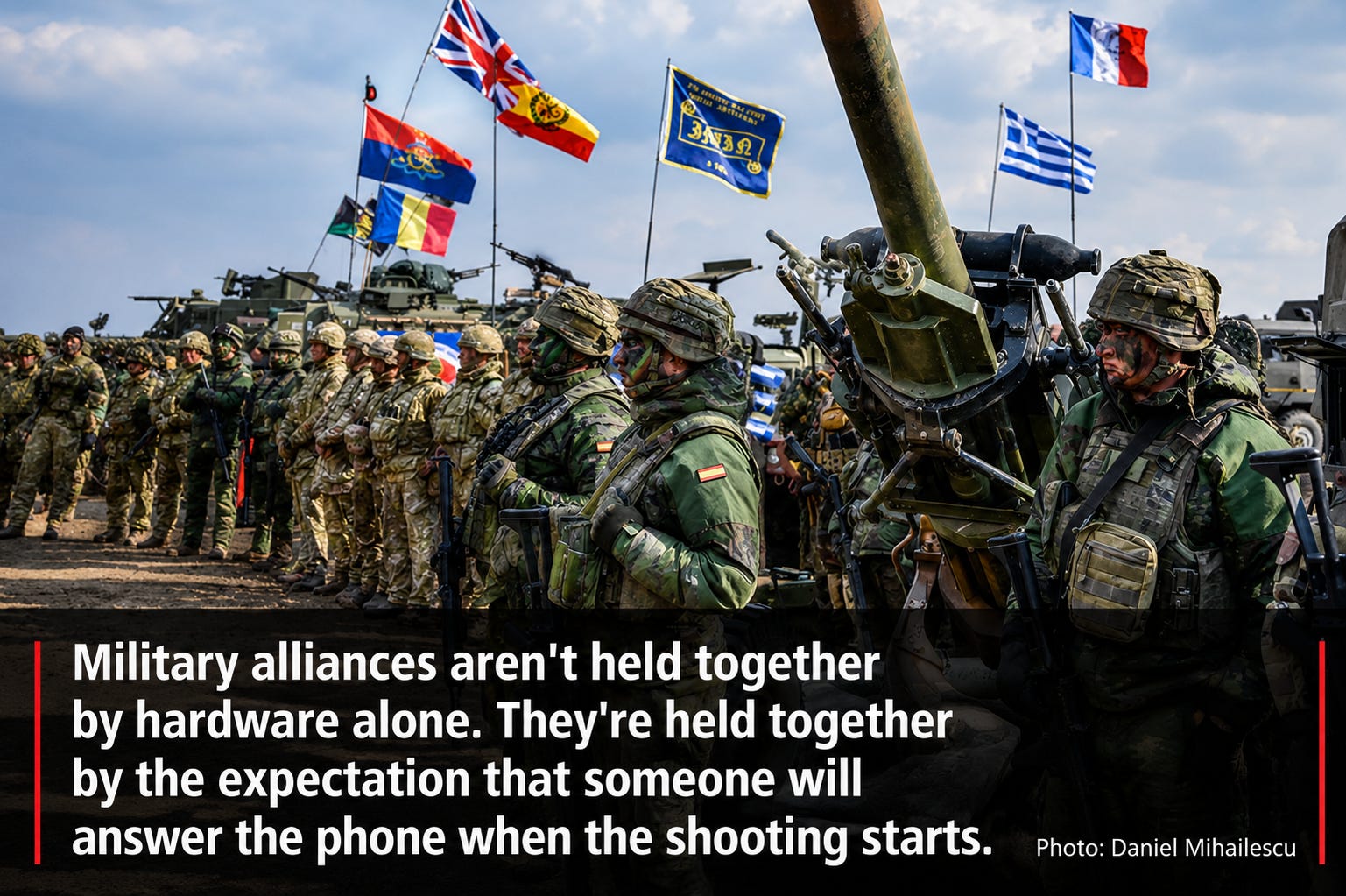
Here’s the factual part, no bullshit attached. According to Defense News, NATO’s top military commander told reporters that European member states have already filled most of the capability gaps created by recent U.S. reductions in military support and equipment. A handful of American capabilities are still hard to replace, but most of the hole got patched.
That’s not a footnote. That’s the whole fucking story.
Because here’s what it means. For decades, America occupied a spot nobody else could touch. Not just NATO’s biggest member, but the country everyone assumed would show up when things went sideways. That assumption ran through European defense budgets, procurement contracts, war planning, the works. It’s also where Washington’s influence actually came from. Not because we screamed the loudest at summits. Because our allies believed we’d answer the phone.
There’s a difference, and it’s the whole point of this article.
Join Me Every Morning
The headlines have chewed on the money angle for years. Europe doesn’t spend enough. America carries too much. NATO members need to hit their commitments. Fine, sure, that argument isn’t crazy. Republicans and Democrats alike have leaned on European governments to invest more in their own defense, and alliances genuinely do work better when everyone’s actually pulling their weight instead of free-riding on Uncle Sam’s checkbook.
But somewhere in there, the conversation mutated into something uglier. Nudging your allies to contribute more is one move. Making them wonder if you’ll even pick up the phone is a completely different one, and anybody selling you the idea that these are just two flavors of the same policy is either lying or hasn’t thought about it for more than four seconds.
One builds partners who trust you enough to lean in. The other builds partners who quietly start drawing up plans that don’t have your name on them.
Once a government spends billions restructuring itself so it doesn’t need you anymore, it doesn’t turn around a year later and undo all that work because some senator gave a nice speech. That’s true for supply chains, energy grids, manufacturing, and yeah, national defense. People build independence because dependence got too risky to keep betting on.
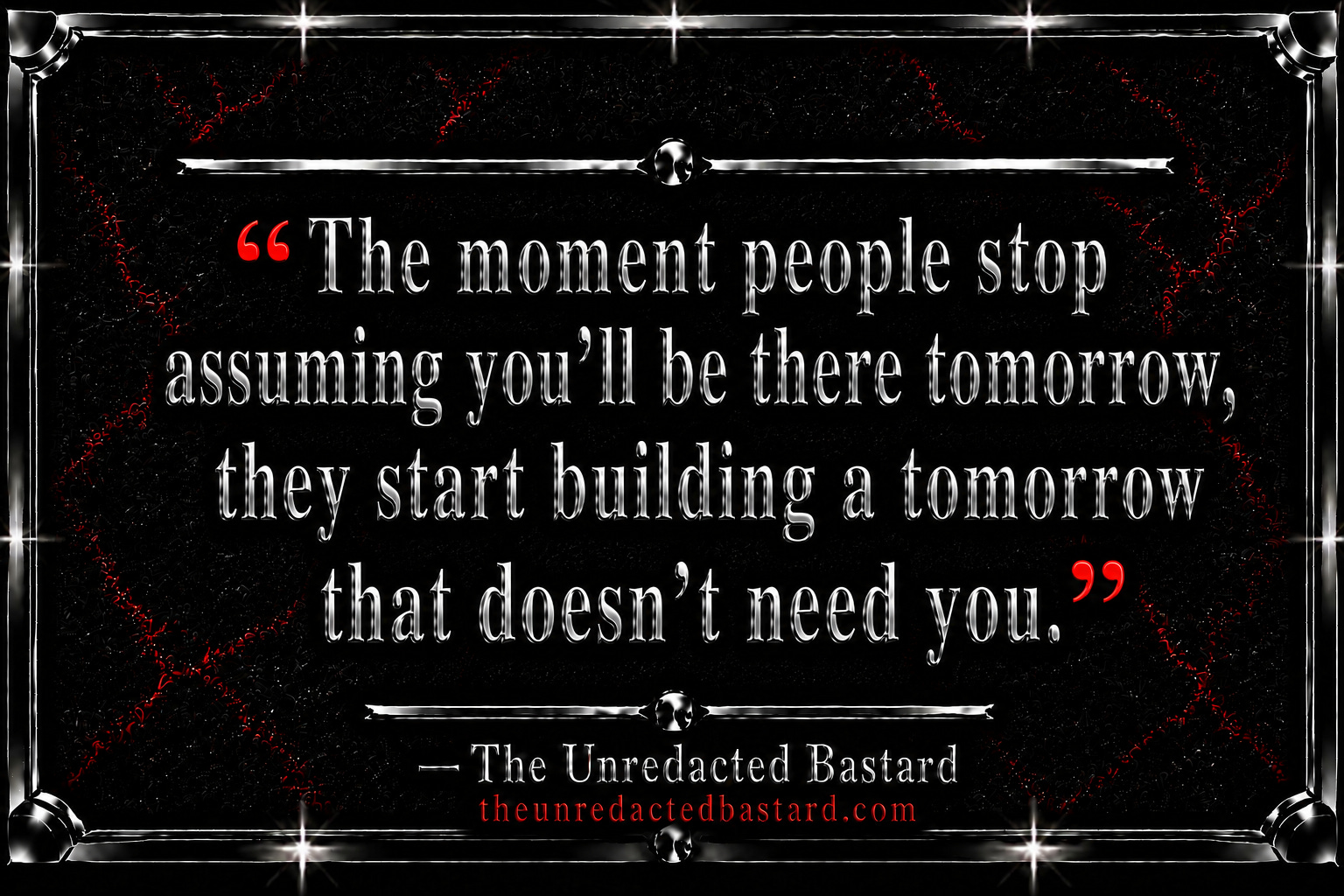
And the irony here is almost too much. American leaders spent years demanding that Europe grow up and take more responsibility for its own defense. Now Europe’s doing exactly that, and half of Washington acts shocked.
The real question was never whether Europe getting more capable is good or bad. It’s why it happened now, this fast. There’s a canyon-sized difference between an ally saying “we’ll do more because we’re in this together” and an ally saying “we’d better do more because who the hell knows if they’ll show up.” One strengthens the partnership. The other is Europe quietly rehearsing life after the divorce.
And once that rehearsal starts, it doesn’t just stall out. It builds its own momentum.
The hardest thing to measure in international politics isn’t tank counts or missile stockpiles. It’s confidence. Not confidence in the hardware, confidence that when the phone rings at three in the morning, the country on the other end answers the same way it did yesterday.
That kind of trust takes decades to build. Joint exercises, treaty commitments, the boring, unglamorous grind of proving you’re good for your word, year after year. It can start rotting a hell of a lot faster than it took to build.
Countries hate uncertainty as much as anybody running a business does. Your biggest supplier starts acting flaky, you find another supplier. Your insurance company keeps threatening to drop you, you shop around. Your business partner keeps hinting he might walk the second things get hard, you start drawing up a plan B whether you admit it out loud or not. Military alliances run on the exact same logic. They’re built out of capability, but they’re held together by trust, and trust is the part nobody puts a price tag on until it’s gone.
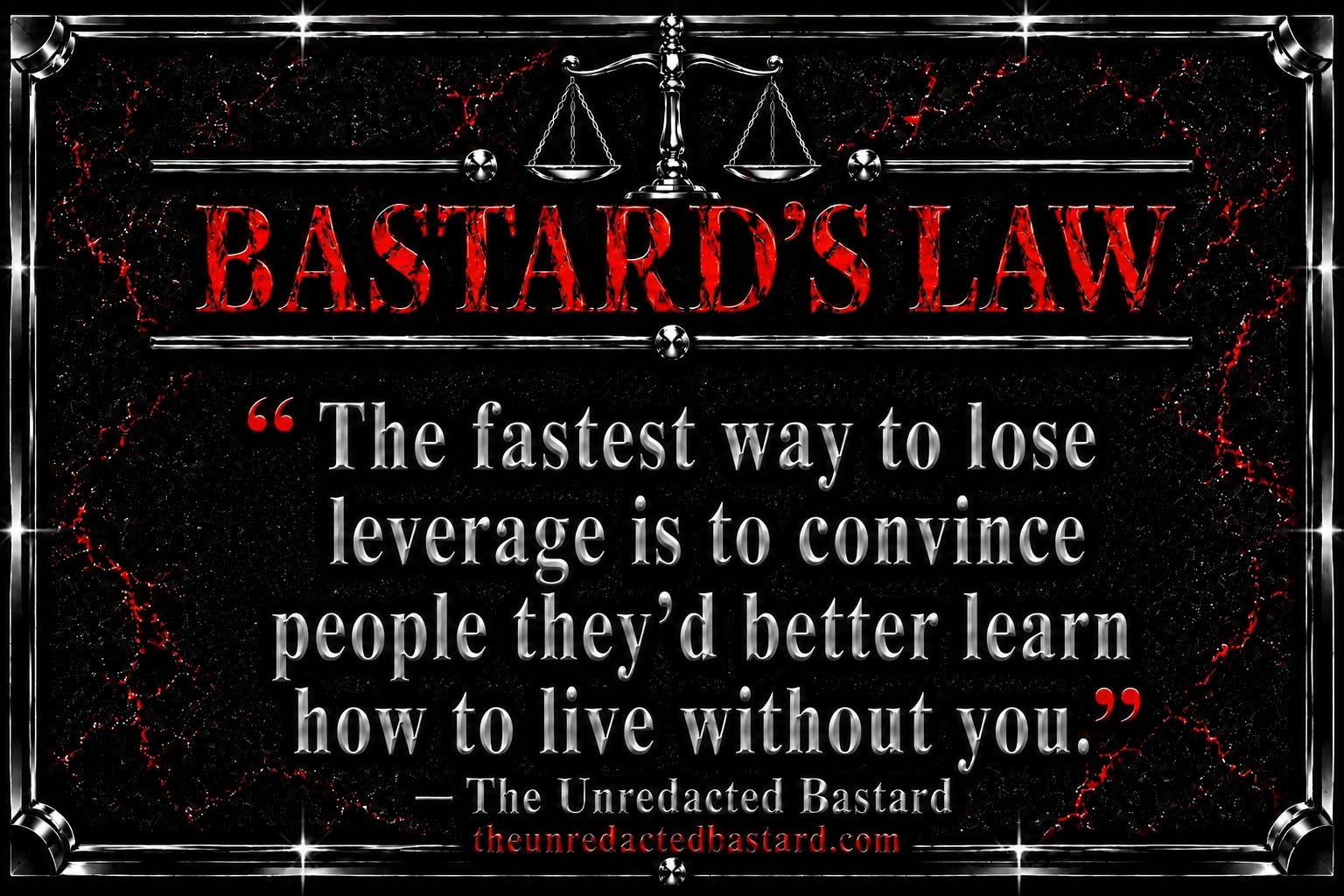
People confuse leverage with power constantly, and they’re not the same animal. Power is having the biggest military. Leverage is having other countries voluntarily build their national plans around the assumption that you’ll be standing there when it matters. That second thing is a hell of a lot rarer, and it’s the thing America actually had.
The U.S. didn’t become NATO’s central pillar just by outspending everybody. It became the pillar because allies spent generations drafting their blueprints with America penciled in at the center. Once those blueprints start getting redrawn, they don’t snap back to the old version because somebody delivers a reassuring speech from a podium. Governments don’t sink billions into new supply lines, new equipment, expanded domestic production, and rewritten military doctrine just to shrug and say “never mind” the second the mood in Washington changes.
Those decisions have momentum. The more self-sufficient Europe gets, the less automatic weight Washington’s voice carries, not because Europe’s turned hostile, but because dependence is quietly giving way to something closer to a partnership of equals. That might build a stronger alliance in the long run. It might also mean an America that has to actually argue its case instead of assuming everyone falls in line. Both of those can be true at once, and anybody who insists on scoring this like a football game, one side up means the other side’s down, isn’t paying attention.
Sometimes you get exactly what you spent years demanding, and it shows up with a bill you never bothered to read.
That’s the part politicians never say out loud. They’ll talk your ear off about strength because strength is telegenic. It comes with aircraft carriers, missile tests, and a nice backdrop for the cameras.
Predictability doesn’t get a backdrop. It gets built one boring decision at a time until people stop wondering whether you’ll keep your word, and then they stop wondering altogether, because they’ve already made other arrangements without telling you.
Keep the receipts hot and the bullshit detector fully operational.
Nobody knows what NATO looks like in ten years. Maybe Europe’s new muscle makes the alliance stronger than it’s ever been. Maybe America stays the unquestioned boss of the table. Maybe it all settles somewhere more even. But whatever shakes out, here’s the lesson that outlives the headline: relationships, whether it’s two people, two companies, or two nations, don’t usually die because somebody walked out the door. They die because everybody else quietly figures out they can survive just fine if that somebody does.
That may end up being the real story buried in all this. Not that Europe bought more hardware. Not that America pulled back in a few areas. Not even that NATO adapted as fast as it did. The real story is that an alliance built around one load-bearing assumption just proved it can hold the roof up when that assumption starts to wobble.
That’s what healthy organizations do. They adapt. The uncomfortable question is what happens after the adaptation.
History’s stacked with countries that assumed yesterday’s influence would just keep showing up tomorrow because it always had. Most of them found out the hard way that influence isn’t a statue you park somewhere and forget about. It’s a relationship, and relationships have to be maintained, or they rot. That doesn’t mean agreeing with your allies on every damn thing, and it doesn’t mean writing blank checks or treating every disagreement like the end of the world. It means understanding that reliability is a form of national power in its own right.
You don’t lose influence the day somebody disagrees with you. You lose it the day they stop building their plans around you.
That’s why this story actually matters. Europe closing most of these gaps isn’t some military curiosity buried in a trade publication. It’s proof that governments handle uncertainty exactly the way the rest of us do: they cut risk where they can, they build backup plans, they invest in alternatives, and once those alternatives exist, nobody rips them out just because the weather improved for a quarter. That’s human nature, just scaled up to the size of nations.
Here’s the part that’s almost funny. America spent generations building something more valuable than its arsenal without fully clocking what it had. Not just the world’s most powerful military. The world’s most trusted ally. Those are two different achievements. One gets measured in dollars, ships, and steel. The other lives entirely inside what other people expect from you, and expectations are a hell of a lot easier to torch than they are to rebuild.
Next time somebody starts talking leverage like it’s a card you keep in your back pocket, remember it isn’t something you declare. It’s something other people decide you still have. Because once they stop needing you, they stop being scared of losing you.
That’s when leverage becomes nostalgia.
One Question Before You Go
If you’re one of America’s allies today, would you build your long-term plans around the assumption that the United States will always be there? Why or why not?
Join me every morning for fact-based reporting, sharp analysis, and absolutely no patience for political bullshit. Subscribing is free, and if you decide to support this work, you’ll help keep independent journalism independent.
BASTARDONIA FACT OF THE DAY
The official Bastardonian fire extinguisher doesn’t spray foam. It sprays documented evidence, followed by a twelve-minute explanation of how we got into this mess in the first place.
#TheUnredactedBastard #Politics #NATO #ForeignPolicy #NationalSecurity #Military #Europe #Democracy #IndependentJournalism