
Republicans spent years warning us that government corruption would destroy America.
You remember the speeches. The scary music. The finger-pointing. Shadowy elites rigging the system. Political insiders helping themselves while ordinary people are getting screwed. We heard so much about weaponized government, you’d think Washington was secretly run out of a volcano by Bond villains in expensive loafers.
Then, in one of those plot twists that would feel too ridiculous if HBO pitched it in a writers’ room, some Republicans finally found a red line.
Apparently, it was a taxpayer-connected grievance fund tied to Trump allies, a luxury ballroom, and a settlement strange enough to make even seasoned cynics stop mid-sip and mutter, “Okay, what the fuck is this?”
Here’s the part that should make people sit up a little straighter: stories like this almost never arrive looking dangerous. They arrive disguised as paperwork.
Complicated language. Legal jargon. Administrative process. The kind of story exhausted people scroll past at night while reheating leftovers, worrying about bills, checking bank balances, or wondering whether one surprise expense is about to kick the shit out of the monthly budget.
And honestly, who could blame them? Most people are just trying to survive.
That’s exactly why this stuff matters.
Because the scary things rarely arrive looking scary anymore. They arrive dressed like accounting problems.
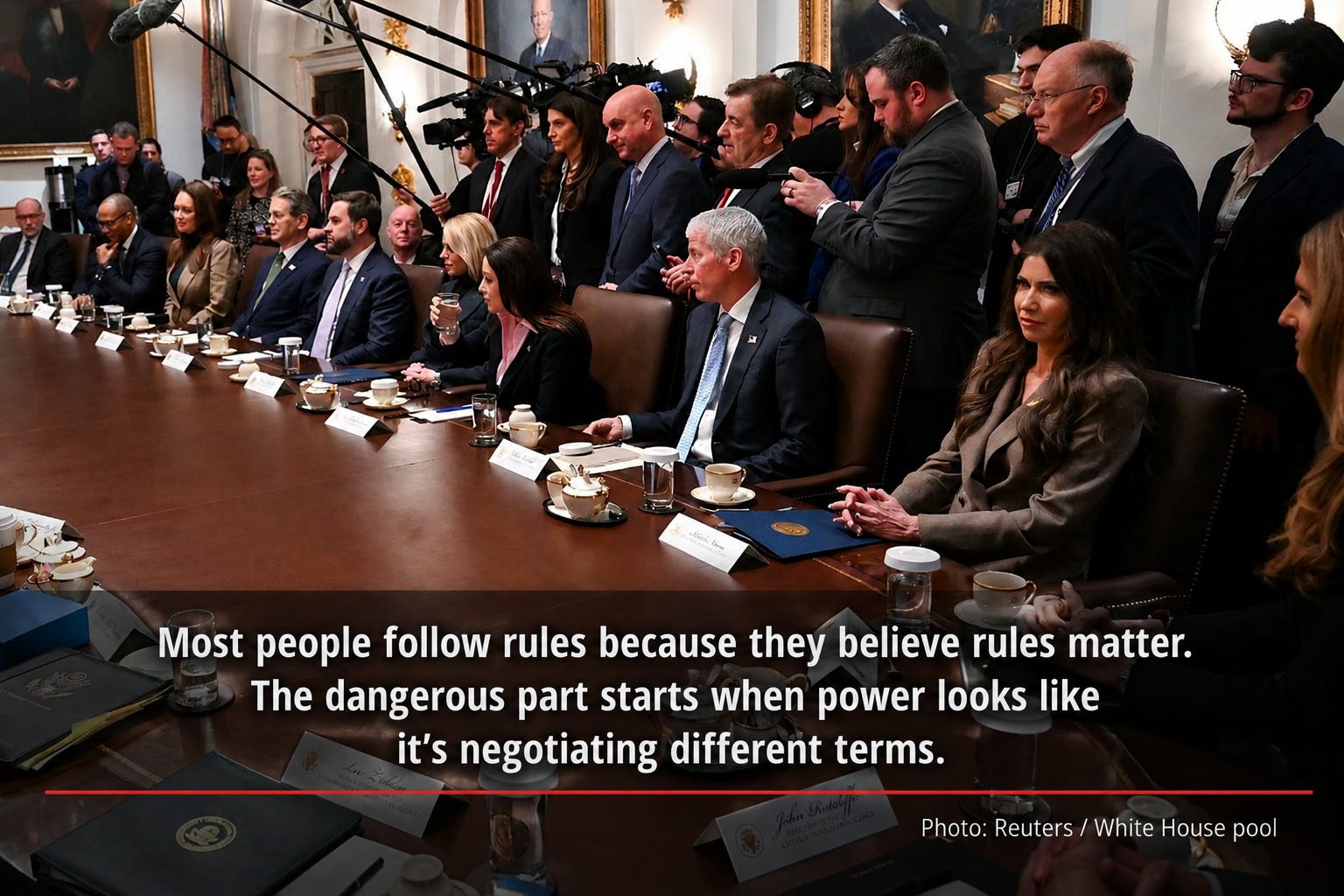
President Trump’s administration is now tied to a reported $1.776 billion “anti-weaponization” compensation fund linked to his IRS lawsuit settlement. Reuters also reported an addendum signed by Todd Blanche that effectively shields Trump, his family, and affiliated companies from certain tax matters that were or could have been raised before May 18, 2026. Add controversy surrounding taxpayer-supported security costs tied to a proposed White House ballroom, and suddenly even some Republicans seem to be sitting there with the political equivalent of:
“…you guys seeing this shit too?”
And maybe right now you’re thinking:
Tom, politicians are corrupt. Water’s wet. What else is new?
Fair.
But here’s where this story quietly starts tightening around your ankles.
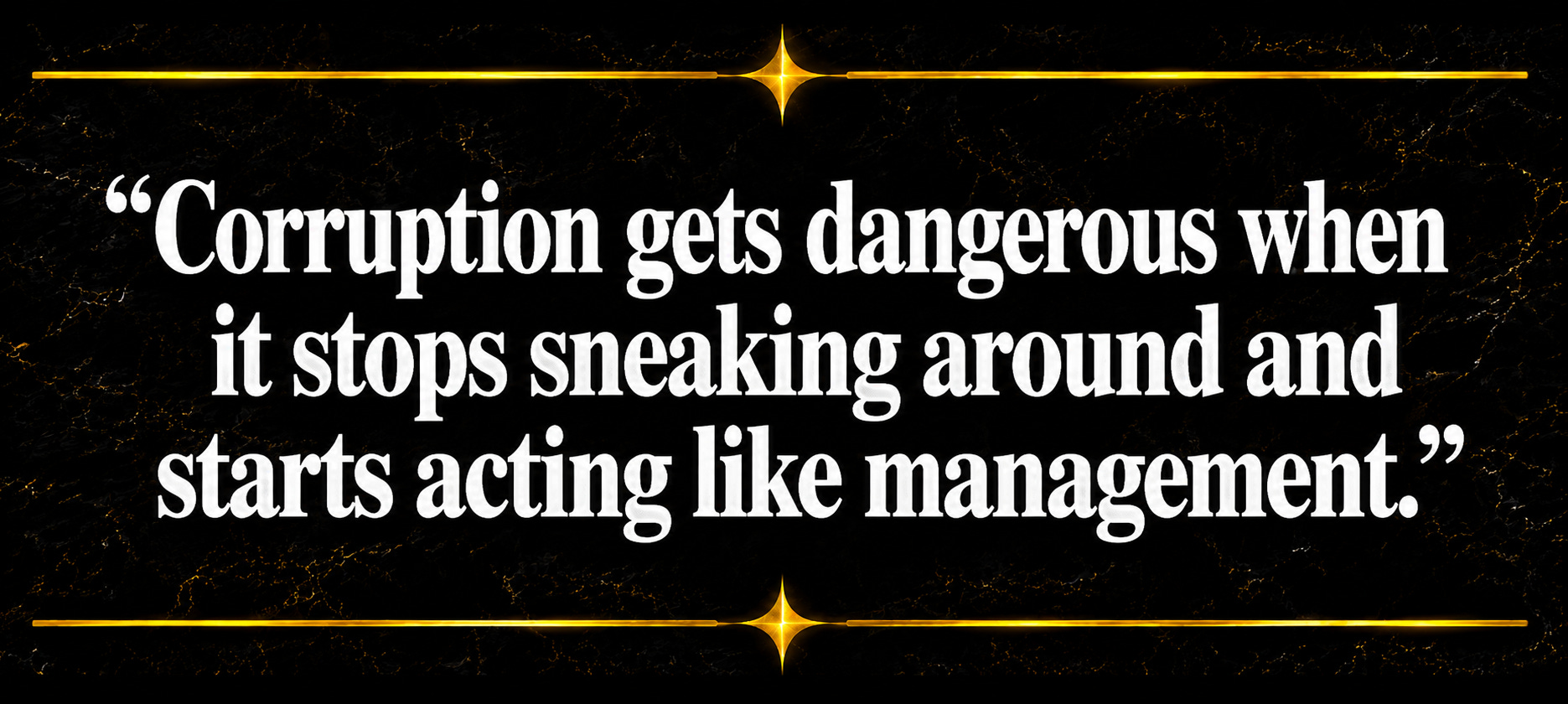
Corruption usually hides. It whispers. It sneaks around parking garages and back rooms, pretending nobody can hear it breathing. What we’re watching here feels different, like corruption finally got comfortable enough to stop sneaking around and start introducing itself in broad daylight.
If this arrangement works the way critics fear it could, the government starts looking less like law and more like some fucked-up loyalty rewards program. Stay loyal, stay useful, stay angry at the approved enemies, and maybe — just maybe — accountability starts getting softer around your friends while everybody else keeps getting the bureaucratic equivalent of steel-toed boots to the ribs.
Funny how consequences suddenly become “complicated” for powerful people.
If you’re not subscribed yet, you’re reading this the hard way. I do this daily. No sponsors. No billionaire sugar daddy texting me at midnight asking if I could maybe chill out with the profanity.
Subscribe if you want independent journalism with receipts, sarcasm, and a professionally unhealthy relationship with political bullshit.
And this is the part where I want you to think about something personal for a second, because most people already know what unfairness feels like.
Maybe you’ve worked with somebody who never followed the rules but somehow always landed on their feet because they were buddies with the boss. The coworker who missed deadlines, dumped work on everybody else, took credit for things they didn’t do, and still got protected while decent people walked around terrified of screwing up once.
Or maybe it wasn’t work.
Maybe it was healthcare. Insurance. School. Taxes. Family. One of those moments where you played by the rules because you thought the rules mattered, only to realize somebody else had quietly been playing a completely different game the whole damn time.
That feeling sticks with people.
Not just anger, but exhaustion, as well.
The kind that settles in your chest when you start wondering if fairness only exists for people without money, power, or connections. The quiet voice asking whether doing the right thing still matters if the assholes always seem to win.
And this, right here, is where the story starts feeling less like politics and more like something that eventually lands in your own damn life.
Because democracies run on trust way more than people realize.
Not blind trust. Nobody trusts politicians that much.
Functional trust.
The belief that if you work hard, follow the rules, pay taxes, show up, and try to do the right thing, the system at least pretends to apply standards evenly. Once people stop believing that, things begin breaking in ways you don’t notice immediately.
At first, it looks like one weird settlement, one bizarre fund, one ballroom story absurd enough to become late-night material. Then the realization creeps in — and this is the Hitchcock part — that the real danger isn’t the story itself.
It’s the lesson.
The lesson that rules bend.
The lesson that loyalty matters more than accountability.
The lesson that ordinary people wait in line while insiders quietly walk through a velvet rope that nobody admits exists.
That’s not abstract civics-class bullshit.
That lands on people.
It lands on the family paying taxes while wondering why accountability suddenly feels optional for powerful people. It lands on the retiree fighting bureaucracy over benefits. It lands on the person terrified to miss one payment because the system comes down on them like a piano from a cartoon, while politically connected people somehow get patience, negotiations, and endless procedural grace.
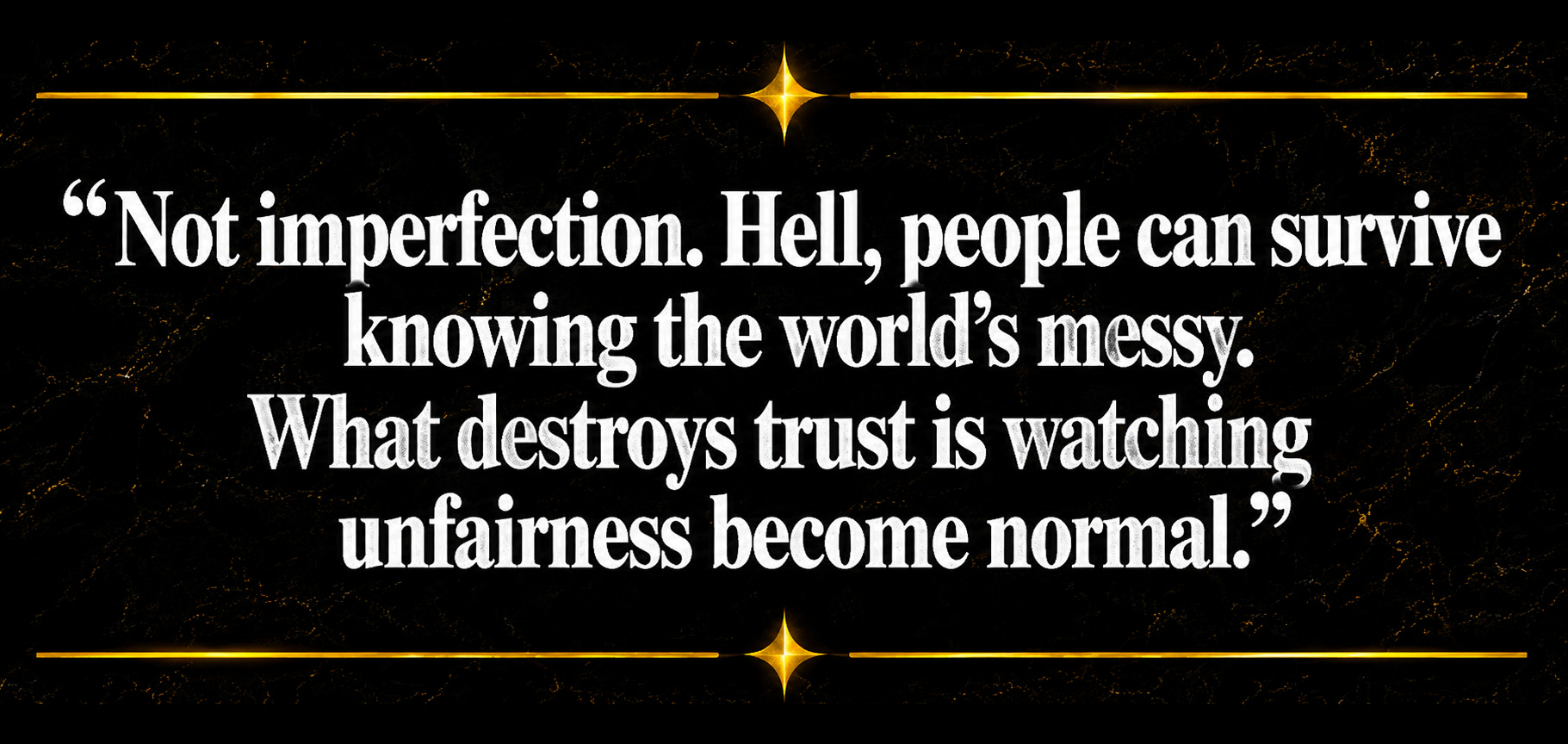
You know what destroys trust?
Not imperfection.
Hell, people can survive knowing the world’s messy.
What destroys trust is watching unfairness become normal. Watching the boss’s favorite never face consequences. Watching rules quietly stop meaning the same thing for everybody, and slowly realizing the system feels less like justice and more like office politics with nuclear consequences.
And once enough people stop believing fairness exists, things start breaking.
People disengage.
People stop believing institutions belong to them.
Or, and this is where history gets dark as hell, they start looking for somebody who promises to rig the system back in their favor.
Democracies don’t usually collapse like action movies. They don’t arrive with orchestral music and villains announcing themselves. They crack quietly, the way a house settles before somebody finally notices the line running across the ceiling and mutters, “Uh… should we be worried about that?”
This is also where the media drives me completely up a fucking wall.
Watch what happens to stories like this. Every sharp edge gets filed down into bureaucratic oatmeal: a “settlement,” an “administrative resolution,” a “controversy,” a “framework.”
Calling something potentially this alarming an “administrative agreement” is like calling a casino robbery an unexpected cash redistribution event. The language itself trains people not to feel urgency.
And before somebody screams “Trump Derangement Syndrome” into a Facebook comment section while angrily pecking at their phone, calm down and finish your drink.
This isn’t about whether you like Trump.
It’s about precedent.
Because if Democrats built a $1.776 billion grievance fund tied to Biden allies while shielding his family from scrutiny, conservatives would be screaming so hard meteorologists would classify it as weather.
You know that.
I know that.
Fox News would be broadcasting from inside an active volcano.
That sentence matters because what scares me isn’t merely corruption. America’s had corrupt bastards since powdered wigs.
What scares me is normalization — the slow, dangerous feeling that there are now two systems: one for insiders and one for everybody else.
And if you think that eventually doesn’t land on regular people or someone you love, I honestly don’t know what to tell you.
Because it always lands somewhere.
In your taxes.
Your healthcare.
Your retirement.
Your job.
Your kid’s future.
Your family’s ability to believe fairness still matters.
A democracy doesn’t collapse the second corruption appears. It starts collapsing when corruption feels normal enough to stop shocking us.
That’s the real story here.
Not merely Trump.
Not merely the ballroom.
Not merely one bizarre grievance fund.
The growing feeling that rules still exist: they just don’t seem to exist for the same people anymore.
And once a country starts believing that?
History says the next chapter usually gets pretty damn ugly.
Upgrade
I’m retired. This is reader-funded. No sponsors. No corporate leash. No one telling me to tone it down.
Paid subscribers get bonus rants, full archive access, priority Q&A, and deeper dives that don’t make it into the free feed.
Upgrade and support independent work that doesn’t play nice.
If you want the same reality with a quieter voice and sharper claws, go check out Lotus Purrspective.
That’s where the judgment is calmer, cleaner, and somehow even more brutal.
Buy Me A Coffee
If this hit, consider supporting the work because yelling “what the fuck are we doing?” at the news doesn’t pay for itself.
#TheUnredactedBastard #Politics #Trump #Corruption #Democracy #ExecutivePower #RuleOfLaw #MediaCriticism #Accountability #Authoritarianism