

A story surfaced this week about a 79-year-old man who somehow gained access to retatrutide, one of the most sought-after experimental weight-loss drugs on the planet. And before anybody knew a single real fact about how, the internet did what the internet always does: it turned into eleven thousand armchair detectives trying to solve a mystery with no evidence and an unlimited supply of confidence.
Was it Trump? Somebody orbiting Trump? A donor? A billionaire bored with yachts?
Here’s the part nobody’s saying out loud: it doesn’t matter who. What matters is that not one single person reading this story thought, “Huh. Weird. Must’ve been random.” Every brain in America went straight to money, power, or a phone number that gets answered on the first ring. That’s not a coincidence. That’s muscle memory.
What struck me wasn’t that people thought it was possible. What struck me was how fast they found it believable, and the gap between those two words might be the whole story.
Because the rest of us live in a healthcare system that treats “wait your turn” like scripture. You wait for the referral. You wait for the appointment. You wait while some twenty-six-year-old at an insurance company who’s never met you decides whether the treatment your actual doctor prescribed is worth the company’s money this quarter. It’s the DMV’s evil twin, and we tolerate it because we’ve been told the wait is the price of fairness — procedures, standards, safeguards, everybody goes through the same grinder.
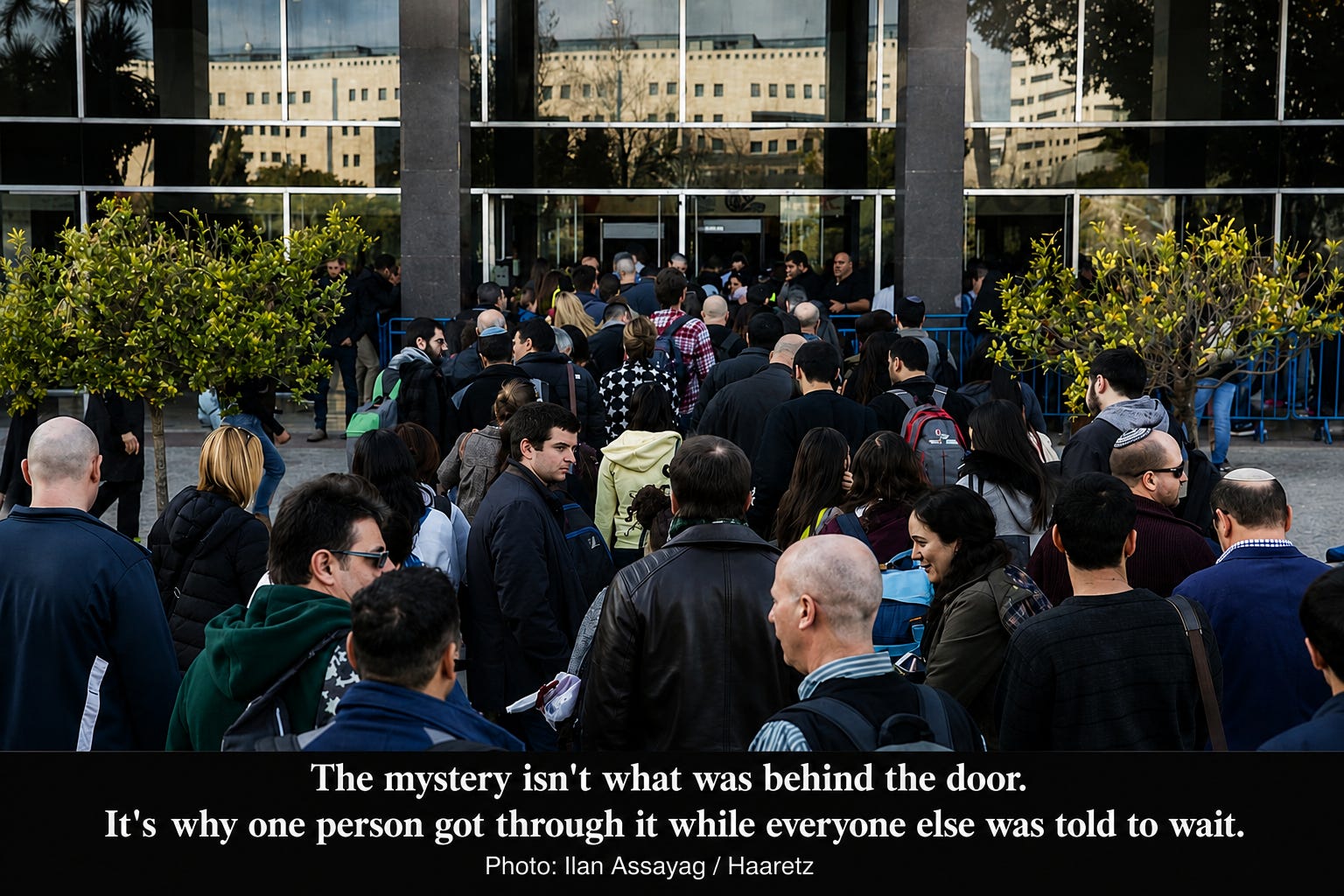
Meanwhile, somebody apparently found a door most Americans didn’t even know existed and walked right through it while the rest of us stood in line holding paperwork.
Join Me Every Morning.
Maybe there’s an explanation. Maybe it’s a rare medical condition that almost nobody else qualifies for. Maybe every rule was followed exactly as written.
Fine. Then explain it.
Because right now what we’ve got is a vacuum, and vacuums get filled with whatever the public’s already primed to believe — and Americans have been primed for exactly this story for forty years.
You want to know why nobody gives institutions the benefit of the doubt anymore? It’s not one scandal. It’s the slow bleed: a bailout here, a sweetheart deal there, a loophole nobody knew existed until somebody powerful needed it. Tell people the rules are non-negotiable, then watch somebody with money or connections find out they’re more of a suggestion.
That’s how trust actually dies, not in some dramatic explosion, but in a slow leak that nobody bothers to fix. Every time ordinary people get told the rules are ironclad while somebody else gets the workaround, a little more confidence walks out the door.
Eventually, people stop listening to the explanation because they’ve heard too many of them already, and they just start keeping score. Rich guys get the lawyer who actually shows up. Connected people get the meeting that would take you eight months and a miracle. Corporations find the exemption sitting there in plain sight. Every institution swears the rules are equal, then spends a decade explaining why this one time was special.
After a while, the details stop mattering.
People start noticing the pattern.
The moment people start noticing the pattern, stories like this stop being surprising.
That’s what makes this one fascinating. The actual headline isn’t that a mystery patient got access to an experimental drug. The headline is that millions of Americans immediately found it believable that somebody important got special treatment. Nobody needed evidence first. Nobody waited for an official explanation. The public reaction was almost instantaneous because enough people have spent enough years watching money, power, and influence bend enough rules that the possibility barely feels surprising anymore.
A federal agency, a drug company, and an experimental treatment are involved, and the public’s first instinct isn’t confidence, patience, or curiosity. It’s suspicion, not because Americans are stupid or gullible, but because they’ve watched enough exceptions pile up that they no longer assume the system works the way they’re told it does.
Most people don’t think there’s a smoke-filled room where a handful of guys secretly run the world. What they believe is simpler and probably closer to reality: powerful people know powerful people, money shortens lines, and certain phone calls get returned while others vanish into voicemail forever. Whether that’s actually what happened here is almost beside the point. The fact that so many people assumed it on sight tells you exactly how much credibility these institutions have left in the tank.
What actually pisses me off is watching an institution get asked a completely fair question and respond like it just got mugged. Nobody’s demanding a man’s full medical history. Nobody’s asking for every internal conversation that led to the decision. People are looking at an outcome that appears extraordinary on its face and asking for an explanation. Somehow, that’s treated like an insult.
Then comes the familiar response: “Trust us.”
Based on what, exactly?
The logo? The seal on the letterhead? The guy in the press office who’s paid to say absolutely nothing in four hundred carefully crafted words?
Trust isn’t a participation trophy you get for having a title or a government seal. You earn that shit through consistency. You earn it by showing people the rules apply the same way whether you’re a senator or some guy sitting on hold with his insurance company for the third time this year. The minute people stop seeing that consistency, they start assuming there’s a second rulebook getting passed around in a room they’re not invited into.
And honestly, can you blame them?
Americans have watched too many exceptions pile up over too many years. They’ve watched powerful people receive outcomes that somehow seem unavailable to everyone else. Sometimes there’s a perfectly legitimate explanation. Sometimes there isn’t. The problem is that after enough of those stories, people stop assuming the explanation exists.
That’s why transparency matters: Not because every unusual decision is corrupt, but because every unexplained decision starts looking like it might be.
Maybe there’s a real reason here. Maybe there was a unique medical circumstance that justified extraordinary access. Maybe every rule was followed exactly as written. If that’s true, great.
Explain it.
Because every day that passes without an explanation allows the public to write its own version of events, and that version is almost always going to involve influence, access, connections, and special treatment. Not because people enjoy believing those things, but because enough people have seen enough examples that they no longer dismiss them automatically.
Eventually, people stop asking whether there might be a hidden door.
They simply assume there is one and start arguing about who got the key.
Maybe we find out who this guy is. Maybe we don’t. Honestly, at this point, it barely matters because the moment millions of Americans heard this story and thought “yeah, that tracks,” it stopped being about one drug and one mystery patient.
That’s the siren. That’s the sound of an institution running out of the only thing it actually survives on — not money, not power, just the public’s willingness to assume the game isn’t rigged. Once that’s gone, a press release doesn’t buy it back, and neither does some bureaucrat doing the cable-news rounds looking wounded that anybody dared ask.
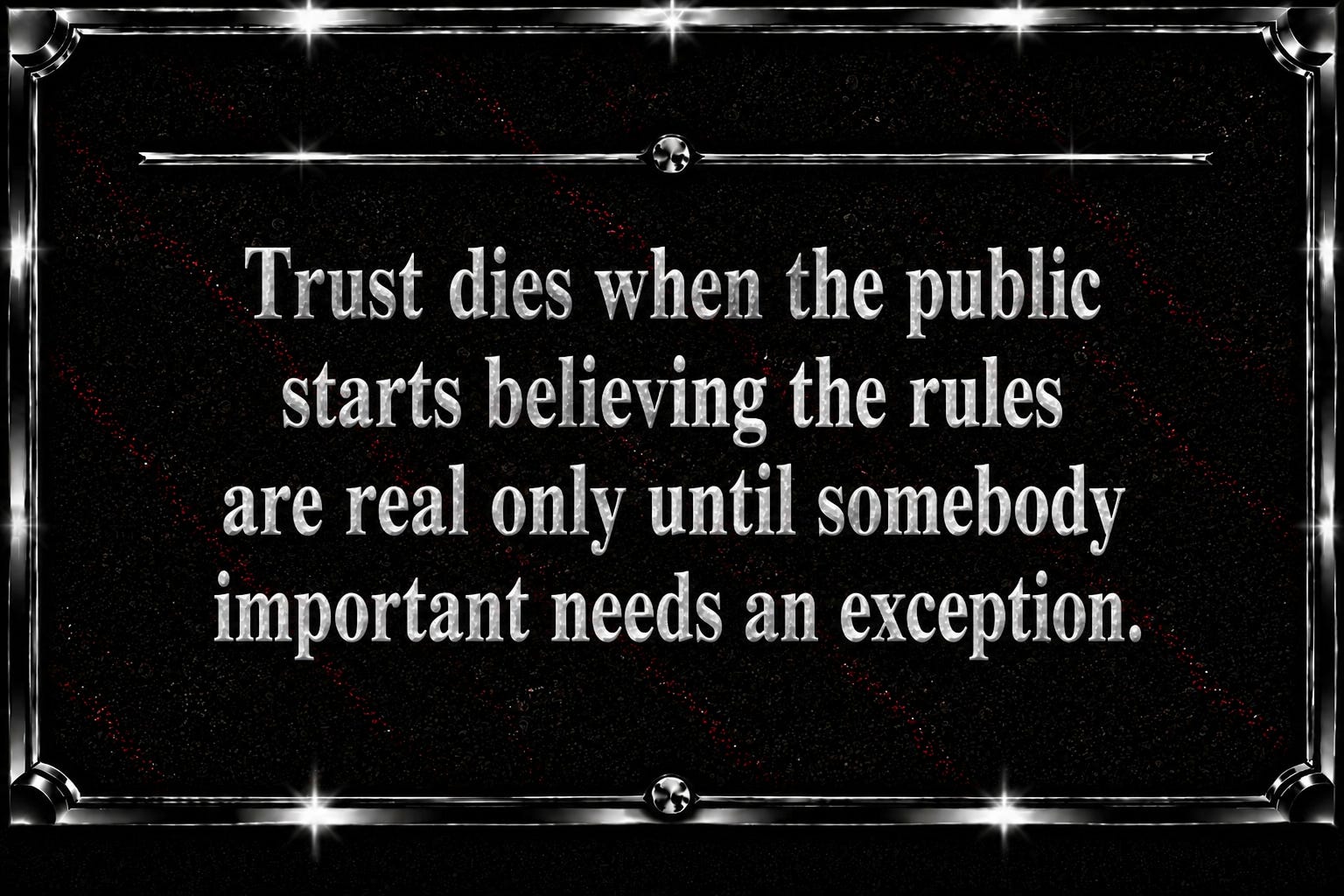
You don’t kill public trust by making people wait their turn. You kill it the second they find out somebody else never had to stand in line at all.
Keep the receipts hot and the bullshit detector fully operational.
One Question Before You Go
When you hear about special access to something the public can’t get, what’s your gut reaction: there’s probably a good reason, or somebody knows somebody?
This newsletter doesn’t run on advertisers, and it sure as hell doesn’t run on access to anybody important. It runs on paid subscribers — that’s the whole operation.
BASTARDONIA FACT: The Bastardonian Ministry of Equal Treatment has confirmed that all citizens are treated exactly the same. Citizens requesting proof were directed to a separate line reserved for important people.
#TheUnredactedBastard #FDA #Healthcare #Politics #Accountability #Receipts