

Tom Hicks | October 14, 2026
Editorial Note:
Donald Trump has employed an extraordinary collection of White House communicators, each with a memorable contribution to the administration’s relationship with the press. His newest press secretary provides an opportunity to examine that history, what the job has become, and why the public should care.
Donald Trump has a new White House press secretary, and after watching her first appearance at the podium Tuesday, I’m beginning to wonder whether the administration might save everyone a little trouble by replacing the position with a prerecorded message thanking the president for his extraordinary leadership.
Katie Zacharia lasted approximately fourteen minutes. She took questions from three news organizations, all conservative-leaning, and spent much of her time reading prepared remarks praising the president. She announced that Trump had asked Ambassador Kimberly Guilfoyle to resign, discussed his upcoming travel, and promised to continue expanding opportunities for new media.
It was an interesting introduction to a job that ordinarily involves answering questions from journalists. Particularly since so much of the introduction involved explaining how wonderful the man who hired her is.
I realize a White House press secretary is expected to defend the president. That’s part of the job, and nobody seriously expects the person standing behind that podium to announce that the administration has been behaving like a collection of escaped circus animals.
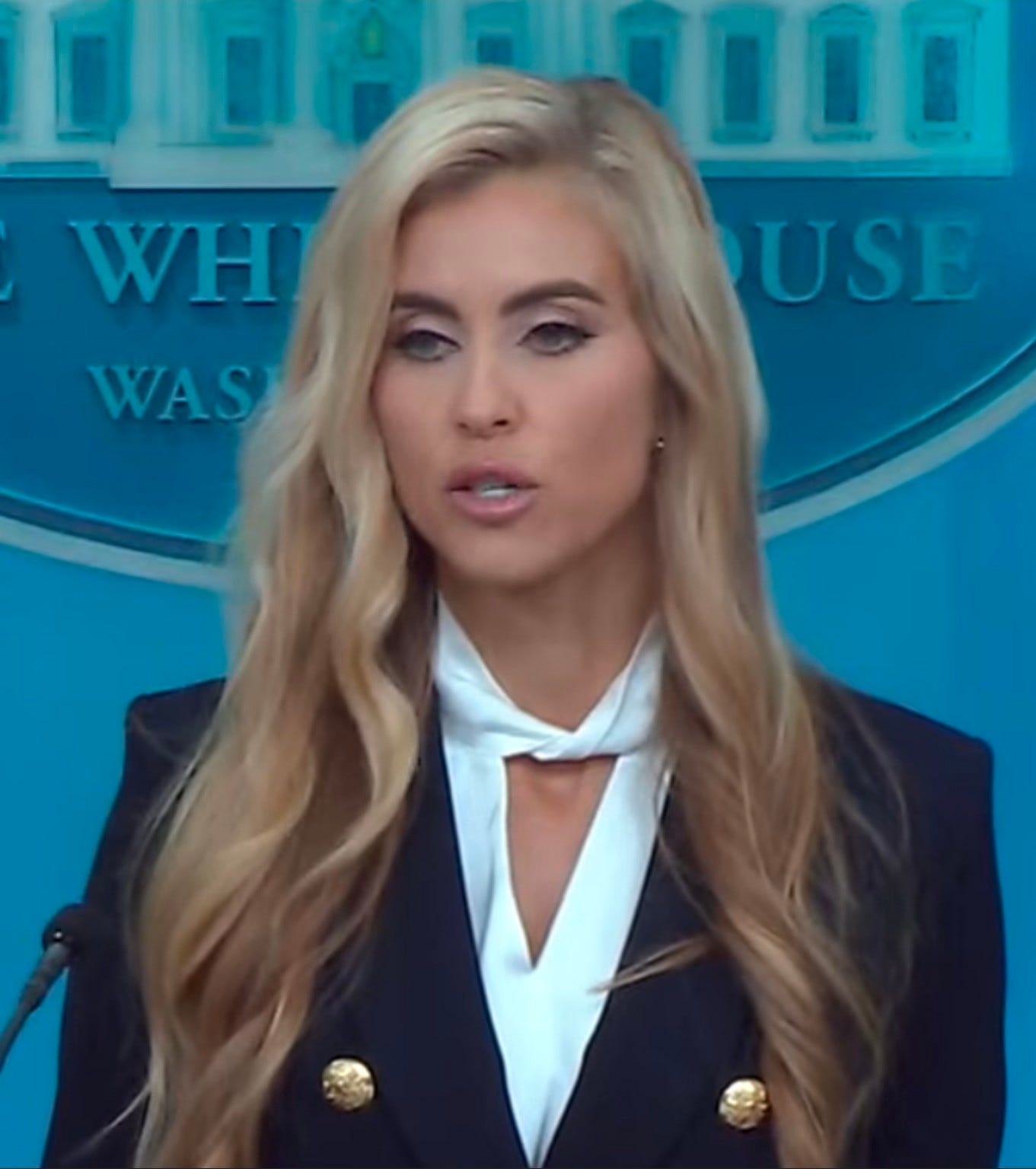
Still, there ought to be some distinction between representing the government and auditioning for the president’s next birthday tribute.
The most revealing moment came when Fox News correspondent Peter Doocy asked whether Zacharia’s job was to communicate White House business or help Republicans ahead of the midterm elections.
Her answer was that she hoped to amplify and expand Trump’s agenda, taking what she’d already been doing outside government into an official capacity.
Then Doocy asked whether the United States had stopped sharing intelligence with Ukraine.
She’d have to get back to him.
That’s a perfectly legitimate answer when a press secretary doesn’t know something. I’d rather hear it than watch someone manufacture a response and hope nobody checks. But there’s something worth noticing about the sequence. Zacharia could describe her mission as amplifying the president’s accomplishments without hesitation. A consequential foreign-policy question had to wait.
That’s where this story gets interesting.
Watch the briefing:
Off Script is independent journalism. No corporate newsroom, no party talking points, and no pretending something makes sense when it plainly doesn’t.
It’s free to subscribe, or you can help fund the research and tools we use every day.
The trouble didn’t begin Tuesday.
In fact, if we’re going to understand how the White House press secretary’s job arrived at this peculiar point, we probably ought to revisit a few of the people who helped get it here.
Political spin didn’t begin with Donald Trump. Administrations of both parties have withheld information, massaged inconvenient facts, and occasionally sent their spokespeople into the briefing room armed with explanations that wouldn’t survive a particularly demanding kindergarten teacher.
But Trump’s communications history provides an unusually useful collection of documented incidents involving false claims, missing briefings, and battles over access.
It began almost immediately.
Sean Spicer and the crowd everyone could see.
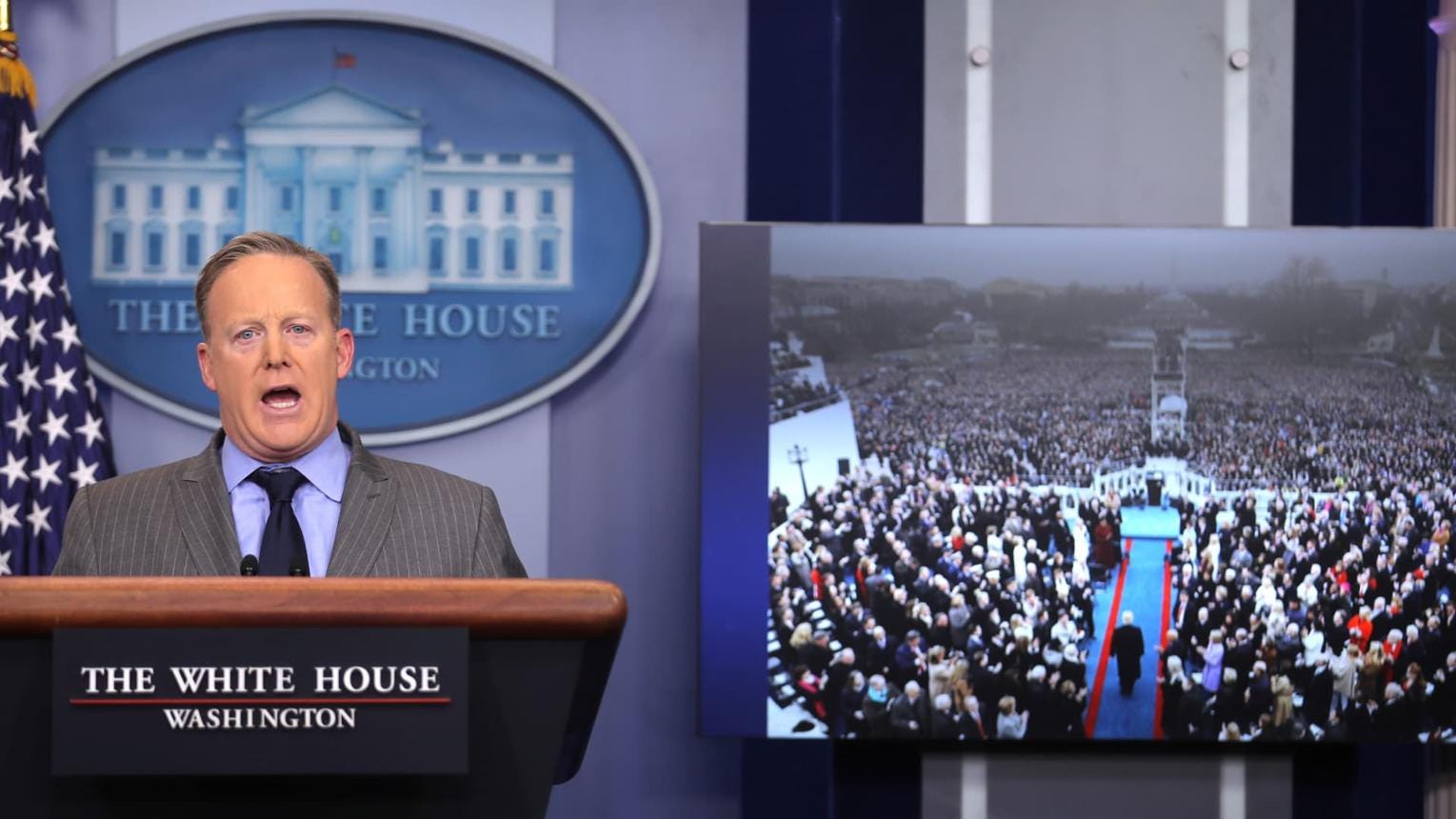
On January 21, 2017, Sean Spicer appeared before reporters to challenge coverage of Trump’s inauguration crowd. He made sweeping claims about attendance, despite photographs and other evidence contradicting the administration’s presentation.
Think about that for a moment. A new administration had the entire machinery of the federal government at its disposal, a country full of problems demanding attention, and a president beginning his first full day in office.
Its opening communications battle was over how many people had shown up to watch him take the oath.
Spicer was placed in the unenviable position of defending an argument that people could evaluate simply by looking at photographs. It established an early pattern: presidential displeasure could become an official White House dispute, regardless of whether the evidence supported it.
Then Kellyanne Conway arrived to explain what we’d just witnessed.
Kellyanne Conway and the invention of alternative facts.
Conway wasn’t press secretary, but her defense of Spicer’s inauguration statements deserves a prominent place in this history.
During a January 2017 interview with Chuck Todd, she described Spicer’s disputed assertions as “alternative facts.”
It was a remarkable expression. Facts, as I understand them, aren’t supposed to come with alternative versions depending on whose television show you’re appearing on.
Conway also referred to a nonexistent Bowling Green massacre while defending the administration’s travel restrictions. She subsequently said she’d misspoken about the incident.
The important thing about “alternative facts” is how conveniently the phrase expressed an approach to public communication: when evidence contradicted an administration claim, the administration could challenge the evidence rather than concede the claim.
I wouldn’t argue that Conway single-handedly invented the practice. Political deception was doing quite nicely long before she arrived, but she certainly gave it a memorable name.
Anthony Scaramucci: Eleven days of communications excellence.
Then came Anthony Scaramucci.
The Mooch was communications director, not press secretary, but leaving him out of a history of Trump White House communications would be like writing about the Titanic and forgetting the iceberg.
His July 2017 appointment contributed to Spicer’s resignation. Scaramucci subsequently delivered a spectacularly profane interview to The New Yorker, attacking senior administration figures, including Reince Priebus and Steve Bannon.
He was gone after eleven days.
Most people need longer than that to figure out the office coffee machine.
Scaramucci has since become a critic of Trump, and the extraordinary brevity of his tenure has become its own unit of political measurement.
When eleven days is enough to secure a permanent place in White House communications history, you’ve entered a particularly strange corner of American politics.
Sarah Huckabee Sanders and the FBI employees nobody could find.
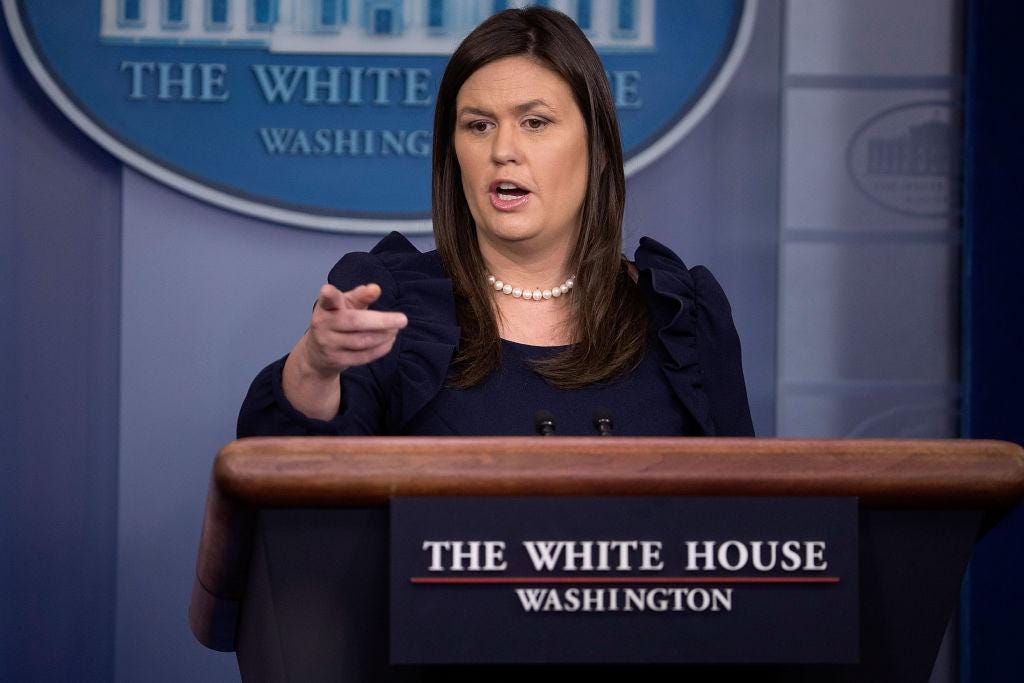
Sarah Huckabee Sanders provided a more consequential example.
After Trump fired FBI Director James Comey in May 2017, Sanders claimed the White House had heard from countless FBI employees who supported the decision.
It sounded like useful corroboration, especially when the firing itself was attracting intense scrutiny.
There was just one problem.
When questioned by investigators working for special counsel Robert Mueller, Sanders acknowledged that her claims weren’t grounded in actual evidence. The Mueller report records her explanation that one statement was a slip of the tongue and another was made in the heat of the moment.
A slip of the tongue is calling your dog by your neighbor’s name.
Claiming to have heard from countless FBI employees when you have no basis for saying so is something else.
That’s why this episode matters more than an awkward briefing. The White House was presenting purported evidence of support inside a federal law-enforcement agency at a moment when the president’s decision to fire its director was under investigation.
The claim wasn’t merely flattering to the president. It was useful to his defense.
Stephanie Grisham and the revolutionary idea of avoiding reporters altogether.
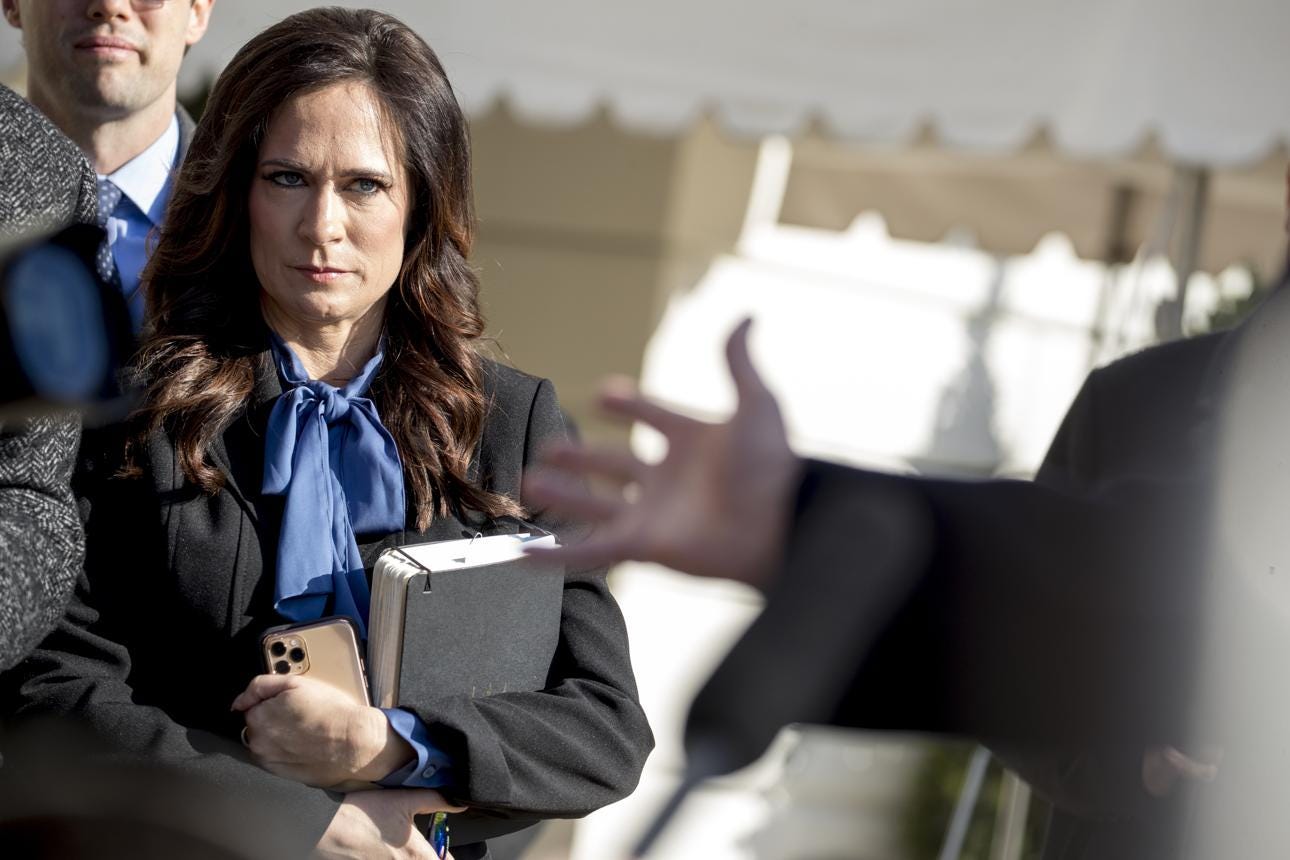
Stephanie Grisham took the communications operation in another direction.
She served as White House press secretary from July 2019 until April 2020 without holding a formal White House press briefing.
Nine months.
Not one.
I’ll admit there’s a certain elegance to the arrangement. If reporters keep asking questions you don’t want to answer, eliminate the part of your schedule where they get to ask them.
Of course, Grisham still communicated with news outlets and appeared in interviews. The position wasn’t literally abandoned. But the traditional briefing, where journalists from competing organizations could ask questions in public and follow up on one another’s inquiries, disappeared during her tenure.
That’s a meaningful difference.
A spokesperson can give a carefully prepared television interview. A briefing room full of reporters is considerably harder to control.
Kayleigh McEnany and the promise.
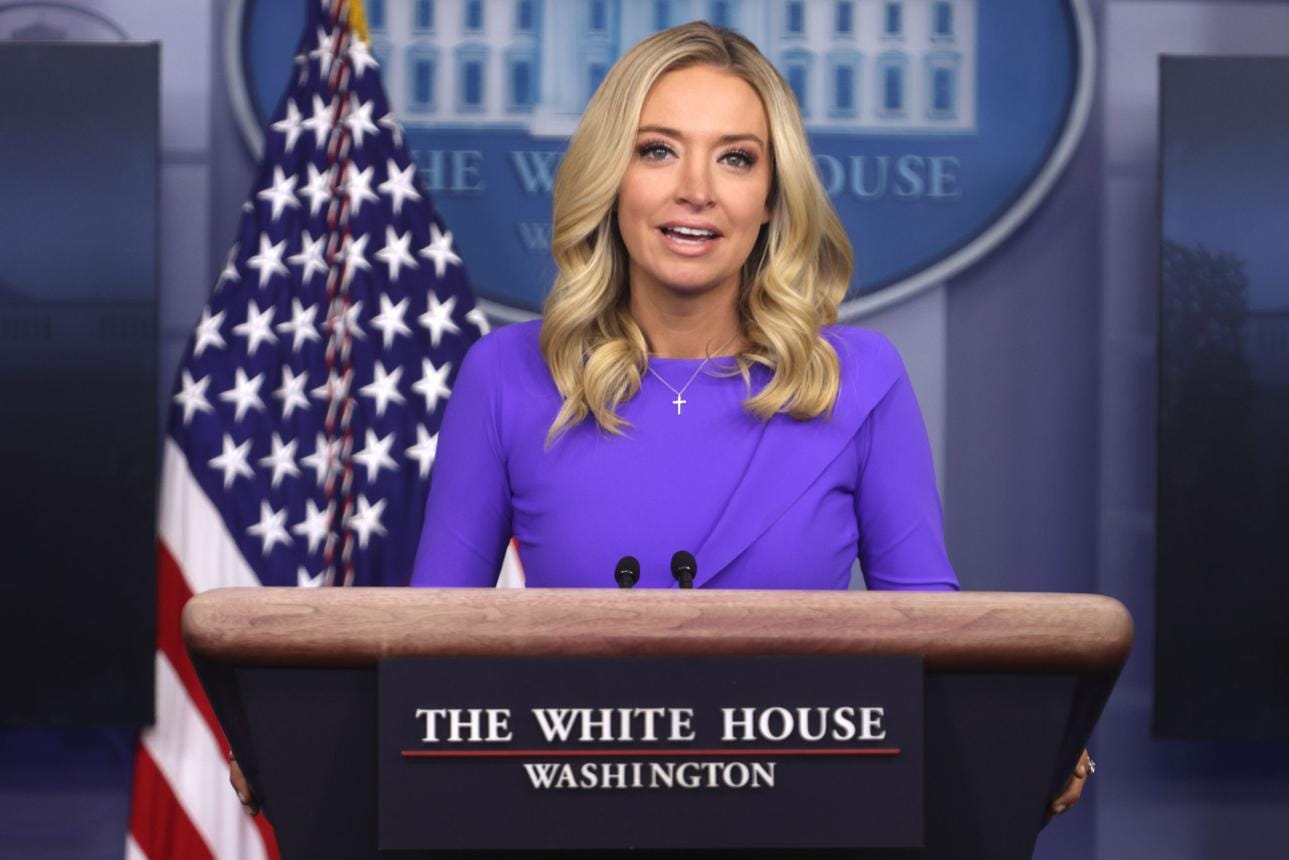
Kayleigh McEnany arrived in April 2020 and restored regular briefings.
At her first appearance, she promised she would never lie to reporters.
That’s an admirable ambition, although I confess it strikes me as the sort of promise that ought to be understood without requiring a formal announcement.
McEnany became a prominent defender of Trump’s statements and policies, including disputed claims surrounding the 2020 election.
Karoline Leavitt and the permanent confrontation.
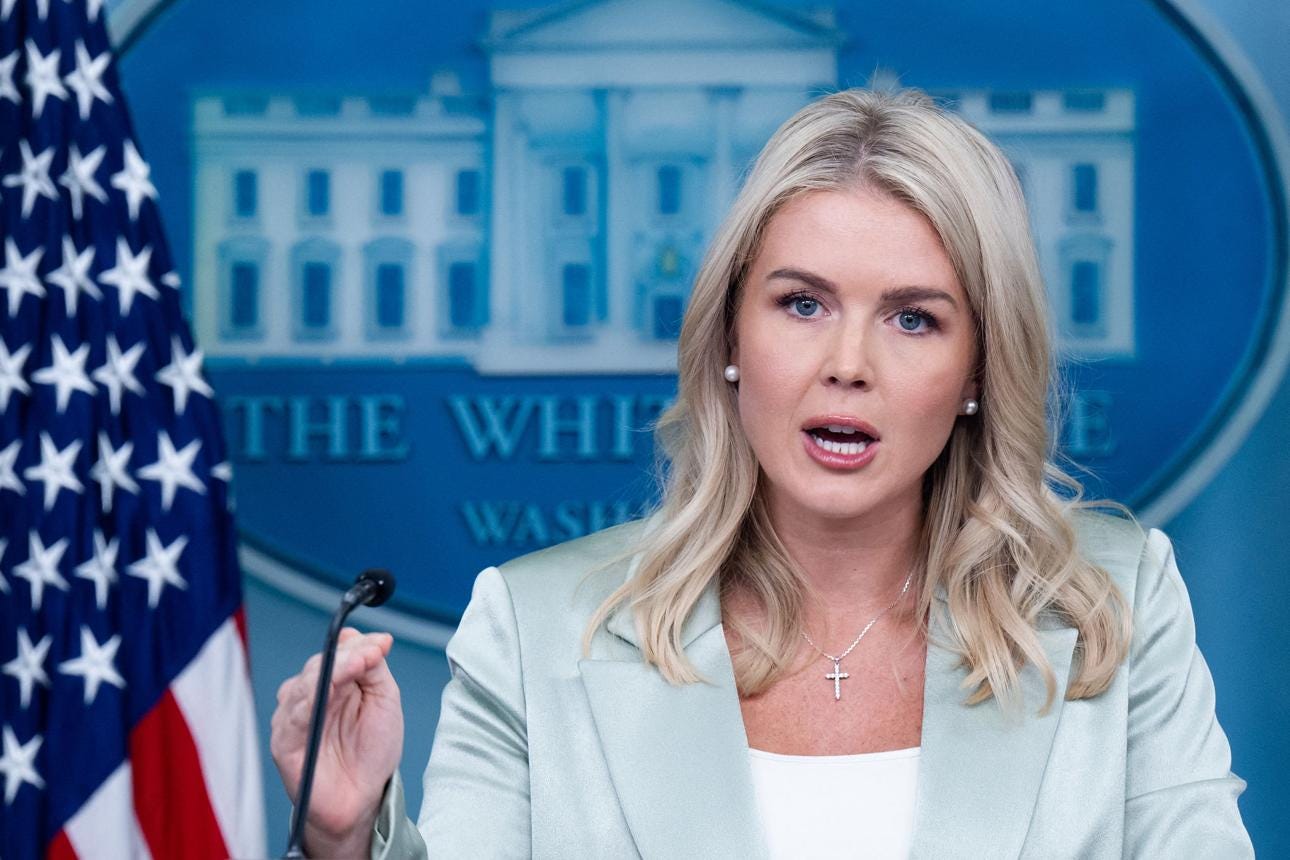
Karoline Leavitt and the permanent confrontation.
By the time Karoline Leavitt became press secretary in Trump’s second administration, the relationship between the White House and the press had deteriorated into something resembling a standing argument over who was entitled to ask questions. Leavitt championed a new-media seat in the briefing room, and I don’t have a problem with that in principle. Traditional news organizations don’t own journalism, and some of them could use a reminder. But there’s a difference between giving more people access and making sure the people getting access are inclined to applaud whatever comes out of the podium.
Leavitt’s confrontations with reporters became a familiar part of the proceedings. The administration called it challenging biased coverage, while critics saw an effort to discredit unwelcome scrutiny. Sometimes reporters ask loaded or unfair questions, and a press secretary has every right to challenge them. But the point of a briefing isn’t to determine who wins an argument. It’s to provide information the public has a right to know. If everyone leaves talking about the confrontation instead of the answer, something has gone wrong.
Leavitt departed in August, and now Katie Zacharia has inherited the job, along with the accumulated baggage of everyone who held it before her.
Fourteen minutes and a much bigger question.
Zacharia’s first briefing was short, heavily scripted, and apparently satisfactory to the president, who pronounced her performance excellent. There are also legitimate questions about her legal credentials, particularly the difference between having a law degree and being licensed to practice. Those deserve factual answers, not speculation. But I’m not going to declare someone unfit for the job after fourteen minutes behind a podium. She might settle in, start taking tougher questions, and surprise us. Stranger things have happened, although the White House briefing room hasn’t exactly been a reliable supplier of them.
What concerns me is the larger question of what the administration thinks the position is for. A press secretary is supposed to defend the president’s policies, explain government decisions, and sometimes tell reporters things they don’t want to hear. Nobody expects an administration spokesperson to behave like an independent investigative journalist. But defending a policy and treating every inconvenient question as an act of hostility are two very different things.
That distinction matters beyond the briefing room, particularly when the administration is fighting with news organizations over access. The White House has legitimate authority to establish security procedures and reasonable rules for journalists working in sensitive facilities. It doesn’t follow that officials should be able to use those rules to punish unfavorable reporting. Trump is entitled to dislike the press, dispute its coverage, and complain about individual reporters. Given his enthusiasm for the last option, I doubt we’re in any danger of seeing that particular freedom disappear.
But the government shouldn’t get to decide that asking uncomfortable questions is grounds for losing access to the people who are supposed to answer them.
So what exactly is the job now?
Looking back over this collection of White House communicators, what strikes me isn’t simply the number of embarrassing episodes. Every administration has them. It’s how often the dispute stopped being about what the government was doing and became an argument over whether the press had any business questioning it.
Spicer’s crowd-size performance, Sanders’ unsupported FBI claims, Grisham’s disappearing briefings, and the confrontations that followed weren’t identical incidents. But they raise a common question about whether the administration regards public accountability as an obligation or an inconvenience to be managed.
And that’s where Katie Zacharia comes in. Her fourteen-minute debut doesn’t establish what kind of press secretary she’ll become, but the history surrounding her arrival tells us something about the job she’s inherited. The White House can change the person behind the podium as often as it likes. Unless its understanding of that person’s responsibility changes, we’re likely to keep getting variations of the same performance.
I’d love to be wrong about that.
In fact, I’d settle for a press secretary who understands that answering a difficult question isn’t an act of disloyalty. It’s part of the job. Apparently, we’ve reached a point where that qualifies as an ambitious reform proposal.
The Bullshit Detector
Three more claims that deserve a closer look.
1. George W. Bush, Dick Cheney, Donald Rumsfeld, and Osama bin Laden were photographed together after 9/11.
Claim: A photograph circulating online shows the four men sitting together at the Pentagon.
Bullshit: 💩💩💩💩💩 — Fabricated.
Why: The photograph was altered. Bin Laden was digitally inserted in place of Deputy Defense Secretary Paul Wolfowitz, and another official was incorrectly identified as Cheney. The original September 12, 2001, Defense Department photograph establishes who was actually present. Apparently, rewriting history now comes with a Photoshop subscription.
2. A graph proves Russian bot activity supporting Germany’s AfD collapsed after Ukrainian strikes.
Claim: A viral chart documents a dramatic reduction in online activity after Ukrainian attacks on Russian data centers.
Bullshit: 💩💩💩💩💩 — Fabricated data.
Why: The chart was reportedly posted October 11 but included supposed observations through October 15. If those dates are accurate, it was presenting future observations as recorded history. Whether the strikes affected bot activity remains a separate question.
3. Those spectacular close encounters between ships and enormous whales are genuine wildlife footage.
Claim: Viral videos show astonishing, apparently authentic encounters with whales at sea.
Bullshit: 💩💩💩💩 — For examples established to be AI-generated.
Why: Artificially generated wildlife videos can resemble genuine footage, especially when reposted without their original context. Real whale encounters certainly happen, but an impressive-looking video isn’t proof that the particular event occurred. Apparently, even Moby Dick has entered the content-creation business.
Elsewhere at Tom Hicks Media
Off Script / Blind Spot follows the stories beneath the headlines and the machinery that makes them matter. What The Hell? explores historical absurdities that sound invented but actually happened.
Lotus Purrspective offers life through the eyes of a cat who has serious reservations about human judgment. Chart Collision revisits the music, memories, and unexpected stories hiding in the charts.
Panic Room Sports brings skepticism and attitude to sports coverage, while Rabbit Ears Classic TV and The Backlot Ghost explore the television and movie history worth remembering.
Buy Me a Cup of Tea
Independent reporting takes time, research, and occasionally a remarkable tolerance for bullshit. If you’d like to help keep Off Script going, consider buying me a cup of tea. Every contribution helps support the work, and the subscription remains free.
One Question Before You Go
Should White House press briefings be a regular public obligation, regardless of which party controls the presidency, or should administrations decide when and whether to hold them?
I’d genuinely like to hear where you draw the line.
#OffScript #WhiteHouse #PressFreedom #GovernmentAccountability #Journalism #FirstAmendment #Media