


How many times today did your phone talk you into staying longer than you meant to?
Don’t lie. I lost twenty minutes last week to a video about a man restoring a rusted-out tractor, and I don’t even like tractors. That’s not an accident. That’s the whole business model working exactly as designed.
Technology doesn’t make decisions. It follows instructions, and most people walking around with a phone glued to their hand have never stopped to ask what those instructions actually are.
The answer isn’t complicated. The software running your feed has exactly one job: keep you from putting the damn thing down. It doesn’t care whether the next thing you see is true, whether it’s helpful, or whether it’s legal. It asks one question and one question only:
Will this keep the human scrolling?
Everything else is an afterthought.
Which brings us to a report that should have gotten a hell of a lot more attention than it did.
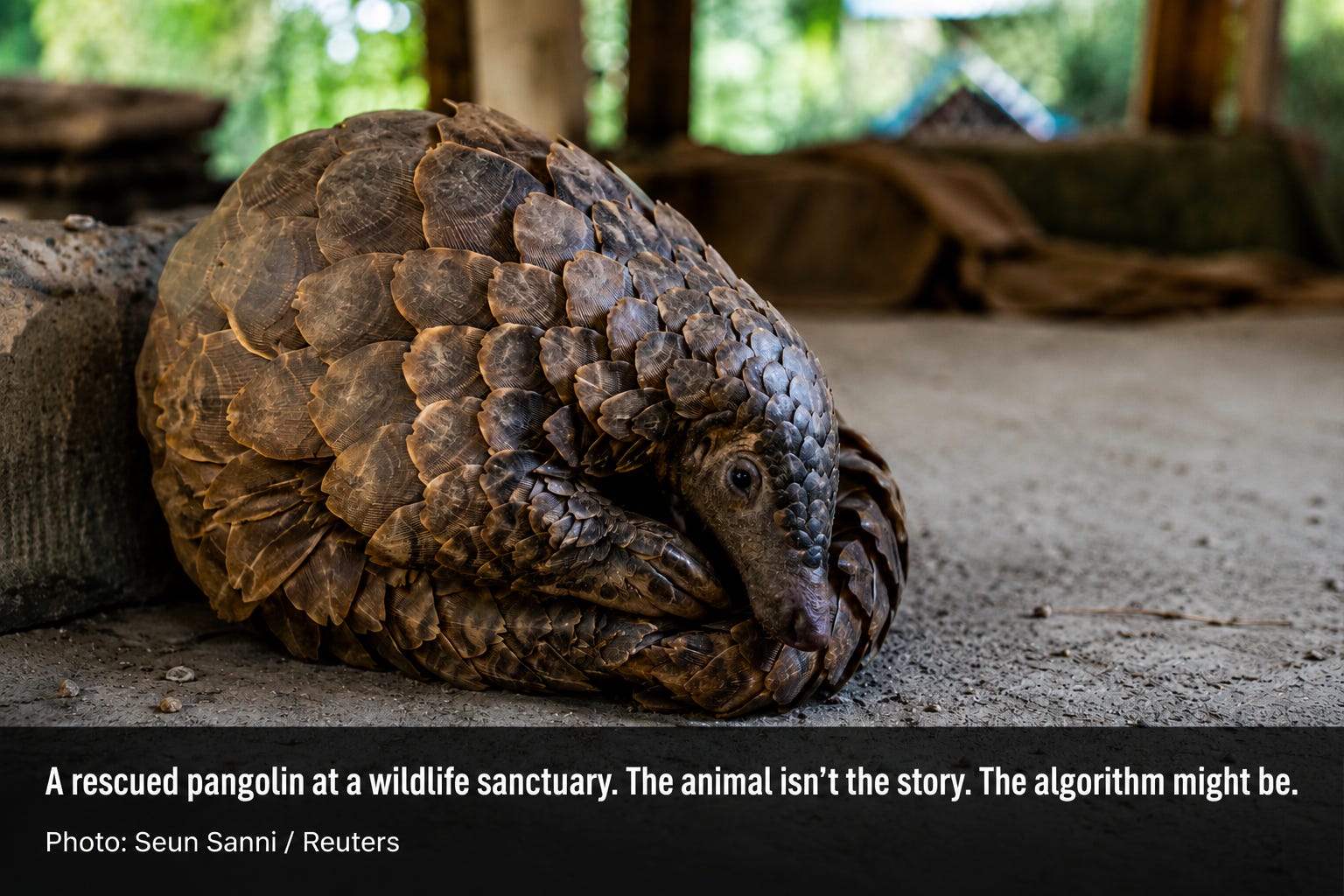
Researchers with the Global Initiative Against Transnational Organized Crime accuse Facebook of becoming the largest online marketplace they documented for illegal wildlife trafficking. Over a two-year period, they tracked tens of thousands of listings involving protected animals and wildlife products, with Facebook accounting for the overwhelming majority of the activity they observed.
If that’s accurate, it should make every one of us uncomfortable. Not because anyone with a functioning brain believes executives at Meta are sitting around a conference table scheming about how to help people sell endangered parrots or tiger cubs. It should make us uncomfortable because it suggests something far more believable—and a lot more depressing. The machine simply kept doing what it was built to do: keep people engaged.
If that meant recommending a cooking group, fine. If that meant suggesting a fishing page, great. If it meant connecting buyers and sellers of protected wildlife because the engagement signals looked strong enough, the machine didn’t blink.
That’s where this stops being a story about wildlife and starts being a story about incentives.
Join Me Every Morning.
We’ve spent years arguing over whether social media spreads misinformation. We’ve fought over political extremism, conspiracy theories, scams, fraud, fake news, bots, and every other ugly thing that thrives online, and we keep treating each one like it’s a brand-new problem. It isn’t. It’s the same problem wearing a different costume.
If you build a machine whose only meaningful reward is attention, don’t act shocked when it gets spectacularly good at promoting whatever captures attention. The machine doesn’t know the difference between important and outrageous, honest and dishonest, legal and illegal. It knows what gets clicks, and that’s the whole business model.
Picture owning a shopping mall where every store pays rent based on foot traffic. One day you discover one of the stores is quietly fencing stolen merchandise. You didn’t tell them to do it. You didn’t advertise it. But you’ve also been cashing checks generated by the extra customers walking through your doors every single day.
Eventually somebody asks the obvious question:
At what point does, “I didn’t plan this,” stop being a good enough answer?
That’s exactly where this report lands. The researchers argue Facebook’s recommendation systems weren’t merely hosting illegal activity. They say the platform’s groups and recommendation features surfaced wildlife trafficking content to users, often before those users went looking for it themselves. That’s a serious accusation.
Meta disputes the implication that it tolerates wildlife trafficking and points to policies prohibiting the sale of endangered animals, along with cooperation with conservation organizations. The company says it has removed content and participated in industry efforts aimed at reducing trafficking. Good. It should be doing that.
But here’s the uncomfortable question nobody at Meta wants to answer on the record: if years of policies, moderation, AI, partnerships, and public promises still leave researchers concluding your platform dominates the problem, maybe this stopped being a moderation issue a long time ago. Maybe it’s an incentive problem, because moderation only happens after the fact. The algorithm decides what gets attention first, and attention is where the money lives.
The wildlife trade simply exposes the flaw more clearly than most stories do. Nobody argues that selling endangered animals should be protected speech. Nobody claims tiger cubs are a matter of political opinion. There’s no national debate over whether traffickers deserve better algorithmic support. That’s exactly what makes this case so revealing.
Strip away the politics and what’s left is the machine. It isn’t picking a side. It’s chasing engagement, full stop.
Today it’s allegedly wildlife traffickers. Yesterday it was romance scammers. Before that it was counterfeit goods, financial fraud, miracle cures, and every flavor of misinformation you can imagine.
The merchandise changes. The incentive never does.
That’s why I think we keep asking the wrong question every time one of these stories breaks. People demand more moderators, more reviewers, more artificial intelligence, more fact-checkers, and those things absolutely help. But they’re all trying to clean up the output while leaving the incentive completely untouched.
It’s like hiring more lifeguards while refusing to fix the rip current. You’ll save some people. The current is still there.
There’s another reason this story matters, and it’s bigger than Facebook, wildlife, or any one platform. We’re rapidly handing algorithms responsibility for deciding what billions of people see every day—from news and entertainment to medical information, investment advice, job opportunities, and even who shows up as a suggested friend.
Increasingly those decisions aren’t being made by editors, librarians, or even another human being. They’re being made by software ruthlessly optimized to answer a single question:
What keeps people here the longest?
That’s an incredibly efficient business strategy. It’s also a goddamn awful moral philosophy because software doesn’t have judgment. It has objectives.
And if we hand it the objective of maximizing engagement without equally rewarding safety, accuracy, legality, or basic human responsibility, we have no business acting shocked when those things quietly disappear from the results.
The wildlife report matters because it forces us to look past the individual listings and toward the system that allowed them to flourish in the first place.
Swap the product for an endangered tortoise, a financial scam, counterfeit medication, or next month’s conspiracy theory, and the underlying mechanism doesn’t change one bit. The algorithm isn’t making ethical choices. It’s following instructions. Maybe we’ve spent so much time yelling at the machine that we forgot to ask harder questions about the people writing those instructions in the first place.
Keep the receipts hot and the bullshit detector fully operational.
Technology isn’t destiny. Business models aren’t laws of physics. They’re choices. Every recommendation engine reflects a set of priorities some human being signed off on somewhere along the line.
The wildlife trade wasn’t the plan. I actually believe that. But when enough unintended consequences keep pointing in the same direction, they eventually stop looking like accidents. They start looking inevitable, and inevitability is usually just a polite word for incentives nobody wanted to change.
The most dangerous algorithm isn’t the one that wants to hurt you. It’s the one that was never taught to give a damn.
Need a Break From Politics?
Take five minutes and see what was topping the charts on this day in history.
Every morning, Tom’s Number Ones celebrates the music that made the memories.
One Question Before You Go
If maximizing engagement keeps rewarding harmful behavior, should platforms be expected to redesign the incentive itself, or simply remove the worst offenders after they’re caught?
If you appreciate independent journalism that follows the incentives instead of the outrage, subscribe and join me every morning.
Bastardonia Fact
The official Department of Common Sense has determined that “the algorithm made me do it” is not currently recognized as a valid legal defense.
#TheUnredactedBastard #Technology #SocialMedia #Algorithms #Facebook #WildlifeTrafficking #ArtificialIntelligence #DigitalEthics #Journalism