


Earlier today, I watched a video from Robert Reich that got stuck in my head and refused to leave.
Reich boiled his concern about Donald Trump down to a single blunt observation:
“Trump either knows he’s telling dangerous lies, in which case he should not be president, or he believes his lies, in which case he’s seriously mentally deranged and should not be president.”
— Robert Reich
That’s one hell of a statement.
I respect the hell out of Robert Reich. The man worked in the Ford administration, the Carter administration, and Clinton’s cabinet. He’s spent decades watching presidents up close, which doesn’t make him infallible, but it damn sure makes him worth listening to.
The problem is that the more I thought about his argument, the more I found myself asking a different question.
Not because I think Reich is wrong. Hell, he may be exactly right. The problem is that his argument requires me to answer a question I don’t think I can answer. It requires me to know what’s happening inside Donald Trump’s head, and that’s a place none of us have access to. Reich doesn’t. I don’t. You don’t. The cable-news circus certainly doesn’t.
Years of combined experience in journalism and the legal field taught me one lesson: if you’re trying to figure out what happened, start with what you can actually prove and work outward from there. Documents don’t care about your feelings. Evidence doesn’t care about your politics. Facts don’t care which conclusion you were hoping to reach. When evidence and speculation start competing for your attention, you follow the evidence.
That’s why Reich’s comment sent me in a completely different direction. Instead of wondering what was happening inside Trump’s head, I found myself thinking about something I’d watched a few days earlier.
I found myself thinking about Kristen Welker.
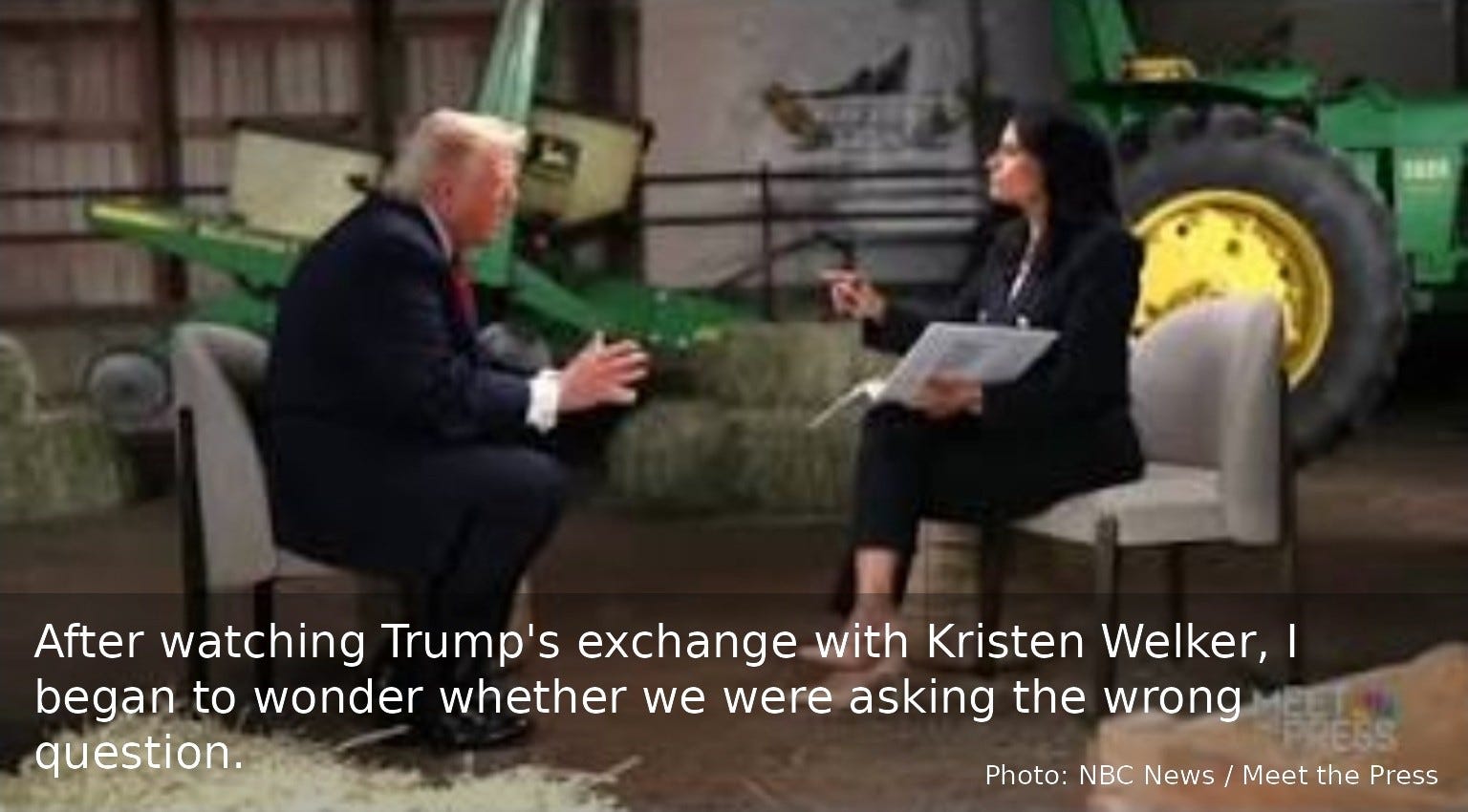
A few days before Reich’s video crossed my screen, I watched Trump’s interview on Meet the Press. What stayed with me wasn’t a policy position, a statistic, or even a particular claim. What stayed with me was the way the interview seemed to deteriorate as it went on.
The longer the conversation continued, the more confrontational Trump appeared to become. Not simply toward the questions, but toward Welker herself. There was an edge to the exchange that became harder to ignore as the interview progressed. The interruptions became sharper. The dismissiveness became more obvious. The irritation became more visible. By the end, it felt less like a president answering questions and more like a man increasingly pissed off that the questions hadn’t gone away.
What really stuck with me was the combination of confrontation and condescension. Calling Welker a fraud. Referring to her as “darling.” Treating an experienced journalist less like a professional doing her job and more like an inconvenience that should have figured out when to stop asking follow-up questions.
Maybe you watched the same interview and saw something different. That’s fine. Watch it again and make your own call. But my years in journalism and the legal field taught me to pay attention to evidence, behavior, and observable facts. What bothered me wasn’t that Trump pushed back. Public officials push back every damn day. What bothered me was the apparent contempt directed toward the process itself.
It didn’t start that way. Early in the interview, the pushback was standard-issue—the kind of friction you expect when a reporter starts pressing on numbers that don’t add up. But it was built. The interruptions came faster. The answers got shorter and sharper. The irritation stopped being something he was managing and started being something he was performing. By the time he called Welker a fraud, that was almost the predictable part—Trump calls people frauds the way other people say good morning.
What I couldn’t shake was what came after it.
“Darling.”
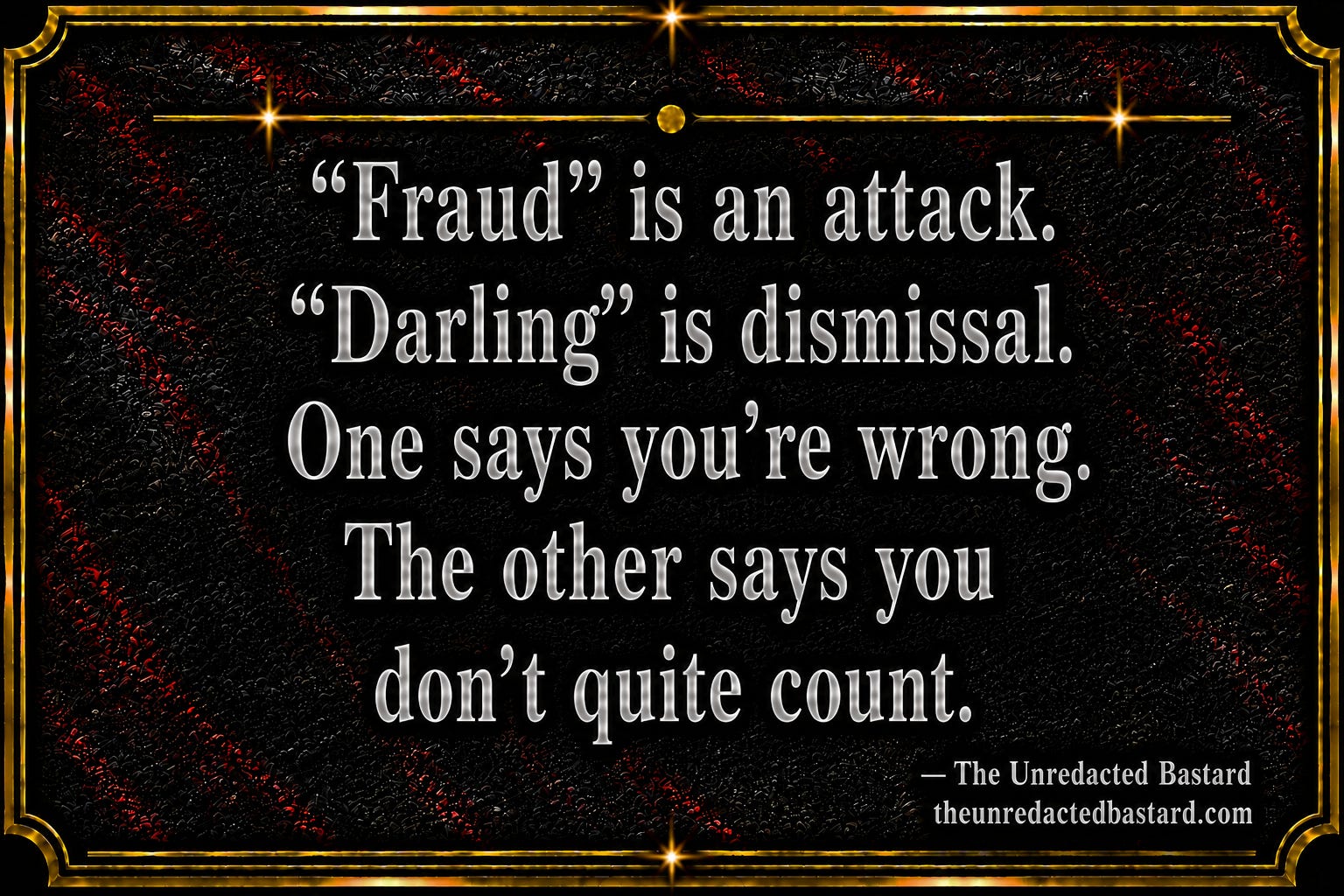
Tossed out at the end like an afterthought, like a door being closed on its way to somewhere more important. Fraud is an attack. Darling is a dismissal. One says you’re wrong. The other says you don’t quite count. The escalation wasn’t random. It had a shape to it—and that shape told me more than anything he actually said.
Reporters aren’t supposed to ask one question and then wander off satisfied when the answer doesn’t actually answer anything. The entire job is the follow-up. The second question. The third question. The question that starts with, “Okay, but that’s not what I asked.” A functioning democracy requires somebody in the room willing to keep asking those questions even after the subject gets uncomfortable.
If you’re finding value in evidence-first journalism that follows facts instead of tribes, consider subscribing.
Independent journalism only works when readers decide it’s worth supporting, and I appreciate every one of you who helps keep this little operation running.
The more I thought about the Welker interview, the more I realized Reich’s question might not be the most important one. We’ve spent nearly a decade arguing about whether Trump knows he’s lying, believes what he’s saying, manipulates people on purpose, fools himself, performs for the cameras, or operates from some private version of reality that only he can see.
Damned if I know, and neither do most of the people getting paid to argue about it.
The truth is that we’ve become obsessed with motive. We want to know why politicians say what they do. We want psychological profiles. We want secret explanations. We want the hidden mechanism that powers the machine. What we often don’t want is the boring, unglamorous work of evaluating whether the damn thing is true.
That’s a problem because motive is one of the hardest things in the world to prove. Human beings are complicated. People lie. People exaggerate. People rationalize. People convince themselves of things that aren’t true. People repeat stories so often that the polished version replaces the original memory. Sometimes people are manipulative. Sometimes they’re self-deluding. Sometimes they’re both.
Good luck proving which one you’re looking at from a television screen.
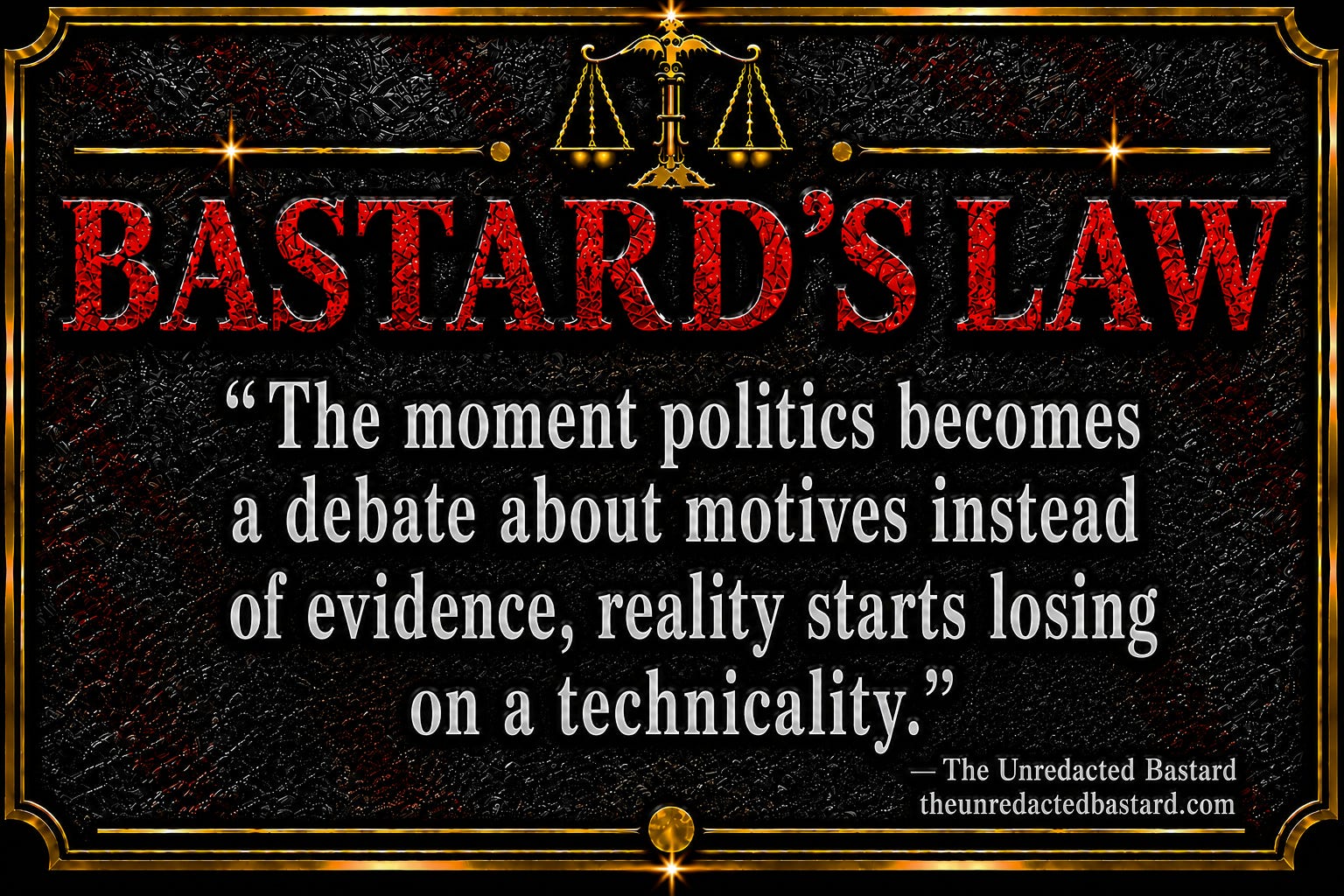
One of the first things the legal world teaches you is that evidence doesn’t give a shit what you want to be true. It doesn’t care about your party, your ideology, your favorite politician, or your least favorite politician. The evidence is either there or it isn’t.
That’s why I’ve never been particularly interested in attempts to explain Trump through psychology. Some people insist he’s a master manipulator playing three-dimensional chess while everyone else is playing checkers. Others insist every strange statement is evidence of mental collapse. Both arguments require assumptions. Both require speculation. Both require me to pretend I know things I don’t actually know.
What I know is what I watched.
I watched a journalist continue asking questions after the answers stopped making sense. I watched a public official become increasingly irritated by those questions, and I watched that irritation evolve into dismissiveness and condescension. I watched a journalist being called a fraud. A “darling” was tossed over the shoulder like a final little insult on the way out the door.
None of that tells me what’s happening inside Donald Trump’s head.
That’s not nothing. That’s everything, and frankly, that’s enough.
And frankly, that’s enough.
Because this stops being a Trump story at a certain point. If you’ve been paying attention, you’ve probably noticed the same disease spreading throughout American politics. Politicians say demonstrably false things, and supporters rush to explain why they said it. Politicians make contradictory statements, and opponents rush to explain what dark psychological truth has finally been revealed. Entire industries have been built around guessing motives while evidence sits quietly in the corner waiting for somebody to notice it.
Evidence is hard. Evidence requires work. Evidence requires admitting when your side is wrong. Evidence requires changing your mind when new information appears. Mind-reading is easier. You can make motives say whatever the goddamn hell you want them to say.
Maybe Robert Reich is right. Maybe Trump knows exactly what he’s doing. Maybe he believes every word that comes out of his mouth. Maybe the answer changes from one day to the next. Human beings are messy enough that several explanations can be true at the same time.
The truth is that I can’t answer Reich’s question.
But by the end of that interview, I found myself asking a different one.
What happens when a leader appears increasingly hostile not merely to criticism, but to the process of being questioned at all?
That’s a question I don’t need a psychological evaluation to ask. I watched it happen. And unlike whatever may or may not be happening inside Donald Trump’s head, that question doesn’t require mind-reading.
And that’s the thing about evidence.
You don’t need to crawl inside somebody’s head to see it.
It only requires eyes.
Upgrade
I’m retired. This is reader-funded. No sponsors. No corporate leash. No one telling me to tone it down.
Paid subscribers get bonus rants, full archive access, priority Q&A, and deeper dives that don’t make it into the free feed.
Upgrade and support independent work that doesn’t play nice.
If you want the same reality with a quieter voice and sharper claws, go check out Lotus Purrspective.
That’s where the judgment is calmer, cleaner, and somehow even more brutal.
Buy Me A Coffee
If this hit, consider supporting the work because yelling “what the fuck are we doing?” at the news doesn’t pay for itself.
#Politics #Journalism #Media #DonaldTrump #RobertReich #Democracy #Evidence #Truth #MeetThePress #KristenWelker #TheUnredactedBastard
It is a worthy question by Reich. However, from this radical feminist psychologist viewpoint: He was caught. So all the predator juices exploded. I am convinced he would have struck if cameras were not rolling. In my book, she won.