

Truthout published polling this week on the Chemical Safety Board’s accident data and how it shifts public opinion on toxic pollution protections. After respondents saw the actual numbers on industrial accidents, 82 percent of Trump voters said they wanted stronger federal protections from toxic pollution.
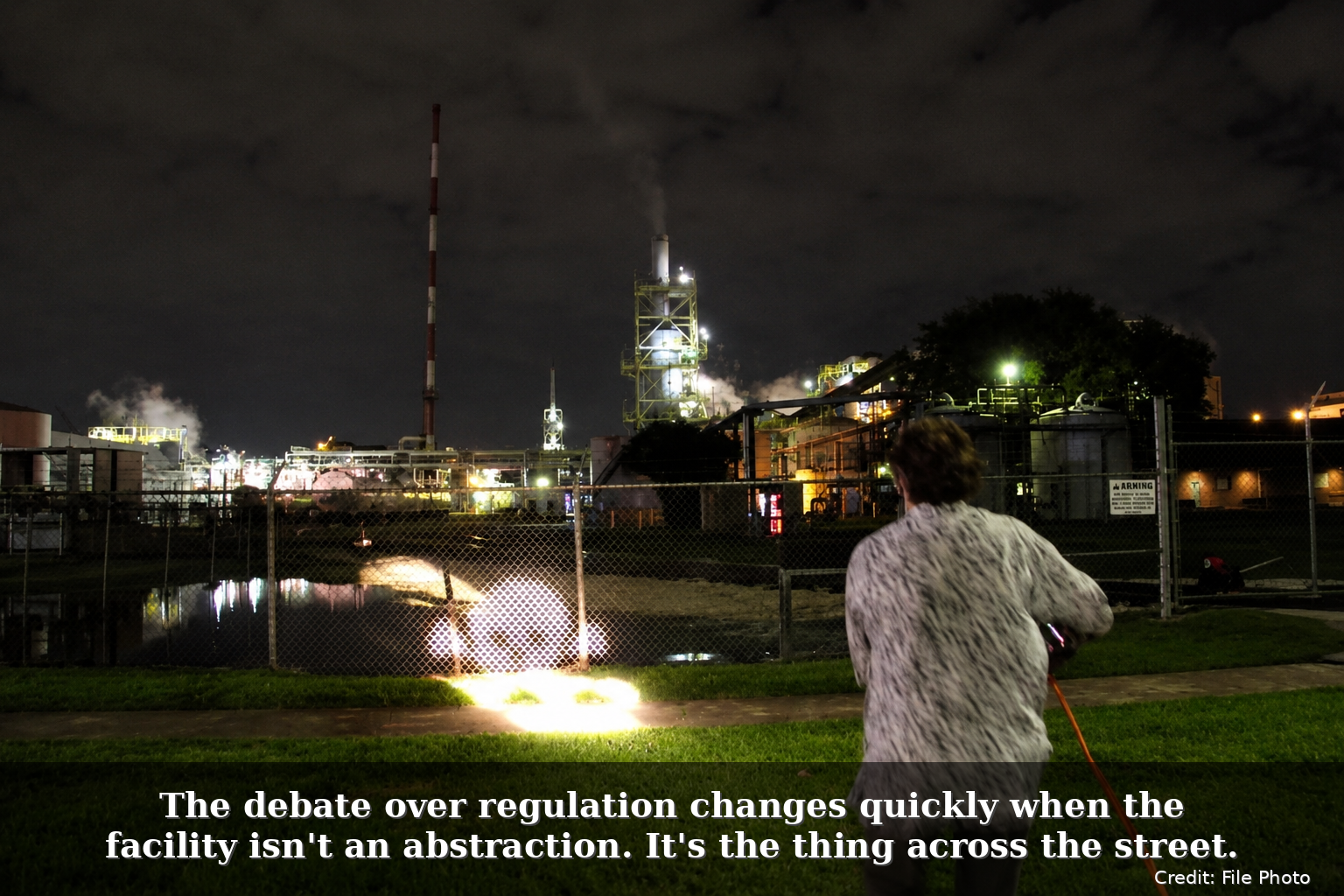
Truthout published polling this week on the Chemical Safety Board’s accident data and how it shifts public opinion on toxic pollution protections. After respondents saw the actual numbers on industrial accidents, 82 percent of Trump voters said they wanted stronger federal protections from toxic pollution.
Read that again for a second.
Eighty-two percent.
More than four out of five Trump voters looked at what industrial accidents actually do and decided stronger protections sounded like a pretty damn good idea.
That’s not a rounding error. That’s a chunk of the electorate that spends election season screaming about government overreach suddenly deciding overreach sounds pretty good once somebody explains what it’s actually stopping.
Americans love talking about freedom. We love bitching about red tape, slashing agencies, and getting government off our backs, right up until a storage tank blows, a train jumps the tracks, or the water coming out of the kitchen faucet starts smelling like it failed a chemistry final. That’s the exact moment everybody who spent a decade calling regulators parasites starts screaming, “Where the fuck was the oversight?”
This isn’t a Republican problem or a Democrat problem. It’s a people problem.
[SUBSCRIBE BUTTON]
Join Me Every Morning
For decades, regulation has lived as an abstraction. Politicians whine about burdens on business. Lobbyists whine about compliance costs. Cable news panels argue for hours about whether rules help or hurt “growth,” whatever the hell that means this week. None of those people are standing on their own lawn, wondering if the brown cloud drifting toward the house is going to put their kid in the hospital.
Once that question shows up, the bullshit evaporates fast.
Regulations aren’t government décor. They’re written in blood, every damn one of them. Food safety rules didn’t show up because some bureaucrat got bored on a Tuesday. Workplace safety rules didn’t materialize because Washington wanted more paperwork to file. They exist because somebody, somewhere, got poisoned or crushed or burned to death before anyone bothered writing the rule that would’ve stopped it.
One of the dumbest habits in American politics is treating regulation and freedom like they’re enemies. They’re not. Half the time, regulation is the only reason freedom works at all. You drink tap water without a Geiger counter because somebody tests it. You eat takeout without hiring a chemist because somebody inspects the kitchen. You board a plane without checking every bolt yourself because somebody set a standard and somebody else enforces it.
The whole damn system runs on invisible safeguards nobody thinks about, because most days they just quietly work. And that’s the trap. When protection works, it disappears. Nobody wakes up thanking God the plant didn’t explode overnight. Nobody throws a party because the water treatment plant did its job again. The absence of disaster is boring as hell, and the paperwork that prevents disaster is even more boring, so the only thing left in the public conversation is the cost.
That’s how you end up with years of rhetoric about wasteful oversight and bureaucratic meddling, right up until disaster shows up and reminds everyone exactly why the rule existed in the first place.
This pattern isn’t limited to chemical plants. People shit on building codes until a building collapses. People shit on financial regulations until a bank fails and torches their savings. People shit on airline oversight until planes start dropping out of the sky. People shit on food inspections until somebody ends up in the ICU from a salad.
The common thread isn’t ideology.
It’s distance.
Distance breeds confidence. Proximity breeds caution. The farther a risk feels, the easier it is to mock the rule designed to stop it.
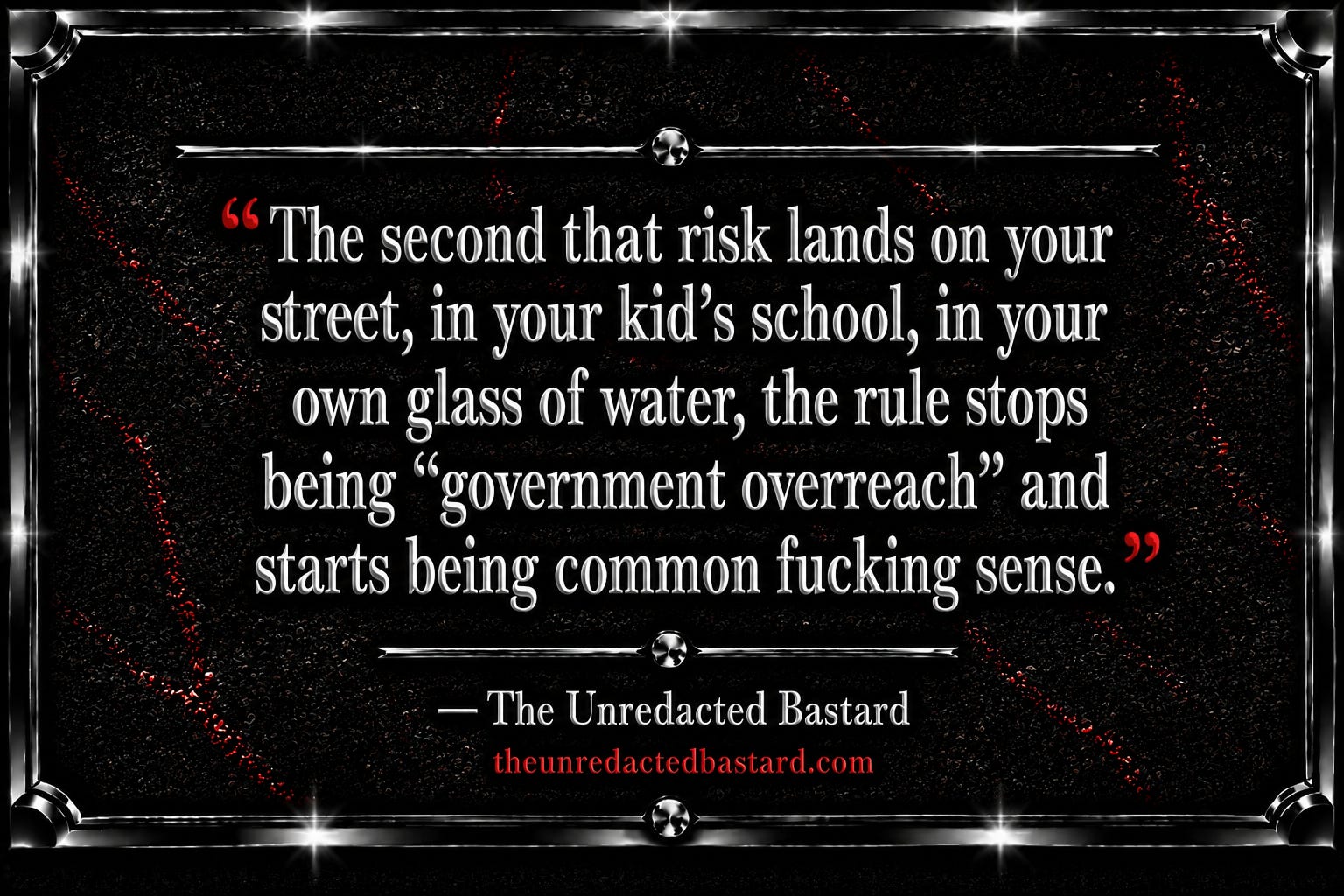
The second that risk lands on your street, in your kid’s school, in your own glass of water, the rule stops being “government overreach” and starts being common fucking sense.
That’s the real story buried in the Truthout numbers. It wasn’t measuring some grand partisan awakening. It was measuring what happens the instant people connect a policy to an actual consequence instead of a talking point.
Buy Me A Cup Of Tea
Keep the receipts hot and the bullshit detector fully operational.
American politics runs almost entirely on abstraction now. Politicians argue theory. Activists argue narrative. Cable news argues identity. Meanwhile, regular people are asking something a lot simpler: will this affect me, will it affect my family, will it affect my block?
The second the answer turns to yes, ideological certainty softens fast.
That’s not hypocrisy. That’s just how humans are built.
But it exposes a real weakness in how we argue about policy. We debate philosophy while ignoring the actual shit those policies are built to prevent. People hear “regulation” and picture a stack of forms. They never hear about the storage tank that didn’t rupture, the contamination that never reached the river, the fire that never started, the workers who clocked out and went home in one piece.
Those wins never make headlines because a disaster that doesn’t happen isn’t a story.
It’s just Tuesday.
Which brings us back to the zip code exception.
Most Americans don’t actually have one consistent view on regulation.
They’ve got two.
The theoretical version rants about freedom and markets and government overreach. The local version wants to know if the air is safe to breathe. The theoretical version complains about inspections being a hassle. The local version wants to know why the inspections weren’t thorough enough to catch this. The theoretical version worries about compliance costs eating into a quarterly report. The local version worries about a cancer cluster showing up on the block.
That’s why this polling actually matters, and not because it proves some shocking partisan flip. It matters because it proves something stubbornly American: underneath the slogans and the campaign ads and the tribal branding, most people still get it.
If a toxic cloud is rolling toward your neighborhood, nobody gives a single damn about a think tank’s deregulation white paper.
They want somebody to stop the cloud.
And if stopping it takes inspections, enforcement, and a federal agency with actual teeth, suddenly none of that sounds oppressive anymore.
Funny how fast principle turns into “fix it now.”
Everybody loves deregulation until the consequences get a zip code.
One Question From The Bastard
What government regulation would you miss most if it disappeared tomorrow?
Because yelling “what the fuck are we doing?” at the news doesn’t pay for itself.
Bastardonia Fact: The official emergency management strategy of Bastardonia is identifying the person who ignored the warning label and putting them in charge of absolutely nothing.
#TheUnredactedBastard #Politics #Environment #Regulation #PublicSafety #Democracy #ToxicPollution #Accountability
I ask people all of the time whether they would get on an airplane that wasn't inspected and didn't have safety regulations.
I get why the oligarchs don't want regulations. I just don't understand why the owner of a small gym wouldn't want them.