

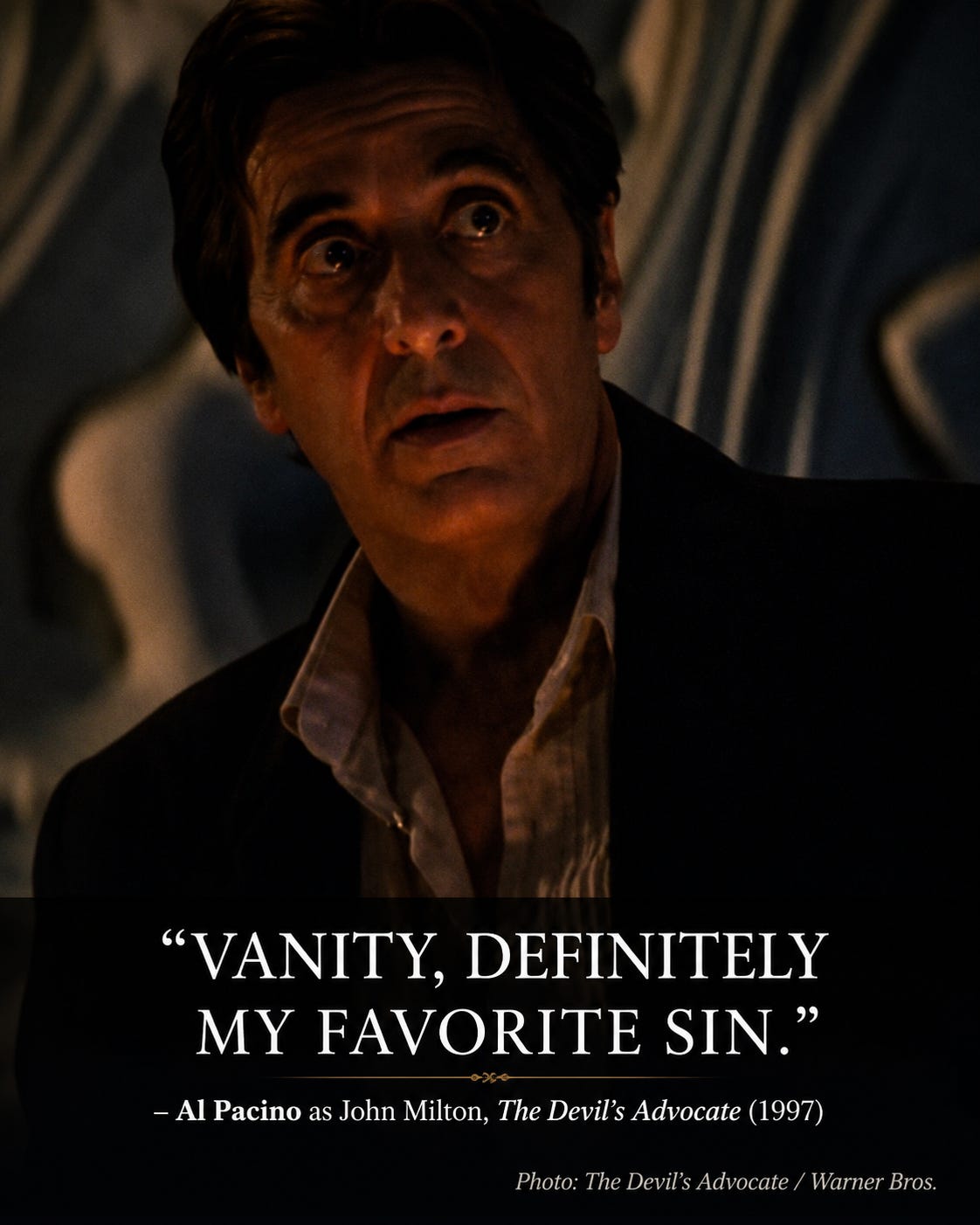
Pacino delivers that line while playing Satan like a Manhattan power broker who just discovered cocaine, luxury real estate, and his own reflection on the same weekend. It’s theatrical as hell, funny in a dark way, and somehow more useful for understanding modern politics than about eighty percent of cable news.
Because if you’ve spent the last decade trying to understand Donald Trump, you can waste a whole lot of time chasing individual scandals like a dog after fireworks. The corruption matters. The revenge politics matter. The loyalty tests matter. The authoritarian vibes matter. The endless parade of petty grievances, televised tantrums, and reality-bending bullshit absolutely matters. But eventually you start noticing something deeper humming underneath all of it, a kind of operating system quietly running in the background while everybody argues over whatever fresh outrage exploded five minutes ago.
Vanity.
Not ordinary vanity either. We’re not talking about somebody sneaking a second look in a mirror or wanting a flattering angle in a family photo. We’re talking about vanity so relentless it stops being personality and starts becoming infrastructure. Vanity that quietly seeps into hiring, revenge, aesthetics, loyalty, symbolism, messaging, governance, and the deeply exhausting expectation that the rest of the country should somehow organize itself around one rich guy’s emotional weather.
Because once you stop looking at Trump through the normal political lenses and start looking at him like somebody pathologically obsessed with admiration, image, status, and humiliation avoidance, a whole lot of deeply weird shit suddenly starts making perfect fucking sense.
Take the branding obsession.
Hotels. Towers. Golf clubs. Universities. Steaks. Water. Sneakers. Crypto bullshit. Trading cards. Bibles. Social media platforms. Endless merchandise ecosystems so sprawling they occasionally feel less like politics and more like capitalism after a head injury.
From the Department of Rich Guy Feelings here in Bastardonia: there comes a point where branding stops looking like politics and starts looking like somebody desperately trying to autograph reality itself.
For most politicians, branding supports the movement.
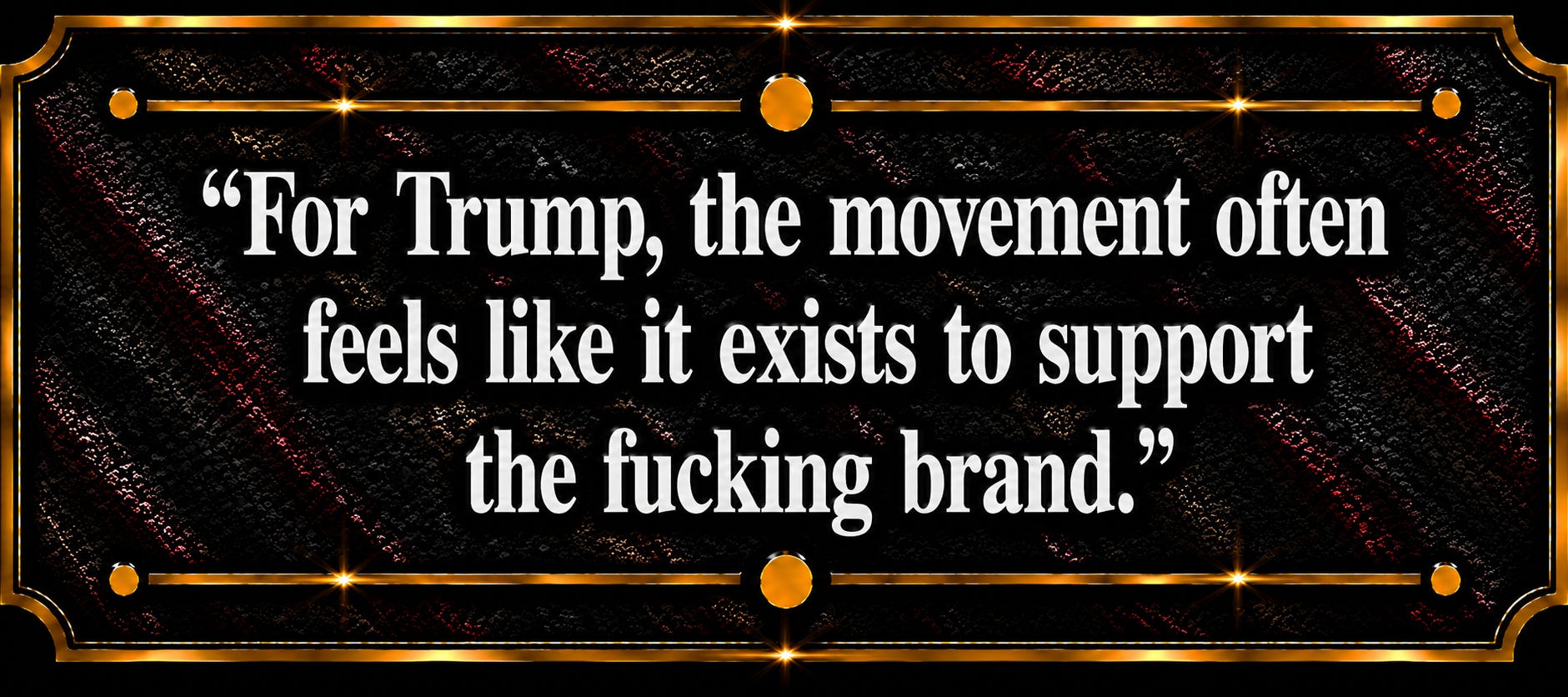
For Trump, the movement often feels like it exists to support the fucking brand.
That difference matters because politics usually asks voters to believe in something bigger than the person selling it. Trumpism often feels like the reverse. The man becomes the product. The product becomes the message. The message becomes loyalty to the man. Before long, policy stops being the point and personality becomes the point, which is how you end up with supporters circulating AI fantasy images of a politician as a warrior king, shirtless superhero, golden emperor, or messianic action figure who looks like fascism wandered into a protein powder commercial and immediately hired a stylist.
At some point, you stop looking at that and thinking “normal political enthusiasm” and start wondering whether mythology and marketing have quietly moved in together while democracy checks to see whether the exits are still unlocked.
If you appreciate receipts, sarcasm, and profanity deployed in the general direction of concentrated bullshit, hit subscribe now.
Independent journalism survives because readers decide reality still matters, even when powerful people would very much prefer we shut the fuck up.
Then there’s Washington, which is where the whole vanity thing stops feeling like personality trivia and starts feeling like governing philosophy.
Most presidents move into the White House understanding they’re caretakers. Temporary tenants. The building belongs to history, the office belongs to the country, and their job is to leave the place standing with slightly fewer problems than they found it. They redecorate a little, shift priorities, leave fingerprints around the edges, and eventually move on.
Trump often seems to approach institutions the way a casino owner approaches a lobby renovation after deciding subtlety is for poor people. Bigger. Shinier. Richer. More imposing. More flattering. More unmistakably mine. Gold accents. Ballroom fantasies. Monumental aesthetics. A constant instinct to turn public institutions into mirrors reflecting status, dominance, and spectacle rather than stewardship.
And look, wanting nice things isn’t the issue. Nobody’s arguing that presidents should decorate with folding chairs and fluorescent sadness. The problem is the psychology underneath it, because history is littered with powerful people who tried to stamp themselves onto reality. Kings put their faces on currency, strongmen rename buildings, autocrats hang giant portraits because power has always hated impermanence and fucking loves reminders.
Trump’s version somehow feels both grandiose and tacky at the same time, like Versailles got franchised by Atlantic City.
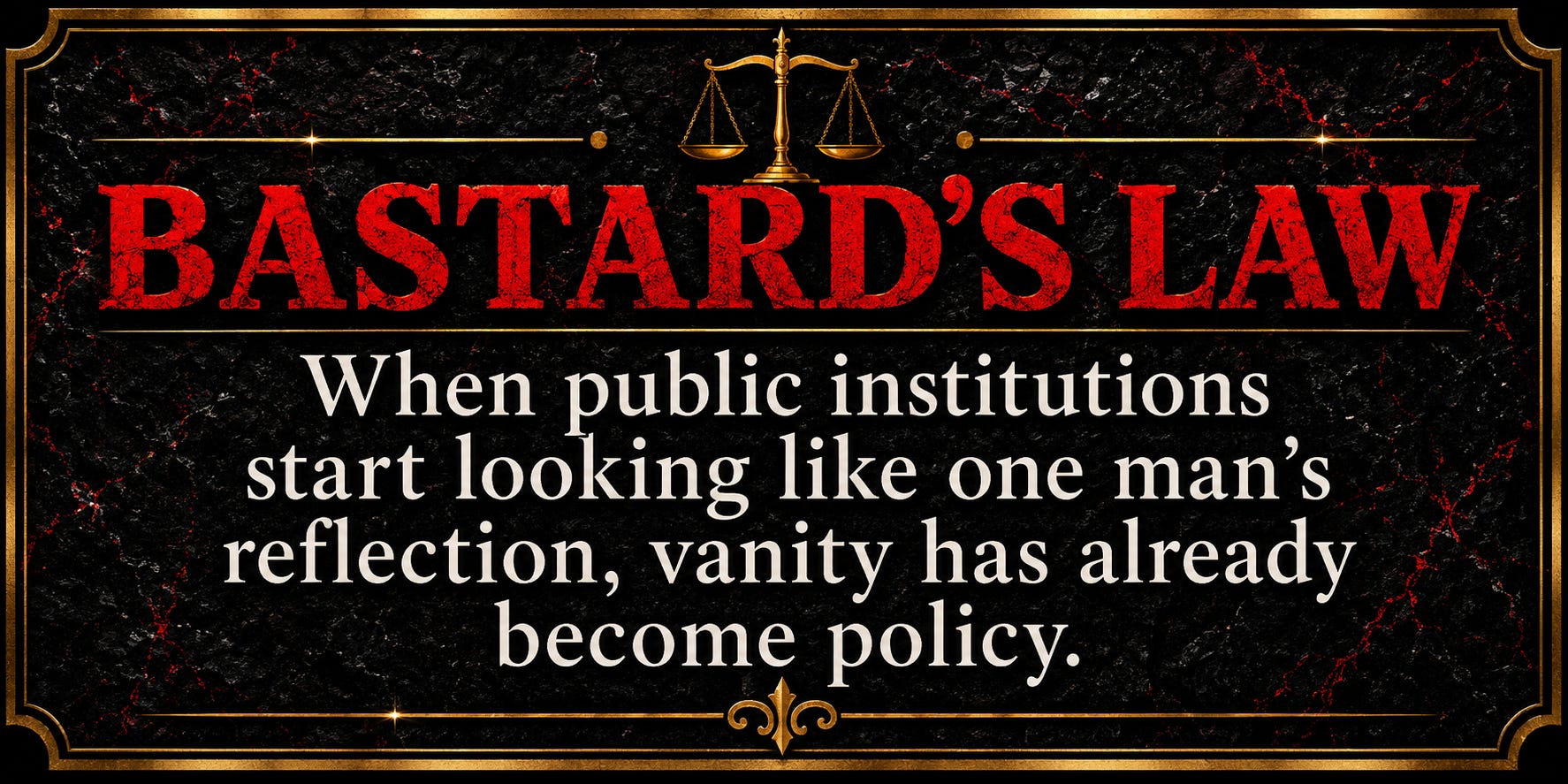
That instinct to personalize everything matters more than it sounds at first because vanity doesn’t stop at aesthetics. Vanity spreads. It leaks into expectations, relationships, decision-making, and eventually governance itself until institutions slowly stop asking what serves the country and start asking what serves the mood.
Once ego starts steering the ship, criticism stops arriving as information and starts arriving as insult. Correction feels humiliating. Expertise starts sounding disrespectful. Bad headlines become persecution. Public accountability starts looking suspiciously like betrayal, and the people surrounding power quietly learn a lesson every office worker has seen before: telling uncomfortable truths to an insecure boss becomes professionally dangerous as fuck.
Why obsess over crowd sizes for years? Why rage over photographs, television angles, applause levels, ratings, and every perceived slight like the world’s most powerful Yelp reviewer having a nervous breakdown? Why redraw a hurricane map instead of simply saying, “Yeah, got that one wrong”?
Because vanity fucking hates humiliation.
And when humiliation feels existential, reality itself starts becoming negotiable.
This is usually where people hear criticism of Trump’s vanity and accidentally shrink the argument into hair jokes, spray tan jokes, or lazy “haha narcissist” punchlines that miss the much creepier thing happening underneath.
The hair is funny. The mechanism is dangerous.
Most of us have worked for somebody like this, which is why the story feels weirdly familiar once you stop thinking about politics for a second and start thinking about office life. You know the boss. The insecure one everybody tiptoes around because honesty creates emotional weather. The manager who punishes bad news. The supervisor who wants praise more than truth and somehow turns every meeting into an obstacle course where everybody’s trying not to trigger a meltdown before lunch.
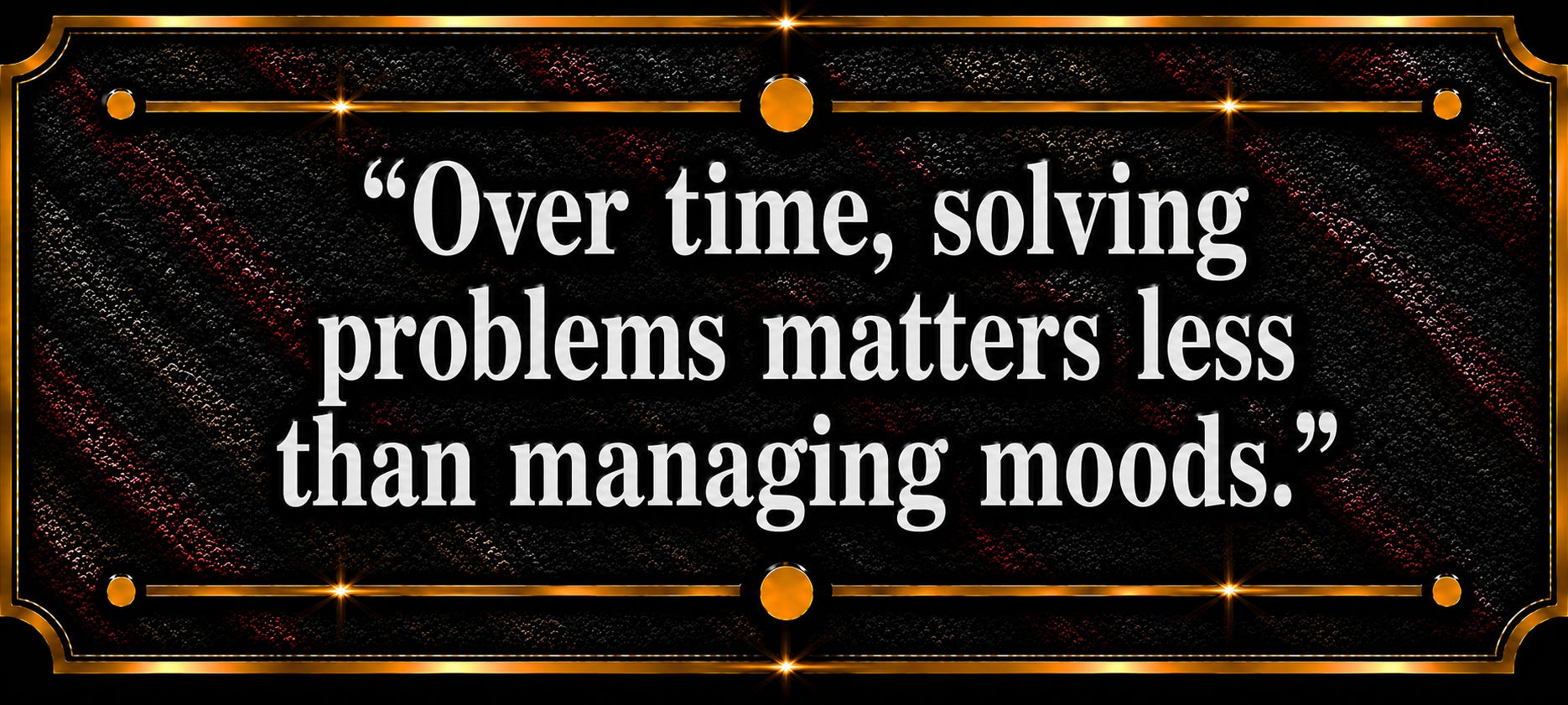
People adapt fast in those environments because they have to. You learn when to nod, when to smile, when to pretend terrible ideas are secretly genius, and when to quietly avoid becoming the messenger carrying reality into the room. Over time, solving problems matters less than managing moods, and everybody starts performing emotional maintenance instead of doing the job they were actually hired to do.
Now attach that dynamic to the presidency and suddenly the joke stops being funny.
A democracy can survive arrogance. Hell, America practically mass-produces arrogant politicians. What becomes dangerous is a government reorganizing itself around protecting one man from humiliation, because humiliation avoidance slowly warps incentives until flattery outranks competence, loyalty matters more than honesty, and facts start getting treated like rude little interruptions that just won’t shut the fuck up.
That’s the authoritarian creep people miss. Not movie-villain dictatorship. Not marching-boots fantasy. Something quieter, sadder, and honestly more pathetic: institutions slowly reorganized around personality instead of purpose, public service turning into image management, Washington drifting toward one giant emotional support system for power while everybody pretends this is somehow serious governance instead of political theater with taxpayer funding.
A democracy can survive arrogance. What it struggles to survive is government reorganized around protecting one man from humiliation.
That’s the real story.
Because once embarrassment becomes a national emergency, reality itself starts negotiating, and reality — inconveniently — never negotiates for free.
If Pacino’s devil really did have a favorite sin, maybe the scary part isn’t vanity itself. Everybody likes approval. Everybody likes applause. Everybody wants to feel admired, respected, attractive, or more important than they probably are. The problem starts when vanity grabs power and mistakes public office for a mirror, because at that point, you’re not governing anymore. You’re curating a reflection, and reflections don’t fix a goddamn fucking thing.
Upgrade
I’m retired. This is reader-funded. No sponsors. No corporate leash. No one telling me to tone it down.
Paid subscribers get bonus rants, full archive access, priority Q&A, and deeper dives that don’t make it into the free feed.
Upgrade and support independent work that doesn’t play nice.
If you want the same reality with a quieter voice and sharper claws, go check out Lotus Purrspective.
That’s where the judgment is calmer, cleaner, and somehow even more brutal.
Buy Me A Coffee
If this hit, consider supporting the work because yelling “what the fuck are we doing?” at the news doesn’t pay for itself.
#Trump #Politics #Democracy #Authoritarianism #TheUnredactedBastard #Vanity
Vanity as infrastructure. Nicely put, Tom.