

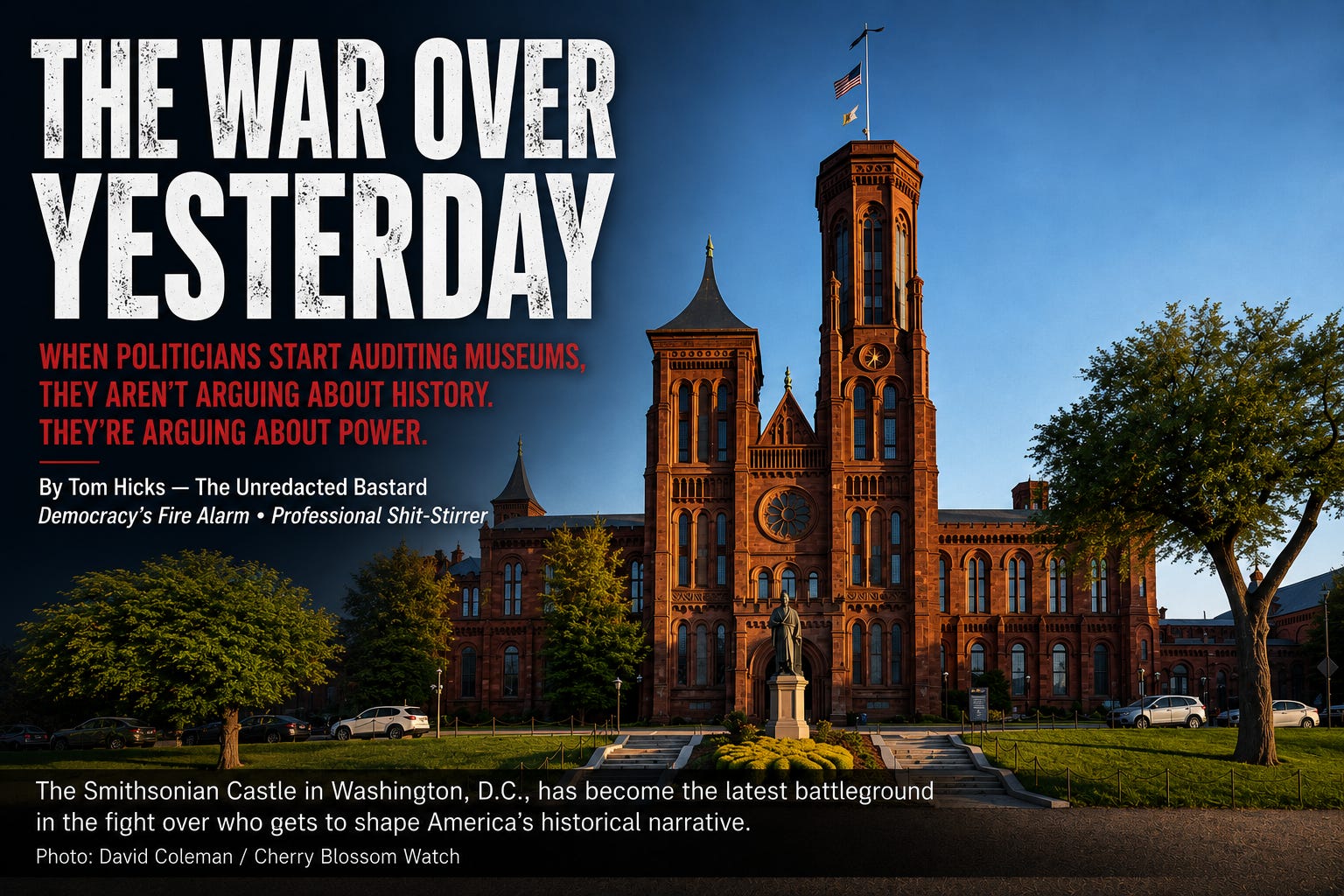
Museums aren’t warehouses. They’re memory. Every artifact on display got there because somebody decided it mattered, and every empty space exists because somebody decided something else didn’t. That’s true whether you’re talking about a dusty Civil War uniform, a lunch counter from the Civil Rights Movement, or a moon rock. History doesn’t just happen. Somebody curates it, which explains why politicians eventually come for museums. They always do.
The latest fight started when the White House accused Smithsonian leadership of pushing political activism instead of objective history.
According to AP, the administration says it’s trying to restore public trust. Smithsonian officials say they’re protecting independent scholarship.
Fine. That’s the press-release version. I’m more interested in the part underneath it, because this isn’t really a fight over display cases in Washington. It’s a fight over who gets to write America’s owner’s manual.
Join Me Every Morning.
Here’s something nobody likes admitting. No museum is completely neutral. The moment you have room for one hundred artifacts instead of one hundred thousand, you’re making choices. Which stories deserve center stage? Which deserves a paragraph? Which disappear into climate-controlled storage where almost nobody will ever see them again?
That’s not corruption. It’s curation, and the problem starts when people pretend their own choices are simply “objective” while everybody else’s are propaganda. Funny how that works. Every administration believes it’s correcting the mistakes of the last one. Every generation believes the previous generation got the story wrong. Every movement insists it’s finally telling the truth.
Maybe sometimes it is. But once the government starts deciding which version of history deserves official approval, you’d better start paying attention, because power rarely stops where it says it will.
This isn’t even new. Kings commissioned paintings that made them look heroic. Dictators rewrote textbooks. Empires erased conquered cultures. Democracies aren’t immune to the temptation either. They just argue about it louder.
Different century.
Same damn instinct.
“The fight isn’t over the past. It’s over who gets to define the country’s memory.
Here’s the part that really gets me. Everybody claims they want history without politics.
Bullshit.
What they usually mean is history with politics they happen to agree with, and those aren’t the same thing. Real history is messy. Heroes disappoint you. Villains occasionally do something decent. Great achievements sit right beside shameful chapters. Nations, like people, are capable of extraordinary generosity and breathtaking stupidity, sometimes in the same decade.
Sanding off either side doesn’t produce truth.
It produces marketing copy with a gift shop attached.
Notice what isn’t happening here. Very few people are asking how museums should balance scholarship, evidence, competing interpretations, and public accountability. Instead, we’re watching another political custody battle. One side says the museum’s been captured. The other says the government’s trying to capture it. Maybe both accusations deserve scrutiny. That’s what skepticism is for, because once you decide your own side no longer needs questioning, you’ve stopped looking for the truth and started shopping for confirmation. That’s a dangerous habit whether you’re sitting in the Oval Office, running a museum, or scrolling social media while pretending headlines count as research.
History deserves better than becoming another campaign ad.
So do we.
The saddest part is that most Americans will never visit the exhibit at the center of this fight. They’ll only hear somebody else’s description of it, which means millions of people will end up arguing over a place they’ve never seen, using talking points written by people whose job depends on winning the argument.
That’s not curiosity.
It’s outsourcing your brain to whoever shouted first.
“The first fight is never over history. It’s over who gets to tell it.”
The Smithsonian won’t be the last institution caught in this tug-of-war. It never is. Schools. Libraries. Archives. Monuments. Textbooks. They all become battlefields sooner or later because they’re all fighting over the same scarce resource: memory. And memory shapes identity.
Every administration eventually discovers that controlling tomorrow gets a whole lot easier if it can first edit yesterday.
Control enough of yesterday, and today’s arguments get a whole lot easier.
That’s why this story matters. Not because museums suddenly became political, but because people in power never stop trying to decide which version of America gets framed on the wall.
The people fighting over yesterday are usually trying to control tomorrow.
One Question Before You Go
If no institution is completely free from bias, who should have the authority to decide how a nation’s history is presented?
If you appreciate independent journalism that follows the receipts instead of the script, subscribe and join me every morning.
Bastardonia Fact: The Ministry of Receipts reminds citizens that honest questions don’t damage history. It’s damaged by people who think questions are no longer necessary.
#TheUnredactedBastard #History #Smithsonian #Politics #Power #Democracy #Receipts #Journalism