

Tom Hicks | November 15, 2026
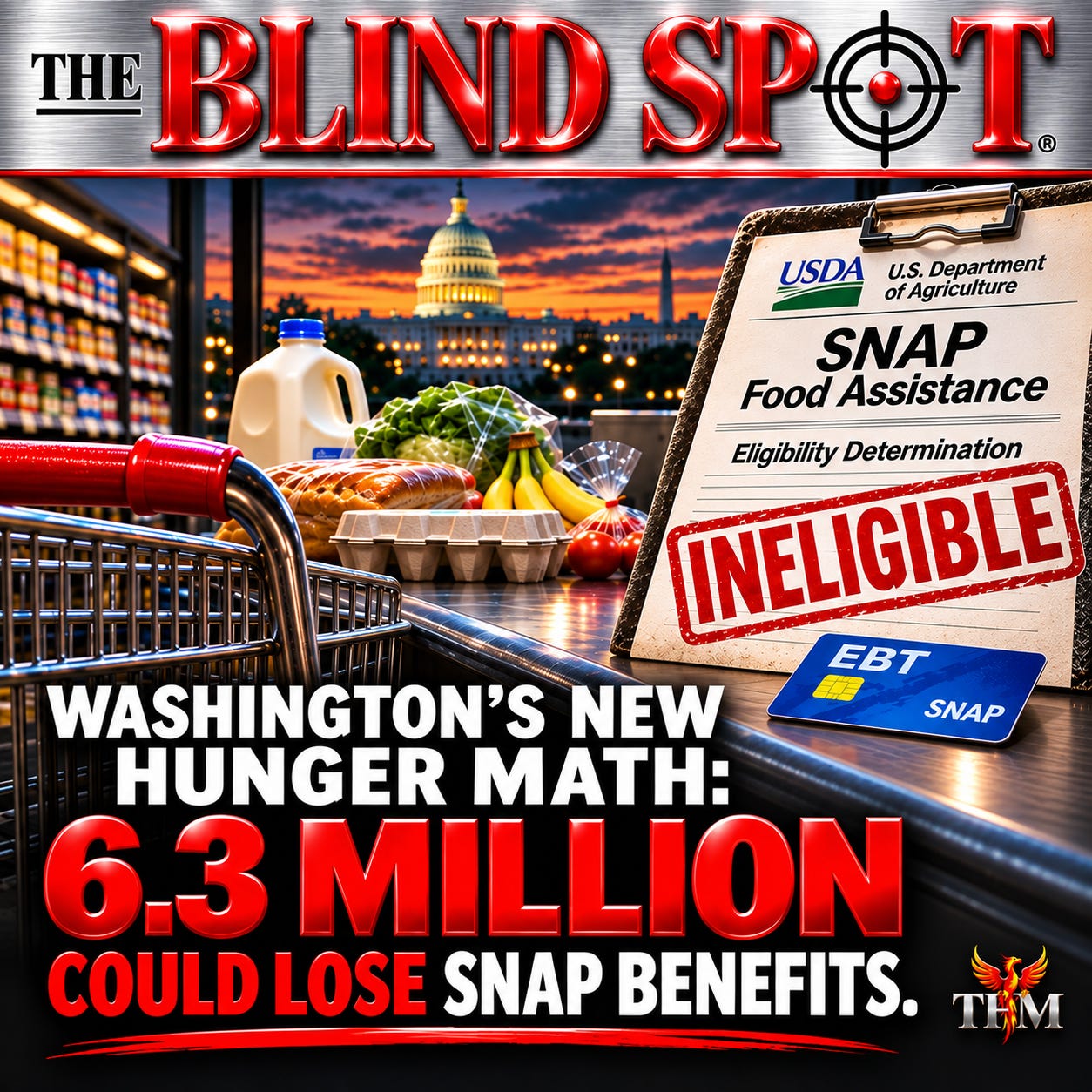
There are people in Washington who apparently believe the biggest problem facing American families isn’t the cost of groceries. It’s that too many people can still afford to buy them.
That’s the impression you’d get from the latest proposal out of the Department of Agriculture, which has found another way to tighten eligibility for the Supplemental Nutrition Assistance Program, better known as SNAP or food stamps.
On November 10, the Trump administration published a proposed rule that would eliminate a widely used method of qualifying households for food assistance. According to USDA’s own estimates, the change would remove 6.3 million people in 3.2 million households from the program by fiscal year 2029, when the rule is expected to have its full effect.
That’s a projected 17.6 percent reduction in participation.
The proposal hasn’t taken effect. There’s a public-comment period, and the administration still has to finalize the rule. But the direction is unmistakable, particularly when you consider what’s already happened to SNAP over the past year.
And before somebody starts screaming about freeloaders, let’s examine exactly whom we’re talking about. USDA’s November 10 proposed rule
This is where the numbers stop being Washington statistics and start being somebody’s dinner.
If you want to know who’s actually getting squeezed, how the rules work, and what the politicians aren’t telling you, become a paid subscriber to Blind Spot. We’re about to get into the part that matters.
