

Tom Hicks | November 22, 2026
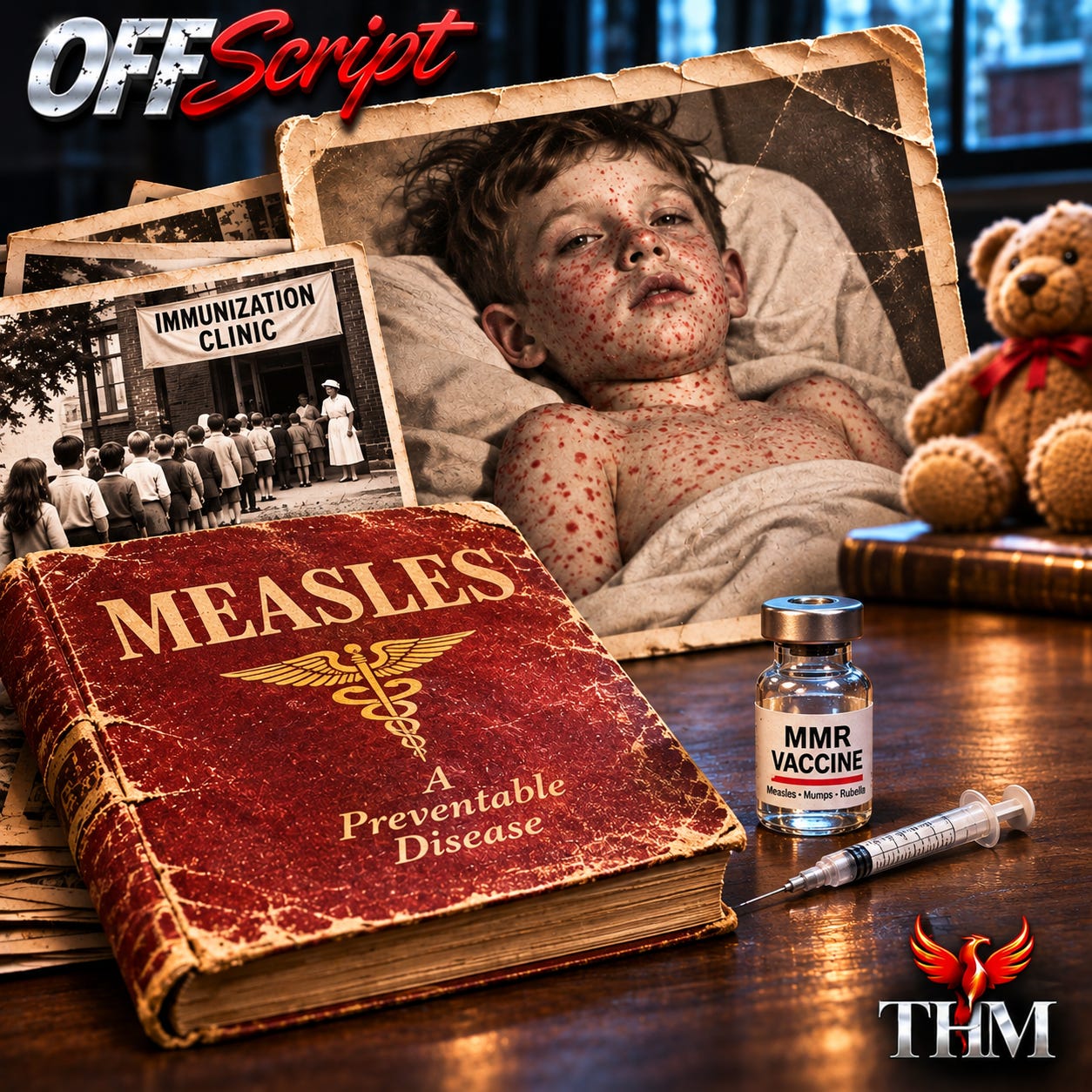
A child younger than five died in Virginia this week after testing positive for measles. State health officials announced the death Friday, withholding details about the child and family, including vaccination status. That’s entirely appropriate. A family has suffered an unimaginable loss, and the last thing they need is an army of amateur epidemiologists turning their tragedy into another internet shouting match.
But the timing of that announcement was impossible to ignore. Just three days earlier, on November 17, the Pan American Health Organization officially confirmed that the United States had lost its measles-elimination status. We’d held that distinction since 2000, back when Bill Clinton was president, people were worried about Y2K, and most of us still thought the internet was going to make everybody smarter.
That last one certainly hasn’t aged well.
Twenty-six years. That’s how long we managed to keep measles from spreading continuously within our borders. And now, after decades of medical progress and millions of vaccinations, we’ve managed to accomplish something I wouldn’t have thought possible when I was a younger man: We’ve brought back a public health problem we already knew how to control.
The particularly infuriating part is that the science hasn’t suddenly stopped working. The measles vaccine hasn’t forgotten how to prevent infection. The virus hasn’t developed a clever new disguise that makes it invisible to modern medicine. What changed was our willingness to listen to the people who actually know what the hell they’re talking about. Sources: Virginia Department of Health | Pan American Health Organization
REMEMBER WHEN WE USED TO BE PROUD OF THIS STUFF?
When I was growing up, measles was something parents genuinely worried about. It was one of those childhood diseases that seemed to be everywhere, and although most kids recovered, everybody understood there could be serious consequences. Some children didn’t recover. Others ended up with pneumonia, brain inflammation, or permanent complications.
Before the first measles vaccine was licensed in 1963, an estimated three to four million Americans contracted the disease every year. Roughly 48,000 were hospitalized annually, and between 400 and 500 died. Those weren’t projections from some worst-case computer model. They were the ordinary annual toll of an illness that circulated so widely that almost every American eventually caught it.
Then scientists developed a vaccine. Doctors administered it, parents took their children to get it, and public health departments worked to make it available. It wasn’t magic. It was medicine, backed by years of research and a national commitment to preventing unnecessary suffering.
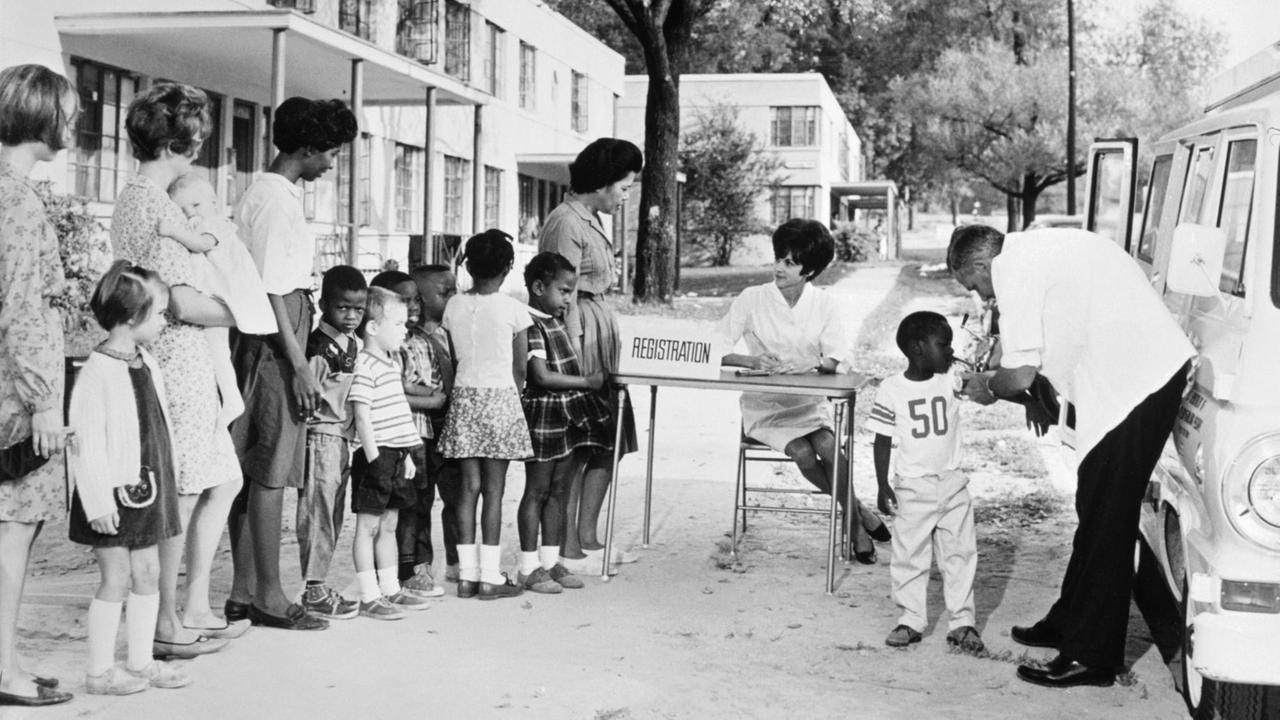
By 2000, the United States had eliminated continuous measles transmission. We hadn’t eradicated the virus worldwide, and infected travelers could still bring it here, but outbreaks were generally contained before the disease could establish itself again.
That distinction matters, because some people hear that we’ve lost elimination status and immediately insist the whole thing must be exaggerated. After all, they say, we had measles cases even when the disease was supposedly eliminated.
Yes, we did. We also occasionally have kitchen fires without the entire neighborhood burning down. The difference is whether you can put the damn thing out.
And that’s the difference we’ve lost. Sources: CDC History of Measles | PAHO Technical Explanation
THE NUMBERS SHOULD SCARE THE HELL OUT OF US
According to the CDC’s latest report, released November 19, the United States has recorded 5,838 confirmed measles cases in 2026. That’s up from 2,289 in all of 2025 and just 285 in 2024. The agency reports 43 newly identified outbreaks this year, with approximately 96 percent of confirmed cases associated with outbreaks.
In other words, we’re not talking about a handful of unlucky travelers picking up an infection overseas. We’re watching sustained transmission develop in American communities, which is precisely what we spent decades trying to prevent.
The vaccination numbers explain a great deal of what’s happening. During the 2019–2020 school year, approximately 95 percent of American kindergartners had received the recommended measles, mumps, and rubella vaccinations. By the 2025–2026 school year, that figure had fallen to 92.4 percent. Meanwhile, exemptions from one or more school vaccination requirements reached 4.2 percent, another increase from the previous year.
Now, a few percentage points might not sound particularly dramatic. If your favorite baseball team dropped from a .950 winning percentage to .924, you’d probably still be pretty happy with the season. Unfortunately, infectious diseases don’t operate on baseball standings, and measles is one of the most contagious viruses we know.
Public health experts generally identify vaccination coverage of around 95 percent as the level needed to prevent widespread transmission. When protection falls below that threshold, especially when unvaccinated people are concentrated in particular communities, the virus finds opportunities to spread. It doesn’t need everybody to be unprotected. It just needs enough susceptible people in the right places.
And right now, we’re giving it those opportunities. Sources: CDC Measles Cases and Outbreaks | CDC School Vaccination Coverage
Let me ask you something before we go any further. Did you grow up during the years when measles was just another childhood disease everybody expected to encounter, or did you grow up thinking we’d pretty much put it behind us? I’m curious how much that experience shapes the way people look at today’s outbreaks.
Leave a comment. I’d particularly like to hear from people who remember the years before childhood vaccination became routine.
And while we’re talking, if you’re enjoying Off Script, consider subscribing. We’re going to keep asking difficult questions about the decisions made in Washington, even when the answers make certain people distinctly uncomfortable.
THIS ISN’T A HARMLESS CHILDHOOD RASH
One of the most disturbing things about the modern anti-vaccine movement is how casually some of its advocates talk about measles. You’ll hear people describe it as little more than a fever and a rash, something previous generations simply endured before returning to school and getting on with their lives.
And yes, most people who contract measles survive. That’s true. It’s also a spectacularly lousy argument for exposing people to an unnecessary disease.
According to the CDC, approximately one in five unvaccinated Americans who develop measles requires hospitalization. The infection can cause pneumonia, encephalitis, and, in rare cases, a devastating neurological condition that develops years after the original illness.
Measles is also astonishingly efficient at spreading. If an infected person enters a room filled with susceptible people, as many as nine out of ten close contacts may become infected. The virus can remain infectious in the air for up to two hours after that person leaves.
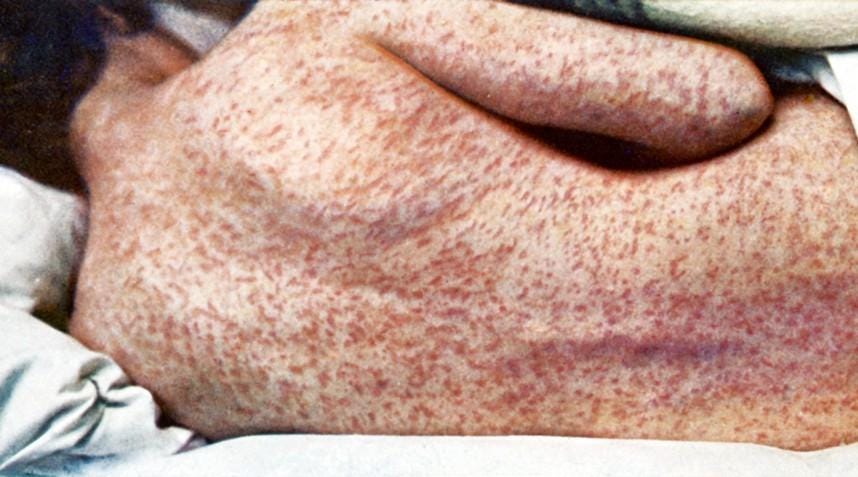
Think about what that means for a pediatrician’s waiting room, a school, a church, or a crowded grocery store. Somebody can expose other people without even knowing they’ve done it, and some of those people may be too young to have received their first scheduled vaccination.
That’s the part of the individual-freedom argument that keeps getting conveniently ignored. Your decision about vaccination doesn’t exist in some airtight little personal universe. Infectious diseases are shared experiences whether we like it or not.
You can decide not to wear a seat belt, and the consequences will generally fall on you. Measles doesn’t have that courtesy. Sources: CDC Measles Symptoms and Complications | CDC Clinical Overview
NOW LET’S TALK ABOUT THE GUY RUNNING THE HEALTH DEPARTMENT
I suppose we should bring Robert F. Kennedy Jr. into this conversation, because when the United States loses a major public health achievement, it’s probably reasonable to ask a few questions of the man running the Department of Health and Human Services.
Let’s establish something up front. Kennedy didn’t create vaccine skepticism, and Donald Trump’s second administration didn’t invent declining childhood vaccination rates. Those problems were developing long before either man took his current job. The pandemic damaged public confidence, misinformation spread across social media, and some communities struggled with vaccine access. Pretending the entire problem began in January 2025 would be intellectually dishonest.
But there’s a considerable difference between inheriting a problem and making it worse.
Kennedy spent years promoting doubts about vaccine safety, including claims about a possible connection between vaccines and autism that extensive scientific research has failed to substantiate. He’s now responsible for overseeing agencies whose job includes explaining the evidence clearly to the American people.
And what have we gotten? A health secretary who says he recommends the MMR vaccine while continuing to pursue policies and cultivate political relationships that reinforce suspicion about vaccination.
In August, Trump issued an executive order calling for the combined MMR vaccine to be separated into individual shots, despite the fact that those separate products aren’t currently available in the United States. Public health experts have warned that complicating the vaccination process could make it harder to maintain adequate protection.
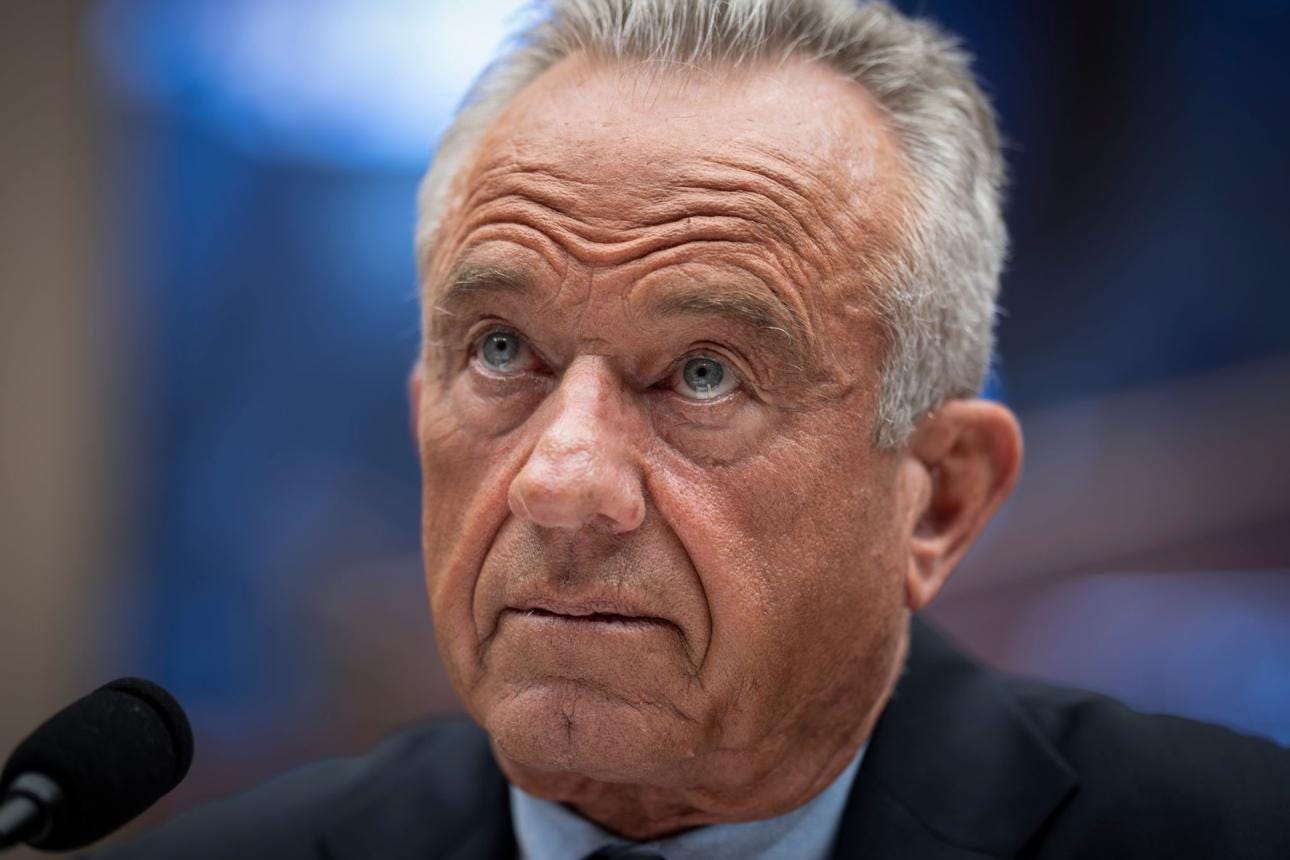
To be fair, Kennedy said after the November 17 announcement that he continues to recommend MMR vaccination as the most effective way to prevent measles. The CDC has also announced approximately $100 million in additional funding to help state and local authorities respond to measles and other vaccine-preventable diseases.
Good. That’s what the federal government should be doing.
But you don’t spend years encouraging people to question the fire extinguishers and then expect congratulations when you finally tell them where to find one.
A November 17 Reuters investigation documented how some state and local officials reduced their emphasis on vaccination during outbreaks, while public health professionals described the confusion created by conflicting messages from federal leadership. The administration disputes criticism of its response and says it has consistently recommended vaccination.
That disagreement deserves examination. But the epidemiological evidence doesn’t become less troubling because the administration would prefer a different political narrative.
And I have a fairly simple question for Kennedy: If the vaccine is the most effective way to prevent measles, why has promoting that message so clearly and consistently become such a struggle? Sources: CDC/HHS Joint Statement, November 17 | Reuters Investigation | Associated Press
If you know somebody who still thinks the vaccine debate is just another political argument with no real-world consequences, share this article. The people ending up in hospital beds deserve a little more consideration than the latest conspiracy theory.
WE’VE TURNED BASIC PUBLIC HEALTH INTO A TRIBAL ARGUMENT
You know what bothers me most about this? Somewhere along the way, we decided that accepting medical evidence was an expression of political allegiance.
Vaccination became tangled up with debates over government authority, personal freedom, pharmaceutical companies, and the pandemic. Some of those discussions involve perfectly legitimate concerns. Governments should be accountable, medical manufacturers should be scrutinized, and patients deserve clear information about benefits and risks.
I don’t have a problem with people asking questions. Hell, asking questions has been my business for most of my adult life.
What I have a problem with is pretending every question deserves equal weight after the evidence has been examined. If thousands of researchers, decades of experience, and countless studies consistently point toward the same conclusion, that evidence doesn’t magically become invalid because somebody with a podcast found a guy who disagrees.
There are genuine medical reasons some people cannot receive the MMR vaccine. Some children are too young for their scheduled first dose, and certain people with severely weakened immune systems cannot safely receive a live vaccine. Those are exactly the people community protection is supposed to help shield.
Instead, we’ve somehow reached a point where protecting vulnerable neighbors is dismissed by some as government overreach.
I don’t know when consideration for other people became such a controversial idea, but I’d certainly like to see it make a comeback.
THE WAY BACK ISN’T A MYSTERY
Here’s the good news, and there really is some. Losing elimination status doesn’t mean the United States is condemned to live with uncontrolled measles transmission forever. Other countries have lost the designation and eventually regained it. Brazil, for example, recovered its elimination status in 2024 after losing it in 2019.
But getting that designation back requires more than a press release promising to work harder. It means improving vaccination coverage, making sure families can actually obtain vaccines, responding quickly to outbreaks, and rebuilding confidence in the public health system.
Two doses of the MMR vaccine are approximately 97 percent effective at preventing measles. That isn’t absolute protection, and nobody should pretend any medical intervention is completely without risk. But the evidence for its safety and effectiveness is extensive, and the danger posed by measles is well established.
If you’re uncertain about your own vaccination history or your child’s protection, that’s a conversation worth having with a qualified healthcare professional. It’s considerably more useful than taking medical advice from somebody whose principal qualification is owning a ring light. Sources: CDC Vaccine Effectiveness | KFF Analysis of Elimination Status
And that brings me back to the child in Virginia.
We don’t know all the circumstances surrounding that death, and we shouldn’t pretend we do. But we know that measles is capable of killing children. We know that the United States once reduced the disease to the point where continuous transmission had stopped. And we know that declining vaccination coverage has helped create conditions for its return.
The question isn’t whether we possess the scientific knowledge to bring measles under control again. We’ve had that knowledge for decades.
The question is whether we’re still willing to use it.
Because if America can’t find the political will to fight a disease we’ve known how to prevent since 1963, we’re going to have some very difficult explaining to do when the next public health emergency arrives.
And God help us if somebody decides the answer is another podcast.
THE BULLSHIT DETECTOR
Three claims making the rounds, three reality checks, and absolutely no patience for nonsense.
THE STINK SCALE: 💩 A Little Whiff · 💩💩 Something Smells · 💩💩💩 Steaming Pile · 💩💩💩💩 Full-Blown Bullshit · 💩💩💩💩💩 Weapons-Grade Bullshit
THE THANKSGIVING TURKEY COMA
Claim: Turkey makes you sleepy because it’s loaded with tryptophan.
Bullshit: Turkey contains tryptophan, but so do plenty of other foods, and it doesn’t contain an unusually high amount compared with other common meats.
💩💩 Something Smells
Why: That afternoon nap probably has more to do with the enormous meal you just consumed, the carbohydrates, the alcohol, and the fact that you’ve spent four hours arguing with relatives. Stop blaming the bird. It had a bad enough day already. Source: Tufts University
BLACK FRIDAY MEANS THE LOWEST PRICES OF THE YEAR
Claim: If you don’t buy it on Black Friday, you’ll miss the year’s best price.
Bullshit: Some Black Friday discounts are excellent. Others can be matched or beaten during earlier or later sales.
💩💩💩 Steaming Pile
Why: Consumer Reports regularly tracks sale prices and finds products that have been cheaper at other times. A giant red sign screaming 60% OFF doesn’t establish whether the starting price was reasonable. Check the price history, because retailers understand that panic is a wonderful sales assistant. Source: Consumer Reports
YOU CAN SEE THE GREAT WALL OF CHINA FROM THE MOON
Claim: The Great Wall is the only human-made structure visible from the Moon.
Bullshit: You can’t see it from the Moon with the naked eye. NASA says it’s difficult or impossible to see unaided even from low Earth orbit.
💩💩💩💩 Full-Blown Bullshit
Why: The wall is enormously long, but it’s also relatively narrow and blends into the surrounding terrain. Apparently, somebody confused impressive construction with a giant illuminated sign visible from 239,000 miles away. Source: NASA
ONE QUESTION
When did vaccination become a political identity issue instead of a routine public health decision?
I’m not particularly interested in another round of people calling each other idiots. I’d rather hear what you think changed. Was it COVID? Social media? Distrust of government? Or were the cracks appearing long before we noticed them?
Tell me what you think. And if you’ve got firsthand experience with measles, either from childhood or a more recent outbreak, I’d be interested in hearing that too.
If this story gave you something to think about, consider sharing it with somebody who might appreciate a conversation grounded in facts rather than another shouting match.
ELSEWHERE AT TOM HICKS MEDIA
For more of the stories that don’t fit neatly into the daily political shouting match, Blind Spot takes a deeper look at the forces shaping our lives. What the Hell? explores the peculiar, frustrating, and occasionally astonishing workings of the world around us. And when you’ve had quite enough of humanity for one day, Lotus Purrspective offers the considered opinions of a cat who already suspects we’re hopeless.
You can find them, along with the rest of the publications, at Tom Hicks Media — The Complete Collection.
#OffScript #Measles #PublicHealth #Vaccines #RFKJr #CDC #HealthPolicy #TomHicksMedia