

Tom Hicks | October 17, 2026
Editorial Note:
The third-quarter campaign finance reports are in, and with the November 3 midterms approaching, they’re telling us something interesting about the election Republicans thought they were preparing to fight. The numbers don’t predict a winner, but they expose a financial contradiction worth examining.
There’s something almost beautiful about watching a political party assemble a financial war machine capable of overwhelming its opponents, only to discover that the opponents apparently didn’t get the memo about being overwhelmed.
Republicans entered the final stretch of the midterms with Donald Trump’s reported $400 million political war chest, Elon Musk writing checks that would make most lottery winners feel financially inadequate, and a Supreme Court that has made it easier for party committees to help their candidates. For that kind of money, I’d expect somebody to throw in a few congressional seats and complimentary valet parking. Apparently, somebody forgot to tell the Democratic candidates. Punchbowl News
The third-quarter fundraising reports are arriving, and some of these numbers are ridiculous. They’re the kind that make you check whether somebody accidentally added a zero, particularly when you consider where the money is being raised.
Take Texas, where Democrat James Talarico raised a staggering $64 million during July, August, and September. Republican Ken Paxton raised approximately $18 million when his campaign and affiliated fundraising are considered together. That’s Texas, mind you, the state where Democrats have been hearing that this might finally be their year for so long that the phrase probably qualifies for historic preservation. The Texas Tribune
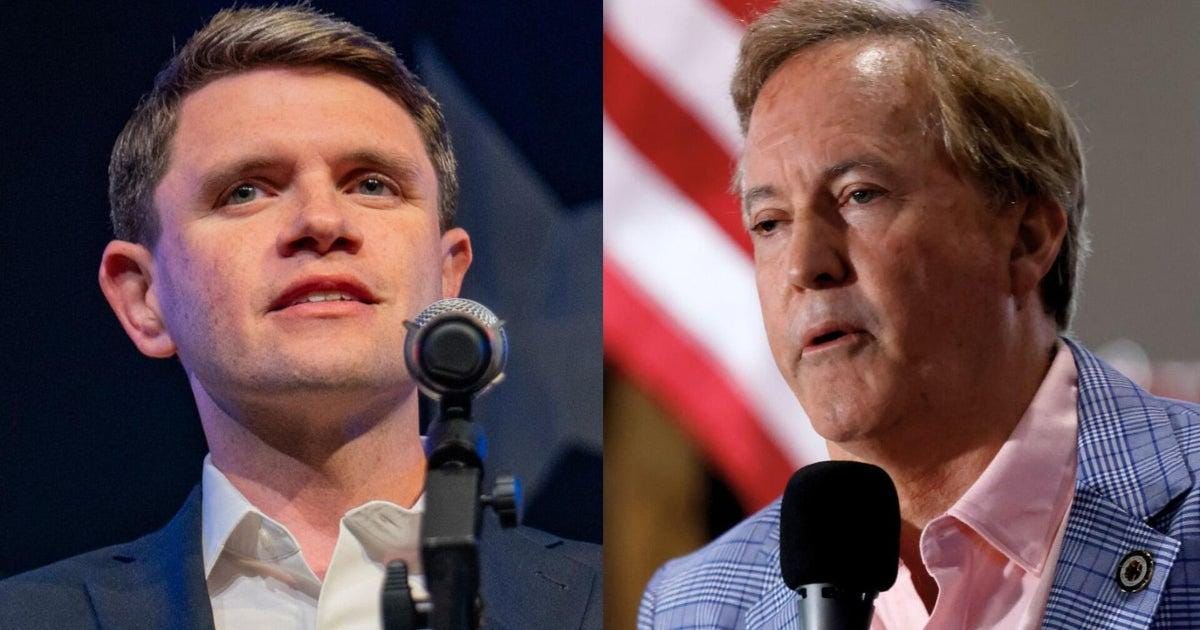
James Talarico and Ken Paxton in the Texas Senate contest. Photograph: CBS News.
Texas isn’t an isolated case. In Ohio, former Democratic Senator Sherrod Brown raised $23.1 million through his campaign account while Republican incumbent Jon Husted brought in $4.8 million. Democrat Mary Peltola raised $17 million in Alaska compared with Dan Sullivan’s approximately $2.7 million through his campaign. Maine’s Troy Jackson brought in $20.4 million against Susan Collins’ $5.2 million, and similar disparities appeared in Michigan and Iowa. Punchbowl News
Now, I know what some of you are thinking, because I’m thinking it myself. Democrats have raised enormous amounts of money before and still managed to lose elections they were absolutely convinced they were going to win. I’ve been watching politics long enough to know that Democratic optimism and actual election results occasionally occupy different zip codes.
That’s why I’m not interested in declaring the election over because Democrats had a spectacular fundraising quarter. What interests me is the pattern, particularly when we move away from the headline Senate races and look at what’s happening in the House.
According to Punchbowl News’ examination of the filings, at least 47 Republican House incumbents were outraised by Democratic challengers or independents during the third quarter. Only about half a dozen Democratic incumbents were outraised by Republicans, most in heavily Democratic districts. Punchbowl News
Think about that for a minute. Incumbents normally have a tremendous fundraising advantage. They’ve already won an election, established donor relationships, built political organizations, and acquired the sort of name recognition challengers spend months trying to develop. Some have also perfected the art of convincing wealthy contributors that another two years of their presence in Congress is essential to the survival of Western civilization.
Yet in New York, Democrat Cait Conley raised $5.4 million compared with Republican Representative Mike Lawler’s $1.8 million. In Colorado, Manny Rutinel raised $4.2 million while Republican incumbent Gabe Evans brought in about $1.5 million. Does that mean Lawler and Evans are finished? Of course not. But if you’re an incumbent looking at a report showing that the person trying to take your job just raised nearly three times as much money as you did, I imagine the next conversation with your campaign manager is going to be a little uncomfortable. Punchbowl News
The larger Republican political operation has plenty of money. Its individual candidates, however, are frequently struggling to keep pace, and that’s a much more interesting problem than simply having an empty bank account.
The Senate money gap
Third-quarter candidate campaign receipts · Millions of dollars
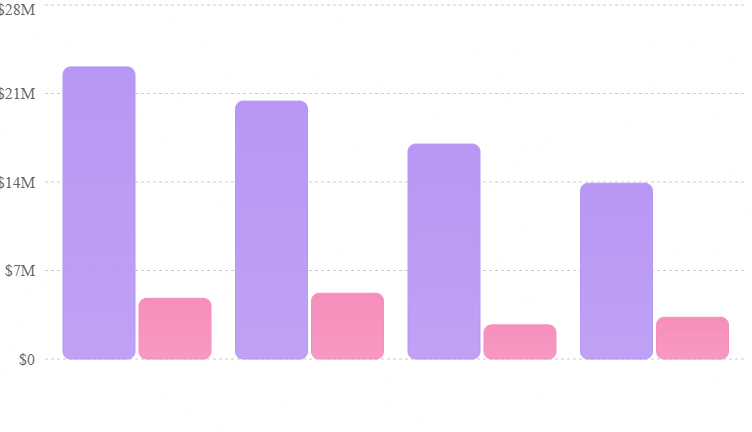
■ Democrat - Purple
■ Republican - Pink
Campaign-account figures, excluding affiliated joint fundraising totals. Texas is discussed separately because its broader reported totals use a different accounting basis.
Here’s where the money gets interesting. Most people understandably assume that if two campaigns spend $10 million on television advertising, they’ve purchased roughly the same amount of exposure. That would be reasonable if political advertising worked like ordinary advertising, but apparently campaign finance law wasn’t complicated enough already.
Under federal law, qualified candidates generally receive broadcasters’ lowest unit advertising rates during the final 60 days before a general election. Independent super PACs don’t automatically qualify for those rates, which means a candidate can sometimes purchase substantially more advertising with the same amount of money. So when you see a Democrat raise $20 million directly and a Republican super PAC spend $20 million attacking that Democrat, don’t assume they’ve purchased an equal amount of television time. They may not even be close. Semafor
Republican strategists understand this perfectly well, which brings us to the Supreme Court. In June, the Court struck down limits on coordinated spending between political parties and their candidates. Then, on October 14, the justices intervened in a dispute over an FCC policy extending favorable advertising rates to certain party-coordinated advertisements and joint fundraising committees. Reuters
Democrats challenged that interpretation, arguing that Congress intended the special rates for candidates. The Court’s intervention blocked a lower court deadline that would have forced the FCC to act before Election Day, leaving the existing guidance in place while the underlying dispute remains unresolved. Roll Call
You don’t have to believe every Supreme Court decision involving elections is part of some grand conspiracy to recognize that legal rulings have political consequences. Republican party organizations have gained additional spending flexibility at precisely the moment their candidates are having difficulty keeping up with Democratic fundraising. That’s a pretty useful combination when you’ve got a few hundred million dollars looking for somewhere to go.
If you’re finding this kind of reporting useful, subscribe to Off Script. It’s free—or help fund the research and tools we use every day. No billionaire sponsorship required, although I suppose I’d hear one out if he promised to leave the journalism alone.
And speaking of billionaires, we should probably talk about Elon Musk, because the amounts of money he’s putting into Republican politics have reached the point where the numbers almost stop meaning anything.
According to reporting from The Washington Post, Musk has contributed approximately $369 million to Republican political efforts since 2025, including a reported $158 million in September to the Senate Leadership Fund. One man, hundreds of millions of dollars, and an extraordinary ability to influence which candidates receive financial support. The Washington Post
I don’t begrudge anybody the right to participate in politics, but we’ve reached a point where one billionaire can contribute more to political organizations than most Americans will earn in several thousand lifetimes. That ought to bother people regardless of which party is receiving the checks.
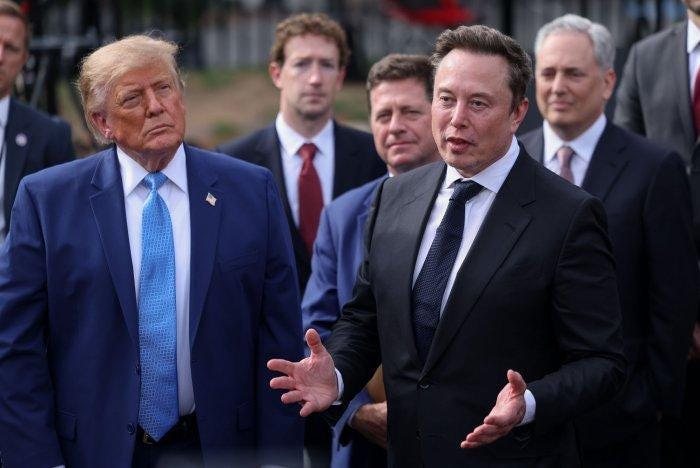
Donald Trump and Elon Musk. Musk’s political contributions have become a major part of the Republican effort to retain control of Congress.
The Republican Senate Leadership Fund raised approximately $273 million during the third quarter, compared with about $151 million for its Democratic counterpart, Senate Majority PAC. Those are enormous sums, and they explain why Republican candidates can be dramatically outraised without necessarily being overwhelmed on television. Semafor
But there’s a catch. When candidates depend heavily on outside groups, those groups have priorities of their own. They look at polling, campaign performance, and the likelihood of winning, then decide where their money will do the most good. If a race begins looking hopeless, they can redirect resources somewhere else.
That’s perfectly rational campaign strategy, but it probably doesn’t feel especially comforting if you’re the candidate whose future depends on somebody in Washington deciding you’re still worth saving. Imagine spending months knocking on doors, shaking hands, smiling for photographs, and pretending to enjoy rubber chicken dinners, only to discover that the people controlling the big money have decided your district is no longer a sound investment. Thanks for playing. We appreciate your participation.
Democrats raising money directly have more control over how those dollars get spent, although there’s an important qualification. Raising money and having money left to spend are two different things. In Iowa, for example, Josh Turek raised $13.9 million during the quarter but spent approximately $12.6 million. Republican Ashley Hinson raised considerably less, yet finished September with nearly twice as much cash on hand. That’s why these figures need to be examined rather than treated as some magical prediction of Election Day. Punchbowl News
The Republican outside-money advantage
Third-quarter fundraising by major Senate super PACs
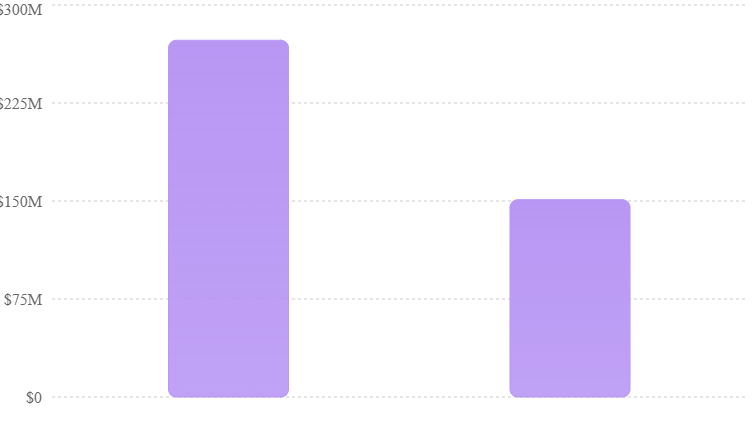
Super PAC fundraising, not candidate receipts or spending. Sources: Semafor and Senate Majority PAC.
The enthusiasm question is where political analysts usually start talking about momentum, grassroots energy, and all the other things they claim to measure right up until Election Night proves they couldn’t. I’m not interested in pretending campaign contributions are the same thing as votes, because we’ve seen far too many well-funded candidates lose elections.
A candidate who raises $10 million from a handful of wealthy donors hasn’t demonstrated the same kind of grassroots participation as somebody who raises that amount from hundreds of thousands of individual contributors. Both have $10 million, but the political implications can be very different.
In Talarico’s case, his campaign says 97 percent of its third-quarter donations were for less than $100. That doesn’t mean 97 percent of the money came from small donors, an important distinction, but it suggests substantial participation by people making relatively modest contributions. The Texas Tribune
Maybe Democratic donors are angry about Trump. Maybe they’re worried about the economy, health care, or the direction of the country. Probably some combination of those things, along with motivations we haven’t adequately measured. We don’t need to pretend we know what every donor is thinking to recognize that something unusual is happening.
There’s also the possibility that Republicans are approaching the point where additional spending simply doesn’t produce much additional benefit. Think about the last fifty political advertisements you’ve seen. Can you remember which candidate approved which message, or have they all blended into one endless parade of ominous music, unflattering photographs, and somebody warning you that civilization will collapse if the other guy wins?
I swear, by the time Election Day arrives, half the country would probably vote for a candidate promising to outlaw political commercials altogether.
Political advertising works under certain circumstances. It can introduce unfamiliar candidates, reinforce existing opinions, and persuade undecided voters. But there’s no guarantee that doubling your advertising budget doubles its effectiveness. At some point, you’re simply paying more money to annoy the same people.
Republican Senator Bernie Moreno raised this concern while discussing Talarico’s fundraising, suggesting that campaigns may be reaching a point of diminishing returns. He’s got a point. Semafor
If voters have already formed strong opinions about Trump, his administration, and the Republican Congress, another $50 million in television advertising may have limited power to change those opinions. The same applies to Democrats, of course, but Republicans are the party defending control of Congress, and they’re doing it with a president whose political influence is central to the election.
Democrats seem perfectly happy to make Trump the subject of the midterms. Republican candidates, judging by their advertising, often appear considerably less enthusiastic about discussing the man who dominates their party.
There are legitimate reasons for congressional candidates to emphasize local issues instead of the president, but if Trump is the tremendous political asset his supporters insist he is, you’d expect Republicans in competitive districts to be falling over themselves to associate with him. Instead, many seem more interested in discussing almost anything else.
If Democrats are correct that Trump is a liability in competitive districts, Republicans have a problem that no amount of campaign financing can entirely solve. They can buy another advertisement, hire another consultant, or send another billionaire looking for his checkbook. What they can’t buy is a different president.
Which brings us back to November 3. I wouldn’t bet the mortgage on either party controlling Congress next year based on quarterly fundraising reports. Democrats still face difficult Senate arithmetic, Republicans retain advantages in numerous districts, and enormous outside spending could make the difference in close races. There’s also the little matter of people actually voting.
What interests me isn’t whether these numbers guarantee a Democratic victory. They don’t. It’s what they reveal about the election Republicans thought they were preparing to fight.
They assembled an extraordinary financial operation, benefited from wealthy donors willing to spend sums most Americans can’t begin to imagine, and gained additional flexibility through legal decisions affecting political spending. Yet Democratic candidates are repeatedly outraising Republican opponents by astonishing margins, including dozens of incumbents who ordinarily should have the upper hand.
Maybe Republicans will spend enough money to overcome those disadvantages and retain control of Congress. Maybe Democrats will discover that their fundraising success doesn’t translate into the votes they need. Either outcome is possible.
But suppose Republicans lose one or both chambers despite everything they’ve spent. What exactly will those hundreds of millions of dollars have purchased?
That’s the question I keep coming back to, because money can buy an extraordinary amount of political exposure. What it can’t guarantee is that the people watching will believe a damn word you’re saying.
If this was worth your time, hit Like, Restack, or share it. That’s how independent work like this finds new readers.
The Bullshit Detector
Three more claims that deserve a closer look.
1. Jeff Bezos says AI deserves drinking water more than people do.
Claim: Bezos supposedly said water should be prioritized for data centers over human consumption because artificial intelligence will contribute more to humanity.
Bullshit: 💩💩💩💩💩 — 5/5
Why: The quotation appeared in a post made to resemble a BBC report, but it originated with a self-described satire account. Fact-checkers found no evidence Bezos ever made the statement. There’s a legitimate debate about the water consumed by AI data centers, particularly in communities already dealing with shortages. Apparently, that wasn’t outrageous enough for somebody, so they decided to manufacture a quote. Because why settle for a real controversy when you can invent a better one? Lead Stories, October 15
2. Viral Walmart receipts prove how much groceries have increased since 2002.
Claim: Images comparing Walmart receipts from 2002 and 2026 provide photographic proof of the dramatic increase in grocery prices.
Bullshit: 💩💩💩💩💩 — 5/5
Why: The viral receipts were AI-generated, not authentic records of purchases made 24 years apart. The supposed store location doesn’t even exist. Grocery inflation is real, and anybody who’s bought food lately probably doesn’t need a lecture about it. But fabricated receipts aren’t evidence of anything except somebody’s ability to make convincing-looking bullshit. Lead Stories, October 15
3. A viral video shows ships trapped in the Strait of Hormuz.
Claim: Footage circulating online shows ships stranded in the Strait of Hormuz during the current Middle East crisis.
Bullshit: 💩💩💩💩 — 4/5
Why: Investigators matched the coastline in the footage to the port area around Chittagong, Bangladesh, rather than the Strait of Hormuz. Shipping disruptions in the Middle East are a legitimate concern, but relocating an entire harbor to another part of the world is a hell of a way to illustrate them. Lead Stories, October 15
More from Tom Hicks Media
If you enjoy Off Script / Blind Spot, there’s plenty more from Tom Hicks Media. Chart Collision revisits the music and stories behind the hits, while Panic Room Sports brings some attitude to the games and people making headlines.
Lotus Purrspective offers the daily observations of a cat who has very little patience for human stupidity, and Rabbit Ears Classic TV revisits the shows, stars, and personalities we grew up with.
The Backlot Ghost digs into Hollywood’s forgotten stories, while What The Hell? explores the real-life absurdities that make you wonder how the hell we’ve survived this long.
Buy Me a Cup of Tea
I don’t have a $400 million political war chest, and I suspect my accountant would be very surprised if I did. But independent journalism still takes time, research, and the occasional cup of tea. If you’d like to help keep Off Script going, your support is always appreciated.
One Question Before You Go
Do you think campaign spending still changes voters’ minds, or has political advertising become mostly an expensive way to annoy people who’ve already decided?
#OffScript #Midterms2026 #CampaignFinance #PoliticalMoney #Congress #Election2026 #BullshitDetector