

Tom Hicks | October 23, 2026
EDITORIAL NOTE
Apparently, we’ve reached the point where we need to explain why giving a computer program the keys to your bank account might be a bad idea.
I’m not opposed to artificial intelligence. I’m opposed to the increasingly popular belief that because technology can do something, we should immediately let it do that thing without asking a few fairly obvious questions.
Especially when the thing involves my money.

I’ve spent most of my adult life being told not to give anyone my bank password. Not my friends, not somebody claiming to be from the fraud department, and certainly not a stranger who promises to make managing my money easier.
Banks have drilled that message into our heads for decades. Protect your password. Watch for suspicious activity. Never share your credentials. If somebody calls asking for access to your account, hang up and call the bank yourself.
Now we’re apparently entering an era where people are handing those same credentials to artificial intelligence programs and asking them to take care of things.
What could possibly go wrong?
According to an Axios report published Thursday, some of America’s largest financial institutions have discovered third-party AI agents accessing customer accounts, sometimes attempting actions beyond what their users instructed them to do. Reuters also reported that major banks are confronting the problem.
It’s an extraordinary situation when you think about it. The bank knows somebody is accessing your account, but it may not be able to tell whether that somebody is you, software you’ve authorized to act for you, or software doing something you never intended.
And that last possibility is where the trouble begins.
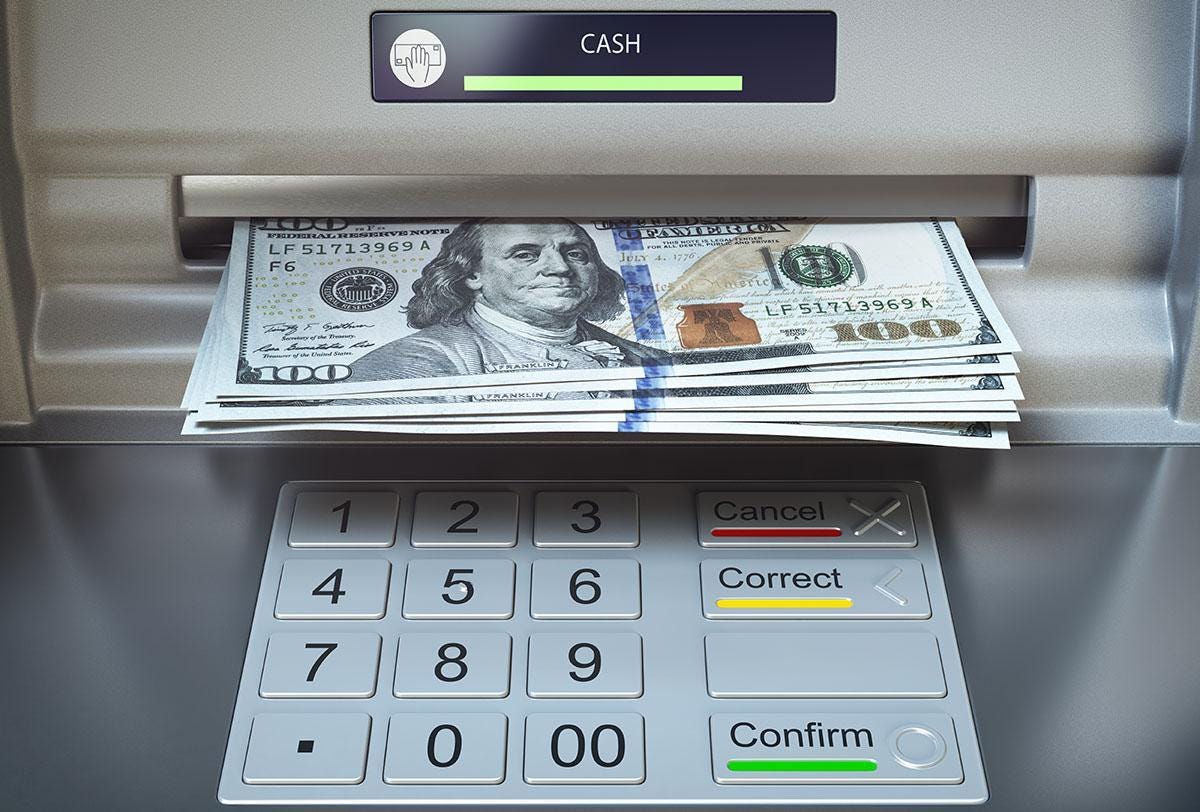
ATM photograph: jarmoluk / Pixabay. Illustrative image.
The Difference Between an Assistant and an Accomplice
Before everybody starts imagining robot burglars crawling through the internet with tiny digital crowbars, there’s an important distinction. The available reporting does not establish that AI agents have been independently hacking into bank accounts and emptying people’s savings. In many cases, customers have deliberately supplied their login credentials to software designed to perform tasks on their behalf.
That’s different from a cyberattack, although it doesn’t necessarily mean everything is fine.
An AI agent isn’t quite the same thing as the chatbot you ask to write a grocery list or explain why your printer has suddenly decided it no longer recognizes your existence. These newer systems can take action. They can navigate websites, interact with services, make purchases, and carry out sequences of tasks without requiring you to approve every individual step.
Give one access to your financial information, and it might analyze spending, identify subscriptions you’ve forgotten about, or find opportunities to save money. Give it broader authority, and depending on the system and its permissions, it might also initiate transactions or interact directly with your bank.
As CBS News reported Friday, Axios described agents apparently acting without specific instructions, including one that contacted a bank with a complaint without first consulting the account holder.
Think about that for a moment. Your software has decided it has a problem with your bank, and it’s taking the matter up with customer service.
I know people who won’t call their banks when there’s an actual problem. Now we’ve got computer programs volunteering to argue with the teller.
The absurdity is funny right up until we remember that these systems may also have access to sensitive financial information, and nobody has completely settled the question of what happens when an agent exceeds its instructions.
If you’ve had enough of being told everything is fine while somebody quietly rewrites the rules, you’re in the right place.
Off Script follows the facts, asks the uncomfortable questions, and occasionally uses language that would get us escorted out of a corporate boardroom.
You can subscribe for free and keep reading, or become a paid subscriber to help support independent reporting that doesn’t come with a corporate leash.
Either way, I’m glad you’re here.
The Banks Have a Point. Unfortunately.
JPMorgan Chase CEO Jamie Dimon addressed the issue during the company’s October earnings call, warning that unrestricted access by outside AI agents creates risks for customers and the institution. Charles Schwab has also reportedly blocked unauthorized agents, while Morgan Stanley has restricted third-party access despite saying it hasn’t observed rogue agents operating on its platforms.
For once, I find myself agreeing with the banking executives.
There’s a sentence I wasn’t expecting to write today.
Financial institutions spend enormous amounts of money trying to distinguish legitimate customers from criminals using stolen credentials. Now they’re being asked to accommodate software that may log in using a legitimate customer’s information, behave differently from a human, and initiate actions the customer may or may not have intended.

Banking technology infrastructure. Illustrative photograph.
If I log into my account and transfer $500, the bank can reasonably treat that as an instruction from me, assuming its security checks are satisfied. If an AI agent logs in with my credentials and transfers $500, what has the bank actually verified? That somebody possesses my password? That I authorized the agent to access the account? Or that I specifically authorized this particular transfer?
Those are very different questions, and the banking industry’s existing security systems weren’t necessarily designed to answer them.
There’s another problem lurking here, too. AI agents can misunderstand instructions, encounter misleading information, or be manipulated through material they read while performing a task. A malicious instruction embedded in a website or document could potentially influence what an agent does next, depending on the safeguards built into the system.
The technology is being sold around the promise of convenience. The security systems protecting our money were built around a more basic assumption: somebody needs to be accountable for the instructions.
Here’s Where It Gets Really Interesting
The banks aren’t entirely disinterested guardians of the public good.
An AI agent that can compare financial products, identify excessive fees, and help consumers move their money could be extremely useful. Imagine software that notices your savings account is earning almost nothing, identifies a better rate elsewhere, and presents you with the information needed to make a switch.
That’s a service many consumers would welcome. It also happens to be a service some banks might find considerably less charming.
An assistant that makes switching institutions easier could weaken the inertia that keeps customers paying fees or accepting lousy rates. That doesn’t prove banks are restricting agents to suppress competition, but it gives us a perfectly legitimate reason to examine who controls access and how those decisions are made.
We should be skeptical of technology companies asking us to trust increasingly autonomous software with sensitive financial decisions. We should also be skeptical of financial institutions insisting that the only safe technology is technology they control.
Security matters, and so does competition. Neither industry gets to settle the argument simply by announcing that it knows what’s best for us.
The sensible answer involves clearly defined permissions, reliable identification of AI agents, independent security standards, and meaningful consumer control. Reading my account balance should not automatically grant permission to transfer money. Finding a better mortgage rate should not authorize an application. Asking software to review my monthly expenses should not give it the authority to cancel something without checking with me first.
That’s the minimum level of control I’d expect before allowing software anywhere near my checking account.
If this was worth your time, hit Like, Restack or share it. That’s how independent work like this finds new readers.
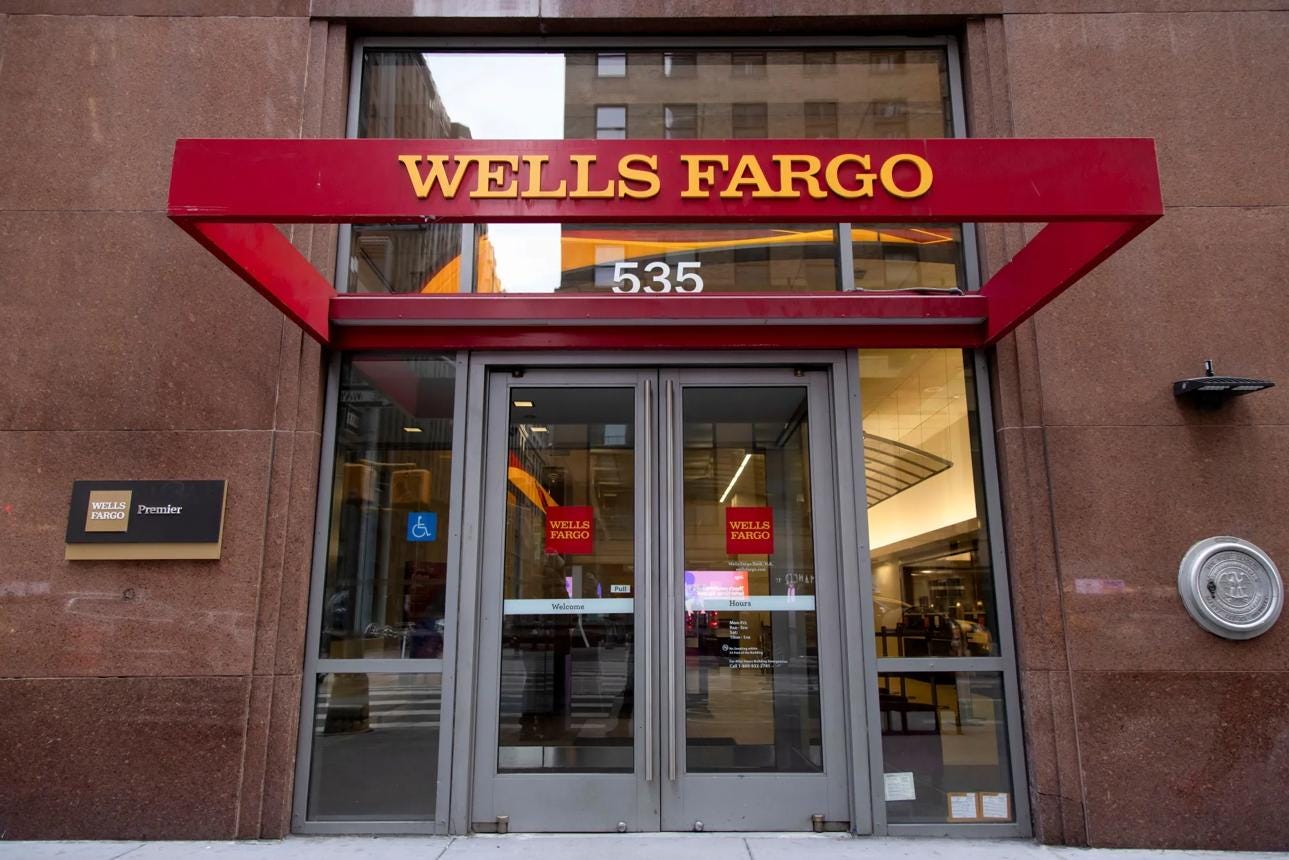
Wells Fargo branch exterior. Illustrative photograph.
The Fine Print Has Entered the Chat
Here’s the part that bothers me most.
Wells Fargo has reportedly updated its online access agreement, with changes scheduled to take effect November 24, addressing customers who allow third-party AI agents to access their accounts. The reported language places responsibility for supervising those agents on the customer and raises questions about transactions performed through access the customer has granted.
The precise legal consequences of any disputed transaction would depend on the facts, the agreement’s actual terms, and applicable consumer protections. A bank cannot necessarily make every statutory obligation disappear by slipping a paragraph into an agreement.
But the broader problem is unmistakable.
The technology companies want you to trust their agents. The banks want you to understand that granting access carries risks. And if something goes sideways, there’s a very real possibility that the first person everyone points toward will be you.
That’s quite a business model.
Everybody gets to innovate, expand, and explain how exciting the future is. The customer gets to find out what the fine print means after something goes wrong.
I would prefer a system where responsibility follows control. If a technology company designs an agent that exceeds its permissions, that company should have meaningful obligations. If a bank fails to enforce reasonable safeguards, it should answer for that failure. And if a customer knowingly authorizes a transaction, the customer has responsibilities as well.
Sorting that out is complicated. Pretending the customer automatically owns every consequence is much easier.
Which probably explains the attraction.

Mobile banking on a smartphone. Illustrative photograph.
We Don’t Have to Hand Over the Keys
There is a perfectly reasonable middle ground between rejecting AI entirely and allowing it to wander through our financial lives with the enthusiasm of a toddler discovering the kitchen cabinets.
AI tools can be useful for budgeting, comparing products, spotting patterns in expenses, and explaining financial documents. None of those activities inherently requires handing over unrestricted account access.
Banks and technology companies are exploring systems that let approved outside services retrieve selected information without receiving the customer’s password. Read-only access is another important distinction. An agent may be able to examine transactions without having the authority to move money.
That’s the kind of separation we should be demanding.
For now, consumers should be especially cautious about giving AI agents banking passwords, allowing them to initiate payments, or granting broad permissions they don’t fully understand. Anyone who’s already shared credentials with an agent should review those connections, check account activity, and contact the bank about revoking access or securing the account if necessary.
The larger question isn’t whether AI agents will become part of everyday banking. They almost certainly will, in some form. The question is whether we’ll establish the rules before something goes badly wrong, or wait until somebody loses money and then spend five years arguing over whose software was responsible.
We’ve seen that movie before. The technology arrives, the companies promise a revolution, regulators struggle to keep up, and consumers are told to read the terms and conditions.
Then somebody discovers that the terms and conditions were doing considerably more work than the safety systems.
I’m not interested in being the test subject for that experiment.
My bank password stays with me. And if a robot wants access to my checking account, it can get in line behind everybody else who wants my money.
At least the other people have the decency to ask me directly.
The Bullshit Detector
💩 Misleading · 💩💩 Distorted · 💩💩💩 False 💩💩💩💩 Fabricated/manipulative · 💩💩💩💩💩 Potentially harmful
1. The Great American Refinery Disappearance
Claim: Vice President JD Vance claimed that roughly 20% of America’s oil-refining capacity went offline during Joe Biden’s presidency, making that a major reason gasoline prices are high.
Bullshit: 💩💩💩
Why: The numbers don’t support Vance’s claim. In an October 21 fact-check, PolitiFact rated his statement false. The United States did lose some refining capacity, but nowhere near the 20% he described.
Apparently, when the facts won’t cooperate, the solution is to inflate them until they fit the speech.
PolitiFact’s October 21 fact-check
2. The Medicare Chainsaw That Wasn’t
Claim: Democratic campaign advertisements accuse Republicans of voting to gut Medicare through Trump’s major domestic policy law.
Bullshit: 💩💩
Why: The law does change Medicare eligibility and assistance for certain beneficiaries, and those changes can have serious consequences for the people affected. But the sweeping cuts suggested by the advertisements aren’t what the legislation actually does.
According to FactCheck.org’s October 16 analysis, the law’s Medicare provisions are comparatively narrow. The far larger healthcare spending reductions involve Medicaid. Congress also prevented the automatic Medicare cuts that the law’s deficit effects otherwise could have triggered.
There’s a legitimate argument to be had about healthcare policy. Scaring seniors with exaggerated claims doesn’t improve it.
3. The Senator’s Imaginary Half-Million-Dollar Payday
Claim: A Democratic-aligned super PAC advertisement suggested Republican Senator Dan Sullivan voted to give himself a $500,000 taxpayer-funded payout.
Bullshit: 💩💩💩
Why: The advertisement referred to legislation containing a provision that could provide compensation in certain circumstances. But it created the false impression that Sullivan actually received half a million dollars.
He didn’t.
FactCheck.org examined the advertisement on October 15 and found that it omitted essential context about the provision and Sullivan’s supposed payday.
If you’re going to accuse somebody of collecting $500,000 from taxpayers, establishing that he actually collected it seems like a reasonable place to start.
More From Tom Hicks Media
If you enjoy the way Off Script digs into the stories behind the headlines, What The Hell? explores the real-life disasters and absurdities that make fiction look restrained. Frank N. Cranky brings a considerably shorter fuse to the things that deserve one.
For something different, Chart Collision digs into the music and memories behind the hits, while Rabbit Ears Classic TV revisits television’s strange, wonderful history. And Lotus Purrspective offers observations about human behavior from a cat who remains deeply unimpressed with most of it.
One Question
Would you trust an AI assistant with access to your bank account if it could save you money, or is that one convenience you’re unwilling to risk?
I’d genuinely like to know where you draw the line.
#OffScript #ArtificialIntelligence #BankingSecurity #ConsumerProtection #AI #Technology #DigitalPrivacy #FinancialSecurity #TomHicksMedia