
Tom Hicks | November 1, 2026
I’ve been following American politics for more than half a century, and I still find myself occasionally staring at something we’ve decided is perfectly normal and wondering how the hell we got here.
Take campaign spending. Every election cycle, we’re treated to endless appeals for contributions, warnings that democracy itself is hanging by a thread, and television commercials explaining why some candidate we’ve never heard of is either the second coming of Abraham Lincoln or a menace to civilization. By the time Election Day rolls around, most of us would happily pay somebody twenty bucks just to make the commercials stop.
But have you ever wondered who’s paying for all that noise?
Because the answer gets considerably more interesting once you start following the money.
Cover position reserved. Landscape image with the Off Script logo at bottom-left and compact THM phoenix at bottom-right. No article headline duplicated on the cover.
Twelve Billion Dollars. For a Midterm Election.
According to an October 31 report based on OpenSecrets’ latest analysis, spending on the 2026 midterm elections is projected to reach approximately $11.9 billion. That’s billion with a B, and it’s a record for a midterm election, even accounting for inflation. The 2022 midterms cost approximately $8.9 billion, or about $10.2 billion in inflation-adjusted dollars.
Now, I’m not suggesting we could simply take that money and build hospitals or repair bridges. It’s private political spending, not a government appropriation, and the distinction matters. But I do think it’s worth considering what nearly twelve billion dollars says about the value people place on controlling the direction of government.
The price of a midterm election
Total federal election spending, billions of dollars
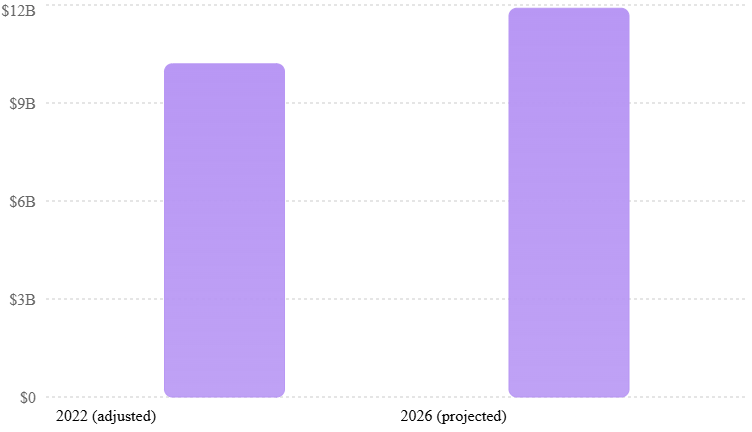
Source: OpenSecrets, October 30–31, 2026. The 2022 amount is adjusted for inflation; 2026 is projected final spending, not a completed total.
And here’s where it gets interesting.
OpenSecrets projects that approximately $3.9 billion of that total will come from outside spending, primarily by organizations operating independently of candidates’ official campaigns. That’s an estimated 85 percent increase over 2022. Meanwhile, the candidates themselves are expected to spend approximately $3.7 billion through their campaign accounts.
We’re talking about an enormous financial industry built around influencing who gets elected to public office.
There’s nothing inherently illegal about that. Political advocacy costs money, and people have every right to support causes and candidates they believe in. But when political influence becomes an eleven-figure business, I think it’s reasonable to ask who can afford to participate at that level, and what the rest of us are supposed to make of it.
Everybody Gets a Voice. Some Get a Sound System.
Let’s suppose you really like a candidate for Congress. You’ve listened to what they have to say, looked at their record, and decided they’re worth supporting. You send them fifty dollars, maybe a hundred if you’re feeling particularly generous.
Under federal law, an individual can contribute up to $3,500 per election directly to a federal candidate during the 2025–2026 cycle. The primary and general elections count separately, meaning someone can legally contribute $7,000 across both elections.
Contribution limits for 2025-2026
For most Americans, that’s a substantial amount of money. Hell, for some of us, finding an extra fifty dollars at the end of the month requires a minor miracle.
But if you’ve got a few hundred million dollars lying around, there’s another option.
It’s called a super PAC, and the rules are considerably different.
Super PACs can accept unlimited contributions from eligible individuals, corporations, and labor organizations. They can spend unlimited amounts independently supporting or opposing federal candidates, although they cannot contribute directly to candidates or legally coordinate their independent expenditures with campaigns.
That’s the distinction the law makes.
You and I might contribute fifty dollars to a candidate. A billionaire might contribute fifty million dollars to an independent organization supporting that same candidate.
Both are exercising political speech rights.
But let’s not pretend those voices are equally loud.
And before somebody starts screaming about the First Amendment, yes, political spending and political expression have substantial constitutional protections. Those protections exist for reasons worth taking seriously. Still, there’s a legitimate question about what happens to public debate when a relatively small number of extraordinarily wealthy people can finance a significant portion of the messages voters encounter.
At what point does having the right to speak turn into having enough money to drown everybody else out?
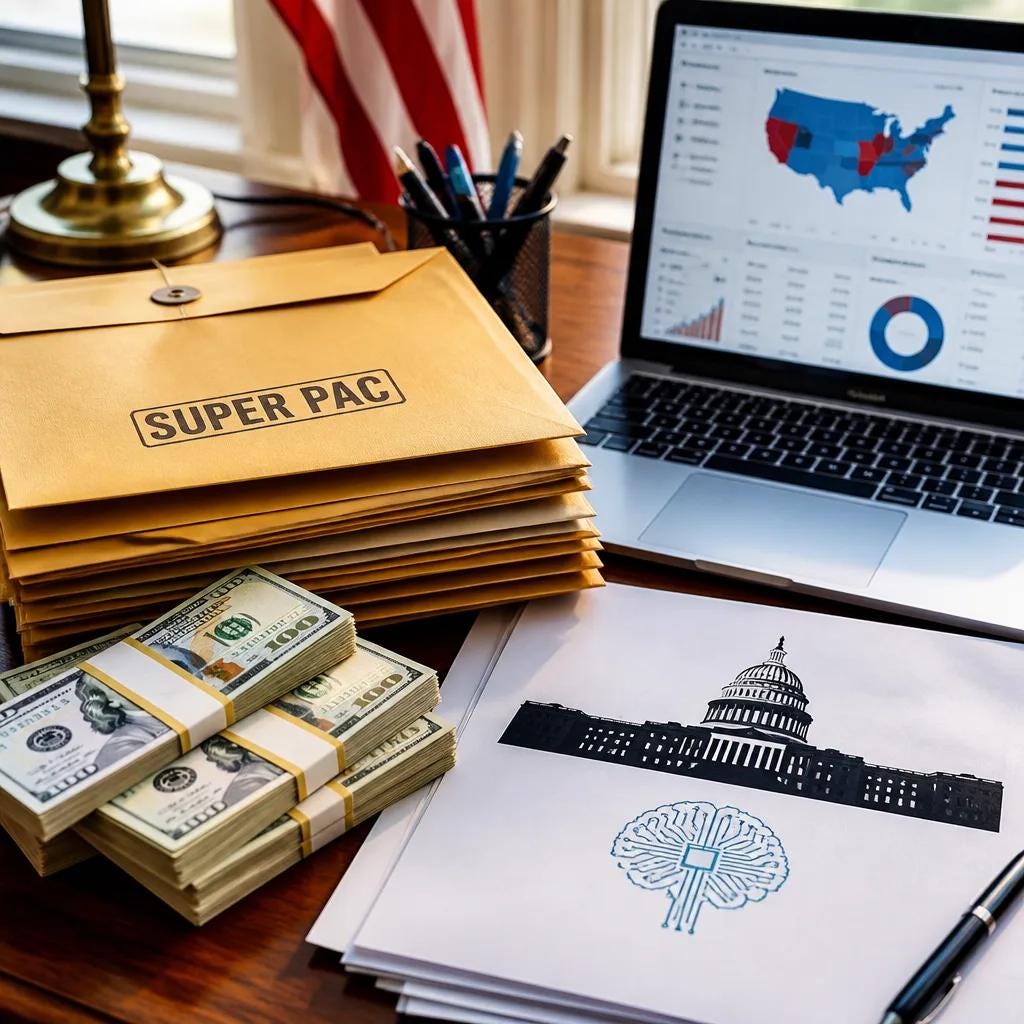
Federal law limits direct contributions to candidates, while independent-expenditure-only committees can accept unlimited contributions from eligible donors. Illustrative photograph.
Enjoying Blind Spot? Stay with us.
This is the final installment of our four-part election investigation, but Off Script will continue examining the people, policies, and institutions that shape our lives long after Tuesday’s votes are counted.
If you appreciate independent journalism that explains what’s happening without treating you like an idiot, subscribe. It’s free, and there’s always room for another voice in the conversation.
Meet the People With the Really Big Checkbooks
Here’s something I find fascinating about campaign finance. We spend an enormous amount of time arguing about whether ordinary people should contribute to political campaigns, while some individuals are spending amounts that would finance entire campaigns all by themselves.
According to OpenSecrets, Elon Musk had contributed approximately $445 million to federal political committees during the 2026 cycle as of its October 30 accounting. That included $215 million to America PAC, which he established, and $168 million to the Senate Leadership Fund. Other donors whose contributions exceeded $100 million included Michael Bloomberg, Richard Uihlein, and Jeffrey Yass.
Where $445 million went
Reported Elon Musk federal political contributions, 2026 cycle · $ millions
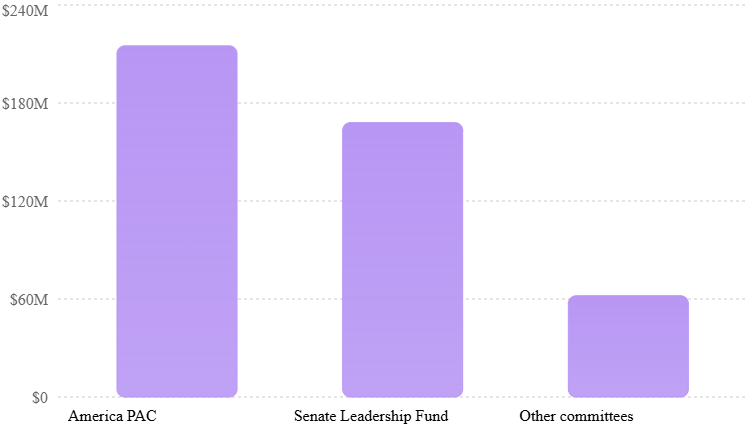
Source: OpenSecrets, October 30, 2026. The $62 million “Other committees” category is the calculated difference between the reported $445 million total and the two individually identified recipients; it is not a separately reported recipient total.
Organizations linked to George Soros contributed more than $102 million to liberal political groups. Cryptocurrency companies also entered the picture in a substantial way, with Ripple and Coinbase contributing a combined $63 million to super PACs promoting the industry’s political interests.
These figures don’t establish that anybody bought an elected official or received an improper favor. Making a large, lawful political contribution isn’t evidence of corruption.
But they do demonstrate just how much financial power some individuals and industries can bring into an election.
And there’s another detail worth mentioning. According to the same OpenSecrets analysis, conservative outside groups had outspent liberal outside groups by approximately $360 million as of October 30. At the candidate level, however, Democratic candidates were projected to spend roughly $800 million more than Republicans during the cycle.
NCIJ Network
The money flows through different channels, and the advantage isn’t always on the same side.
Which is why I get irritated when somebody tries to turn campaign finance into a simple story about one party having rich friends while the other survives on bake sales and good intentions.
Give me a fucking break.
Both parties raise and spend enormous sums. Their donors, organizations, and spending patterns differ, sometimes considerably, but neither major party is operating outside the modern campaign-finance system.
The more interesting question is what all that money does to the political conversation.
Dark Money: The Part You’re Not Supposed to See
Now we get to the part that bothers me most.
Super PACs are required to disclose their contributors to the Federal Election Commission. In theory, that means voters can find out who’s financing the advertisements they see.
But there’s a catch.
Sometimes the disclosed contributor is a nonprofit organization or another entity that doesn’t publicly identify the original sources of its funding. The super PAC reports receiving money from that organization, but the trail may effectively end there.
That’s one of the ways dark money enters federal elections.
According to OpenSecrets, nearly $1.47 billion in dark-money contributions had already been identified in the 2026 election cycle as of October 30. The organization considers that a lower-bound figure because some contributions hadn’t yet been classified and additional disclosures were still pending.

Dark money can obscure the original source of political contributions even when an intermediary organization appears in public disclosures. Illustrative photograph.
Almost a billion and a half dollars.
And that’s only what researchers had identified by that point.
Think about the implications. You might see a political advertisement accusing a candidate of supporting some outrageous policy, or claiming another candidate is the only person standing between your family and economic disaster. The advertisement identifies the organization paying for it, as required, but that name may tell you very little about who ultimately supplied the money.
Maybe it’s an organization financed by people with sincere political convictions. Maybe it’s an industry with a direct financial interest in the election’s outcome. Maybe it’s a collection of wealthy donors who simply prefer not to advertise their involvement.
Without adequate disclosure, you may never know.
There are legitimate arguments for protecting donor privacy, particularly when political contributors face threats or harassment. I understand that. Political association is a constitutional right, and protecting it sometimes requires confidentiality.
But there’s a difference between protecting an ordinary person’s political privacy and allowing enormous political expenditures to move through organizations whose underlying funding remains hidden.
I don’t need to know whether my neighbor gave twenty-five dollars to a candidate.
I would, however, like to know who’s financing a ten-million-dollar advertising campaign designed to influence my vote.
Apparently, that makes me demanding.
Worth sharing?
If somebody you know thinks campaign finance begins and ends with the names printed on political advertisements, send them this article. The interesting part often happens several transactions before the commercial reaches your television.
And Then the Money Trail Went Offline
As if the campaign-finance system weren’t complicated enough, something happened during the final week before this election that deserves attention.
On October 26, the Federal Election Commission took its electronic filing system offline following an attempted cyberattack. For nearly 41 hours, political committees were unable to submit certain mandatory reports, including the 24-hour and 48-hour disclosures that become especially important when campaigns are spending heavily in the days before an election.
The system was restored Wednesday night, October 28. Reuters reported that the motive behind the attempted intrusion remained unknown, and there’s no evidence establishing that a political campaign was responsible. The FEC doesn’t administer voting, so the disruption didn’t prevent anyone from casting a ballot.
But consider the timing.
According to OpenSecrets research director Brendan Glavin, super PACs and dark-money groups had been spending an average of more than $50 million per day during the week before the outage. More than $250 million in spending was reported on October 20 alone.
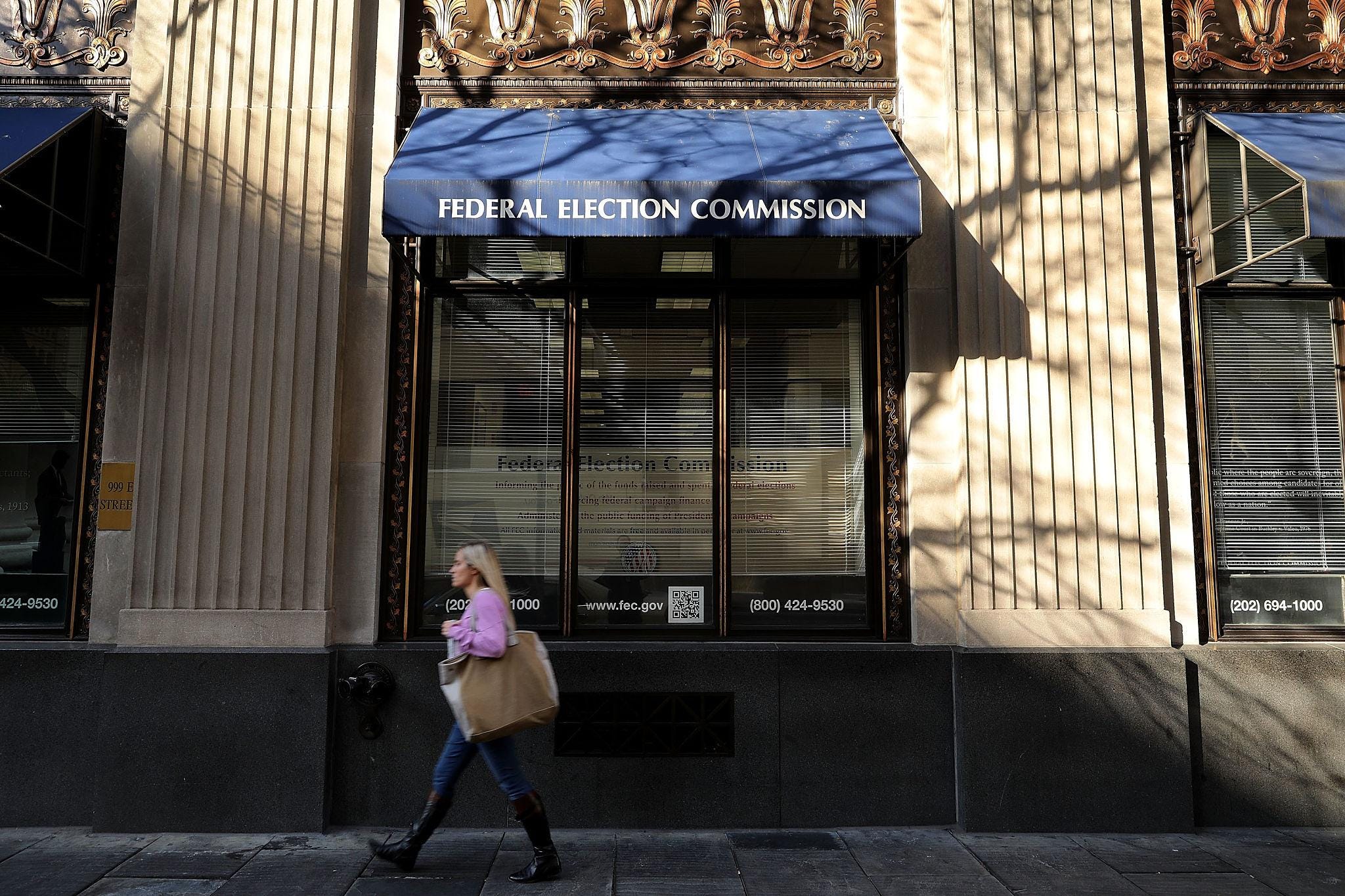
The Federal Election Commission collects federal campaign-finance disclosures. Its electronic filing system was restored October 28 after an interruption of nearly 41 hours.
We’re in the final days of an election involving billions of dollars, and the system responsible for collecting some of the most time-sensitive financial disclosures suddenly becomes unavailable.
That’s a transparency problem regardless of who caused it.
The whole point of disclosure is to provide information while it’s still useful. Learning who financed a last-minute advertising campaign three weeks after the election isn’t quite the same as knowing before you cast your ballot.
It’s rather like discovering who paid for the restaurant meal after you’ve already eaten it, gotten food poisoning, and gone home.
Interesting information, certainly.
Would’ve been considerably more useful earlier.
The Political Advertisement That Follows You Home
Of course, campaign money doesn’t simply disappear into television commercials anymore.
Political organizations can purchase digital advertising, use voter data to identify audiences, and tailor messages to different groups of people. One voter might encounter an advertisement emphasizing taxes, while another sees messaging about immigration, health care, or public safety.
Sometimes those messages are entirely consistent. Sometimes they’re framed so differently that comparing them would be revealing.
The trouble is that most of us never see the entire advertising campaign. We see the particular messages that reach us, often without knowing what somebody else is being told.
And political advertising has become very good at exploiting emotion.
Fear is useful. So is anger. Nothing opens a wallet quite like convincing somebody that civilization will collapse unless they contribute fifteen dollars before midnight.
I’ve received enough political fundraising emails to know that apparently the future of the republic has been hanging by a thread every single Tuesday for years.
You’d think somebody would have bought a stronger thread by now.
Still, the techniques work well enough that campaigns keep using them. That’s worth remembering the next time an advertisement seems designed to make you furious before you’ve had time to consider whether its claims are accurate.
Four Sundays. One Very Complicated Democracy.
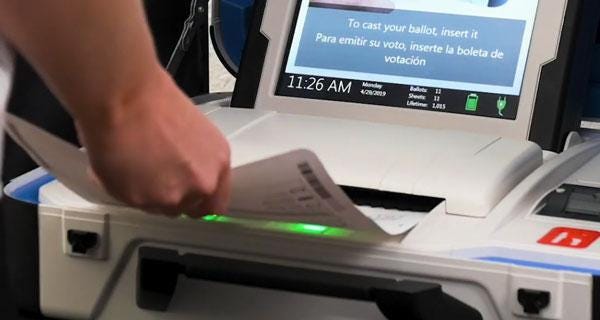
After months of fundraising, advertising, and political argument, the individual ballot remains private.
We’ve reached the end of our election series, and I want to return to where we started.
Four weeks ago, we examined who gets to vote, who participates, and the barriers that can stand between an eligible citizen and the ballot box. We then looked at what those votes are worth, including the effects of geography, representation, and the rules governing how political power is distributed.
Last Sunday, we followed ballots through the counting and certification process, examining the people and procedures responsible for turning individual votes into official results.
Today we’ve looked at the money spent trying to influence those votes before they’re ever cast.
And what strikes me after putting these four subjects together is how much of an election happens outside the voting booth.
We tend to think of Election Day as the moment democracy takes place. We go to the polls, mark our choices, and wait for the results.
But the process begins long before that. It involves laws governing eligibility, decisions about representation, administrative procedures, campaign organizations, and enormous amounts of political money.
By the time voters arrive at the polls, they’ve already been living with the consequences of those decisions for months, sometimes years.
None of this means the outcome is predetermined. Campaigns with enormous financial advantages can lose, and voters routinely make decisions that confound the people trying to influence them.
It does mean that understanding an election requires looking beyond the candidates and the commercials.
And that, more than anything, was the point of Blind Spot.
One Last Thing Before Tuesday
I’ve spent a good portion of my life watching politicians promise things, explain things, deny things, and occasionally accomplish things. I’ve also watched enough elections to know that people can look at the same set of facts and reach completely different conclusions.
That’s their right.
I’m not particularly interested in telling anybody which box to check on Tuesday. I am interested in making sure people understand the machinery surrounding that decision.
Because here’s the one thing all that campaign money cannot legally purchase.
Your ballot.
A billionaire can finance millions of dollars in advertisements. A political organization can spend months trying to shape your opinion. Campaigns can send you fundraising messages until you’re ready to throw your phone through a window.
But when you cast your ballot, the choice is yours.
So take a little time to look beyond the commercials. Find out who’s paying for the messages you’re hearing. Examine the candidates’ records, compare their positions, and decide which arguments actually hold up.
And if something sounds suspiciously like bullshit, don’t be afraid to investigate.
We’ve spent four Sundays looking at how American elections work. I hope we’ve answered some questions, raised a few others, and occasionally made you wonder why we tolerate certain things that have somehow become perfectly ordinary.
I know I have.
Now let’s see what happens Tuesday.
Around Tom Hicks Media
The election series may be ending, but the conversations aren’t. Off Script continues daily with politics, government, media, and whatever else needs a closer look. For a change of pace, there’s Lotus Purrspective, where humanity gets judged by a cat, and Chart Collision, where the music comes with memories.
And Monday brings the debut of Just Lucy, a four-and-a-half-year-old with pink glasses, a remarkable imagination, and absolutely no idea how funny she is.
All our publications are together in one place:
Tom Hicks Media — The Complete Collection
You can also join us on the Tom Hicks Media Discord server, where the conversation doesn’t have to end when the article does.
Leave a Comment
We’ve covered a lot of ground over these four Sundays. What surprised you most about the way American elections work? Was there something you already knew, something you learned, or something you think we should have examined more closely?
I’d particularly like to hear whether knowing who’s financing a political message changes how you evaluate it. The comment section is open, and disagreement is welcome. Just bring an argument worth discussing.
One Last Share
If you found this series worthwhile, consider sharing the final installment with somebody who might appreciate it. Independent journalism doesn’t have a multimillion-dollar advertising budget. It gets around because readers decide it’s worth passing along.
#BlindSpot #OffScript #Election2026 #Midterms2026 #CampaignFinance #DarkMoney #SuperPACs #PoliticalTransparency #IndependentJournalism #TomHicksMedia