

Tom Hicks | November 18, 2026
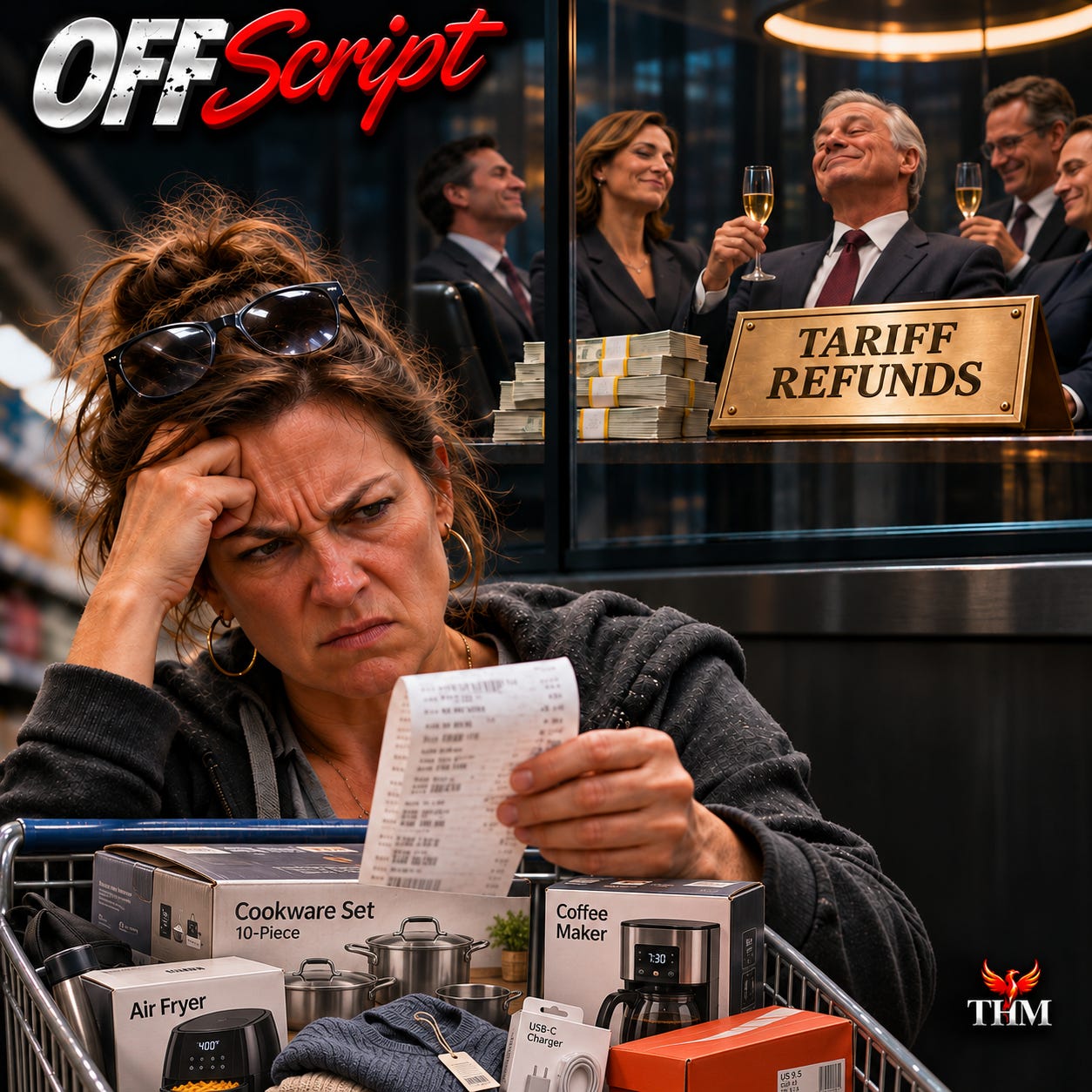
Remember when Donald Trump kept telling us that foreign countries would pay his tariffs? China would cough up the money, American factories would roar back to life, the Treasury would overflow, and we’d all be skipping down Main Street with pockets full of cash.
Well, the foreign countries didn’t pay the tariffs. American importers did, just as economists kept explaining until they were blue in the face. Businesses absorbed some of those costs, passed others along, and ordinary Americans paid higher prices for everything from clothing to household goods. Trump continued insisting that his brilliant economic strategy was making America rich, while Americans continued wondering why their money wasn’t stretching nearly as far as it used to.
Then the Supreme Court ruled in February that Trump lacked the authority to impose his sweeping tariffs under the International Emergency Economic Powers Act. The government had collected billions of dollars under a law that didn’t authorize those tariffs, which meant the businesses that paid them were entitled to seek refunds.
And now, thanks to a November 16 investigation by ProPublica, we’ve discovered something absolutely magnificent about how those refunds are being handled.
The companies are getting their money back. The consumers who helped pay the higher prices generally aren’t. And at least nine publicly traded companies have connected their tariff refunds to corporate bonus compensation.
Oh, for Christ’s sake.
We spent months listening to politicians explain why hardworking Americans needed to accept a little economic discomfort for the greater good. We were supposed to be patient, patriotic, and understanding while the cost of everyday life climbed. Now that the government is returning the money, apparently the patriotic sacrifice portion of the program has been discontinued.
Somewhere in corporate America, an accountant is calculating bonuses. Somewhere else, a customer is still trying to figure out why a damn hedge trimmer costs so much.
And if that sounds like an unfair comparison, wait until you see the numbers. ProPublica investigation, November 16
THERE’S MONEY IN THEM THERE REFUNDS
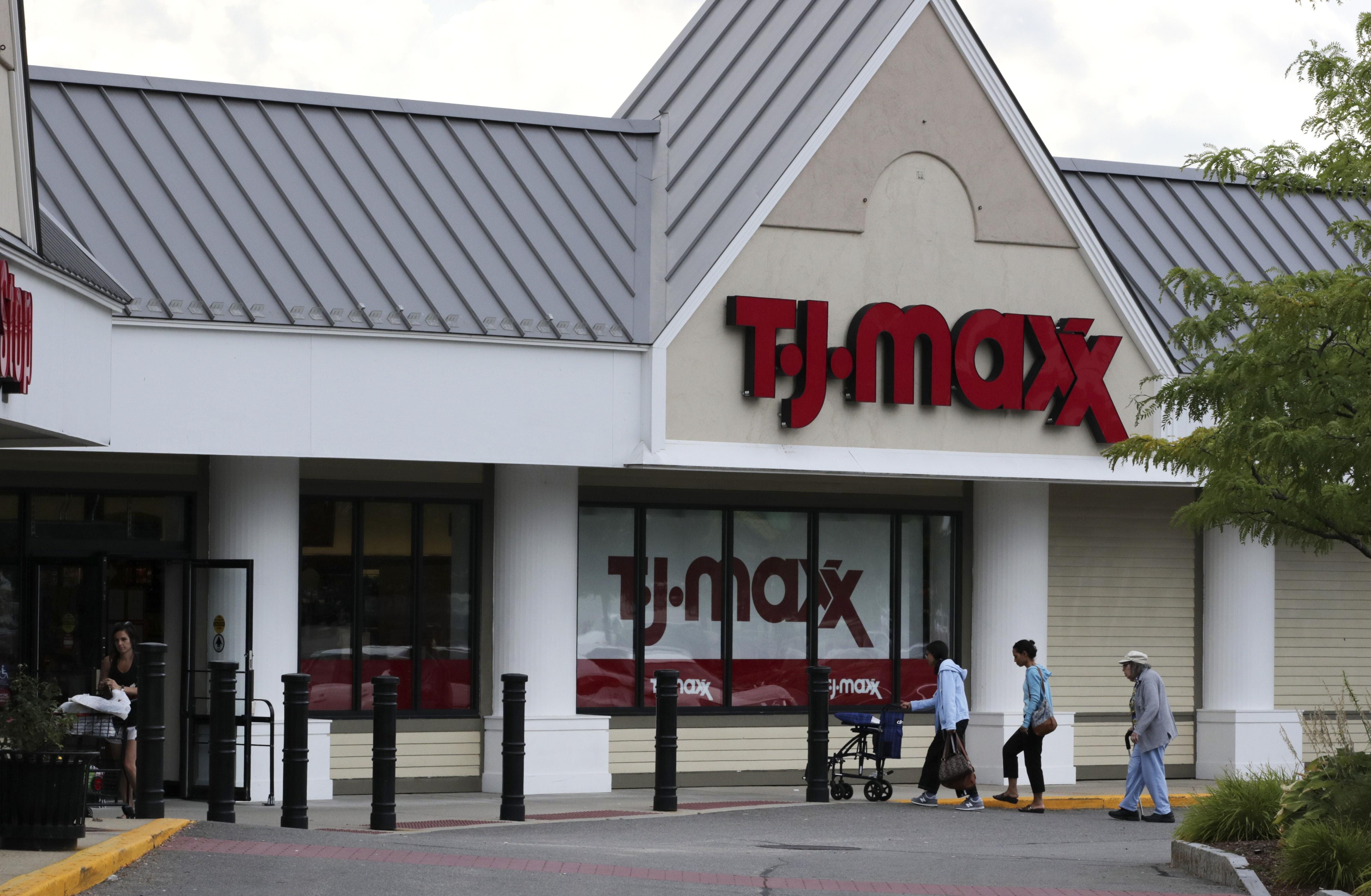
T.J. Maxx is one of the retail chains owned by TJX, which received $331 million in tariff refunds. Photo: The Washington Post.
Let’s start with TJX, the parent company of TJ Maxx, Marshalls, and HomeGoods. If you’ve ever wandered into one of those stores looking for a pair of socks and emerged forty-five minutes later with a lamp, three picture frames, and a decorative ceramic rooster, you’re familiar with the operation.
TJX received $331 million in tariff refunds. That’s a fairly respectable chunk of change, even for a company with thousands of stores. But tucked into its financial disclosures was another interesting number: as a result of those refunds, the company accrued $112 million in additional incentive compensation and discretionary bonus expenses.
That’s roughly one-third of the refund connected to additional compensation expenses. One hundred and twelve million dollars. Think about that the next time you’re standing in a checkout line wondering whether you really need the ceramic rooster.
Now, before some corporate attorney starts sharpening his pencils, let’s be precise. TJX says the compensation covers eligible employees around the world. It hasn’t disclosed how much will go to senior executives and how much will go to other workers. The $112 million is an accrued expense, so we shouldn’t pretend it has already been stuffed into executives’ pockets.
But we know the company received $331 million. We know that triggered an additional $112 million in compensation expenses. And we know TJX told ProPublica that the remaining refund money would support its future growth, without announcing a plan to reimburse shoppers who may have paid higher prices because of those tariffs.
That’s what bothers me. When businesses were dealing with the tariffs, consumers were expected to help absorb the costs. When the refunds arrived, the compensation system apparently had no trouble recognizing that corporate employees might be entitled to a share of the good fortune. Somehow, the people who shop in the stores didn’t get the same consideration.
Apparently, shared sacrifice is a wonderful corporate philosophy right up until there’s something to share. TJX SEC filing; ProPublica
If you enjoy journalism that follows the money instead of following a party script, subscribe to Off Script. We ask the questions corporate press releases would rather nobody thought of, and we’re not particularly concerned about being invited to their Christmas parties.
THE DRILL COST MORE. THE EXCUSE WAS TARIFFS. NOW WATCH THIS.
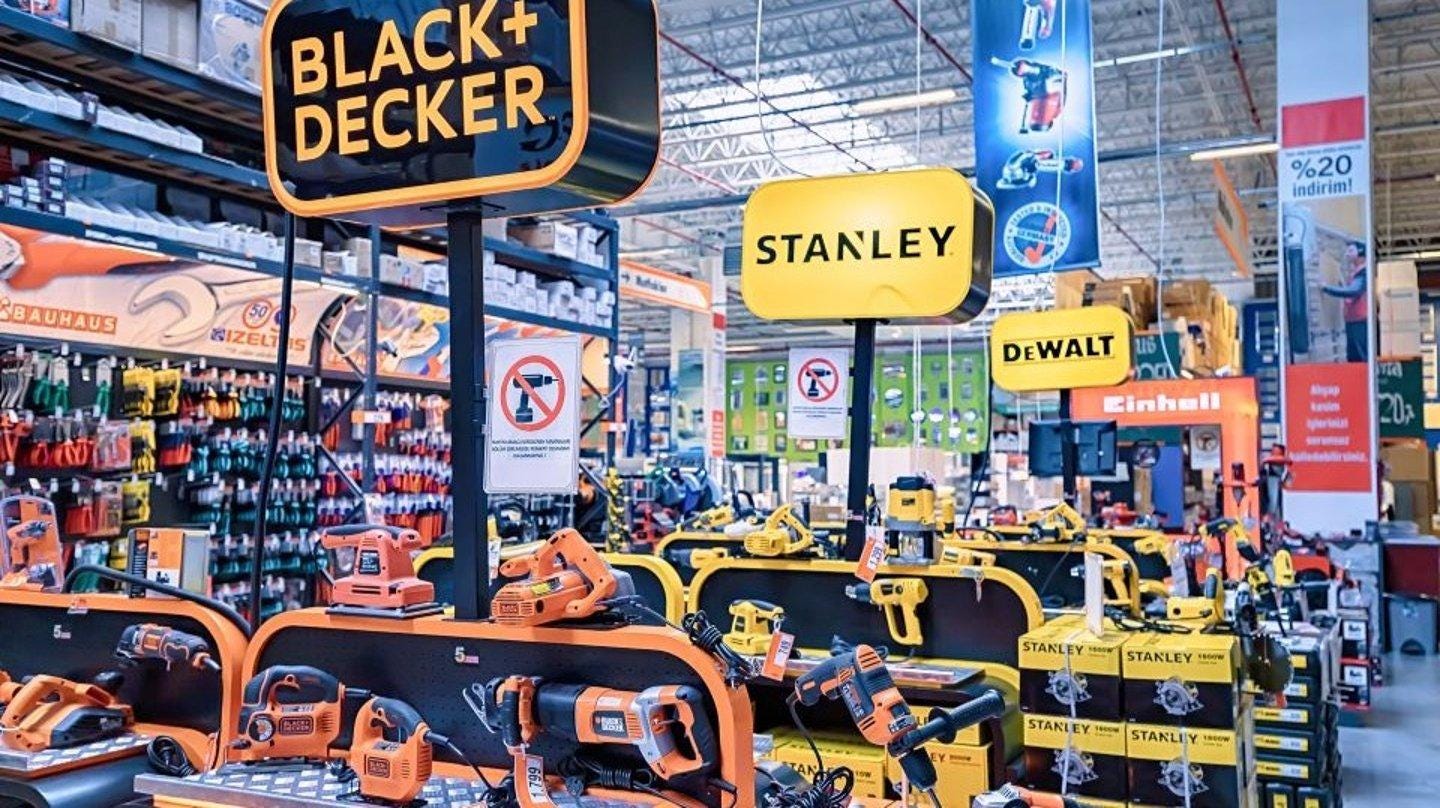
Stanley Black & Decker provides an even better illustration of how this little economic magic trick works. The Connecticut-based toolmaker, whose brands include DeWalt, Craftsman, Stanley, and Black+Decker, stands to receive at least $298 million in tariff refunds.
When Trump imposed his tariffs, Stanley Black & Decker executives were remarkably forthcoming about what would happen next. The company would raise prices. In fact, it raised them repeatedly, with executives explaining that the increases were necessary to offset tariff-related costs and protect the business.
Fair enough. Nobody expects a manufacturer to absorb unlimited additional expenses without making adjustments. Materials cost money, employees need paychecks, factories don’t operate on good intentions, and shareholders tend to get cranky when profits disappear.
But here’s where my sympathy starts developing a nasty rash.
After the Supreme Court knocked down the tariffs, Stanley Black & Decker began receiving hundreds of millions in refunds. Its financial disclosures acknowledged that some of the gain was offset by costs associated with incentive compensation. The company hasn’t disclosed precisely how much of the refund is tied to bonuses or who will receive them.
Let me see if I have this straight. When the government imposed an additional cost on the company, executives explained that the burden had to be shared with customers. Now that the government is returning money, the company’s compensation arrangements recognize a financial benefit for employees and management, while customers have no comparable assurance that they’ll receive anything.
So when the bill arrived, we were all one big happy family. When the refund arrived, suddenly everybody remembered where the corporate office was and which doors required a key card.
The pain gets distributed. The relief gets discussed in the boardroom.
And before anyone accuses me of suggesting that Stanley Black & Decker should hand every customer a check, that’s not the point. The company absorbed some tariff costs itself, and it has a legitimate claim to reimbursement. But if management were perfectly capable of explaining to customers why prices needed to rise, perhaps management could explain what portion of the refunds will benefit those same customers.
That’s not an unreasonable request. It’s a basic question of fairness, which is apparently becoming a rather exotic concept in American business ProPublica
HOW TO TAKE MONEY FROM EVERYBODY AND GIVE IT BACK TO SOMEBODY ELSE
Here’s how this racket works, and you don’t need a degree in economics or a subscription to The Wall Street Journal to understand it.
When an American company imports a product subject to a tariff, that company pays the tariff to the federal government. The payment doesn’t come from China, Mexico, Canada, or whichever foreign country Trump happens to be angry with that afternoon. It comes from the American importer.
The importer then has decisions to make. It can absorb some of the additional expense, raise prices, negotiate with suppliers, or attempt some combination of the three. Every business handles those decisions differently, and the costs move through supply chains in different ways. Eventually, a portion can land on the price tag you see in the store.
Research cited by ProPublica estimates that American consumers absorbed somewhere between 26% and 43% of the tariff costs. That’s a substantial burden, even if businesses absorbed the rest. A thousand dollars in additional annual household costs, for example, is a fairly minor inconvenience if you’re a billionaire. If you’re living on Social Security or trying to keep a family afloat on two paychecks, that same thousand dollars might as well be a damn mortgage payment.
But here’s where the system becomes particularly interesting. When the Supreme Court ruled Trump’s emergency-powers tariffs unlawful, Customs and Border Protection established a process for refunds. The eligible claimants were the importers of record—the companies and other parties that actually paid the government.
The person who bought a more expensive winter coat doesn’t have an automatic claim. Neither does the family that paid more for household necessities because some of the tariff costs were baked into retail prices. The government knows which importer paid which tariff. It generally doesn’t know exactly how much of that cost was passed along to any particular customer.
So the importer receives the refund, while the people farther down the economic food chain are left hoping that somebody with authority over corporate pricing develops a conscience.
I don’t dispute that the importer is legally entitled to recover duties the government collected unlawfully. What irritates me is that Washington managed to create an elaborate system for imposing the tariffs, another elaborate system for collecting them, and yet another system for returning the money. But apparently nobody thought it was terribly important to establish what should happen when the people paying higher prices were ordinary Americans.
We have accountants tracking billions across international supply chains, but determining whether a customer deserves relief is suddenly beyond the technological capabilities of civilization.
Give me a goddamn break. ProPublica; Associated Press
ONE QUESTION
If a company raised prices because of tariffs and later received a government refund, should it be required to pass some of that money back to customers?
I’m not suggesting consumers automatically deserve every penny. Businesses absorbed costs themselves, and determining exactly who paid what can be complicated.
But when companies used tariffs to justify price increases, shouldn’t the disappearance of those tariffs at least trigger a serious discussion about lowering prices?
Tell me what you think in the comments. And if you’ve noticed businesses blaming tariffs for price increases that never seemed to disappear afterward, I’d particularly like to hear about it.
SCOTT BESSENT SAW THE PROBLEM. THEN HE BLAMED THE DEMOCRATS.
Now we come to Treasury Secretary Scott Bessent, a man who apparently possesses the remarkable ability to recognize a problem and then blame the people who tried to stop it.
Back in February, Bessent acknowledged that American consumers probably wouldn’t see much of the tariff refund money. He understood that the refunds would go to importers rather than necessarily reaching the people who absorbed some of the costs through higher prices.
So far, so good. At least somebody in the administration recognized the obvious.
Then Bessent decided the real villains were the Democrats who challenged Trump’s tariffs in court. He argued that the American people already had the money when it was sitting in the Treasury and that Democratic attorneys general were responsible for forcing the government to return it to the companies that paid the duties.
I’m sorry. What the actual hell?
Trump imposed the tariffs. Trump insisted he had the authority to impose them. The Supreme Court ruled that he didn’t have that authority under the law he used. And now we’re supposed to blame the people who successfully challenged an unlawful government action because the resulting refunds are going to companies instead of consumers?
That’s like a burglar complaining that the police ruined his financial planning when they made him return the stolen television.
And Bessent’s suggestion that the American people already had the money because it was in the Treasury deserves its own special place in the Museum of Political Bullshit.
Try that argument with your landlord sometime. Tell him you have his rent money, but you’ve decided to keep it in your checking account because, technically, it’s still somewhere in the American financial system. See how long it takes before you’re explaining economic theory from the sidewalk.
The Treasury isn’t your personal savings account, Scott. Money sitting in Washington doesn’t automatically compensate the shopper who paid thirty dollars more for something because of your boss’s economic policy.
What’s particularly galling is that the administration and Congress could have tried to establish rules governing how businesses handled these refunds. Democratic senators called for consumer protections, but those requests haven’t produced a general requirement that companies pass the money along.
Instead, we have the usual Washington performance: Republicans blaming Democrats, Democrats demanding action, and the people who actually paid higher prices standing around wondering whether any of these bastards plan to accomplish something useful.
Political accountability apparently works the same way as corporate refunds. Everybody knows the money went somewhere, but nobody seems terribly interested in getting it back to the people who paid. ProPublica
HOLD ON. SOMEBODY ACTUALLY DID SOMETHING DECENT.
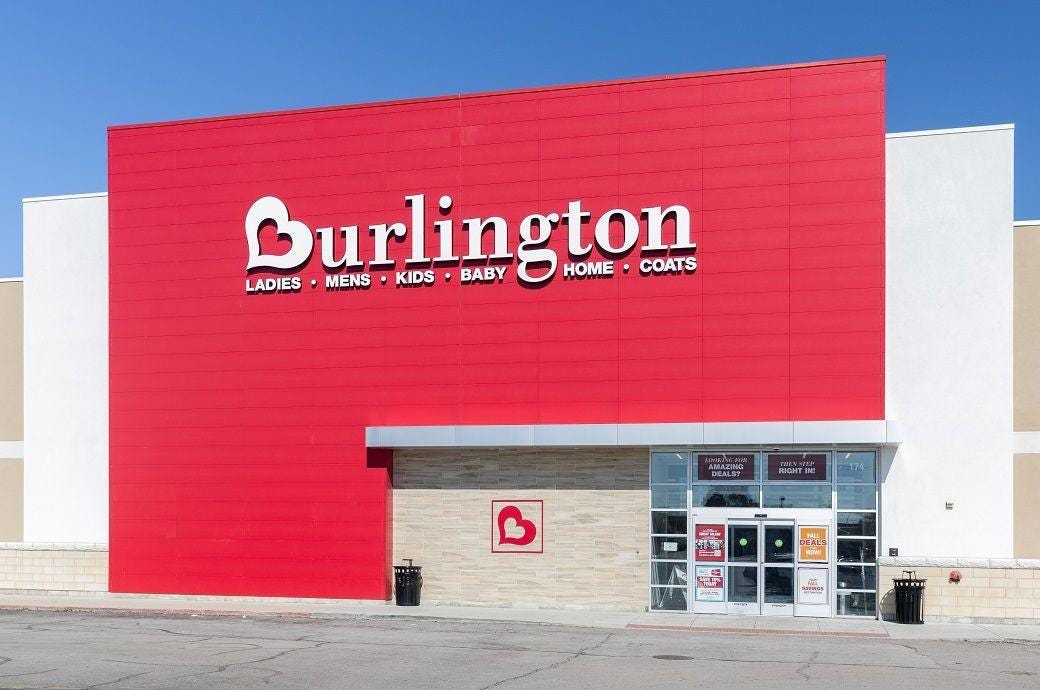
Before we drag every corporate executive into the town square and start measuring them for decorative stocks, there’s one retailer that deserves some credit.
Burlington Stores, formerly Burlington Coat Factory, received $55 million in tariff refunds. CEO Michael O’Sullivan announced that the company intended to use that money to offer better values to shoppers rather than allowing it to produce a one-time boost to earnings. A Burlington spokesperson also confirmed to ProPublica that none of the refund would go toward bonuses.
Well, I’ll be damned. Somebody in a corporate boardroom remembered that customers are actual human beings and not merely ambulatory credit cards.
Now, Burlington isn’t sending checks to everyone who bought a winter coat last year, and lowering prices in the future isn’t precisely the same thing as reimbursing someone for an expense they’ve already paid. But the company’s decision recognizes that the people shopping in its stores have been struggling with higher living costs and might appreciate a little relief.
That’s a meaningful choice, and it’s one more companies could make if they were so inclined.
The Burlington example also demolishes the idea that corporate managers are helpless prisoners of accounting formulas, unable to exercise judgment when a government refund lands in their bank accounts. Management can decide how to use the money. Burlington made one decision. Other companies made different ones.
And that’s why I find the corporate explanations so irritating. We’re expected to believe that executive compensation arrangements are sacred mathematical commandments handed down from Mount Shareholder, while providing relief to customers would somehow violate the natural order of the universe.
Bullshit. These arrangements were designed by people. They can be changed by people. And if a formula produces a result that rewards somebody for a refund generated by a Supreme Court decision, perhaps the formula deserves another look.
Burlington managed to find a way to put customers first without the building collapsing, the stock market catching fire, or the CEO being carried away by wolves.
Maybe the rest of corporate America could give it a try. Burlington Stores announcement; ProPublica
SHARE OFF SCRIPT
Know somebody who still thinks foreign governments paid Trump’s tariffs?
Send them this article. I can’t promise they’ll change their minds, but at least they’ll have something factual to ignore.
THERE’S A LAWSUIT. OF COURSE THERE’S A LAWSUIT.
It was probably inevitable that somebody would eventually call a lawyer, and a Wisconsin consumer who purchased several Stanley Black & Decker products has done exactly that.
The customer filed a lawsuit questioning whether the company should be permitted to keep the full benefit of its tariff refunds after raising prices to recover tariff-related costs. The case seeks to represent other customers who bought the company’s products during the affected period.
The central argument is simple enough: If a company raised prices because of tariffs, thereby recovering some of those costs from customers, and then received a government refund for the same tariffs, shouldn’t somebody determine whether the company effectively recovered that portion of the expense twice?
That strikes me as a perfectly reasonable question, even if the legal answer turns out to be considerably more complicated. ProPublica reports that legal analysts have expressed doubts about whether these consumer lawsuits will succeed. Establishing exactly how much of a tariff any particular shopper absorbed is difficult, and the fact that a business raised prices doesn’t automatically establish that it recovered every dollar of its tariff costs.
There are also legitimate business considerations. Some companies had to reorganize supply chains, absorb expenses, renegotiate contracts, and deal with the uncertainty created by Trump’s tariff policy. Those costs didn’t magically evaporate when the Supreme Court issued its ruling.
Fine. Put those considerations on the table. Let’s examine them. That’s what responsible people do when they’re trying to decide what’s fair.
But don’t tell me consumers should simply accept that their money has vanished into the accounting equivalent of the Bermuda Triangle. If corporate management can calculate exactly how a tariff refund affects earnings and compensation, it ought to be capable of explaining why consumers should or shouldn’t receive some benefit.
And if the answer is that the law doesn’t require it, then perhaps we should be talking about the law.
Because “we aren’t legally required to give you anything” is a lousy substitute for explaining why keeping everything is fair. .ProPublica
LEGAL DOESN’T ALWAYS MEAN DECENT
There’s another argument worth considering before we get carried away with the torches and pitchforks.
Nick Guest, an accounting professor at Cornell University, told ProPublica that companies could have a legitimate reason to adjust compensation when tariff refunds reverse financial damage that affected earlier earnings. If executives were financially penalized for costs outside their control, he suggested, restoring some compensation could be reasonable.
He’s got a point. I don’t think executives should automatically be punished for economic conditions they couldn’t prevent, any more than I think they should automatically be rewarded for circumstances they didn’t create.
But the professor also raised the other side of the question. If customers suffered financially because of those same tariffs, why shouldn’t their interests matter when the money comes back?
Exactly.
And that’s where this stops being an argument about accounting and becomes an argument about priorities.
Corporate executives have compensation committees, employment agreements, incentive plans, legal departments, and financial advisers watching every dollar that affects their pay. Shareholders have reporting requirements and securities laws protecting their interests.
What does the ordinary customer have?
A receipt, if they’re lucky.
That’s the imbalance that makes this story worth writing about. The system is extremely good at identifying people who have contractual claims to money. It’s considerably less enthusiastic about protecting people who suffered an economic burden without a signed agreement promising reimbursement.
I’m not suggesting every retailer should somehow reconstruct millions of individual transactions and send microscopic refund checks to every customer who bought a toaster in 2025. There may be better solutions, including price reductions, customer credits, or rules designed to prevent businesses from retaining costs they’ve demonstrably recovered elsewhere.
What I’m suggesting is that we stop pretending the problem disappears because somebody says solving it would be complicated.
We’ve built an economy capable of tracking a package from a warehouse in Shanghai to your front porch, calculating personalized advertising based on what you looked at online for four seconds, and processing millions of credit-card transactions every hour.
But apparently figuring out how to share a tariff refund with consumers is where human ingenuity finally hits the wall.
Jesus Christ. We can put a robot on Mars, but giving customers a break requires an act of divine intervention. ProPublica
HERE’S WHAT REALLY PISSES ME OFF
The problem isn’t simply that some companies are paying bonuses. Bonuses can be legitimate compensation, and there’s nothing inherently scandalous about rewarding employees who help a business succeed.
The problem is how easily our economic system recognizes a corporation’s entitlement to financial relief while treating the ordinary consumer’s interest as an afterthought.
Trump sold tariffs as an economic miracle that would make foreigners pay for America’s prosperity. Economists warned that Americans would bear substantial costs. Businesses raised prices, consumers paid more, and the president kept telling everybody how brilliantly his plan was working.
Then the Supreme Court ruled that the emergency-powers law didn’t authorize those tariffs, and the government began returning the money it had collected. Roughly $170 billion in refunds had been issued by the time ProPublica published its investigation.
Think about the scale of that operation. One hundred and seventy billion dollars moving back through the financial system. Companies filing claims, accountants updating earnings reports, executives evaluating compensation, and lawyers arguing over who gets what.
Meanwhile, the consumer who absorbed part of those costs is still waiting for somebody to explain why the refund process seems to have forgotten that he exists.
I can already hear the objections. Businesses are entitled to their money. The government can’t possibly identify every consumer who paid more. Higher prices were influenced by other economic factors, too.
All true, or at least substantially true. None of it resolves the underlying unfairness.
When tariff costs were pushing prices higher, the burden moved through the economy until it reached people who had little choice but to pay. When the government began returning the money, the benefits flowed through a much narrower channel, with corporate management making decisions about where they went next.
And somehow, the people who spent the last year being told to tighten their belts are supposed to celebrate because somebody else’s compensation formula just got a little more generous.
You know what I’d like to see?
I’d like to see some of these companies voluntarily explain how their tariff refunds will benefit the people who shop in their stores. I’d like to see corporate boards ask whether a windfall generated by a legal ruling should be treated exactly like a profit increase produced by successful management. And I’d like to see Washington develop policies that consider consumers before the refunds have already been distributed and everybody starts pretending the problem is somebody else’s responsibility.
That’s hardly a revolutionary manifesto. It’s basic fairness, the sort of thing most of us learned before we were old enough to understand what an executive compensation committee was.
If you make a mistake that costs somebody money, you ought to make an effort to put things right.
Apparently, that principle becomes considerably more complicated when the mistake involves international trade policy, billions in corporate profits, and a few people who make more money before lunch than most Americans make in a year.
And here’s the thing I can’t get past.
The government made the policy. Businesses adjusted their prices. The courts corrected the government’s legal error. Corporate America is now collecting the refunds.
But the people standing at the checkout counter are still holding the bag.
If you’re going to make me pay for your mistake, at least have the goddamn decency to remember me when you get your money back. ProPublica
THE BULLSHIT DETECTOR
Three claims that could use a little ventilation.
THE STINK SCALE
💩 A Little Whiff
💩💩 Something Smells
💩💩💩 Steaming Pile
💩💩💩💩 Full-Blown Bullshit
💩💩💩💩💩 Weapons-Grade Bullshit
CLAIM: THE PRESIDENT HAS TO SWEAR ON A BIBLE.
BULLSHIT: No, he doesn’t.
💩💩💩💩 Full-Blown Bullshit
WHY: The Constitution specifies the presidential oath, but it doesn’t require a Bible. Presidents can swear or affirm the oath, and there’s no requirement to involve a religious text. Apparently, some people have confused a centuries-old tradition with constitutional law, which is particularly impressive considering how many politicians claim to worship the Constitution while apparently having only a passing acquaintance with what’s actually written in the damn thing. (National Archives)
CLAIM: FOOD AUTOMATICALLY BECOMES UNSAFE THE DAY AFTER ITS SELL-BY DATE.
BULLSHIT: That’s generally not how food dating works.
💩💩💩 Something Smells
WHY: Most food date labels concern quality or inventory management rather than exact safety deadlines. Infant formula is an important exception, and proper refrigeration and handling still matter. But your yogurt isn’t watching the calendar and preparing to turn poisonous at the stroke of midnight. Although, judging by the condition of some refrigerators I’ve encountered, perhaps it should. (USDA)
CLAIM: THE POST OFFICE RUNS ON YOUR TAX DOLLARS.
BULLSHIT: Mostly false.
💩💩 Something Smells
WHY: The Postal Service generally pays its operating expenses through postage, shipping, and other services. It does receive certain federal funding, but it isn’t ordinarily financed like a tax-supported government department. That stamp you bought is actually paying for something, which is more than I can say for some of the people in Washington who apparently believe investigating the Postal Service counts as delivering results. (USPS Office of Inspector General)
BEFORE YOU GO
If you enjoy following the money and digging beneath the political theater, there’s plenty more where this came from.
Blind Spot takes a deeper look at the policies and political decisions affecting ordinary Americans. Over at Is It Just Me?, Frank N. Krancke is still trying to figure out how civilization became so damn exhausting.
And over at Just Lucy, our four-and-a-half-year-old correspondent has a bone to pick with a boy who called her four-eyes. In yesterday’s “I DON’T HAVE FOUR EYES. I COUNTED.”, Lucy discovers that some kids can be mean, but she’s got a pretty good answer for them.
She counted. She has two.
You can find all ten regular publications, along with occasional special surprises, at Tom Hicks Media — The Complete Collection.
SHARE OFF SCRIPT
If this article made you angry, made you laugh, or made you wonder whether you should start saving every shopping receipt until the end of time, send it to somebody.
And if you’ve got an opinion about corporate tariff refunds, leave a comment. I’m particularly interested in whether you think Burlington’s approach should become the rule rather than the exception.
Independent journalism doesn’t come with executive bonuses or government refunds. If you’d like to help keep Off Script going, buying me a coffee is always appreciated.
#OffScript #TrumpTariffs #Tariffs #CorporateAccountability #ConsumerRights #EconomicPolicy #IndependentJournalism #TomHicksMedia